
Parking App Fees Add Up to 40% to Short-Stay Costs
Parking app fees can add up to 40% to low-value stays. We examine RingGo, PayByPhone and JustPark charges, disclosure rules and ways UK drivers can pay less.

The Parking Ticket Pal Editorial Team
31 October 2026
The 40% Parking Surcharge Hiding in Plain Sight
You pull into a high street bay, open your phone, and tap in a two-hour stay. The council tariff says £1.00 an hour. The app asks for a bit more than you expected. It is only a few pence, so you pay and walk off.
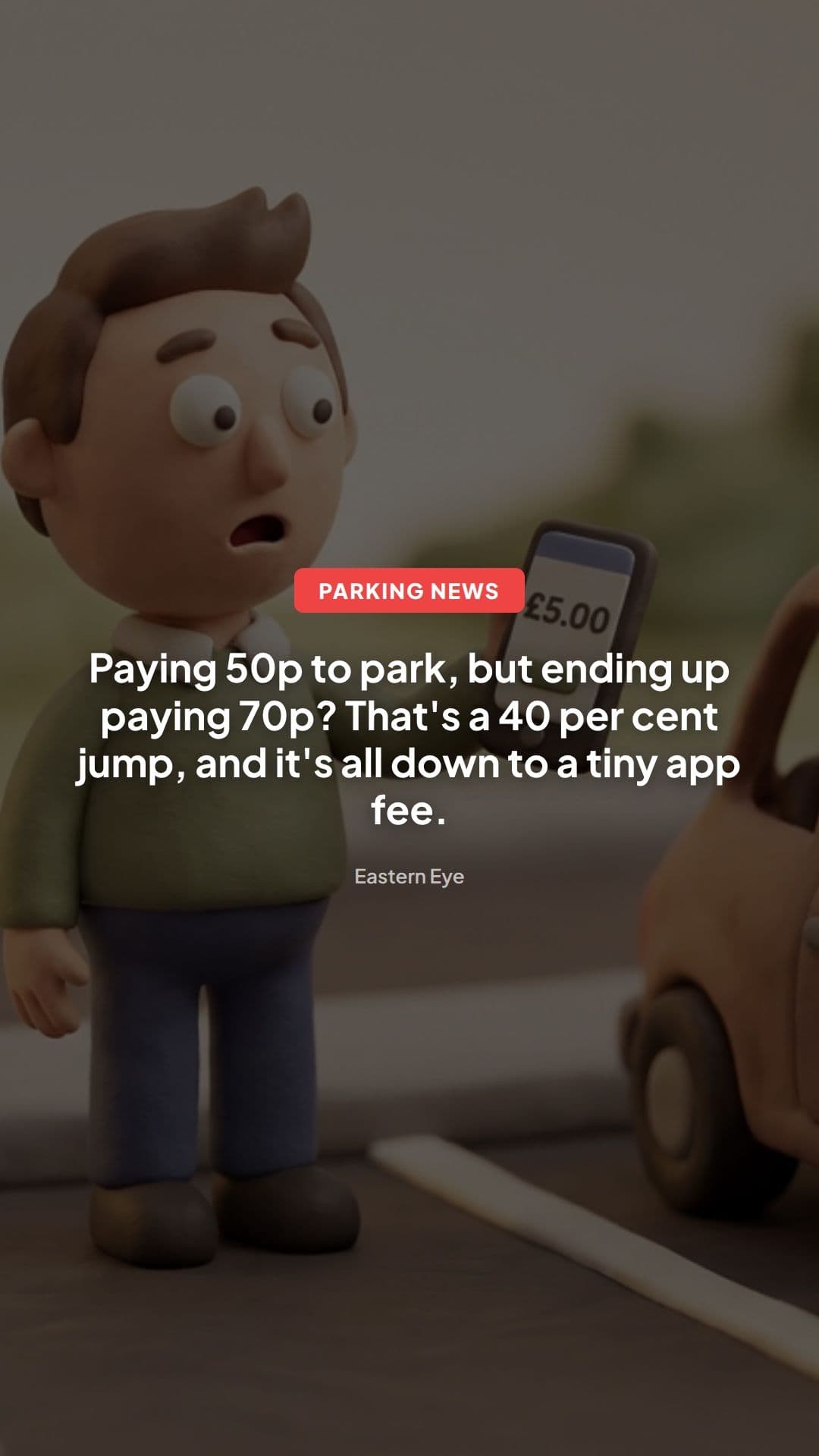
Those few pence are the subject of a story reported by Eastern Eye. Service fees charged by parking apps can substantially increase the cost of short, low-value parking transactions, by up to 40% in some cases. RingGo, PayByPhone and JustPark have all said that any applicable fees are disclosed before payment.
Both things can be true. The fee may be shown, and it may still change what a short stay really costs. For drivers, that is where the interesting questions start.
What the story actually says
The key phrase is "short, low-value". A fee that barely registers on a £15 all-day stay looks very different on a £1.50 half-hour stop for a coffee or a parcel drop.
Here is a hypothetical, purely to show the principle. If a bay costs £1.00 and the app adds a 40p fee, you pay £1.40, which is 40% above the council tariff. If a bay costs £10.00 and the same 40p is added, the uplift is 4%. The fee has not changed, but its weight has. That is the mechanism behind the headline figure. These are not real tariffs, and fee structures vary by operator, by council contract and by location.
The three apps named responded in similar terms: the fees are visible before you commit. That matters legally, and we will come to it. But disclosure and affordability are different questions, and most drivers will not be weighing a few pence against the alternative when they are late for a meeting.
Why it matters more than it seems
Parking is going cashless
Pay-by-phone used to be an optional extra beside a pay-and-display machine. In many places it is now the main route, and sometimes the only one. Councils remove or fail to repair machines, cut cash collection costs, or move to cashless-only car parks. We have covered local examples before, such as Cornwall's cashless parking rule and the headaches of cashless parking problems.
When an app is the only practical way to pay, the fee stops being a convenience charge. For that driver it is simply part of the price of parking.
The council tariff is not the whole bill
Councils set on-street charges using their powers under the Road Traffic Regulation Act 1984 and publish tariffs on signs and websites. But the app fee is normally charged by the app provider under its own terms with you, not set as part of the council's tariff. So the figure on the street sign may not be the final amount leaving your account.
That is not necessarily unlawful. It does mean you cannot assume the sign tells the full story.
Who feels it most
Short stays are the daily reality for people who do quick trips: carers on visits, delivery drivers, tradespeople, shoppers popping to a chemist, parents on school runs. They may pay a fee several times a day. Drivers who are less comfortable with smartphones, or who do not have a bank card linked to an app, can find the shift to digital harder still.
The legal angle
This is general information, not legal advice. The rules are layered, and the answer for any specific charge depends on the facts.
Transparency and "drip pricing"
The key legal concept here is how the price is presented. Under the Digital Markets, Competition and Consumers Act 2024 (DMCC Act), which replaced the older Consumer Protection from Unfair Trading Regulations 2008 for most purposes from April 2025, the rules on misleading practices and so-called "drip pricing" were tightened. Drip pricing means revealing mandatory extra charges late in the buying process. The Competition and Markets Authority (CMA) now has direct enforcement powers, including fines of up to 10% of global turnover for breaches.
Whether an app's service fee falls foul of those rules depends on questions such as:
- Is the fee mandatory, or can you avoid it by another route, such as a machine or card payment?
- Is it clearly shown before you commit to pay?
- Is the total price presented clearly alongside the parking cost?
The apps say their fees are disclosed before payment. That is the position they would rely on. Whether a particular presentation is clear enough is a question for regulators and, in extreme cases, the courts, not something this article can decide.
Payment surcharges
The Consumer Rights (Payment Surcharges) Regulations 2012 ban traders from charging more for using a particular payment method, such as a debit card, than it costs the trader to process. An app service fee is typically presented as a charge for the service of the app, not a card surcharge, so the fit is not straightforward. It is an area where the way a fee is described and what it covers can matter.
The Consumer Rights Act 2015
Contract terms that are unfair, or not transparent and prominent, can be challenged under the Consumer Rights Act 2015. A fee that is buried, unclear, or out of proportion to the service could in principle be scrutinised. But "in principle" is doing real work. This route is untested for most parking app fees, and no single driver can assume it will succeed.
Equality and accessibility
Councils also have duties under the Equality Act 2010 to avoid putting disabled people at a disadvantage. A cashless-only system that excludes people without smartphones may raise questions, particularly for blue badge holders or older drivers. This is a broader policy point rather than a clear-cut right to a refund, but it explains why some councils keep alternative payment methods in place.
The PCN risk is separate
An app fee is a cost. A parking charge notice (PCN) is a penalty. The two should never be confused, but they overlap in practice. If you wrongly enter your registration, your session fails to register, or you misread the zone code, you can end up with a PCN even though you tried to pay. We explain the practicalities in our guides to PayByPhone app errors and parking apps and broken meters.
On private land, operators work under the Protection of Freedoms Act 2012 for keeper liability and the industry codes of practice. The long-awaited statutory private parking code is a separate story. For the key changes, see our piece on new private parking rules.
What drivers should know
1. Check the total, not just the tariff
Before pressing "pay", look at the final figure on the confirmation screen. Compare it with the price on the signage. If the difference matters to you, you have the information to decide before you commit.
2. Think about how many transactions you make
Many apps charge per transaction, not per hour. Several short sessions can cost more in fees than one longer session. Extending a session in the app may trigger a fresh fee. Do not overpay for time you will not use just to save a fee, but do plan the duration sensibly. Leaving a margin of time can also help you avoid an overstay PCN.
3. Look for alternatives where they exist
If a machine, contactless card reader or another payment route is available at that location, compare the cost. Some places support more than one app, and fees can differ between them. That is part of the case for a joined-up system, which we discuss in our coverage of the national parking platform.
4. Keep your evidence
Screenshot the confirmation screen and keep the email or text receipt. It shows the amount paid, the location code, the vehicle registration and the time. It proves your payment if a PCN arrives and it shows the fee if you later want to raise a complaint.
5. Check the registration and location code
A typo in the registration or a wrong zone number is a common cause of avoidable PCNs. Check them before you confirm.
6. Beware of fake QR codes
Fraudsters have placed fake QR code stickers over genuine ones on signs and machines, sending drivers to bogus payment sites. Use a trusted app that you have installed yourself, or check the sign carefully before scanning. See our guide on the parking app QR code scam.
7. If you think a fee is unfair
You can complain to the app provider first, keeping the complaint factual: what you paid, when, where, and why you think it was unclear. If you are unhappy with the response, general consumer advice is available through Citizens Advice, and you can report concerns about pricing practices to Trading Standards. For anything involving significant sums or a PCN dispute, consider taking independent advice. Do not ignore a PCN while you argue about the fee, because the two issues follow separate processes and deadlines.
Looking ahead
Several threads will shape what happens next.
Regulatory attention. With the DMCC Act now in force and the CMA holding direct enforcement powers, the way digital services present fees is under closer scrutiny across the economy. The CMA has already shown interest in parking-related practices, as we have covered in our reports on CMA action against Euro Car Parks. Whether app fees draw formal attention is unknown, but the direction of travel favours clearer price presentation.
A national platform. The government's plan for a National Parking Platform aims to let drivers use their preferred app across participating councils. If it works, competition between apps could put pressure on fees. If it does not, drivers may still face a patchwork of operators, each with different charges.
Council choices. Local authorities decide which providers to contract with and whether to keep machines or alternative payment methods. Those procurement decisions, often made quietly, determine what drivers pay at the bay. Drivers who raise concerns with their council or local councillors are doing something practical.
Fee transparency. The simplest improvement would be for the total price, including any fee, to appear alongside the tariff before you start a session. Some drivers may think that is already the case. The Eastern Eye report suggests the cost impact is not always obvious until you do the sums.
The bottom line
The story is not that parking apps are hiding something. Their position is that fees are shown before payment. The point is that a flat fee on a small transaction can change the real price of a short stay by a lot, and as parking goes cashless, more drivers have no alternative.
Check the total before you tap, keep your receipts, and watch for both the fee and the PCN risk. If you do receive a penalty notice, act within the deadlines on it, and use official guidance or professional advice if the stakes are significant.
This article is general information about UK parking and motoring rules and is not legal advice. Fee structures, council contracts and the law can change, so check current official guidance for your situation.
Written by
The Parking Ticket Pal Editorial Team
Source-checked parking guidance
Ready to Challenge Your Ticket?
Let our AI analyse your PCN and generate a professional appeal letter in minutes.
Start Free Appeal