
Morrisons Parking Charge: ANPR Error Cost Driver £100
A Morrisons shopper faced a £100 parking charge after ANPR allegedly missed an exit. Find out how private parking errors can be challenged in the UK today.

The Parking Ticket Pal Editorial Team
25 November 202610 min read
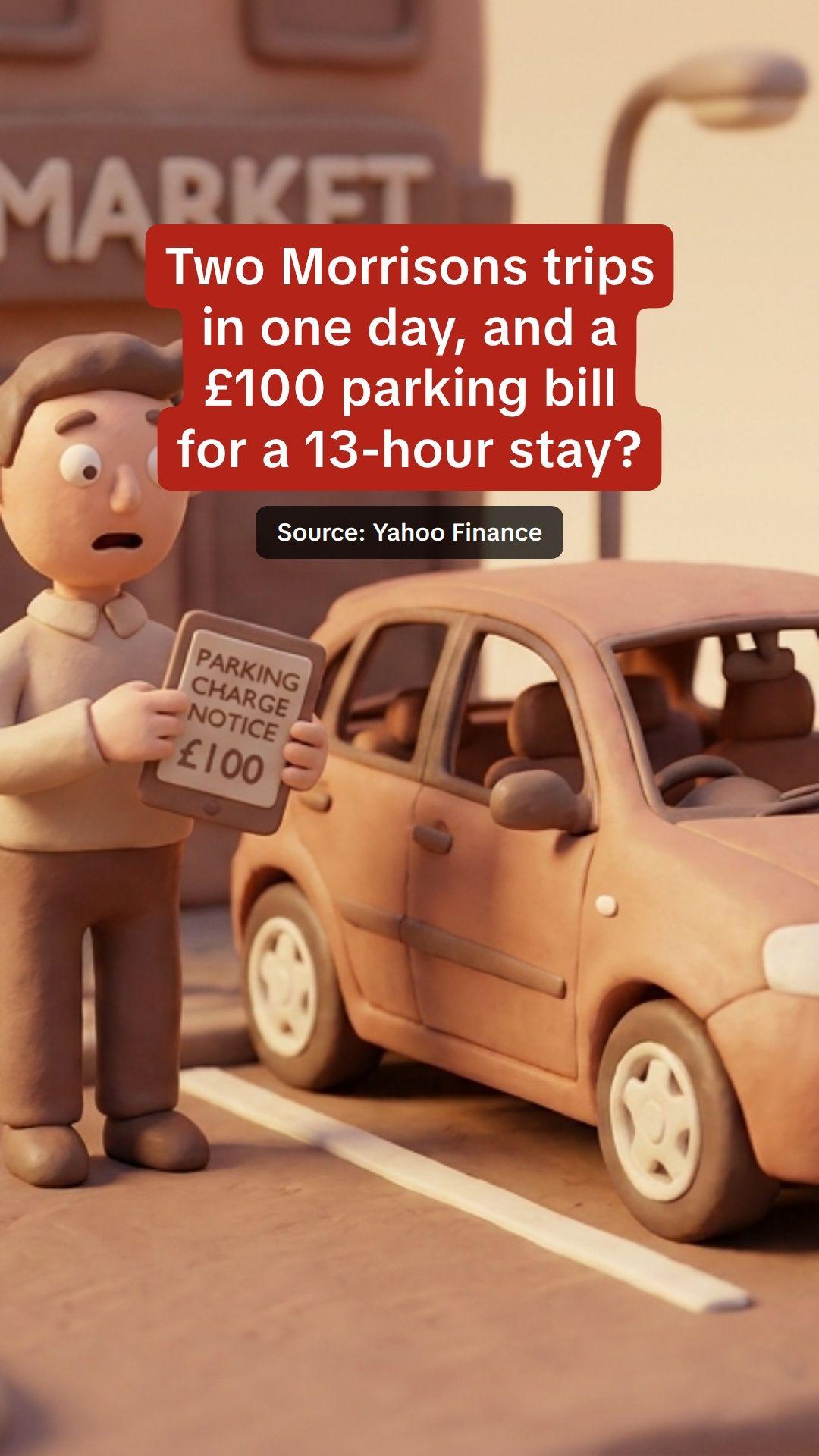
Most of us have done it. You nip into the supermarket, realise you've forgotten something, pop back to the car, drive off to the shops next door and return later for the rest of the shopping. It is a perfectly ordinary bit of driving. But if the camera system watching the car park loses track of any part of that journey, it can turn an ordinary trip into a very expensive misunderstanding.
That is what a driver says happened at a Morrisons car park run by Euro Car Parks, according to a Yahoo Finance report. The case ended happily, but the way the system seems to have failed is worth understanding, because the same weakness can catch out anyone who uses a camera-monitored car park.
What happened
According to the report, the driver's visit was recorded as lasting more than 13 hours. The driver's explanation was that the automatic number plate recognition (ANPR) system had failed to record an exit and a re-entry. In other words, the car left and came back, but the cameras did not log either movement. To the system, one long visit appeared to have lasted most of a day.
The result was a charge of around £100 for overstaying. Morrisons later arranged for the charge to be cancelled and gave the driver 10,000 loyalty-card points as a goodwill gesture.
We only have the driver's account as reported, along with the outcome. We do not know exactly why the cameras missed the movements, and it would be wrong to guess. But the underlying logic of ANPR parking enforcement makes it easy to see how a gap in the data could produce a result like this.
How ANPR "time on site" is worked out
Most ANPR car parks work in a simple way. A camera at the entrance records your registration and a timestamp. A camera at the exit does the same. The system matches the two, calculates the time between them, and compares it with the permitted stay.
The weak point is the pairing. If a read is missed, because of glare, dirt, an angled plate, a fast vehicle or a technical fault, the system has to work with what it has. A missing exit followed by a later re-entry and exit can leave the software with a single, very long stay. It does not know you drove to the shops next door. It only knows what it recorded.
Unlike a paper ticket, which a human places on a windscreen after seeing a car parked for a long time, an ANPR charge is generated automatically from data. Nobody is standing there asking whether 13 hours at a supermarket is plausible. That plausibility check often only happens if the driver challenges the charge.
Why this matters beyond one driver
Automated systems are only as good as their data
Camera enforcement has become the default in supermarket, retail park and hospital car parks. It is cheap to run and doesn't need staff on site. But the efficiency comes with a trade-off: errors can multiply quietly. A single mismatch becomes a letter, then a reminder, then possibly a debt-recovery demand, all generated by automated processes.
The burden often lands on the driver
When an operator says "our records show you stayed 13 hours", the driver is often the one who has to prove otherwise. That can mean digging out receipts, card statements or loyalty-card records weeks after the event, while the clock on a reduced payment offer is ticking.
Retailers have more influence than many drivers realise
In this case it was Morrisons, not simply the parking company, that arranged for the charge to be cancelled. Parking operators typically work on retailers' land under a contract. The retailer, as landowner or tenant, can often ask for a charge to be cancelled, and has a reputational interest in doing so when a customer has clearly been shopping. A complaint to the store or its customer service team can therefore be a useful route alongside the formal appeals process.
The legal angle
This is general information about UK parking rules, not legal advice.
Private charges are a contractual matter
A private parking charge is not a fine. It is a claim that you broke the terms displayed on the signs, and the operator is asking for payment under contract law (or, in some cases, trespass). In ParkingEye v Beavis [2015] UKSC 67, the Supreme Court held that a £85 charge in a retail car park was enforceable and not an unlawful penalty, partly because the operator had a legitimate interest in managing the car park. That ruling does not mean every charge is valid. It means a charge can be enforceable if the driver really did breach clearly displayed terms.
That last point is the crux of the Morrisons-style problem. If the data is wrong, the underlying breach (staying too long) may never have happened.
Keeper liability and the 14-day rule
If an operator cannot identify the driver, it can pursue the registered keeper, but only by following the conditions in Schedule 4 of the Protection of Freedoms Act 2012. For charges based on cameras, with no ticket placed on the car, the notice to keeper generally has to be delivered within a set window of the alleged event (14 days in the usual ANPR scenario), and it must contain specific information. Notices that miss those requirements can be challenged.
The appeals system
If an operator rejects your first appeal, drivers can usually escalate to an independent appeals service. For members of the British Parking Association (BPA), that is POPLA, and for members of the International Parking Community, it is the Independent Appeals Service. The notice or rejection letter should say which applies. Our guide to the POPLA appeals process walks through the steps.
Rules are changing
The Parking (Code of Practice) Act 2019 requires a single statutory code for private parking operators, and proposals associated with it have included a cap on charges and a grace period. The timing and details have shifted over the years, so check the current position through official government sources. Our overview of the proposed £100 cap and 10-minute grace period covers the debate. Note that a grace period would not help in a case like this one, where the problem is a 13-hour recorded stay, not a few minutes' overrun.
Your data rights
Because ANPR relies on images of your number plate, the operator holds data about you and your vehicle. Under UK data protection law, you can generally make a subject access request, which operators usually have a month to answer. Asking for the entry and exit images and timestamps can be a powerful way to see exactly what the system recorded, and what it missed.
What drivers should know
These are points of general good practice, not instructions for any particular case.
1. Check the time between entry and exit on any charge notice. If the stated duration looks implausible, that is a strong sign of a data error. It was the key feature in this story.
2. Gather your own timeline. Evidence that tends to carry weight includes:
- Shopping receipts with timestamps
- Bank or card statements showing transaction times
- Loyalty-card activity, such as a store app history
- Dashcam footage or photos with time stamps
- Parking app or fuel receipts from the places you visited in between
If your journey included leaving and re-entering, evidence of where you went in the gap is particularly useful, because it explains the missing movements.
3. Keep the original paperwork and note the dates. Appeal windows and reduced-payment offers run on strict timelines. The time limits on a notice are one reason it pays to act promptly, even if you are confident the charge is wrong.
4. Appeal in writing and stay factual. Explain what happened, set out the timeline, attach evidence and point out any inconsistency in the operator's data. Emotional language adds little. Our guide to how ANPR errors can be proven goes into more detail about the kind of evidence that helps.
5. Don't ignore letters. Even a charge you believe is invalid can escalate if letters from debt recovery firms go unanswered. Responding, or at least seeking advice, is generally wiser than silence.
6. Think about contacting the retailer. As the Morrisons case shows, store managers or customer service teams sometimes have the ability to request cancellation. It is not guaranteed, and it should not replace a formal appeal if the deadline is looming, but it is a useful extra route.
7. Consider your options if you move your car during a shop. If you know you will leave and return, there is no rule against it, but be aware the system might not handle it neatly. Keeping receipts from both visits can make any later dispute much simpler. Where signs say "no return within X hours", read them carefully, because some sites do restrict re-entry.
8. Know where to get help. For high-value or complicated disputes, Citizens Advice and independent consumer or legal advice services can help you weigh your options. For more general background, see our explainer on whether you actually have to pay a private parking charge.
Looking ahead
Goodwill gestures are welcome, but they are not a system. A driver who happens to have kept evidence, complained effectively and dealt with a responsive retailer may get a good outcome. A driver who pays quickly to avoid hassle, or who loses the receipt, may not.
Several developments could change this over time. A statutory code of practice, if it is fully implemented, could standardise how operators handle appeals and how they treat evidence. Greater scrutiny of ANPR accuracy, including by regulators and consumer groups, could push operators to build in basic sense checks, such as flagging an implausibly long stay for human review before a charge is issued. And retailers, who bear the reputational cost when loyal customers receive wrongful charges, have good reason to demand better from their parking contractors.
Until then, the practical lesson is simple. An ANPR charge is an automated claim, not a verdict. If the numbers do not add up, the driver is entitled to question them, and the best defence is usually a tidy trail of evidence showing what you actually did.
This article is general information based on a published news report and UK parking rules. It is not legal advice. If you have received a charge you are unsure about, check the guidance from the relevant appeals service or seek independent advice.
Written by
The Parking Ticket Pal Editorial Team
Source-checked parking guidance