
Knitted Speed Cameras: Can They Slow UK Drivers Down?
Fillongley villagers have knitted fake police officers and speed cameras to deter speeding. We examine whether this rural-road stunt can improve local road safety.

The Parking Ticket Pal Editorial Team
18 October 2026
Knitted Cops and Woollen Speed Cameras: What Fillongley's Village Protest Tells Drivers About Speeding
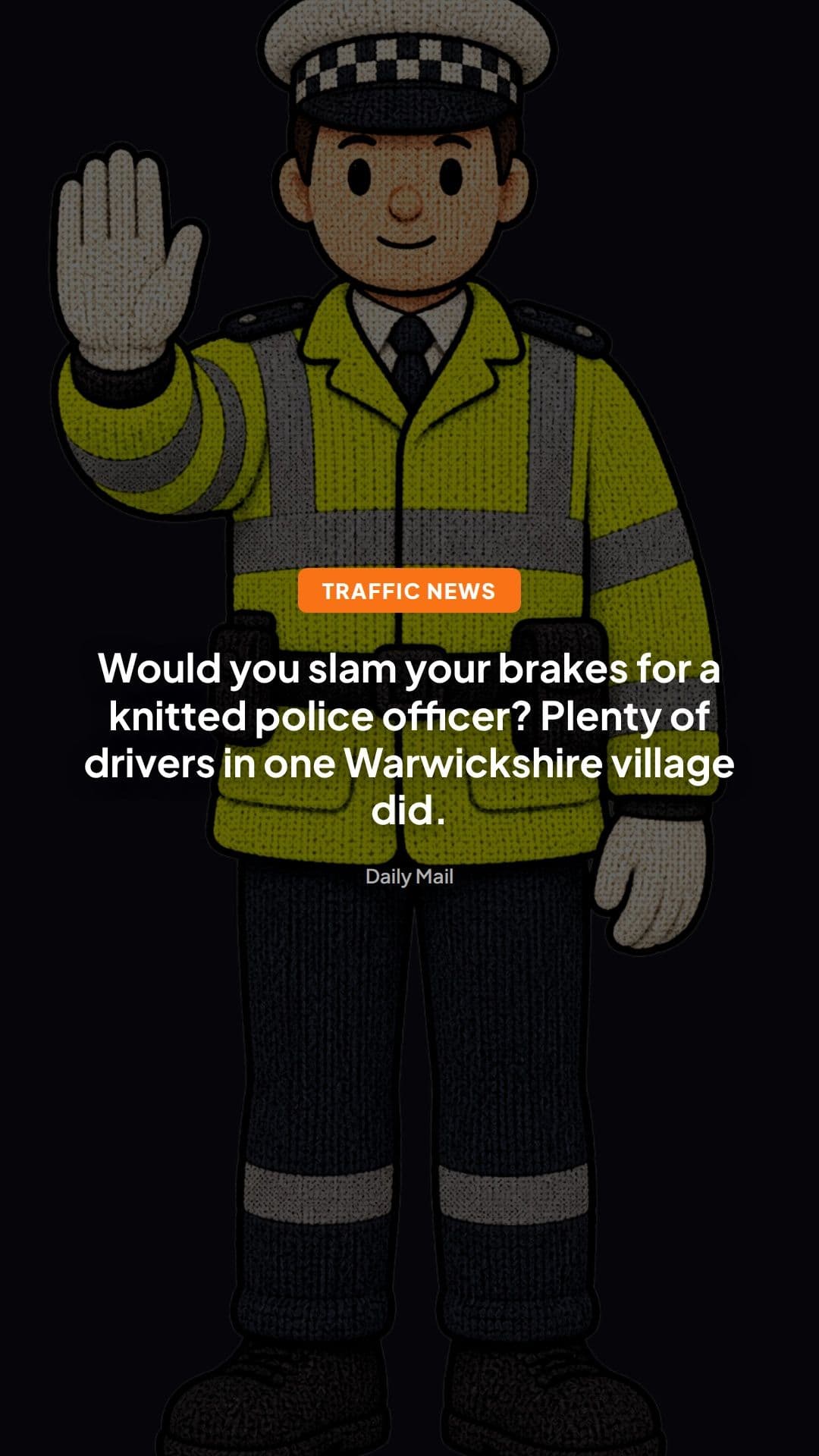
Somewhere in Warwickshire, a motorist rounds a bend, spots a figure in a hi-vis jacket by the roadside and eases off the accelerator. A few seconds later, they realise the "officer" is made entirely of wool.
It sounds like a sketch from a village fete, but it is a real response to a real problem. Residents of Fillongley, Warwickshire, have turned to knitting needles to tackle speeding, and the story, first reported by the Daily Mail, has struck a chord because so many communities will recognise the frustration behind it.
What happened in Fillongley
According to the Daily Mail's report, residents in Fillongley created life-size knitted traffic officers and fake speed cameras in an attempt to deter motorists from speeding through the village. The idea is simple. A figure that looks like an enforcement presence, seen from a moving car, might make a driver check their speedometer before they realise it is a craft project.
The report frames it as the action of villagers who are fed up with fast drivers. That detail matters. This was not a council initiative or a police operation. It was people living beside a road who decided that if official solutions were not arriving quickly enough, they would try something themselves.
It is also worth being clear about what a knitted camera cannot do. It cannot record a speed, it cannot trigger a penalty, and it cannot change anyone's driving once they realise it is not real. Its value is entirely psychological, and psychological deterrents have a shelf life.
Why this matters beyond one village
Fillongley is far from alone. Across the UK, residents on village high streets, rural lanes and suburban roads regularly report vehicles passing too fast for the environment. The pattern is familiar:
- A road that runs through a settlement but feels like a through route to drivers.
- A speed limit that is clear on paper but rarely enforced in practice.
- Residents who feel they have exhausted the formal options.
Enforcement resources are finite. Police forces cannot station officers in every village, and fixed cameras are expensive and typically installed only where casualty or collision records meet particular criteria. That leaves a gap between how fast residents feel traffic is moving and what the authorities are able to do about it.
Communities have long filled that gap in creative ways. Scarecrows in hi-vis, painted "children at play" silhouettes and cardboard police cut-outs have all appeared at the roadside over the years. The woollen version is simply the latest, and perhaps the most charming.
We have covered the wider picture before, including how members of the public are tackling speeding where councils fail to enforce and how AI speed cameras could change enforcement. Fillongley sits at the grassroots end of the same debate: who is responsible for slowing traffic down, and what happens when the answer is "nobody, quickly enough"?
The legal angle: what the law says about speeding
For drivers, the funniest part of this story should not obscure the serious part. The speed limit is the speed limit whether or not a camera, real or woollen, is visible.
The basics
- Speeding is a criminal offence. The offence of exceeding a speed limit is set out in the Road Traffic Regulation Act 1984.
- Built-up areas. Under that Act, a road with street lighting at regular intervals is generally subject to a 30mph limit unless signs say otherwise. Many villages have lower limits, and some have 20mph zones.
- The typical penalty. The standard outcome for a speeding offence dealt with by fixed penalty is £100 and three penalty points. More serious cases can go to court, where fines are linked to income and a disqualification is possible.
- Enforcement thresholds. Police forces follow national guidance that allows some tolerance, commonly described as 10 per cent plus 2mph, before action is usually taken. That is guidance, not a legal right to speed, and forces can and do enforce below it.
- Speed awareness courses. Depending on the speed and the force's policy, some drivers are offered a course instead of points. That is discretionary and not available to everyone.
The notice process
If a real camera records you, the registered keeper must normally receive a Notice of Intended Prosecution within 14 days of the offence under the Road Traffic Offenders Act 1988. The keeper can also be required to identify the driver, and failing to do so can be an offence in its own right under section 172 of the Road Traffic Act 1988. Anyone who receives such a notice should read it carefully and look at official guidance or take professional advice if they are unsure what applies to them.
What about the knitted versions?
A knitted camera has no legal status at all. You cannot be prosecuted because of it, and you cannot defend a speeding charge by pointing out that a camera was fake. But there are legal questions on the other side of the story, for the people putting such displays up.
Anything placed on or beside a public road can raise issues. Highways law, including the Highways Act 1980, deals with obstruction of the highway and with unauthorised items on or over it. Official traffic signs are tightly regulated by the Traffic Signs Regulations and General Directions, and only authorised signs can be placed on the highway. A woollen figure on a private verge or garden wall is a very different matter from one placed in the carriageway or on the pavement.
I have no information about where in Fillongley the figures were placed or what permissions, if any, were sought, so this is general context rather than a comment on the villagers' arrangements. The general point is that communities who want to try a similar idea would be wise to talk to the highway authority first. In Warwickshire, as in most of England outside London and unitary areas, that means the county council, which controls speed limits and what goes on the roadside.
Do fake deterrents actually work?
I am not aware of reliable evidence on how effective knitted or dummy enforcement figures are, so I will not claim any. What we can say is that the logic is sound for a short period, and flawed over the longer term.
The case for. A sudden, unusual sight at the roadside can make drivers reassess their speed. Regular drivers may be caught out the first few times, and visitors who do not know the road may stay cautious.
The case against. Familiarity breeds contempt. Locals who use the road daily will soon spot the trick. Once a deterrent is known to be fake, it can even backfire, suggesting that the community has no real enforcement behind its complaints.
That is why most road safety professionals pair visual prompts with measures that physically or legally change behaviour, such as lower limits, traffic calming, speed indicator devices or proper enforcement.
What drivers should know
Whether you live in a village or are simply driving through one, a few practical points follow from this story.
1. Never treat a camera as "probably fake"
Do not make a habit of assuming that a roadside figure, box or camera is a dummy. Some real cameras are housed in unmarked cases, and mobile enforcement can appear anywhere, whether it is a van, a handheld device or a police officer. Dummy cameras do exist, but you cannot tell from a moving car. The safe approach is to stick to the limit everywhere. For more on common misunderstandings, see our guide to UK speeding rules and the myths that could cost drivers dearly.
2. Know the limit before you enter a village
Look for the circular signs showing the limit, and remember that in built-up areas with street lights, the default is 30mph unless signed otherwise. If you see lampposts but no repeater signs, do not assume the limit is higher. Many villages now have 20mph limits as well, a trend we have looked at in 20mph speed limits, safer streets or tougher enforcement.
3. Expect more community-led enforcement
Community Speedwatch groups, in which trained volunteers record vehicle details and pass them to police, operate in many areas. The volunteers have no powers to stop or penalise anyone, but police can use the information to send warning letters. If you receive such a letter, it is a warning rather than a fine, but repeated reports may lead to further action.
4. If you get a notice, deal with it promptly
Deadlines apply to speeding notices. Check the dates, confirm the details are accurate and seek official or professional guidance if you are unsure how to respond. Ignoring paperwork usually makes things worse.
5. If you live on a problem road
If you are one of the residents rather than one of the drivers, there are routes beyond wool:
- Contact the highway authority about a speed limit review, traffic calming or a speed indicator device.
- Speak to your local police force or the local neighbourhood team about enforcement and Community Speedwatch.
- Involve your parish council, which can often press the county council and may be able to fund local measures.
- Gather evidence, such as traffic counts and near-miss records, which tends to strengthen any case for action.
If you want to display something creative, ask the highway authority first so that it does not raise obstruction or safety concerns.
Looking ahead
The knitted officers of Fillongley are charming, but they are also a symptom. When residents resort to crafts to slow traffic, it suggests they feel the formal system is not keeping pace with their concerns.
Several trends may shape what happens next. Camera technology is becoming more flexible and cheaper to deploy, as the debate over AI-enabled speed cameras shows. Lower limits are spreading across more towns and villages. And there is growing political attention on how speeding is policed at local level. Whether those developments reach small rural communities quickly enough is another question.
For drivers, the lesson is straightforward. A woollen cop is not going to fine you, but a real camera might, and the limit exists to protect the people who live beside the road. If a village has gone to the trouble of knitting life-size figures to ask you to slow down, the simplest and cheapest response is to do exactly that.
This article provides general information about UK motoring law and is not legal advice. If you have received a notice of intended prosecution or face a speeding charge, check official government guidance or speak to a qualified professional about your own circumstances.
Written by
The Parking Ticket Pal Editorial Team
Source-checked parking guidance
Ready to Challenge Your Ticket?
Let our AI analyse your PCN and generate a professional appeal letter in minutes.
Start Free Appeal