
Hospital Car Park Crisis: Families Miss Final Goodbyes
Hospital car park shortages are leaving families unable to reach dying relatives. We examine the campaign, NHS parking rules and motorists’ rights in the UK.

The Parking Ticket Pal Editorial Team
16 October 2026
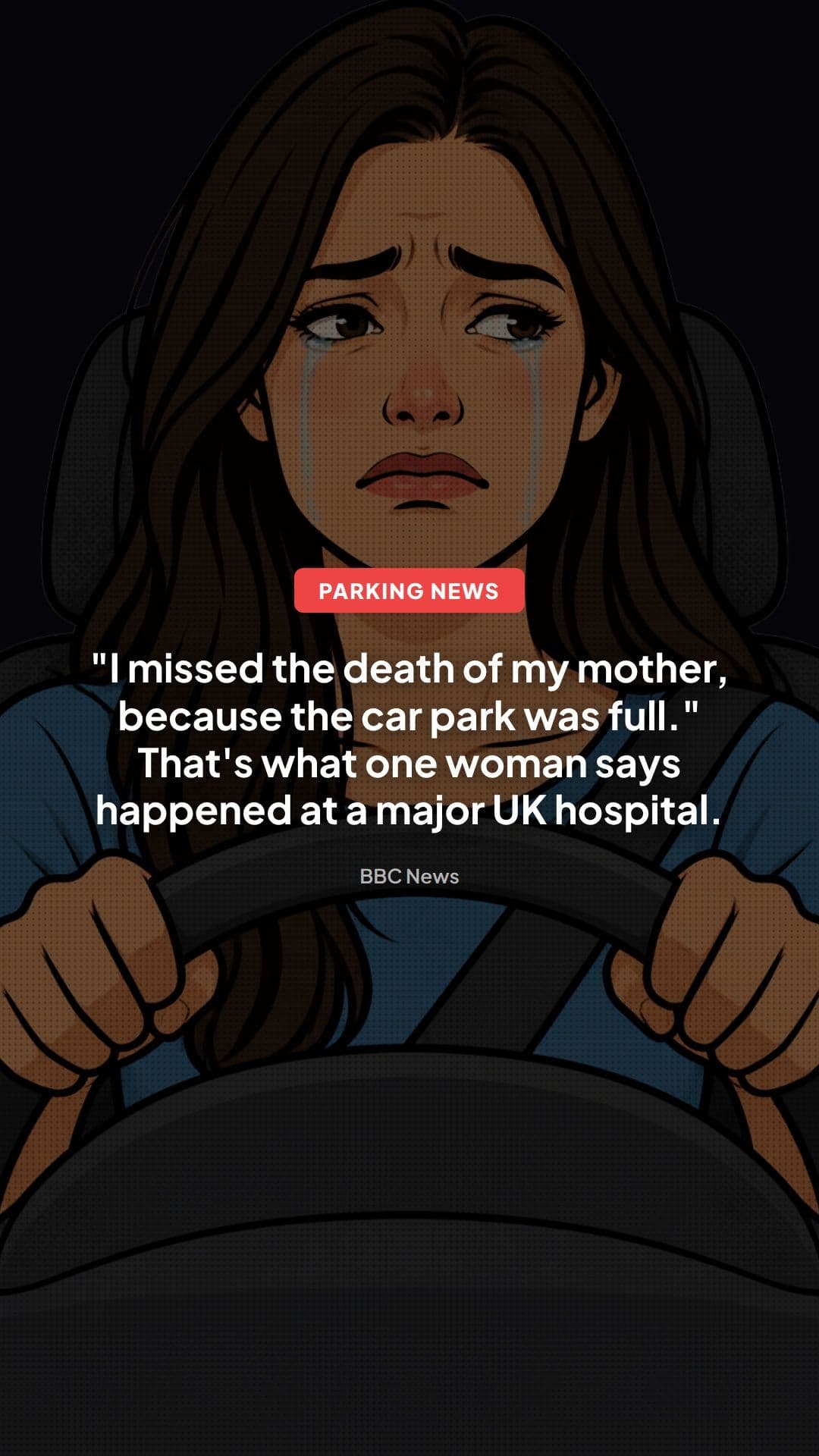
"My mother died alone because the hospital's car park was full": the human cost of hospital parking
Most of us treat finding a parking space as a small daily irritation. For a family racing to a hospital because a loved one is dying, it can be something else entirely. A circling car, a barrier that won't lift, a queue for a space that doesn't exist: each minute lost can matter.
That is the uncomfortable reality behind a story reported by BBC News, where a campaign about hospital parking has gathered 1,500 signatures. Some of the people backing it say parking problems meant they missed the deaths of loved ones. One account carries a headline that is hard to read: "My mother died alone because the hospital's car park was full."
This post looks at what the story tells us, why hospital parking is such a flashpoint, what the rules actually say, and what drivers can do if they find themselves in this situation.
What has been reported
The BBC's reporting centres on a petition-style campaign calling for change to how hospital parking works. According to the summary, it has attracted 1,500 signatures, and some of those involved say that difficulty finding or paying for a space meant they were not at the bedside when someone they loved died.
It is worth being clear about what we know and what we don't. The core claim is that full or inaccessible hospital car parks have, in the experience of these families, delayed them at the worst possible moment. We are not in a position to verify individual cases, and this article does not attempt to. What we can do is look at why this kind of situation arises and what the framework around hospital parking looks like.
The campaigners are not, on the face of it, asking for anything exotic. The underlying request is that families of seriously ill or dying patients should be able to get to them without a parking obstacle in the way.
Why hospital parking is uniquely fraught
Hospital car parks combine several pressures that few other car parks face.
Unpredictable demand. Shopping centre car parks have peaks you can plan around. Hospitals have outpatient clinics, ward visiting hours, shift changes and emergencies all overlapping. Staff, patients and visitors all compete for the same limited spaces.
Unplanned arrivals. Many visitors have no choice about when they come. A phone call at 2am saying "come now" leaves no time to research pay-and-display apps or find the overflow car park.
Emotional stress. Drivers who are frightened, exhausted or grieving are the least likely to read small print on signs, work out payment machines or notice a barrier system's quirks. That is precisely when mistakes, and charges, happen.
Limited land. Many hospital sites were built decades ago and have grown piecemeal. Adding spaces often means sacrificing something else, or fighting planning constraints.
Hospital trusts also face a financial argument. Car park income is often described as a source of funding, and charges are sometimes framed as a way of managing demand. Critics counter that patients and visitors are a captive audience who cannot simply choose to go elsewhere. This is a long-running debate, and we have covered recent examples in our posts on hospital parking charges that were cancelled after an NHS apology and Hull hospital parking charges nearly doubling.
The legal and policy angle
Hospital parking doesn't sit neatly in one legal box, and the rules differ across the UK.
Who sets the rules
In most cases, hospital car parks are private land in the legal sense, even though they belong to a public body. That means they are not governed by the council penalty charge notice system that applies to on-street parking. Instead, trusts and their contractors set terms and conditions, and breaches are usually dealt with as contractual parking charges.
Some sites are run directly by the trust. Others use private operators. If a private operator issues a charge, the usual private parking framework applies, including appeals to the operator first and then, where available, to an independent appeals service. Our general guide to private parking charges and whether you have to pay explains how that process works. Where a firm issues a ticket and later pursues the registered keeper, it will normally rely on the keeper liability provisions in Schedule 4 of the Protection of Freedoms Act 2012, which only apply if specific wording and timing requirements are met.
Differences across the UK
Policy differs by nation. Wales and Scotland have taken steps to make hospital parking free in most cases, with limited exceptions such as sites under older private finance arrangements in Scotland. Northern Ireland also largely avoids charging patients and visitors. In England, charging is more common, and trusts set their own tariffs, although national guidance applies.
The English guidance on concessions
In England, the Department of Health and Social Care has published guidance on NHS car parking charges, and it encourages trusts to offer free or reduced-price parking to certain groups. As we understand it, these typically include disabled people, frequent outpatient attendees, and parents of children staying in hospital. The guidance has also been framed around visitors to patients who are very seriously ill, though trusts have discretion in how they apply it.
That is the crux of the issue for the campaigners. Guidance is not law. Trusts are expected to follow it, but practice can vary widely from hospital to hospital, and a family arriving at 3am may not know a concession exists, let alone who to ask. Check the current guidance and your trust's own policy rather than relying on a summary like this one.
Does a full car park create any legal right?
Not in a direct sense. There is no general legal right to a parking space at a hospital, and a full car park is not a breach of any law in itself. However, public bodies are expected to run services reasonably, and trusts have complaints procedures and, in England, the Parliamentary and Health Service Ombudsman as a final stage for unresolved complaints about NHS services. Whether a parking failure would fall within that remit depends on the circumstances, so it is worth asking the trust or the Ombudsman directly rather than assuming.
What drivers should know
This is general information rather than advice for any individual case. But there are practical steps that could make a very hard situation a little less hard.
If you are heading to a hospital for a seriously ill relative
- Ring ahead if you can. Call the ward or switchboard and say that you are travelling to see a seriously ill or dying relative. Ask where best to park and whether there is a concession, pass or emergency arrangement. Many hospitals have one, but it may not be advertised.
- Prioritise getting inside. If the main car park is full and time matters, consider dropping a passenger at the entrance first, so one person can reach the bedside while the other finds a space. Check local signage for drop-off rules, as some sites charge for or restrict these areas.
- Know the alternatives. Many hospitals have overflow car parks, park and ride schemes or nearby public car parks. A quick look at the trust's website before you set off, or when someone else can look it up for you, can save precious minutes.
- Tell a member of staff. Ward staff are often able to arrange a parking pass or point you to the relevant department. Don't assume you will be a nuisance by asking.
Avoiding a charge you shouldn't have to pay
- Keep evidence. Take photos of signs, full car park notices, barrier faults or broken payment machines. Keep any receipts and note times.
- Don't ignore a notice. Even if you believe the charge is unfair, respond within the deadlines on the notice. Missing deadlines can limit your options.
- Appeal with context. If a charge arrives after a medical emergency or bereavement, you can explain the circumstances in your appeal. A letter or note from ward staff can strengthen it. Operators are not obliged to cancel, but compassion and proportionality are legitimate points to raise, and outcomes can differ by operator. See our article on a private parking fine overturned after a medical stop for an example of how context can matter, and our guide to the POPLA appeals process if the operator is a member of the relevant scheme.
- Use the Patient Advice and Liaison Service. PALS (or the equivalent in your nation) can often intervene informally, sometimes quicker than a formal complaint.
- Know the difference between bays. Emergency and drop-off bays at hospitals have their own rules. Our guide to hospital emergency bay parking rules is a good starting point.
If you hold a Blue Badge
Blue Badge rights apply on-street, but on private land such as many hospital car parks, the operator's terms prevail. Many hospitals do offer concessions for badge holders, but you should check rather than assume. Our overview of Blue Badge holder rights explains what applies where.
Looking ahead
The campaign may be modest in size, 1,500 signatures is far from a mass movement, but it highlights something that policy debates about hospital parking often miss. Discussions tend to focus on tariffs, staff discounts and income. Fewer focus on the moment-by-moment experience of someone trying to reach a dying relative.
There are several ways things could shift:
- Clearer, more visible concessions. If trusts already have schemes for families of seriously ill patients, the challenge may be making them easier to find and use, with signs at entrances, on appointment letters and on websites.
- Emergency flexibility. Barrier-free or time-limited arrangements for end-of-life visits would remove the need to negotiate payment under stress.
- Capacity planning. Where car parks are routinely full, trusts could look at park and ride, better public transport links or spaces reserved for urgent family arrivals.
- National consistency. Campaigners often point to the gap between nations and between individual trusts. A guideline that is applied differently from one hospital to the next is likely to keep producing the kind of stories the BBC has reported.
Broader reforms to private parking, including the long-awaited code of practice, may also affect hospital sites run by contractors, particularly around grace periods and charge levels. Our explainer on new private parking rules, including the £100 cap and 10-minute grace period sets out what is expected. Those rules won't solve a full car park, but they could reduce the penalty side of the problem.
The bottom line
A parking space is a small thing until it isn't. For the families behind this campaign, it was the difference between being present and being absent at the end of a life. Whether or not the campaign leads to change, the story is a reminder that parking policy is never purely about pounds and spaces. It is about access to care, and to the people we love when they need us most.
If you are heading to a hospital in difficult circumstances, ring ahead, ask for help, and keep evidence of anything that goes wrong. And if you have received a charge you think is unfair, there are routes to challenge it. Check your trust's policy and the official guidance, and seek independent advice if the stakes are high.
This article is general information about UK parking and hospital policy and is not legal advice. Rules and guidance vary by nation and by hospital trust, so always check the current position with the relevant authority.
Written by
The Parking Ticket Pal Editorial Team
Source-checked parking guidance
Ready to Challenge Your Ticket?
Let our AI analyse your PCN and generate a professional appeal letter in minutes.
Start Free Appeal