
Disabled Bay PCN Appeal Refused: Key Lessons for Drivers
A Barking and Dagenham disabled bay PCN appeal was refused. Learn what evidence, Blue Badge rules and signage checks drivers should consider before appealing.

The Parking Ticket Pal Editorial Team
27 November 20269 min read
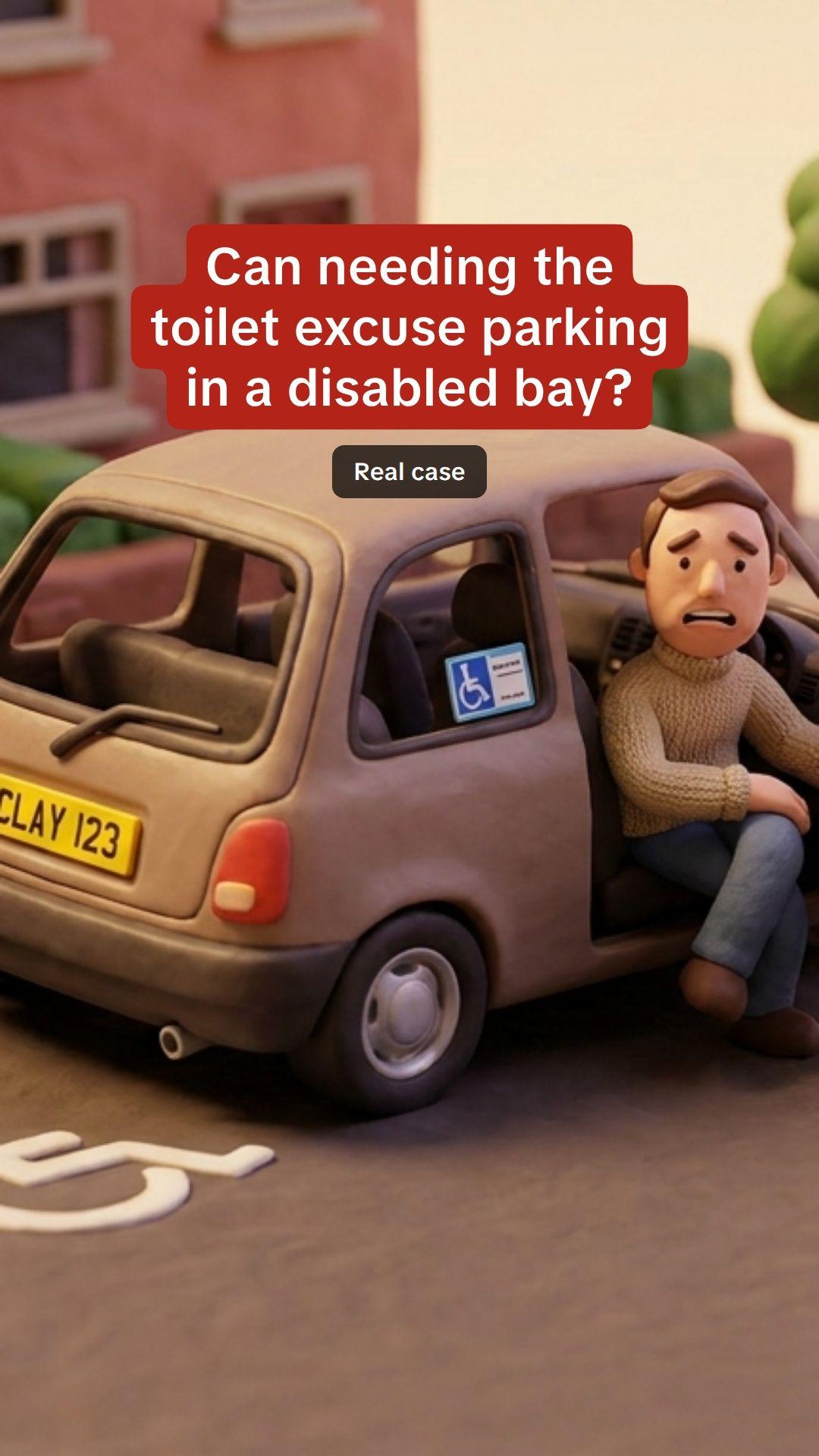
Most of us have felt that moment of panic on the road when nature calls and there is nowhere to stop. A recent London parking tribunal decision asks whether that kind of urgency can justify using a bay reserved for disabled drivers. The answer was a firm no, and the reasoning shows how adjudicators weigh evidence, credibility and legal exemptions.
The case: a disabled bay, no badge and a confrontation
The case comes from the London Borough of Barking and Dagenham. A driver received a Penalty Charge Notice (PCN) for the contravention described as being "in a disabled bay without disabled badge". In plain terms, a civil enforcement officer saw a vehicle in a bay reserved for disabled badge holders, with no valid badge on show.
The case also involved a confrontation. The parking attendant's report said the motorist lost his temper. The driver appealed to the independent tribunal, which refused the appeal. The adjudicator's written reasons are short, but they raise three useful questions:
- Who gets believed when the driver and the attendant tell different stories?
- Does urgent personal need count as a defence?
- What does "displaying" a badge actually require?
The arguments: what each side said
The adjudicator's reasons do not set out the driver's full case, so I will not guess at details. We can still piece together the outline.
The driver's side. From the reasons, the motorist's case appears to have rested partly on needing to relieve himself, which is why the adjudicator addressed urination directly. The driver also seems to have disputed the attendant's account of his behaviour, since the adjudicator had to decide whether the report was accurate.
The council's side. The council relied on the attendant's observations. The attendant recorded that no blue badge was visible when the vehicle was checked, and that the motorist became angry when confronted. The attendant's report, including the notes about the motorist's behaviour, formed the core of the council's evidence.
The decision: appeal refused
The adjudicator rejected the appeal on three findings:
- The attendant's report of the motorist "losing his temper" was accepted as broadly accurate. The adjudicator said it had the "marks of a genuinely accurate report".
- There is no exemption based on the need to urinate.
- At the moment of the attendant's key observation there was no blue badge on view, and so no documentary entitlement to use the bay. The vehicle was therefore left standing illegally in the bay.
The legal reasoning, in plain English
1. The council only has to prove the contravention happened
In a civil parking appeal, the standard of proof is the balance of probabilities. That means "more likely than not", not the "beyond reasonable doubt" test used in criminal courts. The adjudicator asks whether it is more likely than not that a vehicle was in a disabled bay without a valid badge being displayed.
Here the answer was straightforward. The attendant recorded no badge on view, and the adjudicator accepted that.
2. Why the driver's temper mattered
The motorist's behaviour is not a legal element of the contravention. Nobody gets a PCN for being rude. Yet the adjudicator spent time on it, because credibility drives many parking appeals. When two accounts conflict, the adjudicator decides which to trust.
The adjudicator found the attendant's account of the confrontation reliable and read it as a genuine report of a motorist behaving badly. A witness whose account of one part of the incident rings true is more likely to be believed on the rest, including the key point that no badge was displayed.
This does not mean getting angry loses you your appeal automatically. It means that behaviour recorded at the scene becomes part of the evidence, and an attendant's detailed, consistent notes can carry real weight.
3. "I needed the toilet" is not a recognised exemption
The adjudicator's comment that there is "no exemption based on the need to urinate" is blunt, but it reflects how the law works. Parking contraventions are generally what lawyers call strict liability matters. If the vehicle was where it should not have been, the contravention occurred, whatever the reason.
Adjudicators can only allow an appeal on specific grounds set out in the regulations. Broadly, these include that the contravention did not occur, that the penalty exceeded the amount applicable, or that there was a procedural impropriety by the council. Personal urgency, however understandable, does not fit those grounds on its own.
Sympathetic circumstances do sometimes matter in a different way. Councils have a discretion to cancel a PCN, and adjudicators can sometimes refer particular circumstances back to the council for it to consider. That is not the same as a legal defence, and nothing in this decision suggests the adjudicator felt it was appropriate here.
4. Why disabled bays are treated strictly
Disabled bays exist because the people who need them often cannot park elsewhere. A badge holder may need extra room to get in and out of the vehicle, or may be unable to walk far. Every minute a non-entitled driver spends in a bay can mean a badge holder with no alternative.
For that reason, tribunals tend to take a firm line. Our guide to blue badge parking rules and the places you cannot stop covers the wider picture, and our explainer on disabled parking without a blue badge goes into more detail on the contravention itself.
5. "On view" means on view
The adjudicator's findings turn on the badge not being on view when the attendant looked. The wording of the finding points to the moment of the observation.
Blue badge rules generally require the badge to be displayed in the vehicle, usually on the dashboard or windscreen, so that an attendant can read it from outside. Owning a badge is not the same as displaying it. If an attendant cannot see it, they cannot confirm entitlement, and a PCN can follow.
You can read more about the code behind this kind of ticket in our guide to PCN code 87 and parking in disabled bays without a badge.
Lessons for drivers
These are general takeaways from the decision, not advice for any individual's situation.
1. Urgency is not a legal defence
Toilet emergencies, a sick child, a rushed errand: the adjudicator's reasoning shows tribunals tend to separate sympathy from legal entitlement. If a bay is restricted, personal need alone is unlikely to turn a contravention into a non-contravention. Drivers who face a genuine emergency may want to read up on the official routes for asking a council to exercise discretion, and our guide to formal representations for PCNs explains how that stage works.
2. The attendant's notes carry weight
In this case, the adjudicator accepted the attendant's report because it had the "marks of a genuinely accurate report". Attendants record what they see, often with photographs and timed notes. A challenge to that evidence generally needs something concrete, such as your own photographs, receipts or witness details, rather than a general disagreement.
3. How you behave at the scene can become evidence
Heated exchanges with an attendant can end up in the written record. Staying calm will not guarantee a win, but it avoids handing the council an extra point about credibility. It is also the right thing to do. Attendants are doing a difficult job, and abuse towards them is a wider concern.
4. If you hold a badge, display it every time
For genuine badge holders, the lesson of the "on view" finding is that having a badge somewhere in the vehicle is not enough. Our overview of blue badge holder rights sets out what the badge does and does not permit, and the official government guidance on the scheme is the best place to check the current display rules.
5. Think about what your appeal actually says
The adjudicator decides appeals on the legal grounds available. An appeal built mainly on personal circumstances, with no evidence that the contravention did not occur or that the council made a procedural error, faces an uphill climb. Where the stakes are high, such as repeated PCNs or a risk to a badge, it may be worth talking to an independent adviser or consumer advice service before you submit anything.
Key takeaway
A disabled bay is a legal entitlement, not a convenience, and an urgent personal need is not a defence. The tribunal looked at what the attendant saw, found no badge on view, and treated the driver's reason for parking as legally irrelevant, however understandable it may have felt in the moment.
This article is general information and case commentary on UK parking law. It is not legal advice, and every case turns on its own facts. If you have received a PCN, check the notice itself and the official guidance from your council and the relevant tribunal, and consider independent advice where the stakes are significant.
Written by
The Parking Ticket Pal Editorial Team
Source-checked parking guidance