
Car Insurance Warning: The Common Driver Mistake to Avoid
Nearly half of UK motorists may be making a simple error that could put car insurance cover at risk. Learn what to check and how to protect your policy.

The Parking Ticket Pal Editorial Team
26 November 202611 min read
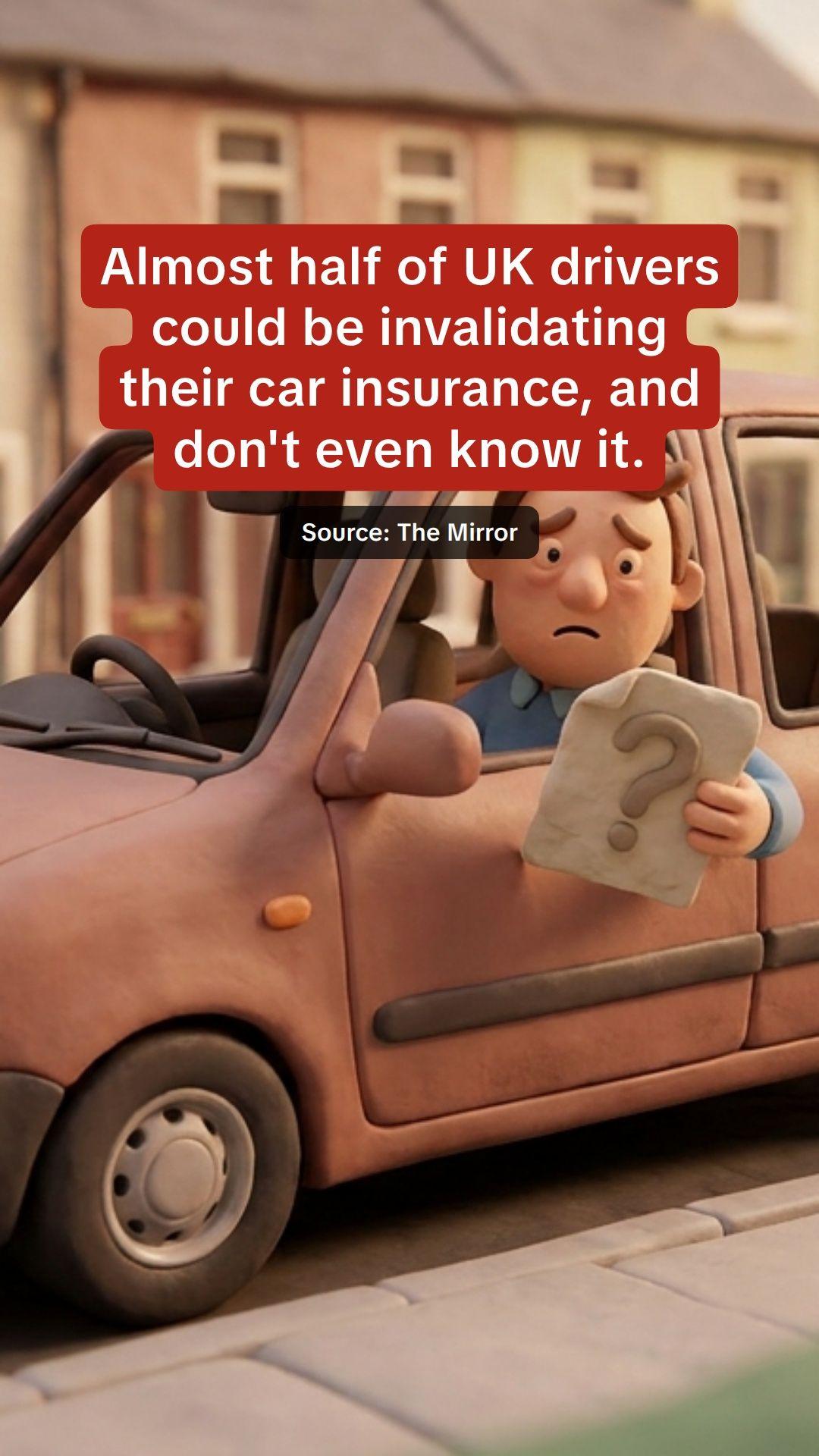
You pay the premium, the certificate lands in your inbox, and you assume you are covered. For most drivers that is true. But insurance is a contract built on the information you give, and a small, common slip can give an insurer grounds to reduce a claim, cancel a policy or refuse to pay at all.
That is the warning behind a recent Mirror story, headlined "Major mistake 'almost half' of all UK drivers make on the roads". It reports experts saying that a widespread driving-related error could invalidate car insurance. The piece is worth reading in full. This post looks at the wider picture: how cover actually becomes invalid, what the law says, and what you can sensibly check.
This is general information, not legal or financial advice. Your own policy wording and circumstances matter, so check them with your insurer, broker or an independent adviser.
What the story is really about
The Mirror's headline claim is that nearly half of UK drivers make a mistake that could put their insurance at risk. I will not put numbers on it beyond what the source says, because the figure belongs to that report.
The underlying point is familiar to anyone in the industry. Policies are priced on the details you disclose and the way you tell the insurer you will use the car. When reality drifts away from what is on your documents, the insurer may argue it was not given a fair picture. Most of the time the drift is innocent. You change job, move house, fit a new part or let a family member drive, and you do not think to mention it.
If you are comparing this with other cases we have covered, our posts on car insurance void over stickers and a car insurance typo leading to a conviction show how small details can have large consequences.
Why it matters more than you might think
Car insurance is a legal requirement, not just a financial safeguard. Under the Road Traffic Act 1988, you must have at least third-party cover to use a vehicle on a road or in a public place. The stakes of getting it wrong are high.
The financial hit. If an insurer declines or reduces a claim, you may be left with your own repair bill. If you are at fault in an accident involving injury or serious damage, the amounts can run far beyond what most households could absorb.
The legal hit. Driving without valid insurance is an offence under section 143 of the Road Traffic Act 1988. A fixed penalty is commonly £300 and 6 penalty points. If a case goes to court, the fine can be higher and disqualification is possible. Whether an insurer's decision turns a policy into "no insurance" for criminal purposes depends on the facts, and that is exactly the kind of situation where you would want professional advice.
The knock-on effects. A cancelled or voided policy usually has to be declared when you apply for cover in future. That can push premiums up, or make some insurers reluctant to quote.
The legal angle: how an insurer can actually reduce or refuse a claim
Insurers cannot simply wave away a claim because they would rather not pay. For private motorists, the key law is the Consumer Insurance (Disclosure and Representations) Act 2012, often shortened to CIDRA.
The duty to take reasonable care
Under CIDRA, a consumer must take reasonable care not to make a misrepresentation when taking out, renewing or changing a policy. Misrepresenting something does not automatically void your cover. What the insurer can do depends on how the misrepresentation is classed.
- Deliberate or reckless. The insurer may avoid the policy, refuse all claims and keep the premiums, unless it would be unfair to do so.
- Careless. The remedy has to be proportionate. In broad terms, if the insurer would not have offered cover at all, it can avoid the policy and return the premiums. If it would have offered cover on different terms, those terms may be applied. If it would have charged more, it may reduce the claim in proportion.
- Innocent. If you took reasonable care, the insurer generally has no remedy.
So "invalid" is rarely all or nothing. A careless mistake about, say, your annual mileage might lead to a proportionate reduction rather than a flat refusal. That said, insurers can and do take a hard line, and disputes over what counts as careless or reckless are common.
Changes after the policy starts
CIDRA mainly concerns what you say at the point of buying or renewing. After that, your policy terms decide what you must report mid-term. Most policies expect you to tell the insurer about certain changes, such as a new address, new vehicle modifications or a change in how you use the car. Failing to do so can breach the terms and give the insurer a basis to act. Read your policy's conditions rather than assuming.
Third-party protection
Even if your own cover is in doubt, innocent third parties are not left stranded. Under the Road Traffic Act, an insurer that issued a policy can generally still be required to satisfy a judgment for injury or damage to others arising from the use of the vehicle. If there is no insurer to pay, the Motor Insurers' Bureau acts as a safety net for victims of uninsured and untraced drivers.
The catch is that the insurer may then seek to recover its outlay from you. The right to compensation for victims does not mean you walk away unscathed.
The kinds of mistakes that put cover at risk
The Mirror's piece centres on one headline error, but several everyday issues tend to crop up in disputes about validity. Check your own situation against these.
- Class of use. Social, domestic and pleasure cover does not usually include commuting. Commuting cover does not always include business use, such as driving between client sites or carrying goods for hire. Delivery and gig work often need specific cover.
- Who drives. Letting someone drive who is not named, or not covered under your policy's driving-other-cars or any-driver terms, can be a problem. Be wary of "fronting", where a parent is listed as main driver to cut a young driver's premium while the young driver actually uses the car. Insurers treat that very seriously.
- Modifications. Alloys, engine remaps, suspension changes and some cosmetic alterations can all affect risk. Insurers often want to know about anything that changes how the car performs, looks or could be stolen.
- Address and parking. Where the car is kept overnight affects price. Telling an insurer you park on a driveway when you park on the street, or using a relative's postcode, can lead to trouble.
- Mileage. Underestimating annual mileage to lower a quote can be treated as a misrepresentation.
- Convictions and claims. Omitted penalty points, previous claims or cautions can unravel a policy if discovered.
- Personal details. Even occupation, job title and the type of licence can alter a premium.
- Mistakes in data entry. Wrong dates of birth, misspelt names or incorrect registrations can matter, as our typo conviction post shows.
What drivers should know: practical steps
- Read your policy schedule, not just the headline price. The schedule lists the details the insurer relied on. Check each one at renewal and whenever circumstances change.
- Ask yourself the "has anything changed?" questions. New job, new commute, new address, new driver, new modification, new parking arrangement. If the answer is yes to any, contact your insurer or broker.
- Be precise when answering application questions. If you are unsure whether something is relevant, say so and ask. Under CIDRA, insurers are expected to ask clear questions, and you are expected to answer honestly.
- Do not shave the truth to save money. Cheaper quotes based on inaccurate information are false economy. The saving is small compared with a rejected claim.
- Keep records. Save emails, documents and confirmation of any changes you have reported. If a dispute arises, evidence that you told the insurer is valuable.
- Check your cover on the Motor Insurance Database. The Motor Insurers' Bureau offers a way to check whether a vehicle is shown as insured on the database. Remember that appearing on the database does not guarantee a claim will be paid.
- Be careful lending your car. Check whether your policy covers other drivers and on what terms before handing over the keys.
- Do not simply let a policy lapse. Under continuous insurance enforcement rules, a registered keeper of a vehicle without insurance, even one that is parked and unused, can face a penalty unless it has a valid Statutory Off Road Notification (SORN) in place.
If your insurer says your cover is invalid
Do not panic, and do not simply accept it.
- Ask for the decision in writing, including the reason and which policy term or legal provision they rely on.
- Check whether the remedy is proportionate. Under CIDRA, an insurer that alleges a careless error should apply a remedy that matches what it would have done had it known the truth.
- Use the complaints process. Insurers must have one. If you remain unhappy after their final response, or eight weeks pass without a resolution, you can usually take the complaint to the Financial Ombudsman Service, which is free for consumers.
- Seek advice from a solicitor, Citizens Advice or a consumer organisation if the sum or consequence is large. If a criminal allegation of driving uninsured has been made, professional advice becomes much more important.
Looking ahead
Insurers and enforcement authorities increasingly have data on their side. ANPR cameras, the Motor Insurance Database and cross-checks with DVLA records make it easier to spot vehicles with no insurance, and comparison sites and insurers share more data than they used to. As telematics and connected-car data spread, insurers will find it simpler to compare declared use with actual use.
None of that means drivers should be paranoid. It means the gap between what a policy says and how a car is really used is more likely to be noticed than it once was. Nearly half of drivers apparently slip up somewhere, so a few minutes with your policy documents is time well spent.
For most motorists, the best defence is boring but effective: tell the truth, update your insurer when life changes, and keep your paperwork in order. If your insurer ever tells you your policy is void, treat it as the start of a conversation rather than the end of one, and make use of the complaints and ombudsman routes open to you.
For the original reporting, see the Mirror article, "Major mistake 'almost half' of all UK drivers make on the roads". For authoritative guidance, consult GOV.UK, the Motor Insurers' Bureau and the Financial Ombudsman Service.
Written by
The Parking Ticket Pal Editorial Team
Source-checked parking guidance