
Cancer Patient Faces £680 Hospital Parking Charges
A Portsmouth cancer patient received £680 in hospital parking charges. We examine the case, cancellation requests and motorists’ rights to challenge PCNs.

The Parking Ticket Pal Editorial Team
8 October 2026
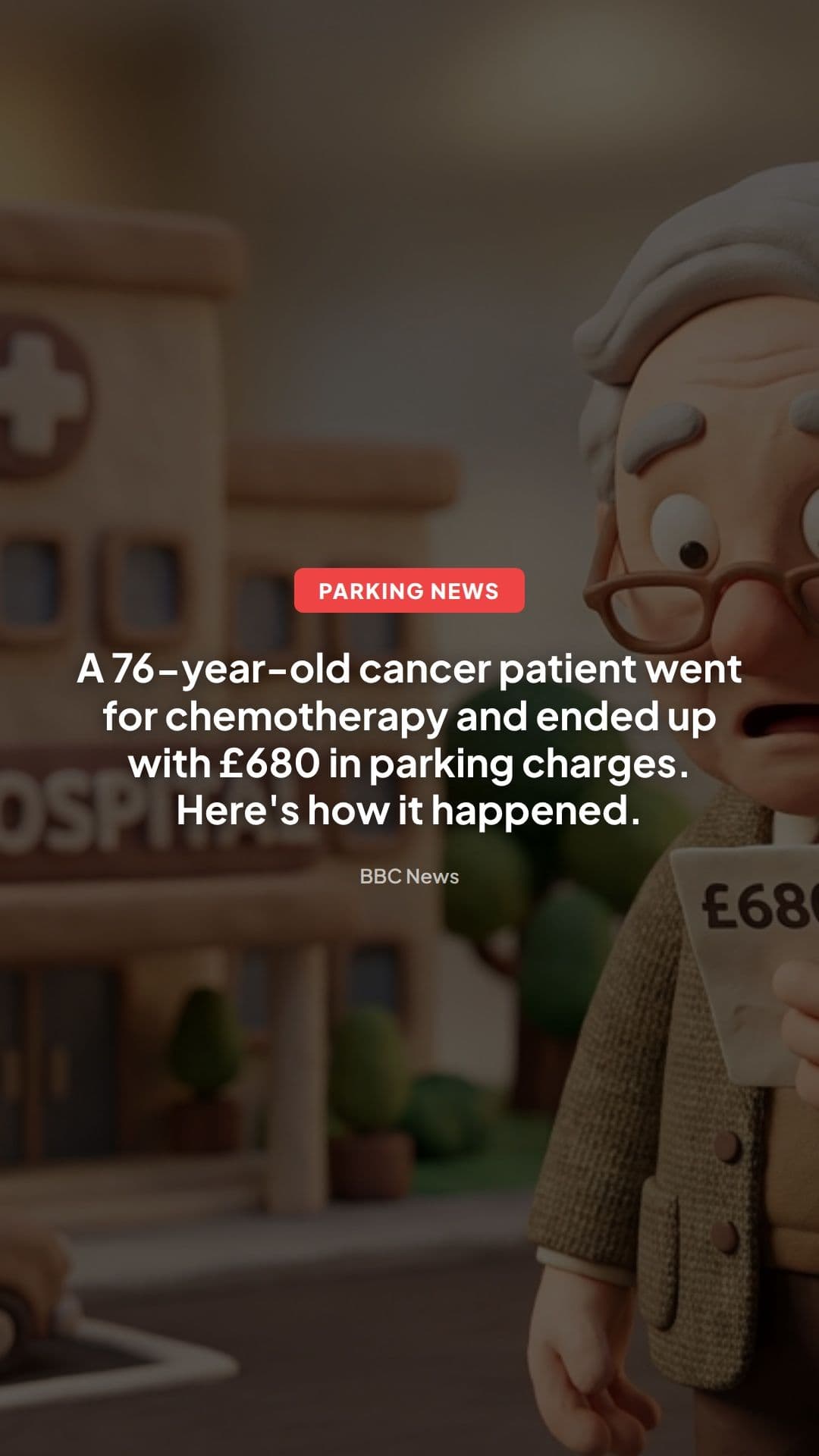
Cancer patient hit with £680 in parking charges: what the Portsmouth case tells us about hospital car parks
Imagine being 76, in the middle of cancer treatment, and finding that every trip to hospital has quietly added to a bill. No speeding, no dangerous driving, just turning up for care you cannot skip. That is the situation a patient described at Queen Alexandra Hospital in Portsmouth, and it is one that many people with long-term conditions will recognise.
Here is what we know, why it keeps happening, and what the rules say about charges on hospital land.
What happened
According to BBC News, a 76-year-old man attending cancer treatment at Queen Alexandra Hospital said he received four parking notices totalling £680. The hospital trust has since asked for the charges to be cancelled.
The BBC report is the source for these facts, and the details beyond that summary are not something we can fill in. Still, a few points are worth drawing out.
First, the arithmetic. £680 across four notices averages £170 each. That is the sort of figure people often associate with private parking charges rather than a council penalty, though we cannot say from the summary how each individual notice was calculated or who issued it.
Second, four notices suggests a pattern rather than a one-off slip. Treatment such as radiotherapy or chemotherapy usually involves repeated visits. If something goes wrong on the first visit, such as a payment not registering, a misunderstanding about a concession, or a number plate entered incorrectly, it can go wrong again on the next, and the next. Notices then arrive by post days or weeks later, by which time more visits have already happened.
Third, the trust's intervention matters. When a hospital trust itself asks for charges to be cancelled, it suggests the circumstances were not what the car park system is meant to catch. It does not guarantee the outcome, particularly if a separate company operates the car park, but it is a strong signal.
Why it matters
Hospital parking is a long-running sore point. Patients cannot choose their appointment time, cannot always predict how long they will be, and are often anxious, unwell or in pain. That is a poor match for systems designed around fixed tariffs and tight time limits.
Several features make hospital sites particularly risky:
- Unpredictable stays. Clinics overrun. Scans are added on. A "quick" appointment can become half a day.
- Pay-on-exit versus pay-on-arrival. Many sites use number plate recognition (ANPR) rather than tickets, so the first you know of a problem may be a letter.
- Concession schemes that need registering. Free or reduced parking often requires action at the time, such as registering a vehicle with a machine or reception.
- Several operators and zones. Large hospital estates can have different rules in different car parks, including staff-only areas, drop-off bays and patient parking.
- Vulnerable users. Older patients, those on strong medication and people who are simply exhausted are less likely to spot a sign or navigate an app.
We have covered similar cases before. If you want to see how these stories tend to play out, our posts on hospital parking charges cancelled after an NHS apology and Hull hospital parking fines revoked after patient outcry are good companions to this one.
The legal angle
The first question in any case like this is: what kind of charge is it? The rules differ sharply.
Private parking charges
Many hospital car parks are run by private operators under contract with the trust. Their charges are not fines. They are a contractual claim, based on the idea that by parking you accepted the terms on the signs. The Supreme Court confirmed in ParkingEye v Beavis [2015] UKSC 67 that a parking charge can be enforceable if it is clearly signed and not extravagant, because the operator has a legitimate interest in managing the space.
If the operator does not know who was driving, it can pursue the registered keeper only if it meets the conditions in Schedule 4 of the Protection of Freedoms Act 2012. These include strict rules on the content and timing of the notice to keeper. Operators that fall short can find their claim fails against the keeper, though that is a technical point and each case turns on its own facts.
If you want the wider picture, see private parking charges: do you have to pay?.
Appeals
Operators that are members of an accredited trade association must offer an appeals route. Typically you first appeal to the operator. If it rejects the appeal, you may be able to go to an independent appeals service, which depends on the trade body the operator belongs to. Our guides on BPA versus IPC membership and the POPLA appeals process explain the difference.
Disability and the Equality Act
Under the Equality Act 2010, a person with cancer is treated as having a disability from the point of diagnosis. Service providers have a duty to make reasonable adjustments. Whether and how that applies to a particular car park, and to a particular operator, is a question for each case, and nobody should assume a result. But it is one reason mitigating circumstances such as medical treatment can carry real weight when charges are challenged.
NHS guidance
In England, NHS guidance on hospital car parking encourages trusts to offer concessions to certain groups, such as disabled people and frequent outpatient attenders. The exact scheme and eligibility vary by trust, and guidance is not the same as an automatic legal right to have a charge cancelled. Scotland and Wales have separate arrangements, with free hospital parking widely in place. If you are unsure what applies at your hospital, the trust's own website or patient advice team is the place to check.
The wider rules
The government has been working towards a single Private Parking Code of Practice following the Parking (Code of Practice) Act 2019, with reported measures including a cap on charges and a grace period. We have explained these in new private parking rules: £100 cap and 10 minute grace. Because the detail has changed over time, check the latest government guidance rather than relying on any single article.
What drivers should know
This is general information, not legal advice, and every case is different. With that in mind, here are the points that tend to matter most.
1. Ask about concessions before or at your first visit. If you or a relative will be attending repeated appointments, ask the department or the hospital's patient services team what parking support exists. Ask specifically how it works: is it a permit, a plate registration, a machine, a form?
2. Find out who runs the car park. Signs at the entrance usually name the operator and state the terms. Knowing whether it is the trust or a contractor tells you who to contact and which appeals route is likely to apply.
3. Keep records. Hold on to payment receipts, appointment letters, clinic cards and any emails. Take photos of signs and payment machines if something looks unclear or broken. Evidence of treatment dates can be vital if a notice arrives later.
4. Do not ignore letters. Even when you think a charge is unfair, unanswered notices can escalate to reminders, debt recovery letters and in some cases a county court claim. Ignoring them rarely makes them go away. If a letter is a formal court document, seek independent advice promptly.
5. Appeal in writing and stick to facts. Explain the circumstances calmly: the dates, the treatment, what went wrong and any supporting evidence. Ask for the charges to be cancelled and keep a copy. If one appeal covers several notices, say so clearly and list them.
6. Contact the trust as well as the operator. The Portsmouth case shows why. If a trust is willing to ask for charges to be cancelled, a prompt complaint through the hospital's patient advice and liaison service (often called PALS) can be a useful route alongside a formal appeal.
7. Use independent help where the stakes are high. If several charges have built up, or you are being threatened with court action, free advice from organisations such as Citizens Advice can help you understand your position. Our post on what patients can do about hospital parking fines covers a similar scenario in more detail.
8. Check the emergency and drop-off rules. Hospital sites often have specific rules for emergency bays and drop-off areas. Our guide to hospital emergency bay parking rules is worth a look if you are ferrying someone to an appointment.
9. Beware of letters you did not expect. If a notice relates to a date when you were not there, or a vehicle you no longer own, query it rather than paying. Mistakes with number plates are not unknown.
Looking ahead
Cases like this tend to follow a pattern: a story gains attention, the trust steps in, and the charges are dropped. That is a good result for the individual, but it also exposes a gap. A patient should not need media coverage for common sense to prevail.
Several things could reduce the chance of repeat cases:
- Clearer, simpler concession schemes. If free or reduced parking depends on a patient remembering to register a vehicle, the system will keep catching people who are ill or tired.
- Better coordination between trusts and operators. Where a contractor issues the charges, the trust has a reputational stake. Clear contract terms on mitigating circumstances and easy cancellation routes would help.
- A consistent national code. If the long-awaited private parking code arrives in full, it should bring more predictability on charges, grace periods and appeals, which is particularly valuable in settings where drivers are under stress.
- Technology that works for patients. ANPR can be convenient, but it needs reliable ways for patients to link appointments, concessions and plates, rather than relying on them to chase errors after the fact.
For now, the practical lesson is to treat hospital parking like any other regulated place you will visit repeatedly: ask early, document everything, and respond to every notice. And if you are caring for someone going through treatment, it is worth doing that homework on their behalf before the first appointment, not after the fourth letter.
The Portsmouth patient's case reached a sensible next step, with the trust asking for the £680 to be cancelled. The wider hope is that fewer people have to reach it that way.
This article is general information about UK parking and motoring rules and is not legal advice. For guidance on your own situation, speak to the car park operator, your hospital trust, or an independent adviser such as Citizens Advice.
Written by
The Parking Ticket Pal Editorial Team
Source-checked parking guidance
Ready to Challenge Your Ticket?
Let our AI analyse your PCN and generate a professional appeal letter in minutes.
Start Free Appeal