
Camden Parking Wardens Win £18-an-Hour Pay Rise
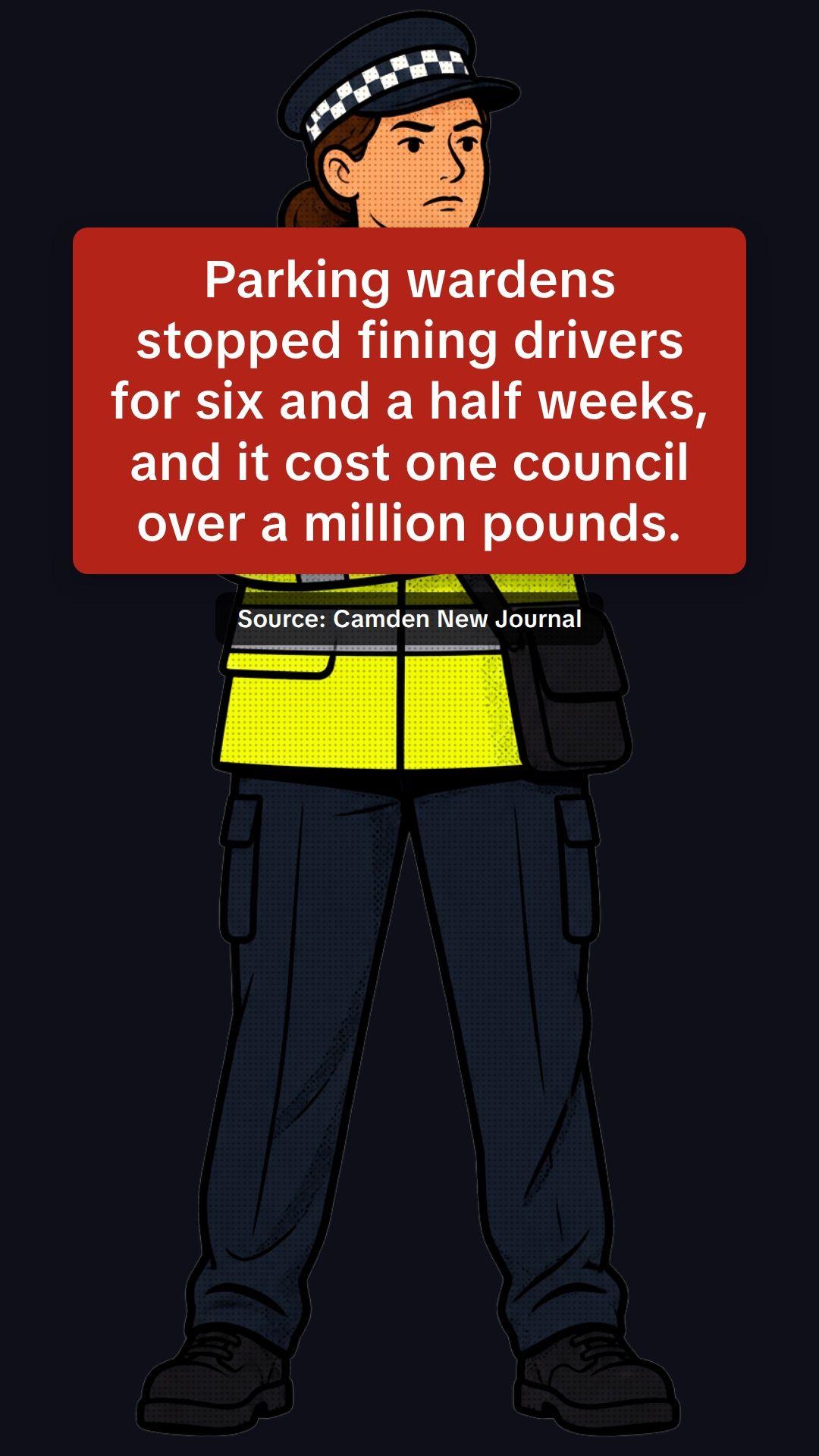
Camden parking wardens have ended a six-and-a-half-week strike after winning an £18 hourly wage, as the council lost over £1m in enforcement revenue.

The Parking Ticket Pal Editorial Team
16 November 202610 min read
Camden's Parking Warden Strike Is Over: What the £1 Million Hole in Enforcement Tells Drivers
For six and a half weeks, a few of Camden's busiest streets were patrolled by rather fewer parking wardens than usual. Some drivers will have noticed. Others will have quietly parked on a single yellow, glanced up and down the road, and thought, "Nobody's checking."
That dispute has now ended. According to the Camden New Journal, wardens employed by NSL won a pay rise to £18 an hour, rising to £19.10 next year. The same report says the strike cost Camden Council more than £1 million in lost enforcement revenue.
For anyone who parks in north London, the story raises useful questions. What does a pause in enforcement actually mean legally? Can a ticket still catch up with you? And what does the economics of parking enforcement say about how councils behave? We touched on the strike itself in our earlier piece on what the Camden traffic warden strike meant for parking. Now that it has been settled, here is what the outcome tells us.
What Happened
NSL is the contractor that provides civil enforcement officers, the formal name for parking wardens, to Camden Council. The wardens took strike action over pay for just over six weeks. The dispute ended when they secured:
- £18 an hour now
- £19.10 an hour next year
That second figure is a rise of around 6% on the first, on simple arithmetic. It was presented by the union as a win.
The headline figure for drivers is the reported £1 million-plus in lost enforcement revenue for the council. Spread over six and a half weeks, that is very roughly £150,000 a week. That is a back-of-envelope division of the reported total, not an official weekly figure. It does show how much money a functioning enforcement operation can generate, and how quickly it disappears when wardens stop patrolling.
Why It Matters
Parking enforcement is outsourced, and that shapes everything
Many councils do not employ wardens directly. They contract the work to a private company, which employs the officers on a contract that sets standards and performance expectations. That arrangement has two consequences:
- Pay disputes sit between two parties. The council wants enforcement. The contractor sets wages within its contract price. When the wardens strike, the council loses the service, and the contractor's relationship with its client is under strain.
- Wage rises feed into contract costs. A higher hourly rate has to be absorbed somewhere, either by the contractor's margin or in future contract pricing. That may matter at renewal time.
None of that is a reason to feel sorry for councils, but it explains why a local pay dispute can become a six-figure, then seven-figure, problem.
The revenue point is uncomfortable
A £1 million loss in just over six weeks is a stark reminder that parking enforcement is a significant income stream. Drivers often suspect that enforcement is about money rather than traffic management. Councils insist that it is about keeping roads safe and moving. Both things can be true, but a reported loss of that scale makes the financial dimension hard to ignore.
There is a legal guardrail. Under section 55 of the Road Traffic Regulation Act 1984, any surplus from on-street parking must be spent on specified transport and environmental purposes rather than disappearing into general funds. It is worth knowing when you read headlines about council parking income. For wider context, see our look at English councils' parking surplus.
Enforcement gaps change driver behaviour
When wardens are absent, some people park more casually, and the effects tend to be felt by others: blocked dropped kerbs, cars on bus stops, bays occupied by people with no permit, and delivery vehicles struggling to get through. Wardens exist partly to prevent exactly that. A strike tests the assumption that the rules largely police themselves.
The Legal Angle
A strike does not suspend the rules
This is the key point. Parking restrictions are created by traffic orders and shown by signs and road markings. A strike among wardens does not repeal, pause or amend any of them. A single yellow line is still a single yellow line, and a resident bay still belongs to permit holders, whether or not anyone is patrolling.
The rules that apply to on-street civil enforcement in England come from Part 6 of the Traffic Management Act 2004 and its associated regulations. They set out how a Penalty Charge Notice (PCN) must be issued, what it must contain, and how you can challenge it. Councils and their contractors have to follow those procedures, and the process depends on a civil enforcement officer or an approved camera recording a contravention.
Does a quiet period mean no fines?
For wardens' patrols, in practice often yes: if no officer observes a contravention, no PCN is issued on the street. But two cautions apply.
- Cameras are a separate matter. Enforcement of bus lanes, certain moving traffic contraventions and some other restrictions is often done by approved camera devices rather than patrols. A warden strike would not normally affect that, though it depends on how a council has set up its operation.
- A missing PCN is not a legal green light. Nothing about a strike creates a defence if a ticket is later properly issued. It also does not create an amnesty for tickets already issued before the dispute.
Existing PCNs are not affected
If you received a PCN before or during the strike, the usual timelines and rights still apply. Typically that means an early-payment discount if you pay within the stated period, the right to make an informal challenge, and the right to make formal representations once a Notice to Owner arrives. The exact process is set out on the PCN itself.
If you appeal and are refused, you can generally take the matter to an independent tribunal. For councils in London, including Camden, that is London Tribunals. Outside London it is the Traffic Penalty Tribunal. The tribunal looks at whether the contravention occurred and whether the PCN was properly issued. It does not look at whether the council needed the money. For a primer on the codes you may see on a ticket, our guide to PCN codes is a good place to start.
What Drivers Should Know
This is general information, not advice on any specific ticket. With that said, here are some practical takeaways.
1. Do not read enforcement gaps as permission. Restrictions exist for reasons such as keeping junctions clear, protecting dropped kerbs and keeping bus stops usable. The restriction applies at all times it is in force, and enforcement can return without notice.
2. Keep evidence if you do get a PCN. Photos of the signs, road markings, and the position of your vehicle can matter. So can payment confirmations. If you pay by app, keep the receipt or confirmation. Our post on PayByPhone and app errors explains why.
3. Read the PCN carefully. Check the contravention code, the date, the time, the location and your vehicle details. Errors on the notice can matter, but whether they are significant enough to cancel a ticket depends on the facts. Our guide to informal PCN appeals can help you understand the process.
4. Mind the deadlines. Discount periods and challenge windows are strict. If you are unsure which applies, check the wording on the notice and the council's own guidance.
5. Understand the difference between public and private parking. A council PCN is not the same as a private parking charge, and the rules, appeals bodies and consequences differ. If you are unsure which you have received, see our explainer on council PCNs versus private charges.
6. Be wary of timing arguments. "There were no wardens that week" is not a defence to a valid PCN. If a PCN was issued correctly, the circumstances of enforcement elsewhere in the borough make no difference to your case.
Looking Ahead
Pay rises may reshape contracts
The settlement is a data point for other councils and contractors. Warden pay is a key cost in any enforcement contract, and a visible, successful dispute may encourage staff elsewhere to press their own claims. Whether that happens is speculation, but it would not be surprising if other contractors watched the outcome closely.
Expect enforcement to resume at full strength
The sums reportedly lost during the strike give councils an obvious incentive to get patrols back to normal quickly. Drivers should expect that. Camden has not announced a crackdown as far as the source reports, and nothing suggests an enforcement blitz is planned. But a council that has lost significant income will be keen to restore normal operations, and normal operations in busy parts of north London mean regular patrols.
The bigger enforcement picture is changing anyway
Enforcement is increasingly camera-led and technology-driven, which makes it less dependent on individual patrols. There is also continuing debate about PCN levels and about how councils should use parking income. Our coverage of rising London PCN rates covers one part of that. The strike shows both how reliant councils have been on wardens, and why many are looking at technology to reduce that reliance.
Fair pay and fair enforcement can both be true
It is easy to see this story as wardens against drivers. It is more accurate to see it as workers in a tough public-facing job winning a pay settlement, and a council discovering what its enforcement operation is worth. Drivers who park lawfully have nothing to fear from the outcome. Those who rely on a quiet street to cut corners should remember that the rules never went away.
The Bottom Line
The Camden dispute ended with wardens on £18 an hour, heading for £19.10, and a council reportedly short by more than £1 million. For drivers, the lessons are straightforward: restrictions stay in force even when patrols thin out, existing PCNs keep their deadlines and appeal rights, and enforcement tends to return quickly. If you are issued a ticket, read it carefully, gather your evidence, and use the official challenge routes. If the stakes are high, consider getting professional advice.
This article is general information about UK parking rules and is not legal advice. For guidance on a specific penalty charge notice, check the notice itself, your council's website, and the relevant tribunal's official guidance.
Written by
The Parking Ticket Pal Editorial Team
Source-checked parking guidance