
Bristol Couple Hit by £40k in Wrongful Traffic Fines
A Bristol couple faced £40,000 in parking and Clean Air Zone penalties linked to their address. We explain bailiff action, liability and how to fight errors.

The Parking Ticket Pal Editorial Team
27 November 202611 min read
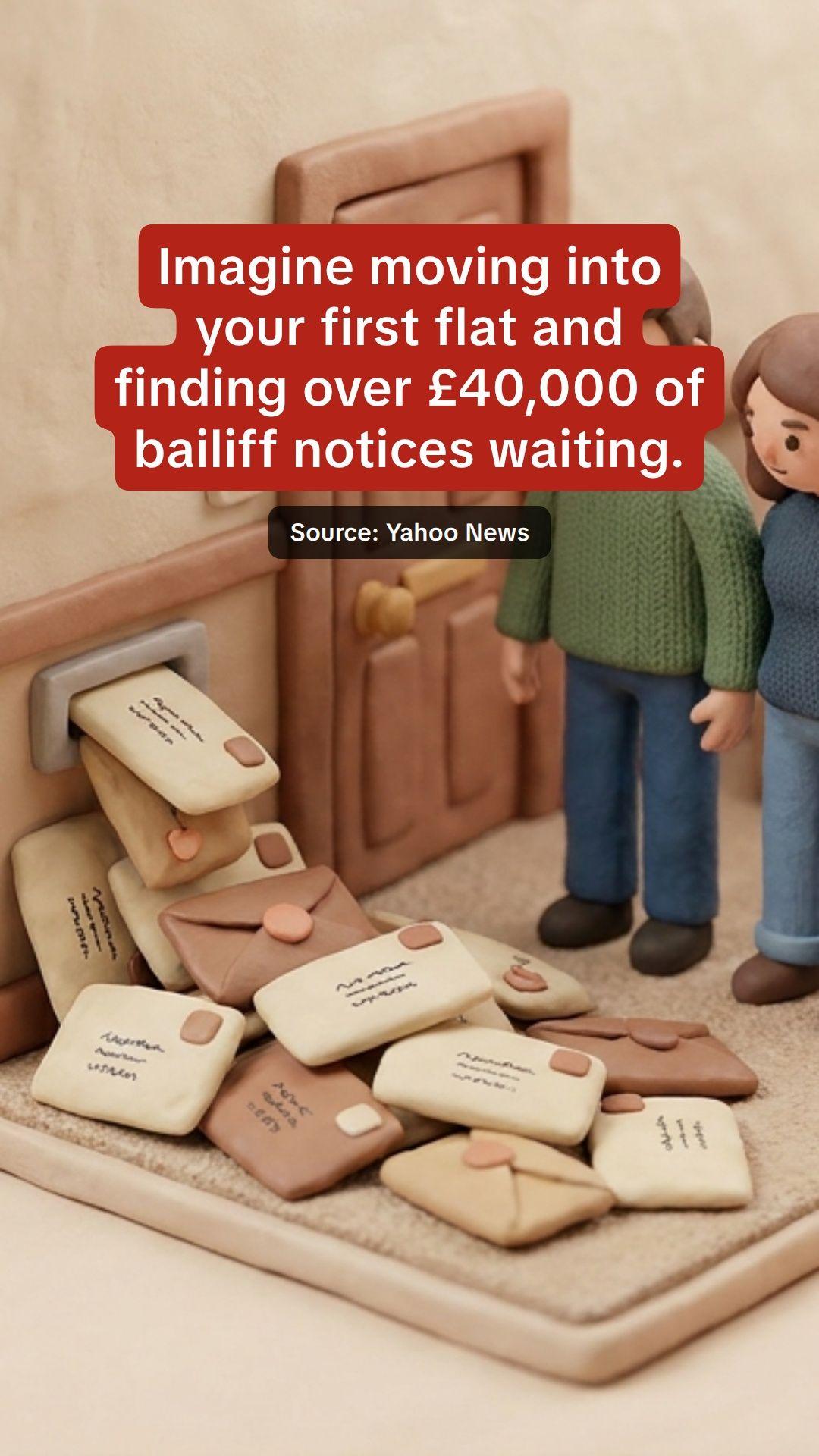
Imagine opening the door to find an enforcement agent asking about a debt of more than £40,000. Now imagine none of it relates to you. No car, no trip to the zone, no parking space you ever used. That, in essence, is what happened to a Bristol couple, according to a Yahoo News report. For months they were pursued over parking penalties and Clean Air Zone (CAZ) charges that appear to have been linked to other people using their address.
It sounds like an extreme outlier, but the mechanics behind it are ordinary. They are worth understanding, because the same system that can catch a careless driver can also catch someone who has never owned the vehicle in question.
What happened
The reported facts are limited, so it is worth being clear about what we know. A Bristol couple were pursued for more than £40,000 in traffic penalties. These included parking violations and Clean Air Zone charges. The apparent link was other people using their address, rather than anything the couple themselves had done. The pursuit involved bailiffs, now properly called enforcement agents, and continued for months.
We do not know from the report exactly how each vehicle ended up tied to the address, and it would be wrong to guess. What we can do is look at how penalties usually reach an address, and how a problem like this can build until it becomes a five-figure sum.
Why this matters
Penalties follow records, not people
Most traffic enforcement in the UK is automated. A camera or warden records a vehicle registration mark (VRM). The enforcing authority then asks the DVLA who the registered keeper is, and writes to the address on file. At no point does anyone check that the person living there is the person who drove.
That works well when the DVLA record is accurate. It works badly when:
- a vehicle is registered to an address with no real connection to the driver
- records have not been updated after a sale, a move or a change of keeper
- plates have been cloned and the penalties are sent to the genuine keeper
- someone has deliberately used another person's address
Any of these can send a stream of penalties to a household that has never seen the vehicle. If the letters are ignored, mislaid or sent to the wrong name, the penalties escalate without anyone realising. For the Bristol couple's case, we simply do not know which explanation applies.
How a few penalties become £40,000
Penalty charge notices (PCNs) are not static. Under the usual council process, the sum rises at each stage if there is no payment or challenge. A discounted amount for prompt payment is lost, a notice to owner follows, and then a charge certificate typically increases the penalty by 50%. If that is also unpaid, the debt can be registered with the court as an order for recovery, and a warrant allows enforcement agents to be instructed. Enforcement fees are then added on top.
Multiply that across many penalties, across both parking and CAZ charges, and the arithmetic of a very large demand becomes easier to see, even if the original vehicle was never yours. A big total does not prove that you owe it. It shows how quickly the machinery can add up.
The Bristol angle
Bristol's Clean Air Zone has been operating since late 2022, and charges apply to vehicles that do not meet the emissions standards for the zone. Enforcement is by cameras reading number plates, which makes it the kind of system where a keeper-record error travels quickly. Our own guide to Bristol's Clean Air Zone charges, exemptions and appeals covers the scheme in more detail.
The legal angle
This is general information, not legal advice. If you are facing a demand of this size, speak to an adviser.
Who is liable?
For council parking PCNs in England outside London, the framework is the Traffic Management Act 2004. London has its own legislation. In both, liability for a civil penalty generally rests with the registered keeper or owner of the vehicle, not whoever happened to be at the wheel. CAZ penalties are issued under separate road user charging regulations, but again the starting point is the keeper.
The corollary is important. If you are not the keeper, and you can show the vehicle was never yours, the basis for liability falls away. The difficulty is proving it and getting the record corrected before enforcement escalates.
Grounds to challenge
At the formal stage, an owner can generally challenge on specific statutory grounds. Typical examples include that the person was never the owner at the relevant time, that the vehicle was taken without consent, or that the penalty was not valid. A challenge to the council can progress to an independent adjudicator. For parking and CAZ cases in England, that is generally the Traffic Penalty Tribunal, and in London, London Tribunals.
Where the case has already moved to the court registration stage, a person who says they never received the notices can generally use a statutory declaration. This is done on court form TE9, and a late version is available through TE7 where the deadline has passed. A successful declaration can have the registered debt set aside and the process restarted, which in turn allows the underlying grounds to be challenged. We explain the process in our posts on TE9 and TE7 statutory declarations and out-of-time declarations and the evidence that works.
What enforcement agents can and cannot do
Enforcement agents operate under the Tribunals, Courts and Enforcement Act 2007 and the Taking Control of Goods Regulations 2013. In broad terms:
- They must give written notice before taking control of goods, with a minimum notice period.
- They cannot force entry into a home to recover this kind of debt.
- They cannot lawfully take goods that belong to someone else, or items regarded as essential, such as basic household items needed for living.
- They are limited to fees set out in the regulations, which are applied at fixed stages.
Their instruction usually comes from the council, which remains responsible for the debt and for how its agents behave. If you want to know more about the process, see our explainers on warrants of control and controlled goods agreements.
What drivers and householders should know
You do not have to be a driver to get caught up in this, and you do not need to be at fault. The practical points below are general rather than specific to anyone's case.
1. Open and log everything
Letters addressed to someone you do not know are easy to bin. But penalty notices, even those in the wrong name, can be the first sign that a record is wrong. Keep them, photograph them and note the dates. If the same unfamiliar name or number plate keeps appearing, treat it as a pattern.
2. Respond in writing, early
If you receive a PCN or CAZ penalty for a vehicle you have never owned, respond in writing and state clearly that you are not the keeper and do not know the vehicle. Ask the issuing authority for the registration number, the date, and the keeper details it has on record. Keep copies and proof of postage. A dated paper trail is often what makes the difference later.
3. Check the DVLA record
Ask the DVLA to investigate if a vehicle appears to be registered to your address wrongly. Depending on the circumstances, it may also be appropriate to report the matter to the police or Action Fraud, particularly if you suspect deliberate misuse of your address or identity. The DVLA and police are the right sources for the specific steps.
4. Do not ignore bailiff letters, but do not pay in panic
An enforcement notice is a serious step and should not be ignored. But paying a large demand simply to make it stop is not the only option. Contact the enforcement firm and the council, quote the reference, and say in writing that you dispute liability. Ask for a clear breakdown of the debt, the underlying PCNs, and the dates. If the case has already reached the court registration stage, consider whether a statutory declaration is available and what the deadlines are.
5. Know what you can say at the door
You are not obliged to let an enforcement agent into your home for this type of debt, and you should not sign anything you do not understand. Ask for identification and the authority for the visit. Take notes, and remain calm and polite.
6. Complain if conduct falls short
If an enforcement agent's behaviour is improper, there is a route: the firm's own complaints process, then the council that instructed it, and then external bodies such as the Local Government and Social Care Ombudsman. Our guide to filing a complaint against bailiffs lays out the steps.
7. Get independent help
Where the sums involved are this large, independent advice is not a luxury. Citizens Advice, a debt charity or a solicitor can help assess the options, and the official government and court guidance on form TE9 is the authoritative source for deadlines. We have also covered similar situations in our post on bailiffs chasing an innocent motorist over ULEZ fines, and on cloned number plates, which are another route by which penalties reach the wrong door.
Looking ahead
This story highlights a quiet weakness in automated enforcement. Cameras are fast and cheap, and the systems behind them depend heavily on the quality of the keeper data. When that data is wrong, the burden of proving a negative lands on the householder, often only after the debt has grown through several stages.
There are reasons to think pressure for reform will build. Clean air schemes and camera-based enforcement are expanding in many places, which means more penalties and more opportunities for records to go astray. Councils and the DVLA face a straightforward question: how quickly and how easily can an innocent person get a record corrected, and what checks exist before a debt is passed to enforcement agents? There is also the question of whether a sum on this scale should prompt a human review before bailiffs are sent. None of this is settled, and we should be careful not to overstate what the Bristol case proves, as it is a single reported example.
What it does show is why paperwork matters. Whether you drive daily or never, the safest habits are to keep your own address records accurate, take unfamiliar post seriously, and challenge errors early, in writing, and with evidence. A mistake that is simple to fix in month one can be much harder to unpick after several months of escalation.
If you are in a situation like this, the key message is that being innocent is not the same as being safe. It has to be demonstrated, through the proper channels, and as early as possible.
This article is general information about UK parking and motoring rules and is not legal advice. For your own circumstances, consult official guidance or a qualified adviser.
Written by
The Parking Ticket Pal Editorial Team
Source-checked parking guidance