
Autumn Budget 2026: Fuel Duty Cut Extended to 2027
Autumn Budget 2026 extends the 5p fuel duty cut until July 2027. Find out what the move means for petrol and diesel drivers as pump prices rise nationally.

The Parking Ticket Pal Editorial Team
31 October 2026
Fuel Duty Relief Extended to July 2027: What 5p a Litre Really Means for Drivers
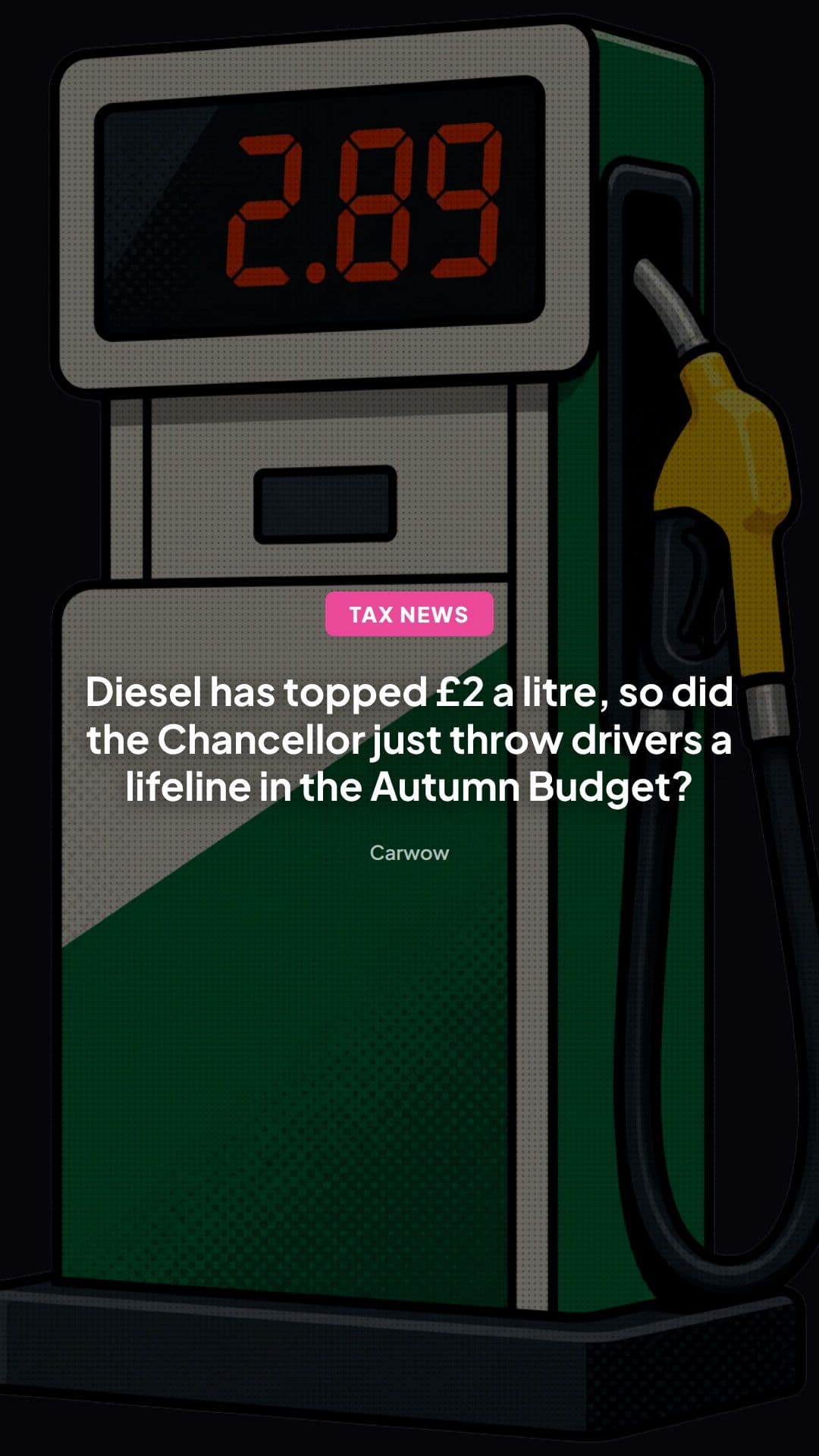
When diesel crosses £2 a litre, the number on the forecourt sign stops being a figure and becomes a mood. Drivers wince, fleet managers recalculate, and everyone looks to the Chancellor. So when the Autumn Budget 2026 arrived with a promise to keep the 5p-per-litre fuel duty reduction in place until July 2027, it was welcome news. It was also a reminder of how little control a Budget has over what you pay at the pump.
This post looks at what the extension does, why it feels smaller than the headline price, and what drivers and small businesses can do while it lasts.
What happened
According to Carwow's Autumn Budget 2026 roundup, the Government has extended the 5p-per-litre cut in fuel duty until July 2027. The stated aim is to limit the impact of elevated pump prices, with diesel reported to have topped £2 per litre.
Some background helps here. The 5p cut dates back to March 2022, when fuel prices surged and the then Chancellor trimmed the main rate of duty on petrol and diesel from 57.95p to 52.95p per litre. Since then, the cut has been held in place rather than reversed, alongside a long run of duty freezes. The extension means the "temporary" relief carries on rather than ending and sending the rate back to 57.95p.
Fuel duty is charged at the same main rate on petrol and diesel. That matters at a time when diesel is the headline grabber, because the tax treatment doesn't favour one fuel over the other. The price gap comes from the wholesale market, refining margins and retail pricing, not from duty.
Why it matters: the maths behind the 5p
The cut sounds modest, and in cash terms it is. But it is slightly bigger than it sounds, because VAT at 20% is charged on top of the duty-inclusive price. Removing 5p of duty therefore takes roughly 6p off the pump price.
That is simple arithmetic rather than a forecast, but it shows what the relief is worth:
- A 50-litre fill-up: around £3 less than it would cost without the cut.
- A driver filling up once a week: roughly £150 a year, assuming 50 litres each time and 52 fills.
- A van or HGV with a large tank: proportionally more, though commercial users face different tax treatment (more on that below).
Those figures are illustrations, not averages. Your own saving depends on how much fuel you buy.
Now look at what happens when diesel tops £2. Fuel duty is a fixed amount per litre. It does not rise when the wholesale price rises. VAT, however, is a percentage, so it takes a bigger bite as the price climbs. This is the quiet irony of high pump prices. The Treasury collects more VAT per litre when fuel is expensive, even though duty stays flat. That is why campaigners regularly call for a VAT cut on fuel rather than a duty cut, and why chancellors rarely oblige. A duty cut is cheaper to deliver and easier to reverse.
In short, the 5p extension stops a bad situation getting worse. It does not make diesel cheap. If anything, its biggest effect is avoiding a sudden 6p jump at the pumps when drivers are already stretched.
The legal angle: how fuel duty is set and what protects you
Where fuel duty comes from
Fuel duty is a statutory tax. The rates trace back to the Hydrocarbon Oil Duties Act 1979 and are changed through Finance Acts. A Budget announcement signals intent, but the cut only has legal force once it is written into legislation or an order. In practice, the Government usually acts quickly to give announcements effect, and retailers adjust their pricing to match.
What the cut does not guarantee
This is where many drivers misunderstand the policy. A duty cut lowers the tax a fuel supplier pays. It does not legally require a retailer to pass the saving on to you. Pump prices are set by retailers in a competitive market. There is no rule saying the 5p must appear as 5p, or 6p with VAT, on the forecourt sign.
If you feel prices are not following wholesale costs, the relevant bodies are the Competition and Markets Authority (CMA), which has looked at the sector, and the government's fuel price transparency measures. Consumers cannot enforce "fair" pricing individually, but they can compare prices and choose where to buy. Forecourt prices must be displayed accurately, and Trading Standards deals with misleading price signs.
Your rights at the pump
- Pay for what you dispense. Leaving a forecourt without paying can amount to the offence of making off without payment under section 3 of the Theft Act 1978, in England and Wales, if done dishonestly. Genuine mistakes, such as a card failure, are treated differently, but you should go back and sort it out promptly.
- Prices should be clear. The price per litre should be visible before you fill up, so check which fuel grade the sign refers to.
- Faulty pumps. If a pump seems to over-dispense or miscalculate, raise it with the staff and keep your receipt. Trading Standards is the escalation route.
For anyone who has found themselves caught out by forecourt rules, our post on Euro Car Parks petrol queue fines explains how parking-style charges can sneak into fuel stops.
What drivers should know: practical steps while the relief lasts
1. Don't assume the sign tells the whole story
Because the duty cut is already priced in, you won't see a dramatic fall at the pump from this extension. What you are getting is stability, not a discount. Compare the actual pence per litre at different stations, not the headline "Budget" message.
2. Use price comparison tools, but don't use them while driving
Price-checking apps and the government's fuel price transparency scheme make it easier to find cheaper stations. Use them before you set off, or while parked. Using a handheld phone while driving is an offence, and the rules are strict, even if you are stationary at lights with the engine running. Our guide to UK mobile phone driving laws in 2026 covers the hands-free position in detail.
3. Weigh up the detour
A station 5p a litre cheaper that is five miles out of your way will almost certainly cost you more in fuel than you save. As a rough rule, if the detour burns more than the saving on a typical fill, it is not worth it.
4. Think about how you drive
Smooth acceleration, sensible tyre pressures and removing unnecessary roof boxes or weight do more for your fuel bill than chasing small price differences. These habits help whether duty is cut or not.
5. Check the small print at supermarket and retail park forecourts
Some forecourts sit within car parks with their own rules, signage and cameras. If you plan to nip into the shop after filling up, make sure you are not breaching a time limit or leaving a pump area in a way that could trigger a private parking charge. Our guide to private parking charges and whether you have to pay explains the basics.
Business drivers and the self-employed
If you drive for work, fuel duty relief works a little differently.
- Mileage claims. If you use your own car for business and your employer pays approved mileage rates, the HMRC approved rate has long been 45p per mile for the first 10,000 business miles and 25p after that. Those rates do not move with pump prices, so a rise in diesel can squeeze employees who use their own vehicles.
- Company cars. HMRC publishes advisory fuel rates for company car drivers, updated periodically. They are worth checking if you reimburse or are reimbursed for business fuel.
- VAT-registered businesses. Whether you can reclaim input VAT on fuel depends on your business use and the method you use. This is an area where professional advice from an accountant is worth having, as the rules on private use are detailed.
If your business runs a fleet, the extension at least gives you predictability on duty through to July 2027, which makes budgeting easier.
The bigger picture: a temporary measure that has stopped feeling temporary
There is a wider story behind this extension. A "temporary" 5p cut introduced in 2022 is still here in 2026, and has now been pushed beyond a further year. Several things explain why governments keep extending it:
- Politics. Letting the cut expire means a visible price jump at the pump, with the Treasury blamed for it.
- Economics. Fuel affects almost every household and business, and sharp rises feed into inflation.
- The fiscal hole. Each extension costs the Exchequer revenue, which the Government has to find elsewhere. Anyone expecting duty to stay low forever should remember that the tax exists partly to fund public services, and it is also a lever on climate policy.
Meanwhile, the long-term direction of travel is toward electric vehicles. The Government has been developing a way to tax EV mileage as the fuel duty base shrinks. For a closer look, see our explainer on electric vehicle tax changes, VED and pay-per-mile. It is a reminder that the system fuel duty sits in is shifting, even if the pump price is your immediate concern.
Looking ahead
July 2027 is not far away, and the question to ask is what happens then. There are three broad possibilities:
- Another extension. This has become the pattern, particularly if pump prices stay high.
- A phased return. The Government could raise duty in steps, softening the impact.
- An abrupt end. This would mean a visible price jump unless wholesale prices fall in the meantime.
Which one happens depends on oil and gas markets, inflation, public finances and politics, and none of that can be predicted reliably. The sensible approach for drivers is to treat the 5p relief as helpful but not guaranteed, and to avoid building a household or business budget that depends on it surviving indefinitely.
Key takeaways
- The 5p cut is worth roughly 6p a litre at the pump once VAT is included, or around £3 on a 50-litre fill.
- Duty is fixed per litre, while VAT rises with the price, which is why £2 diesel hurts even with relief in place.
- A duty cut does not legally oblige retailers to pass on savings, so compare prices yourself.
- Don't use a handheld phone to compare prices while driving.
- Check any forecourt car park rules before you fill up and shop.
- Business drivers should check mileage and advisory fuel rates and take professional advice on VAT.
- Plan for July 2027 as a possible price pressure point, not a certainty either way.
This article is general information about UK motoring and tax rules, not legal or financial advice. For decisions affecting your own business or tax position, consult an accountant or visit GOV.UK.
Written by
The Parking Ticket Pal Editorial Team
Source-checked parking guidance
Ready to Challenge Your Ticket?
Let our AI analyse your PCN and generate a professional appeal letter in minutes.
Start Free Appeal