
A20 Speed Limit Fines: 66,000 Drivers May Be Owed Refunds
More than 66,000 motorists may have been fined after an allegedly unlawful A20 speed-limit change. We examine TfL's powers, refunds and appeal options.

The Parking Ticket Pal Editorial Team
2 November 2026
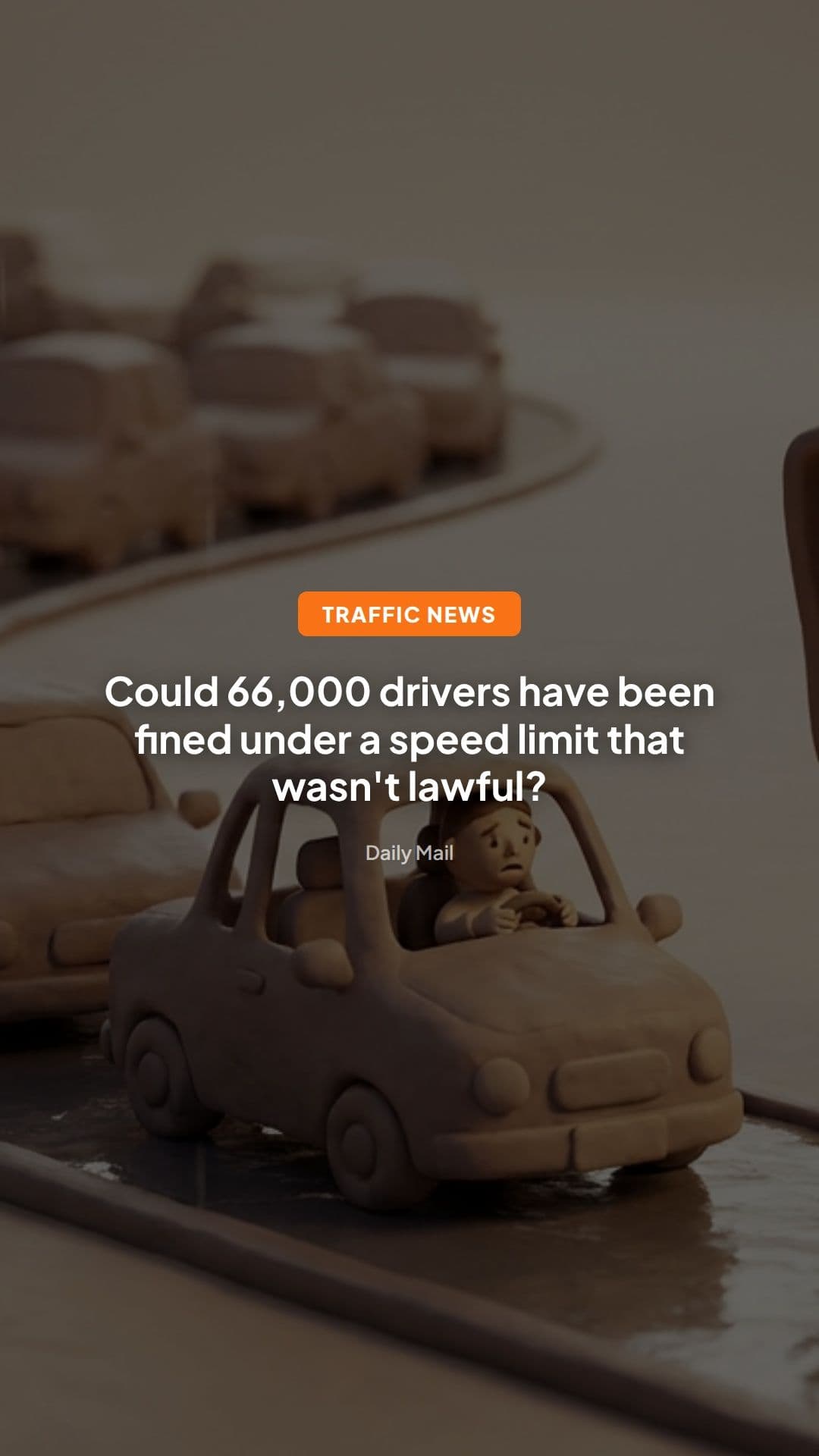
Sadiq Khan Accused of a Cover-Up Over A20 Speed Limits: What Drivers Need to Know
Imagine paying a speeding fine, accepting the points and moving on, only to learn later that the limit you were caught breaking may never have been properly in force. That is the allegation at the heart of a row over a stretch of the A20 in London, and it is one every driver should understand.
According to a Daily Mail report, the Mayor of London is accused of a cover-up over a temporary speed-limit change that was allegedly introduced unlawfully. The claim is that more than 66,000 motorists were wrongly fined, and that a single speed camera may have generated more than £6 million in fines for Transport for London (TfL).
These are allegations. This post looks at what has been reported, why speed-limit validity matters so much in law, and what drivers can sensibly do if they think they are affected.
What has been reported
The reported claims are:
- A temporary speed-limit change on the A20 was introduced without the proper legal footing.
- More than 66,000 people were fined as a result.
- A speed camera on the route may have brought in over £6 million for TfL.
- Sadiq Khan is accused of a cover-up over how the limit came about.
We have not seen the underlying documents, and the report does not settle whether the limit was lawfully made. Allegations of a "cover-up" are political accusations until tested. TfL and the Mayor's office are the right sources for their side of the story, and any official review or legal ruling would carry far more weight than headlines.
Even so, the story raises a question that matters well beyond one road: can you be lawfully punished for breaking a speed limit that was not lawfully created?
Why this matters beyond one camera
Speed cameras are among the most contentious pieces of roadside equipment in Britain. Supporters point to road safety. Critics argue that some cameras are placed or configured to raise revenue. Wherever you stand, the system only works if drivers can trust that the rules being enforced are valid.
Temporary limits are a particular pressure point. They are often introduced around roadworks, safety schemes or trials, and drivers may not know how long they are meant to last or what authority sits behind them. If the paperwork is wrong, the problem is not the speed on the sign. It is the legal basis for turning a breach into a penalty.
The scale alleged here also matters. Tens of thousands of fixed penalties add up to a large sum, and every one of those drivers faced more than a fine:
- Points on a licence, usually three for a standard speeding fixed penalty.
- Possible increases in insurance premiums.
- For some, a heightened risk of reaching the 12-point "totting up" threshold.
If a limit was unenforceable, the consequences did not stop at the money.
The legal angle: how a speed limit becomes enforceable
This is general information rather than legal advice, and the detail of any given case turns on its facts.
In Great Britain, speed limits on public roads are set under the Road Traffic Regulation Act 1984. The headline offence of exceeding a limit sits in section 89 of that Act. For the offence to bite, the limit itself must have been validly created and, in most cases, properly signed.
Traffic orders
Speed limits and other traffic restrictions are normally created by a traffic regulation order (TRO) made by the relevant traffic authority. In London, TfL is the traffic authority for the red route network, while boroughs handle most other roads. Temporary measures can be introduced under separate powers designed for short-term situations, and those powers come with conditions on how long they can run and what steps must be taken.
If an authority relies on a temporary mechanism but the limit stays in place beyond what that mechanism allows, or the procedural requirements were not met, a question arises over whether the order was valid. That kind of procedural argument is the sort of thing that would be at issue if the allegations in this story were tested.
Signs
Signs matter as much as orders. Under the 1984 Act and the Traffic Signs Regulations and General Directions 2016, speed limits must be indicated in prescribed ways. In many built-up areas, the presence of street lighting creates a default 30mph limit, with signs required to show any other limit. Where signing is missing, obscured or non-compliant, drivers have sometimes been able to challenge enforcement. We have covered a related point in our piece on overgrown hedges hiding road signs.
Orders and signs together
A limit that is validly made but badly signed can be challenged. A limit that is well signed but not validly made can be challenged too. The allegation in this story appears to concern the first step, whether the limit was lawfully introduced at all. Courts and tribunals take procedural defects in orders seriously, but the outcome in any particular case depends on the specific defect and the law at the time.
How fines are handled, and why refunds are not automatic
This is where many drivers' hopes may meet reality. The route to redress depends on what happened to the penalty.
If you paid a fixed penalty. Accepting a fixed penalty is treated as accepting the offence, and the points are recorded on your licence. There is no simple appeal process for a fixed penalty you have already paid. If an authority concluded that a limit was invalid, it could choose to withdraw penalties and refund payments. That would be a decision by the authority, a regulator or a court, not something drivers can usually demand on their own.
If you went to court. If you contested a charge and were convicted, or were convicted in your absence, there are routes to revisit it. One is an appeal to the Crown Court. Another is asking the magistrates' court to reopen the case under section 142 of the Magistrates' Courts Act 1980, which allows certain cases to be reopened. Time limits apply, so anyone in this position should get proper advice quickly.
If you took a speed awareness course. Offering a course is a discretionary alternative to penalty points. Whether anything could be unwound would again depend on the authorities.
If the allegations here are upheld, the practical question will be how any remedy is organised. A refund scheme, an official review or a court-led process would each work differently. For parking-related refunds, our guide to how the refund request process works shows the general logic, though speeding penalties follow different rules.
What drivers should know and do
If you received a speeding penalty on the A20 in the relevant period, or any camera fine you now doubt, there are sensible steps that do not require taking anything on trust.
1. Keep every document
Hold on to the notice of intended prosecution, the fixed penalty notice, payment confirmations, any course certificates and correspondence. Photographs of signage taken at the time are valuable if you have them. If not, dated photos or Street View captures may help show what signs were in place.
2. Note dates and locations precisely
Allegations like these turn on specifics, such as when a limit started, where it applied and which camera was involved. Your paperwork should show the date, time and location of the alleged offence. Compare it against any official statements on when the limit was in force.
3. Watch official channels
TfL, the Mayor's office, the Department for Transport and the courts are where any authoritative developments will appear. Be wary of unofficial "refund" services that appear in the wake of stories like this. Nobody can legitimately promise you money back before an official process exists, and some may charge for something you could do yourself.
4. Think carefully before assuming you were wrongly fined
Even if there is a problem with one temporary limit, individual circumstances differ. Your fine might relate to a different location, a different date or a different issue altogether. An allegation about one camera does not automatically undo every penalty on the route.
5. Get proper advice if points or livelihood are at stake
If the penalty put you near a ban, affected your job or your insurance, speak to a solicitor who handles road traffic matters. Citizens Advice and motoring organisations can also point you towards official guidance. Do not rely on a blog post, including this one, to decide your own case.
6. Do not stop complying with limits
It is tempting to conclude that disputed limits can be ignored. That is risky. Unless and until a limit is formally declared invalid, enforcement can continue, and ignoring signs on the strength of a news story is a poor defence in court.
Part of a wider pattern
This is not the first time enforcement accuracy has been in the spotlight. Recent stories have involved camera faults and cancelled penalties, including the case we covered in thousands of drivers being wrongly fined after a speed camera fault and the smart motorway camera fault that saw fines cancelled. London's own camera landscape has also been changing, as we explored in our look at London's no-flash speed cameras.
The A20 allegations differ in one important way. Those earlier cases were about equipment failing. This one, if the claims are borne out, is about the legal groundwork behind enforcement, and the answer will not be found in a camera's calibration records.
Looking ahead
Several questions will determine whether this story fades or grows:
- Will there be an official investigation or review? An independent look at how the limit was introduced would be the clearest route to facts rather than claims.
- Will anyone challenge the limit in court? A test case, or a judicial review, could settle the validity question for everyone.
- What happens to the money? If penalties were found to be unenforceable, there would be a live debate about refunds, who administers them and how drivers would be identified.
- What about transparency? The "cover-up" accusation puts the spotlight on how authorities record and publish the legal basis for temporary limits. Whatever the truth here, clearer public records of when and why limits change would help drivers and authorities alike.
For motorists, the broader lesson is that enforcement is only as strong as the law behind it. Most of the time that law is sound and the sign means what it says. But if you ever have a genuine doubt about a limit, keep your evidence, check official sources and seek proper advice rather than guessing.
Until this story is tested, treat it as what it is: serious allegations that deserve a clear answer. If you were fined on the A20, the best thing you can do now is keep your paperwork safe and watch for official updates.
This article is general information about UK motoring law and is not legal advice. If you are affected by a speeding penalty, consider speaking to a qualified solicitor or an organisation such as Citizens Advice.
Written by
The Parking Ticket Pal Editorial Team
Source-checked parking guidance
Ready to Challenge Your Ticket?
Let our AI analyse your PCN and generate a professional appeal letter in minutes.
Start Free Appeal