Why Resident Parking Permits Now Cost Over £1,000
Some UK councils are charging residents more than £1,000 a year for parking permits. We examine Islington’s rates, rising costs and what drivers can do.

The Parking Ticket Pal Editorial Team
25 August 2026
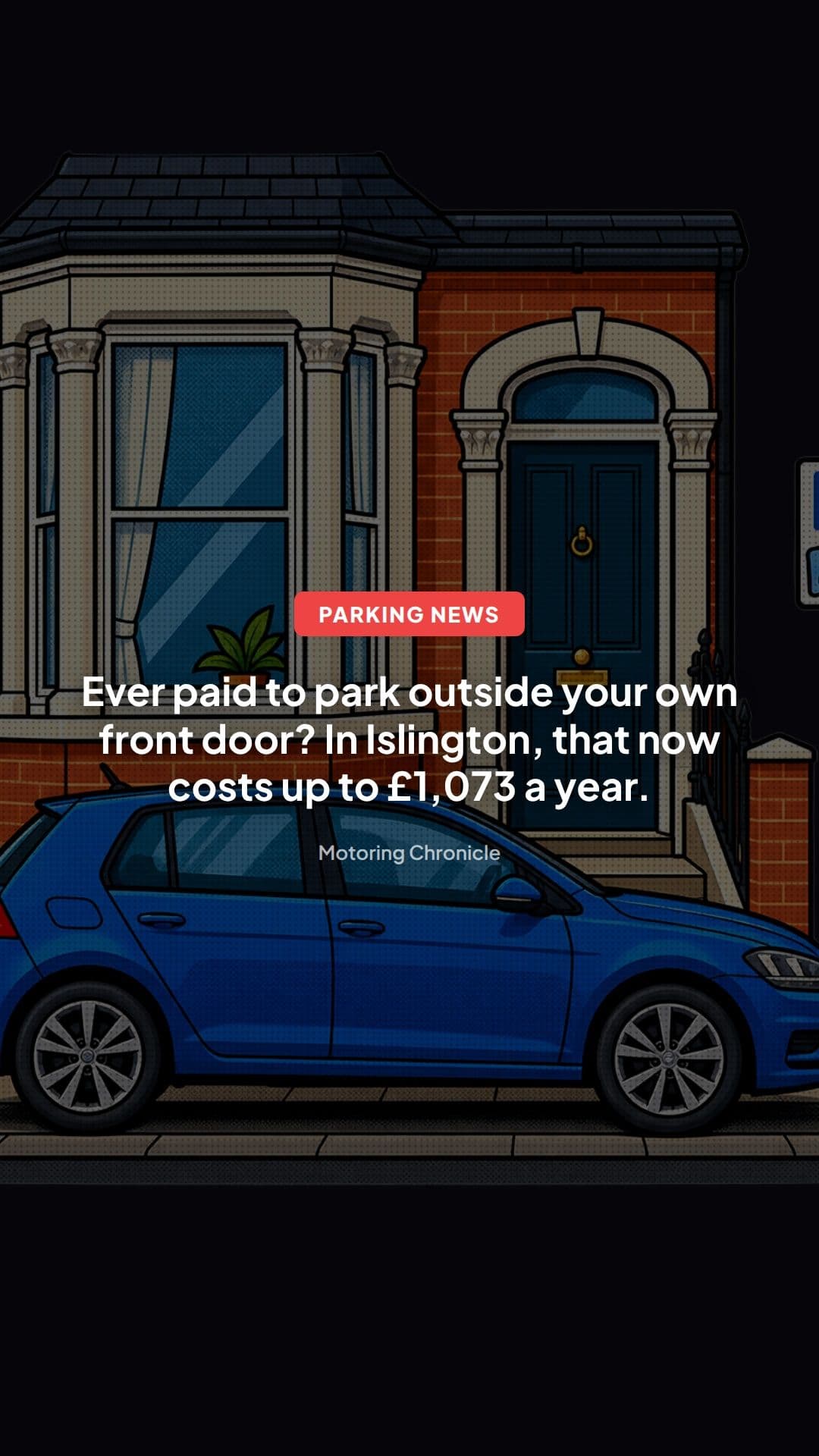
Some Councils Now Charge Residents Over £1,000 a Year to Park Outside Their Own Home
Imagine paying more to park your car outside your front door than you spend on your annual TV licence, home insurance and broadband combined. For a growing number of households in parts of London, that is no longer a hypothetical. Resident parking permits, once a modest annual fee to keep commuters off residential streets, have in some boroughs crept past the four-figure mark. Islington has become something of a poster child for this trend, and it raises an uncomfortable question for millions of drivers: how did parking outside your own home become one of the more significant lines in your household budget?
What Happened
According to reporting on the issue, some councils are now charging residents more than £1,000 a year simply to park a vehicle on the street where they live, with Islington singled out as a leading example of just how steep these charges have become. This isn't a one-off penalty or an unusual enforcement quirk. It's the standard cost of holding a valid resident's permit in a controlled parking zone (CPZ), the system that most inner-London boroughs, and an increasing number of towns and cities elsewhere, use to manage on-street parking.
The headline figure understandably grabs attention, but the detail matters. Many councils, including Islington, now operate emissions-based or engine-size-based charging bands. Rather than a flat fee for every resident, permit prices scale according to how polluting or how large a vehicle is. Owners of larger, older, or higher-emission cars, think big diesel SUVs or ageing petrol estates, are pushed into the top bands, where annual costs can run into four figures. Owners of small electric or low-emission vehicles, by contrast, often pay a fraction of that, sometimes even nothing at all in certain schemes.
So the £1,000-plus figure isn't necessarily what every resident pays. It's what the most heavily charged households are paying, and that number has been climbing steadily as councils extend and refine their banding systems.
Why It Matters
On the surface, this looks like a straightforward story about the rising cost of car ownership. But it sits at the intersection of several bigger issues in UK local government and transport policy.
First, there's the financial reality facing councils. Local authorities have faced years of funding pressure, and parking has become one of the few revenue streams they can control directly. Parking charges and penalty notices already generate substantial surpluses for councils across England, a trend that has been well documented in recent years. Resident permit fees are a natural extension of that logic: a captive market of drivers who need somewhere to leave their car, and a council with the statutory power to set the price.
Second, there's the environmental angle. Emissions-based permit pricing is explicitly designed to nudge residents towards cleaner vehicles. Councils argue that if you drive a heavily polluting car, you should pay more for the privilege of parking it on a public street in a densely populated area. That's a defensible position from an air quality standpoint, particularly in inner London boroughs like Islington that already grapple with poor air quality and heavy congestion. But it also means the burden falls unevenly. Someone who bought a diesel car in good faith a decade ago, when it was actively encouraged by government tax policy, may now find themselves paying vastly more than a neighbour with a newer electric car, even though both are using exactly the same amount of kerb space.
Third, there's a fairness question that goes beyond emissions. Not every household can simply swap their car for a cheaper-to-park model. Families who need larger vehicles, tradespeople who rely on vans, or residents who bought a car years before these charging structures existed, all face the same steep bills with little practical ability to change their circumstances quickly.
Finally, this is a sign of things to come rather than an isolated London quirk. As more councils outside the capital adopt CPZs and banded pricing to manage congestion and raise revenue, the pattern seen in Islington is likely to spread. Once one authority demonstrates that residents will, however reluctantly, pay four-figure sums for a permit, others often follow.
The Legal Angle
It's worth understanding exactly what gives councils the power to charge these fees, because it isn't unlimited or arbitrary.
Local authorities set up controlled parking zones and resident permit schemes under powers granted by the Road Traffic Regulation Act 1984, alongside the Traffic Management Act 2004, which places a general duty on councils to manage their road networks efficiently. Crucially, income raised through on-street parking charges is not meant to simply disappear into a council's general fund. Under Section 55 of the 1984 Act, surplus revenue from on-street parking must be spent on transport-related purposes, such as highway maintenance, public transport improvements, or environmental measures. Councils are required to publish accounts showing how this money is used, though scrutiny of exactly how rigorously that requirement is followed varies.
There is no statutory cap on how much a council can charge for a resident's permit. Unlike penalty charge notice amounts, which are set within nationally defined bands, permit pricing is largely a matter of local discretion. This is why charges vary so dramatically between authorities, and why boroughs with high property values, high vehicle ownership among larger cars, and ambitious air quality targets, tend to sit at the top of the pricing table.
That said, councils cannot introduce or change these charges without following proper consultation procedures. Residents affected by a new or revised charging scheme are generally entitled to be consulted, and unlawful failures to consult properly have, in other contexts, formed the basis of successful legal challenges to council decisions. If you believe a scheme has been introduced without adequate consultation, or that the charging structure is being applied incorrectly to your vehicle, that is a matter worth raising formally with the council, and in more serious cases, seeking independent advice on.
It's also worth being clear that a resident's permit does not guarantee you a parking space. It simply grants you permission to park within the zone if a space is available, meaning residents can pay four-figure sums and still spend time circling the block looking for a spot.
What Drivers Should Know
If you live in, or are considering moving to, an area with a controlled parking zone, there are some practical steps worth taking before the bill lands on your doormat.
- Check the banding structure before you buy a car. If permit costs in your area are based on emissions or engine size, this should factor into any car-buying decision, not just fuel costs and road tax.
- Look for low-emission or electric vehicle discounts. Many schemes offer significantly reduced or waived fees for the cleanest vehicles, which can make a real difference if you're due to replace your car soon.
- Read the specific rules for your zone carefully. Permit conditions, eligible vehicles, and pricing bands vary enormously between boroughs, and even between neighbouring streets in some cases. Our guide to resident parking permit rules and common traps covers the pitfalls that catch out many drivers.
- Understand the specific rules if you're in Islington. The borough's zones, hours and signage have their own quirks, and it's worth reviewing dedicated guidance on Islington's CPZ rules, hours and signage before assuming your circumstances match a neighbouring zone.
- Don't assume visitor permits work the same way. Many households discover too late that visitor permit allowances are separate, limited, and come with their own costs, something covered in our guide to visitor permit regulations for UK residents.
- Query anything that looks wrong. If you've been placed in a higher pricing band than you believe applies to your vehicle, or a scheme has changed without proper notice, raise it with the council in writing before paying, and keep records of the exchange.
Looking Ahead
The direction of travel here seems fairly clear. With councils under continued financial pressure and air quality targets pushing authorities to reward cleaner vehicles and penalise heavier polluters, emissions-banded permit pricing is likely to become more common, not less, and the ceiling on what residents in the most expensive bands pay is likely to keep rising rather than falling.
For drivers, the lesson is that where you live and what you drive are now more tightly linked to your annual outgoings than ever before. A car that seemed like a sensible purchase five years ago could, purely because of its emissions rating, now be costing its owner hundreds of pounds more each year just to keep parked outside their own front door. Keeping an eye on how your local authority's charging bands work, and factoring that into future car-buying decisions, is no longer optional if you live in one of these zones. It's fast becoming as important as checking fuel economy or insurance groups before you sign on the dotted line.
Written by
The Parking Ticket Pal Editorial Team
Source-checked parking guidance
Ready to Challenge Your Ticket?
Let our AI analyse your PCN and generate a professional appeal letter in minutes.
Start Free Appeal