
Southwark Parking Clamp Plan: 3 Unpaid PCNs Explained
Southwark councillors will vote on a pilot to clamp or remove legally parked cars with three unpaid PCNs. Find out who could be affected under the plan.

The Parking Ticket Pal Editorial Team
12 November 2026
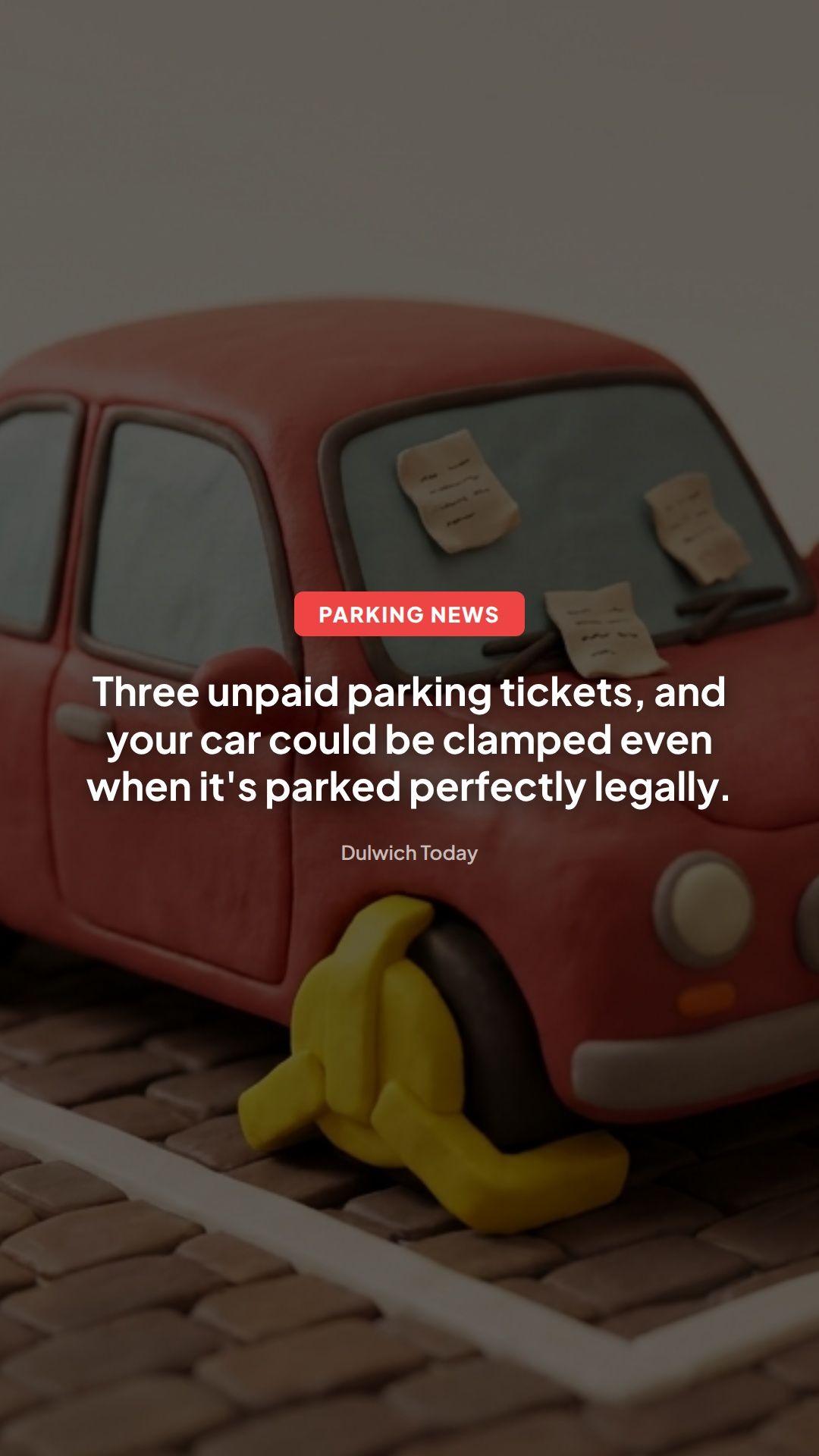
Southwark Clamping Pilot: What Drivers With Unpaid Tickets Need to Know
Picture this. You park legally, pay for your time, and walk away. You return to find a clamp on the wheel, or an empty space where your car used to be. You did nothing wrong that day. The trouble is the paperwork behind your number plate.
That is the scenario at the heart of a proposal in south-east London. According to Dulwich Today, Southwark councillors are due to consider a one-year pilot allowing vehicles with at least three unpaid parking penalties to be clamped or removed, even when legally parked. This post looks at what is being proposed, how the law around it works, and what it could mean for drivers in Southwark and beyond.
What is actually being proposed?
The key details from the report are these:
- It is a one-year pilot, not a permanent policy.
- It targets vehicles with at least three unpaid parking penalties.
- The vehicles in scope are those whose tickets have reached the charge-certificate stage, or which cannot be enforced because no registered keeper is recorded.
- Clamping or removal could happen even if the vehicle is legally parked at that moment.
That last point is the headline grabber. Most drivers understand clamping as a response to a current offence, such as parking on a double yellow line. This is different. It targets the vehicle because of its history, not its current parking. In effect, the clamp becomes a debt-recovery tool.
I have not seen the full council report, so I cannot comment on fees, thresholds, safeguards or how the pilot would be reviewed. Readers should check the council's published papers and the outcome of the meeting, as proposals can change before or after a vote.
Why the two categories matter
The two groups in the proposal are quite different, and understanding them explains why councils find evaders so hard to pursue.
1. Tickets at charge-certificate stage
A council parking ticket (a Penalty Charge Notice, or PCN) follows a set path under the Traffic Management Act 2004 and its regulations in England. In broad terms:
- A PCN is issued and the discounted payment window runs.
- If it is unpaid and unchallenged, the council sends a Notice to Owner to the registered keeper.
- If that is still unpaid, the council can issue a charge certificate, which increases the penalty by 50%.
- If the increased amount is still not paid, the council can register the debt at the County Court, and it can then be passed to enforcement agents (bailiffs).
By the charge-certificate stage, the driver has already had several chances to pay or challenge. Councils tend to see these vehicles as deliberate non-payers, although that is not always the case, as we will see.
2. Vehicles with no registered keeper recorded
This second category is the tricky one for councils. The ticket process depends on the DVLA identifying a keeper to send the Notice to Owner to. If no keeper is recorded, the PCN stalls. There is nobody to chase, so the debt never progresses through the usual stages.
That is where clamping has an obvious appeal for a council. A car sitting on a Southwark street cannot hide, even if its paperwork is a mess. Physical enforcement bypasses the paper trail.
Why it matters
Parking enforcement is shifting from the ticket to the vehicle
For years, the main complaint about unpaid PCNs from councils has been that persistent evaders carry on regardless. Councils argue that other drivers pay while evaders effectively get free parking. Physical immobilisation is a blunt but effective answer, because it turns an ignorable letter into an immediate, expensive problem.
If you want the wider picture of how councils are using enforcement data, our post on the persistent evader database is a useful companion read, and our piece on Southwark's parking fines revenue covers the borough's wider enforcement context.
Not every "evader" is an evader
This is the part that deserves scrutiny. A vehicle can end up with several unpaid PCNs for reasons that have nothing to do with a driver ignoring the rules. For example:
- Cloned number plates. If criminals copy your plate onto another car, tickets can be issued to your registration. See our guide on proving a cloned number plate PCN.
- A sold car that was never updated. If the new keeper is not recorded promptly, notices can go to the wrong person. See what to do if you receive a fine for a sold vehicle.
- Notices that never arrived. A missed house move, an out-of-date address at the DVLA, or a letter lost in the post can all leave a driver unaware of a growing debt.
- Genuine disputes that were never resolved, including PCNs the driver believes were issued wrongly.
The proposal, as reported, is aimed at "persistent evaders", and it is reasonable to ask how a council would distinguish a determined evader from an unwitting driver. Safeguards, such as checks before a clamp is applied, will matter a great deal.
The legal angle
Clamping on public roads versus private land
It is worth separating two things people often confuse. Under the Protection of Freedoms Act 2012, clamping and towing on private land without lawful authority is a criminal offence in England and Wales. That is why private car park operators no longer clamp.
Councils and other statutory bodies operate under different rules. Local authorities and certain public bodies can lawfully immobilise or remove vehicles on public roads when specific statutory conditions are met. For more on the distinction, see our explainer on UK vehicle clamping laws.
Where "three unpaid tickets" fits
The idea of treating vehicles with several unpaid penalties differently is already recognised in the framework for civil parking enforcement. The specific conditions, and who may apply them, are set out in regulations and in each council's powers. The question for any pilot is how it applies those powers locally, and what notice, release process and appeal routes sit around it. I would encourage anyone affected to check the council's published procedure rather than rely on summaries.
Your rights if a vehicle is immobilised or removed
In general terms, drivers in this situation can expect that:
- The vehicle is released on payment of the relevant outstanding sums and any release or removal charges.
- There are routes to challenge the action itself, and the underlying penalties, although time limits can be strict.
- If you believe the tickets were never properly served, you may be able to make an out-of-time challenge using a witness statement or statutory declaration. Our guide to TE9 and TE7 forms explains how that process works.
Because the stakes here include a car being taken away, anyone facing this should consider getting advice from a free service such as Citizens Advice, or from a qualified professional, rather than relying on a general blog post.
Bailiffs and the other route
Clamping is not the only recovery option. Once a debt is registered, councils can instruct enforcement agents, who must follow the Taking Control of Goods Regulations 2013. If you think an agent has acted improperly, see our guide on how to complain about bailiffs and our explainer on the warrant of control.
What drivers should know
This is general information, not advice on your own situation, but here are some sensible habits for anyone parking in a borough with tough enforcement.
1. Keep your DVLA details accurate. Your registered address needs to be current. Unclaimed or misdirected notices are the most common way a manageable ticket becomes a charge certificate.
2. Never ignore a notice, even if you think it is wrong. If you dispute a PCN, challenge it in writing within the deadlines. An unanswered ticket moves through the stages automatically. Our guide to formal representations explains how to do it properly.
3. Act quickly if you have been a victim of cloning. Report it, keep evidence, and challenge every PCN issued against your plate. Do not wait for a pile to build up.
4. Update records when you sell a vehicle. Notify the DVLA straight away and keep proof of the sale date, buyer details and the date you notified them.
5. If money is the problem, talk to the council. Councils can sometimes agree a payment arrangement. Our post on payment plans for PCNs looks at how this typically works.
6. Check whether you already have a debt. If you suspect old tickets are outstanding, contact the council before the vehicle is clamped. It is far easier to deal with a letter than with an immobilised car.
7. If your car is clamped or removed, act promptly. Check the notice for instructions, the release process and any time limits. Keep paperwork, photographs and receipts. Payment may be required to release the vehicle, and you may still be able to challenge afterwards, but keep all deadlines in view.
Looking ahead
If the pilot goes ahead, a year of data will probably decide whether it spreads. A few things are worth watching:
- How the council defines and verifies a "persistent evader". The detail of this will determine how fair the scheme feels.
- How many vehicles are affected, and why. A scheme that mainly catches abandoned or unregistered cars looks very different from one that catches ordinary residents with admin problems.
- Complaints and challenges. Any wrongly clamped or removed vehicles will be a test of the safeguards.
- Whether other London boroughs follow. Councils compare notes closely, and a successful pilot would be hard for neighbours to ignore.
There is a genuine fairness argument on both sides. Supporters say compliant drivers should not subsidise those who dodge penalties for months. Critics will point to the risk of a driver losing access to their car over a debt they did not know about, particularly where a cloned plate or an address error is involved.
For now, the practical message is simple. Unpaid tickets do not just sit quietly. They accumulate, they escalate, and in some boroughs they may soon be enforced against the vehicle itself. If you suspect you have outstanding penalties, deal with them early, keep your records tidy, and seek independent advice if the amounts or consequences are significant.
This article is general information about UK parking and motoring rules and is not legal advice. For guidance on your own case, consult official sources, the issuing authority, or a qualified adviser.
Written by
The Parking Ticket Pal Editorial Team
Source-checked parking guidance
Ready to Challenge Your Ticket?
Let our AI analyse your PCN and generate a professional appeal letter in minutes.
Start Free Appeal