
Someone Parked in Your Space? UK Legal Rights Explained
Police say parking disputes over allocated spaces are usually civil matters. Learn your UK legal rights, practical steps and when action may be possible.

The Parking Ticket Pal Editorial Team
1 November 2026
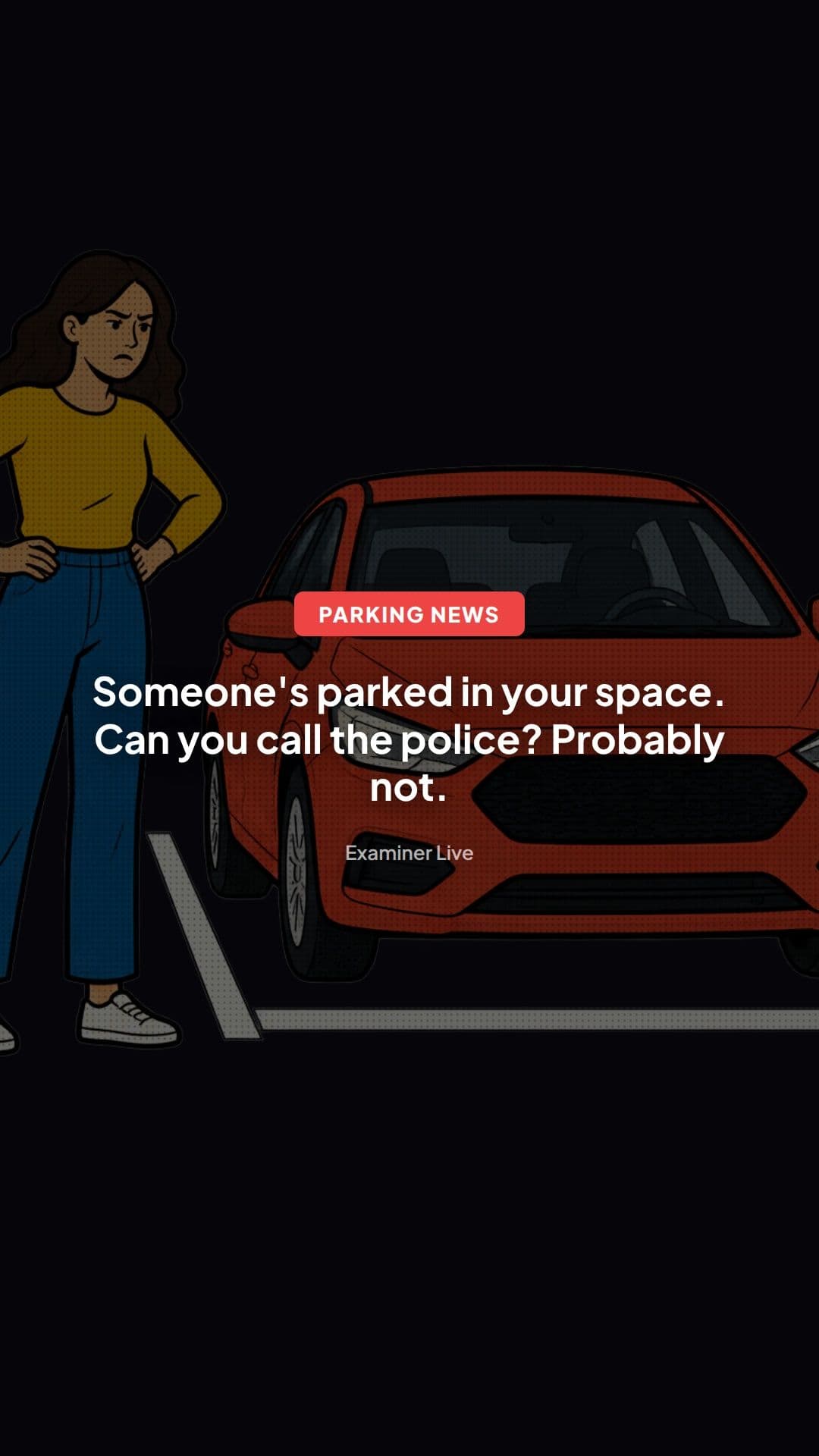
Someone's Parked in Your Space: Why the Police Usually Won't Help, and What You Can Do Instead
You come home after a long day, indicate into the space you pay for, and find a stranger's hatchback sitting in it. Your first instinct is to ring the police. After all, it's your space, and someone is using it without permission.
According to a recent report in the Examiner Live, that call is unlikely to get you very far. Police have been clear that disputes over someone parking in a resident's allocated space are generally civil matters, and officers are not normally able to intervene. For anyone who has stood in a car park staring at the offending vehicle, that can feel like a nasty surprise. But the reasoning behind it is straightforward, and knowing it will save you time, stress and possibly money.
What the police said, and what it means
The core message from the report is simple. Where a space is privately allocated, such as one tied to a flat, a rented home or a housing development, a driver using it without permission is not usually committing a criminal offence. It is a dispute between private parties, and those are resolved through civil routes, not through policing.
That does not mean the police never get involved in parking problems. It means they focus on situations where a criminal law has been broken or where there is a risk to safety. Forces have limited resources and a long list of priorities, and a neighbour in the wrong bay generally falls outside them.
The report is also a reminder of how much confusion exists. Many drivers assume that because a space has a number painted on it, or because they pay for it through rent or a service charge, someone with authority can simply remove the offender. In practice, the legal picture is more tangled.
Why this matters more than it sounds
Allocated parking is a growing flashpoint. Newer housing developments often have fewer spaces than homes. Converted buildings squeeze cars into courtyards. Visitors, delivery drivers and neighbours with no space of their own all compete for the same patch of tarmac. When a space is part of what you pay for, losing access to it can affect your daily routine, your work, and in some cases your mobility.
The emotional temperature rises quickly too. A parking disagreement between neighbours can turn into a long-running feud, and in the worst cases it escalates into confrontation. Our look at a Kent parking row that turned violent shows how badly these situations can go wrong. Knowing the proper channels from the start is partly about protecting yourself.
The legal angle: why it is a civil matter
Trespass and your right to the space
Whether you have a legal right to a particular space depends on your paperwork. If you own a leasehold flat, your lease may grant you the exclusive right to use a numbered bay, or the space may be part of the demised property shown on the lease plan. If you rent, your tenancy agreement may include the space. In some developments, spaces are allocated informally by a management company or housing association.
If you do have a genuine right to exclusive use, another person parking there without permission may amount to trespass, which is a civil wrong. The remedy for a civil wrong is not an arrest. It is something like an apology, a court order, or compensation, and the compensation is often modest because the loss is typically small.
That is why the police see these cases the way they do. Trespass on private land is not ordinarily a criminal offence, and the police do not generally enforce civil rights.
When the police can step in
There are circumstances where the picture changes. The police are more likely to be able to act if:
- The vehicle is stolen, or you suspect it has been abandoned in connection with crime.
- There is a threat to safety, such as a vehicle blocking an emergency access route.
- Someone is being threatened, harassed or assaulted, which is a separate matter from the parking itself.
- There is criminal damage, for example if a vehicle has been damaged or a barrier broken.
- The vehicle is on the public highway and causing an obstruction or danger. Offences such as wilful obstruction of the highway under the Highways Act 1980, or leaving a vehicle in a dangerous position under the Road Traffic Act 1988, relate to roads, not to a private forecourt.
If there is an immediate risk to anyone, ring 999. For other concerns, 101 is the non-emergency route. Just be aware that a plain "someone is in my space" report on private land may be passed back to you as a civil matter.
Why you cannot take matters into your own hands
This is where drivers can accidentally land themselves in trouble. In England and Wales, section 54 of the Protection of Freedoms Act 2012 makes it an offence to immobilise a vehicle, or to move it with the intention of preventing its removal, without lawful authority. In plain terms, clamping on private land is banned. So is towing it away yourself, and so is blocking someone in as a form of retaliation. Scotland has its own legal position, and Northern Ireland differs too, so check the rules where you live.
So while the police may not take the side of the resident, the law does not hand the resident a licence to retaliate either. Our guide to vehicle clamping laws in the UK explains the position in more detail.
Where private parking operators fit in
Some estates, flats and car parks are managed by a private parking company on behalf of the landowner or management company. If that applies, the operator may be able to issue a parking charge notice to the vehicle, provided the signage and contract terms support it. If the operator wants to pursue the registered keeper for the charge, it must comply with the keeper liability rules in Schedule 4 of the Protection of Freedoms Act 2012, and to get keeper details from the DVLA it must belong to an accredited trade association.
Whether a charge can be issued for using someone else's allocated space depends on the signs and contract on that particular site. It is not automatic. Our guide on whether you have to pay a private parking charge covers the basics from the other side of the fence, which is useful context if you are on either end of a notice.
Council bays are different
It is worth separating private allocated spaces from on-street residents' bays. A residents' permit does not give you ownership of a particular spot on the public road. It typically gives you permission to park in a zone or bay, and councils enforce those restrictions under the Traffic Management Act 2004. If another driver is parked in a permit bay without a valid permit, the matter is for the council's civil enforcement officers, not for you or the police. Our residents' parking permit guide goes through some of the traps.
What drivers should know: practical steps
This is general information and not legal advice. If a dispute is serious, recurring or involves significant money, take advice from a solicitor or a recognised advice service. With that said, here are the routes most commonly used.
1. Check your paperwork first. Look at your lease, tenancy agreement or allocation letter. Does it actually give you a specific, exclusive space? Check any plan attached. Your rights and the best route to resolve a problem depend on this.
2. Record what is happening. Take dated photographs showing the vehicle, its registration, and the surroundings, including any bay numbers or signs. Keep a log of dates and times if it happens repeatedly. Evidence helps whoever ends up dealing with the problem, whether that is a managing agent or a court.
3. Try a calm, polite approach. Many cases are accidental. A visitor may have been told to use the space, or a new neighbour may not realise which bay is theirs. A short, friendly note or a knock on the door resolves a surprising number of these. Avoid anything that could be seen as threatening, and do not damage or interfere with the vehicle.
4. Go to the landlord, managing agent or housing association. They often have the power, through the lease or estate rules, to write to the offending driver, issue warnings or arrange signage. If there is a parking operator on site, tell them too.
5. Find out who owns the vehicle, properly. You cannot simply look up a keeper from a number plate. The DVLA can release keeper details only where there is a legitimate reason, and the rules are on GOV.UK. Often it is easier for a landowner or operator with the right access to pursue this.
6. Consider formal civil routes if it persists. A solicitor's letter can sometimes settle things. In England and Wales, a small claims court claim is possible for modest sums, usually after a formal letter setting out the problem. Repeated trespass can in some cases lead to a court order, though that is a significant step. Costs, evidence and realistic outcomes need weighing carefully, and the process differs in Scotland and Northern Ireland.
7. Know the reporting routes for related problems. If a vehicle looks abandoned, you can report it to the local council. If it appears to be untaxed, the DVLA has its own reporting tools. If anyone threatens you, call the police about the threat itself.
8. Do not retaliate. Blocking the car in, letting down tyres or leaving damaging notes can expose you to criminal liability, even if the other driver started it. The law on clamping and criminal damage applies to residents too.
What not to assume
A few common myths are worth clearing up:
- "It's my space, so the police must act." Ownership or a right to use a space gives you civil rights, not automatic police powers.
- "I can move the car or box it in." Not safely, and potentially not legally.
- "A sign saying 'Private, Residents Only' means anyone can be fined." Only if there is a lawful scheme in place with a clear contract and a body entitled to enforce it.
- "A note on the windscreen saying 'You owe £100' is binding." A note from an individual resident is not a parking charge notice. A genuine charge requires a proper operator and a lawful basis.
Looking ahead
The report adds to a wider picture of how little teeth there are for resolving everyday parking disputes on private land. As more homes are built with limited parking, and as councils and landlords look at managing space more tightly, these disputes are unlikely to disappear.
Some practical changes may help over time. Clearer lease wording, better signage, and managing agents who are willing to take action all reduce the chances of a problem escalating. Meanwhile, wider reforms to private parking, including the new code of practice discussed elsewhere on this site, are aimed at improving standards for how operators behave, though they will not turn a neighbour dispute into a police matter.
For now, the message from the police is plain. If someone has parked in your space, the starting point is not a 999 call but your paperwork, your evidence and your landlord or managing agent. It is slower than a quick police visit, but it is the route that is more likely to produce a lasting result, and one that keeps you on the right side of the law.
This article is general information about UK parking and motoring rules and is not legal advice. Laws and procedures vary between England, Wales, Scotland and Northern Ireland. If your dispute is serious or recurring, consider speaking to a solicitor, Citizens Advice or your landlord's complaints process, and check official guidance on GOV.UK.
Written by
The Parking Ticket Pal Editorial Team
Source-checked parking guidance
Ready to Challenge Your Ticket?
Let our AI analyse your PCN and generate a professional appeal letter in minutes.
Start Free Appeal