Vehicle Clamping Laws UK: When Clamping Is Legal
Learn UK vehicle clamping laws: when clamping is illegal on private land, who can clamp on public roads, and what to do if your car is clamped.

Raj Patel
16 June 2026
Vehicle Clamping Laws UK: When Clamping Is Legal (And When It Isn't)
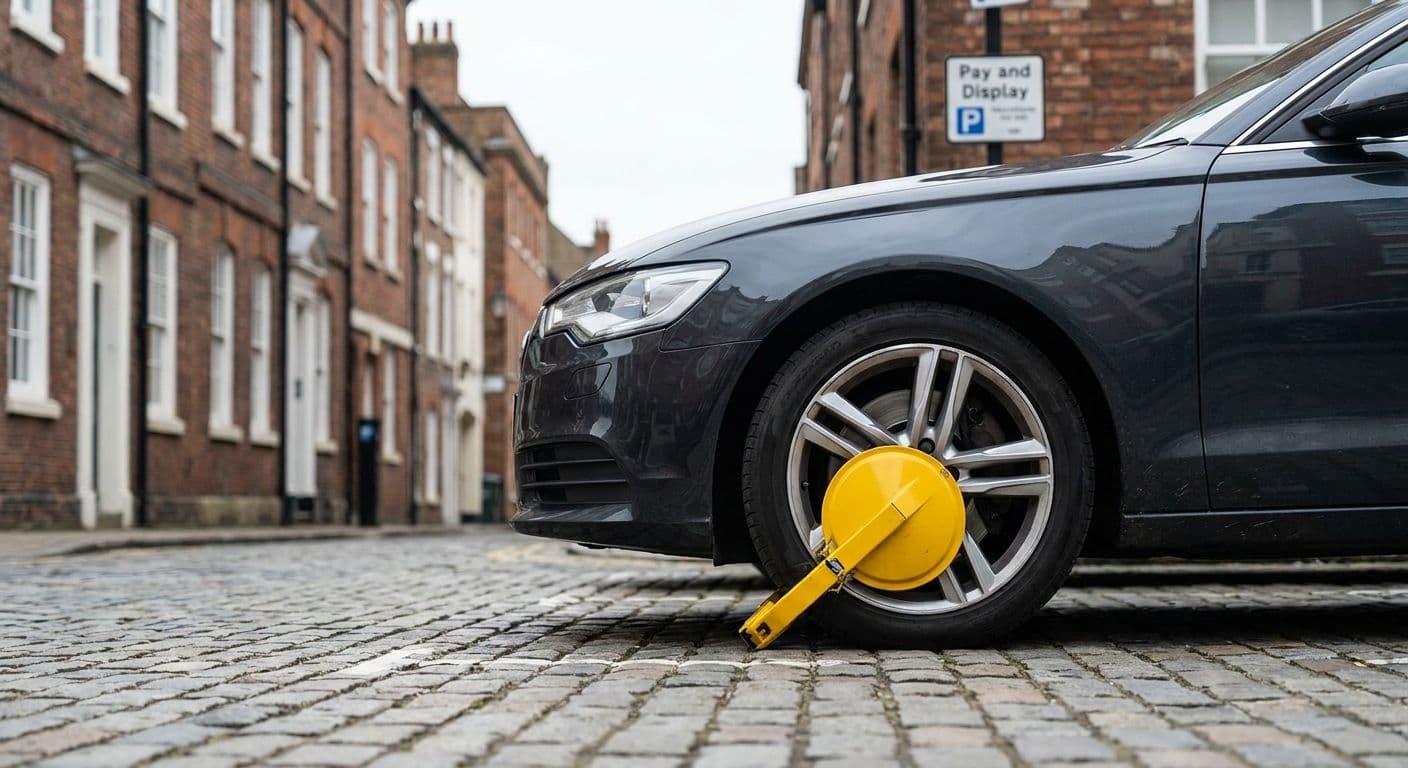
Imagine walking back to your car after a quick shopping trip, only to find a bright yellow clamp locked around your wheel. Your stomach drops. Is this even legal? Can they really do this? And more importantly — how do you get your car back without getting ripped off?
Vehicle clamping is one of those topics where most drivers have strong opinions but surprisingly little actual knowledge. The law changed dramatically in 2012, and yet plenty of motorists still don't know their rights. Whether you've just found a clamp on your car or you simply want to be prepared, here's everything you need to know about UK clamping law.
The Big Change: Private Land Clamping Was Banned in 2012
Let's start with the most important fact: clamping your car on private land without legal authority is a criminal offence in England and Wales.
The Protection of Freedoms Act 2012 made it illegal for private landowners, parking companies, and security firms to clamp or tow away vehicles on private land. Before this law came into force, rogue clampers were essentially running extortion rackets — slapping clamps on cars in supermarket car parks, housing estate forecourts, and pub car parks, then demanding hundreds of pounds in cash to release them.
That all changed on 1 October 2012. Now, if a private operator clamps your car on private land without lawful authority, they are committing a criminal offence under Section 54 of the Act. The maximum penalty for the clamper? An unlimited fine.
What does this mean for you?
If you return to your car on a private car park, a retail estate, or any privately owned land and find it clamped by a private company or landowner, that clamp is almost certainly illegal. You are entitled to have it removed — and the person who applied it could face prosecution.
Pro tip: If you find an illegal clamp on private land, call the police and report it as a criminal matter. Don't pay any release fee — doing so doesn't make the clamping legal, but it does make recovering that money more complicated.
So Who Can Legally Clamp Your Car?
Just because private clamping is banned doesn't mean all clamping has disappeared. Several authorities retain the legal power to immobilise your vehicle. Here's who they are and when they can act:
1. The DVLA
The Driver and Vehicle Licensing Agency can clamp and ultimately crush vehicles that are not properly taxed and have not been declared off the road (SORN). DVLA enforcement officers patrol public roads and car parks, and if your vehicle shows as untaxed on their database, it's at risk.
- Where: Public roads and public car parks
- When: If your vehicle tax has lapsed and no SORN is in place
- Release fee: Currently £100, plus any outstanding vehicle excise duty owed
- Crushing: If a clamped vehicle isn't claimed within 24 hours, the DVLA can arrange for it to be towed and eventually crushed
This is one of the most common forms of clamping that catches drivers off guard. A lapsed direct debit for your road tax, a forgotten renewal — and you could come back to a clamped car.
2. Local Councils
Councils have the power to clamp vehicles on public roads as part of their civil parking enforcement powers under the Traffic Management Act 2004. This typically happens when a driver has:
- Accumulated multiple unpaid Penalty Charge Notices (PCNs)
- Parked in a restricted zone in breach of a Traffic Regulation Order
- Been flagged as a persistent evader on the council's enforcement database
Councils in London and other decriminalised parking areas use clamping as an escalation tool. If you've ignored several PCNs, don't be surprised if a council enforcement officer immobilises your car rather than simply issuing another ticket.
Pro tip: Check for any outstanding PCNs before driving in areas where you've previously received fines. Councils share persistent evader data, and enforcement can follow you across borough boundaries.
3. Bailiffs (Enforcement Agents)
Court-appointed enforcement agents — commonly known as bailiffs — can clamp vehicles as part of debt recovery proceedings. This usually follows a sequence of events:
- An unpaid PCN escalates to a county court judgment
- The court issues a Warrant of Control
- A certified enforcement agent is authorised to seize goods, including vehicles
Bailiffs must follow strict rules under the Taking Control of Goods Regulations 2013. They cannot clamp a vehicle that is your only means of getting to work if it's worth less than the debt owed, and they must give you a Notice of Enforcement at least seven clear days before they can take action.
4. The Police
Police officers and traffic wardens working under police authority can clamp vehicles in specific circumstances, including:
- Vehicles causing an obstruction or a danger to other road users
- Vehicles linked to criminal activity
- Vehicles parked illegally in certain restricted areas
Police-applied clamps are less common than council or DVLA enforcement, but the power exists and is used.
What About Scotland and Northern Ireland?
The Protection of Freedoms Act 2012 applies to England and Wales. Scotland has its own legal framework, and private clamping has historically operated under different rules there. Northern Ireland also has separate legislation. If you're driving in Scotland and find a clamp on a private car park, the legal position can differ — always check the specific Scottish legislation or seek advice relevant to your location.
What Should You Do If Your Car Is Clamped?
The right response depends entirely on who has clamped your car.
If it's on private land and applied by a private company:
- Do not damage or attempt to remove the clamp yourself — that could constitute criminal damage
- Photograph everything — the clamp, any signage, the location, and any notices left on your vehicle
- Call the police and report it as a potential criminal offence under the Protection of Freedoms Act 2012
- Do not pay any release fee demanded — seek legal advice first
- Contact a solicitor if the clamper refuses to remove it — you may be able to seek an emergency injunction
If it's a DVLA clamp:
- Check the notice left on your vehicle — it will explain exactly what you need to pay and how
- Pay the release fee (currently £100) plus any outstanding vehicle tax
- Act quickly — the 24-hour clock before towing begins the moment the clamp is applied
If it's a council clamp:
- The notice on your vehicle will detail the outstanding PCNs and the release fee
- You can pay online or by phone using the details on the notice
- If you believe the underlying PCNs were issued incorrectly, pay to release the vehicle first, then challenge the PCNs separately — don't leave the car clamped while you dispute the fines
If it's a bailiff clamp:
- Ask the enforcement agent to show their enforcement agent certificate — they are legally required to carry one
- Check whether you received a valid Notice of Enforcement at least seven clear days before the action
- If the correct procedures weren't followed, the clamping may be unlawful — contact a debt advice charity such as StepChange or the Citizens Advice Bureau immediately
Can You Claim Compensation for Illegal Clamping?
Yes. If your vehicle was clamped illegally — particularly by a private operator on private land in breach of the Protection of Freedoms Act 2012 — you may be able to:
- Recover any release fee paid through the small claims court
- Claim compensation for losses caused by the illegal immobilisation (missed work, alternative transport costs, etc.)
- Report the clamper to the police for criminal prosecution
Document everything meticulously. Photographs, witness statements, receipts for any alternative transport you had to use — all of this strengthens your position significantly.
Your Actionable Next Steps
Whether you've just found a clamp or you want to stay protected going forward, here's what to do:
- Check your vehicle tax is up to date — log in to the DVLA portal at gov.uk and verify your status right now
- Clear any outstanding PCNs — search your name and vehicle registration on your local council's enforcement portal
- Know the law — save this article and the key phrase: Protection of Freedoms Act 2012, Section 54
- If clamped on private land, call the police first — not the number on the clamper's notice
- Never ignore escalating PCNs — the route from unpaid fine to bailiff clamp is faster than most drivers realise
The bottom line? Private clamping on private land is essentially dead in England and Wales — killed off by the 2012 Act. But legitimate clamping by the DVLA, councils, and enforcement agents remains very much alive. Know who has the power, know your rights, and you'll never be caught out.
Written by
Raj Patel
Transport Policy Analyst
Ready to Challenge Your Ticket?
Let our AI analyse your PCN and generate a professional appeal letter in minutes.
Start Free Appeal