Private Parking Rule Changes: End to Five-Minute Fines?
Proposed private parking safeguards could stop ANPR 'five-minute fines'. Find out what may change for drivers, and why council car parks are excluded.

The Parking Ticket Pal Editorial Team
4 September 2026
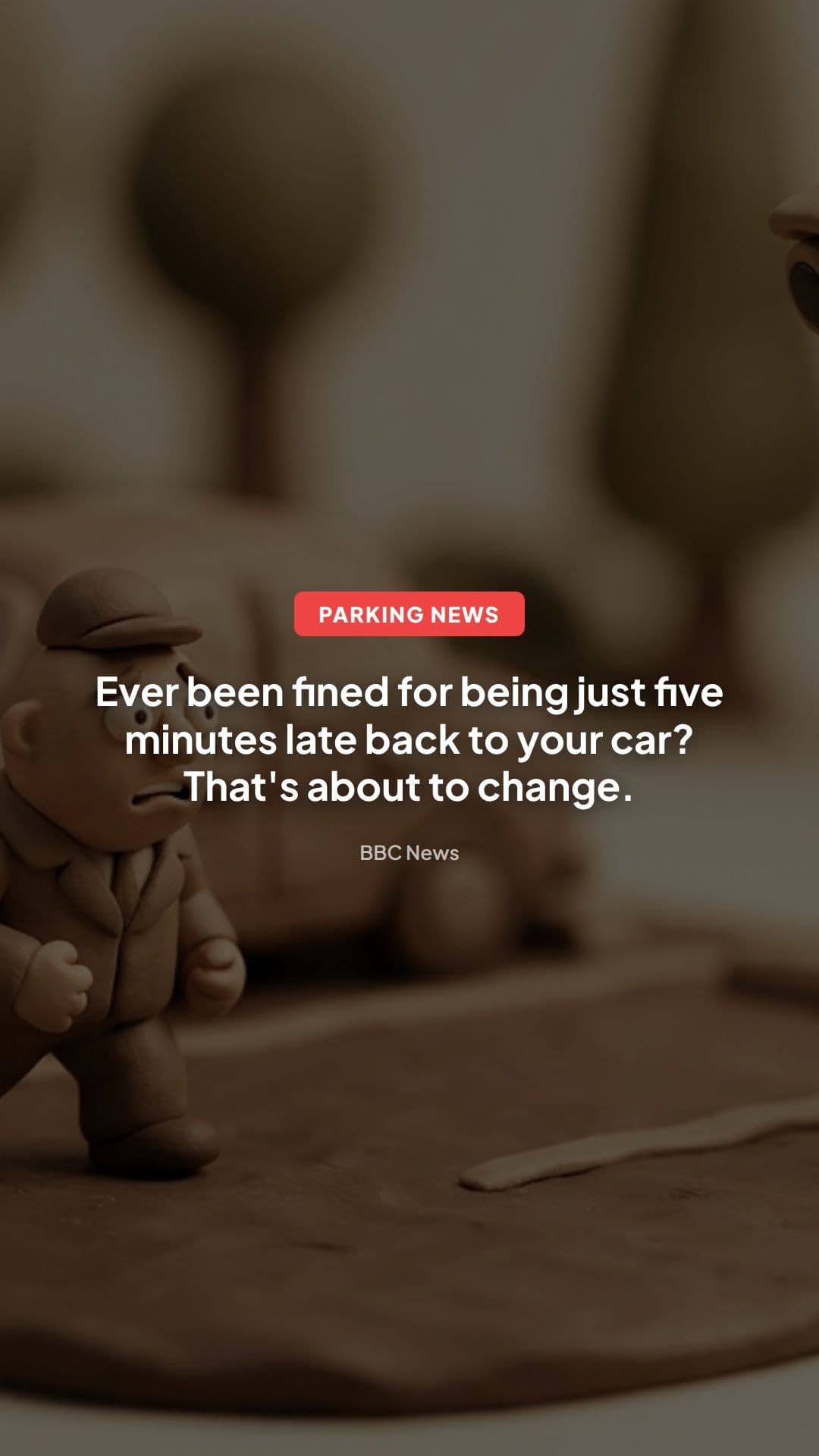
Parking Rules to Change After 'Five-Minute Fines': What Drivers Need to Know
A Two-Minute Coffee Run That Costs £100
Picture the scene. You pull into a retail park, dash in for a coffee, and get stuck behind a dawdling queue at the till. By the time you're back in your car, you've been gone eleven minutes instead of the ten you were "allowed". A camera at the exit barrier logs the moment your number plate leaves the site, and a fortnight later a Parking Charge Notice lands on your doormat.
Except here's the twist that has been quietly infuriating motorists for years: the time you were sat in traffic queuing to get out of the car park almost certainly counted against you too. You weren't parked for those extra minutes at all, you were simply trying to leave, but as far as the Automatic Number Plate Recognition (ANPR) system is concerned, "time in the car park" and "time parked" are the same thing.
According to a BBC News report, ministers are now proposing safeguards designed to stop exactly this kind of "five-minute fine" in ANPR-operated private car parks. It's a small but significant step in the long, slow reform of Britain's private parking industry, and it's worth understanding exactly what's being proposed, why it matters, and what it does and doesn't mean for drivers right now.
What's Actually Being Proposed
The reported measures would introduce safeguards specifically for private car parks that use ANPR cameras to track vehicles entering and leaving a site. The core problem the proposals appear to target is a technical quirk of how these systems work: cameras record the exact second a car crosses the entry point and the exact second it crosses the exit point, and that full window is treated as the "parking session".
In reality, that window includes several minutes that have nothing to do with parking at all, such as driving in and searching for a space, walking to and from a pay machine, and queueing at a barrier to leave. When a car park has a free period (say, the first ten or fifteen minutes) or a strict overstay charge, drivers can end up penalised for delays that were entirely outside their control and had nothing to do with how long their car was actually stationary.
Crucially, the BBC's report notes that these proposed protections would apply to private car parks, and would not extend to council-operated car parks. That distinction matters a great deal, and we'll come back to why.
Why This Matters More Than It Might Seem
This isn't an isolated tweak. It sits within a much longer running saga of attempts to properly regulate the private parking industry, an industry that operates on a fundamentally different legal basis to council enforcement and has, for years, been criticised for aggressive and sometimes disproportionate ticketing practices.
The current framework relies on two industry-approved trade associations, the British Parking Association (BPA) and the International Parking Community (IPC), whose codes of practice operators must follow to retain access to DVLA keeper data. Our guide to BPA vs IPC membership explains how this affects which appeals body handles your case if you're ticketed. These codes already include some protections, such as a minimum grace period towards the end of a stay, but the ANPR "dwell time" issue, where legitimate driving-in and driving-out time gets counted as parking time, has never been comprehensively addressed.
The government has been trying to introduce a single, legally binding Code of Practice since the Parking (Code of Practice) Act 2019 was passed. An earlier attempt at a statutory code, which would have introduced a cap on charges and a mandatory grace period, was withdrawn in 2022 after a threatened legal challenge from within the industry. Work has continued since, in fits and starts, and this latest proposal appears to be part of that ongoing effort rather than a standalone announcement.
The Legal Angle: Why Proportionality Matters
Private parking charges are not fines in the criminal or statutory sense. They are, in law, a contractual charge for breaching the terms of an agreement formed the moment you drive onto the land and accept the terms displayed on signage. This is why the landmark Supreme Court case, ParkingEye Ltd v Beavis (2015), matters so much to this whole debate. The court upheld an £85 charge, but only because it found the sum was not "extravagant or unconscionable" and served a legitimate commercial purpose in managing turnover of spaces.
That reasoning cuts both ways. A charge triggered by a genuine overstay is one thing. A charge triggered because a camera clocked a driver queueing to leave, when the vehicle was never actually parked for the "breach" period at all, sits on much shakier legal ground. Arguably, such a charge risks failing the very proportionality test that kept the Beavis charge lawful in the first place, and it's a point drivers have increasingly raised in appeals to the Parking on Private Land Appeals service (POPLA) and the Independent Appeals Service (IAS).
It's also worth remembering that private parking enforcement and council enforcement are governed by entirely separate legal regimes. Council car parks and on-street enforcement operate under the Traffic Management Act 2004, with civil penalty notices that follow their own appeals route through the local authority and, ultimately, the Traffic Penalty Tribunal. Private operators, by contrast, rely on contract law and the keeper liability provisions in Schedule 4 of the Protection of Freedoms Act 2012. This is precisely why any new safeguard aimed at ANPR car parks would need separate legislation to apply to councils, and why the BBC report specifically notes that council car parks would not be covered.
What Drivers Should Know Right Now
Until any new rule is confirmed and in force, the existing legal landscape still applies, so it's worth being pragmatic:
- Check the maths on your PCN. If you've received a charge based on ANPR entry and exit times, work out how much of that window was genuinely spent parked versus manoeuvring, queueing, or paying. This is a legitimate line of challenge today, not just under future rules.
- Keep contemporaneous evidence. Till receipts, dashcam footage, or even a photo of a queue at the exit barrier can support an argument that the recorded time doesn't reflect actual parking duration.
- Identify who runs the car park. Whether it's a private operator affiliated with the BPA or IPC changes your appeals route. Our guide to the POPLA appeals process walks through how to challenge a charge properly.
- Don't assume every grace period works the same way. Rules on minimum grace periods and how they're calculated vary between operators and sites, so it's worth understanding how grace periods are actually regulated before you park.
- Always challenge in writing before paying. An early, well-evidenced informal appeal is far more effective than ignoring a notice or paying under protest.
- Remember ANPR isn't infallible. Camera misreads and timing errors do happen, and it's always worth verifying the accuracy of ANPR evidence before assuming a charge is correct.
Looking Ahead
This proposal is exactly that: a proposal. Given the history of stalled and watered-down reform in this sector, drivers shouldn't expect an overnight change to how ANPR car parks operate. It will likely need to be folded into the wider statutory Code of Practice that has been years in the making, alongside other long-discussed measures such as capped charges and standardised grace periods.
The exclusion of council car parks is also likely to draw criticism from consumer groups, since drivers arguably face the same ANPR timing quirks in local authority car parks that increasingly use camera-based enforcement too. Expect pressure for parity between the two systems as this debate develops.
For now, the sensible approach is to stay alert, read the signage carefully, keep evidence of your actual parking time where you can, and challenge any charge that doesn't reflect reality. Reform may be coming, but until it lands, the burden of proof still tends to fall on the driver.
Written by
The Parking Ticket Pal Editorial Team
Source-checked parking guidance
Ready to Challenge Your Ticket?
Let our AI analyse your PCN and generate a professional appeal letter in minutes.
Start Free Appeal