
Private Parking Fines: When Honest Mistakes Cost You
Private parking firms are issuing hefty charges and debt demands for minor errors. Learn your rights, challenge unfair PCNs and avoid escalating costs.

The Parking Ticket Pal Editorial Team
10 November 2026
Unfair Fines: When an Honest Mistake Costs You Hundreds
You pay for your parking, walk away feeling virtuous, and weeks later a letter arrives. You typed one character of your number plate wrong. Or the payment went through a minute late. The charge is steep, the tone is stern, and if you ignore it, the letters keep coming, each one more threatening than the last.
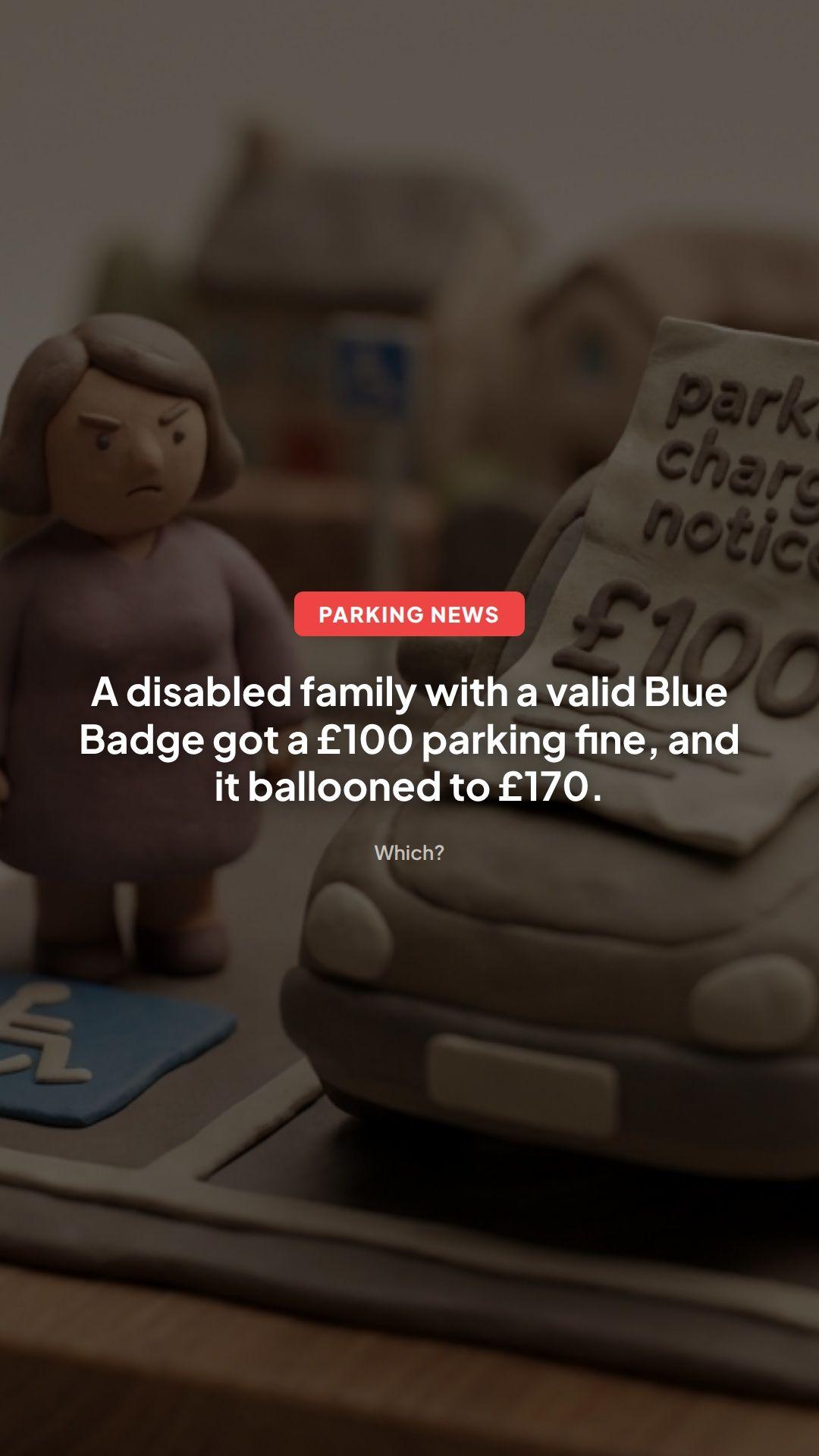
This is the situation described in a recent Which? report, which highlights motorists hit with hefty private parking charges and debt-recovery demands over alleged mistakes. The consumer group also points to calls for safeguards, including lower charges for minor errors. The story has wider significance than a handful of unlucky drivers, because it exposes a gap between how most of us think about fairness and how private parking law actually works.
What the Which? report highlights
According to Which?, motorists are receiving steep private parking charges and then debt-recovery demands after what are described as alleged mistakes. The word "alleged" matters. In many of these disputes, the driver believes they did what was asked of them, while the operator's system records something different.
The report also notes calls for reform. The most striking idea is that charges should be lower where the driver has made a minor error, rather than applying the same headline sum whether someone deliberately abused a car park or slipped up on a keypad.
I have kept to what Which? reports here. I would rather not embellish individual cases I cannot verify. What I can do is explain why this keeps happening and where the law currently stands.
Why honest mistakes become expensive
Private parking operates on a different legal footing from council parking. A council issues a Penalty Charge Notice under statute, with set rates, formal representations and an independent tribunal. A private operator is asserting a contractual claim. By entering the land, the argument goes, you accepted the terms on the signs, including the price of breaching them.
That framework has a few consequences for innocent errors.
1. The charge is a contract term, not a fine. Operators can set a sum that is far above the cost of a day's parking, so long as it is not a penalty in the legal sense.
2. Automation magnifies small slips. Many car parks use ANPR cameras. A mistyped registration, a payment made against the wrong car, or a few minutes of overstay can all trigger a notice without any human ever looking at the situation.
3. Debt-recovery letters change the mood. Once a case passes from the operator to a collection agency, the tone usually shifts to "final demand" language, often with extra sums added. To an anxious recipient this can feel like the first step before bailiffs or court. It is usually neither.
The legal angle
The Beavis case and why high charges survive
The leading authority is ParkingEye v Beavis [2015] UKSC 67. The Supreme Court upheld an £85 charge for overstaying a free two-hour limit in a retail car park. It held that the charge was not an unenforceable penalty because the operator had a legitimate interest in managing the car park, and the sum was not out of all proportion to that interest. The terms were also clearly displayed.
Beavis is often cited by operators, but it is worth reading carefully. It did not say every private charge is automatically valid. It turned on prominent signage, a legitimate commercial purpose and a charge level the court considered justifiable. It also concerned a driver who knowingly overstayed, not one who made a genuine typo. Campaigners argue that applying the same sum to a harmless slip stretches that logic, which is exactly where the "lower charges for minor errors" proposal fits.
Keeper liability under POFA
If an operator does not know who was driving, it can pursue the registered keeper only by following Schedule 4 of the Protection of Freedoms Act 2012 (POFA). This sets out strict requirements, including what a Notice to Keeper must say and when it must arrive. Operators that follow the rules can pursue the keeper. Operators that do not generally cannot, unless they can show who was driving.
Operators who want DVLA keeper data must also belong to an Accredited Trade Association, currently the BPA or the IPC. Both run independent appeals services, POPLA for the BPA and the IAS for the IPC. For a broader look at the differences, see our post on BPA vs IPC membership.
Consumer law
The Consumer Rights Act 2015 requires terms and notices to be fair and transparent. A term that causes a significant imbalance to the detriment of the consumer, contrary to good faith, may be challengeable. This is not a magic wand, but it forms part of the backdrop to arguments that disproportionate sums for trivial errors are unfair.
Debt recovery is not enforcement
This is the part many drivers misunderstand. A letter from a debt-recovery firm acting for a private operator:
- is not a court order
- does not give anyone the right to enter your home or seize goods
- cannot lawfully be presented as though it were a court judgment
Bailiffs (enforcement agents) become involved only after a court has made a judgment and enforcement has been authorised. For private parking, that means the operator has to issue a county court claim and win it, or you have ignored the claim and judgment was entered by default. That last point is the real danger. Ignoring court papers is far more dangerous than ignoring a collection letter. For more on this stage, see what bailiffs and warrants of control involve.
Extra "recovery fees" added by debt collectors are another controversial area. Whether such sums are recoverable has been argued in the courts and tribunals, and the position can depend on the contract wording and the specific case. Anyone facing a claim that includes them should take advice rather than rely on a blog post.
Practical advice: what drivers should know
This is general information, not advice on any individual case. With that said, here is how the process tends to work in practice.
Before you leave the car park
- Photograph your payment confirmation and the signs. Capture the terms, the tariff and the operator's name. These images can matter months later.
- Check the registration you enter, twice. It sounds obvious, but keying errors are among the most common causes of disputes. Our guide to incorrect VRM entries covers this in more detail.
- Keep receipts and app records. Screenshot rather than assume you can retrieve them later. If an app has failed, see our post on parking app errors and proving payment.
When a charge notice arrives
- Read it carefully. Check the date, location, alleged breach and whether it is a Notice to Keeper or a notice to the driver.
- Note the deadlines. Discounted payment windows and appeal periods are time-limited. Missing the appeal window can reduce your options.
- Appeal in writing to the operator first. Set out the facts calmly: what happened, what evidence you have, and why you consider the charge unreasonable. Honest mistakes, such as a typo where you did pay, are worth explaining plainly. Our guide to private parking charges covers the wider picture.
- Do not ignore it. Silence tends to escalate matters, even if the underlying claim is weak.
If the operator rejects your appeal
- If the operator is a BPA member, you can usually take your case to POPLA. If it is an IPC member, the route is the IAS. Our guide to the POPLA appeals process explains the steps.
- Keep a clear record of all correspondence.
If debt-recovery letters arrive
- Stay calm. Letters are not court action.
- Do not assume you owe the inflated total shown. Check what the original charge was and what has been added.
- If you receive a county court claim form, act promptly. There are strict deadlines for responding, and failing to do so can lead to a default judgment and a County Court Judgment, which can affect your credit file. If a claim arrives, consider free advice from organisations such as Citizens Advice, or a solicitor if the stakes justify it.
Unfair or disproportionate charges
If you believe the charge is out of proportion to a minor slip, say so in your appeal and mention the reasoning in the Which? report if it is useful. It will not bind an operator or a court, but it shows the concern is mainstream.
Why this matters beyond individual cases
Private parking has become a large industry. The volume of tickets is high, as covered in our posts on private parking ticket volumes and the DVLA data requests behind them. A system that processes this many notices cannot easily treat each driver as an individual. The risk of honest errors being penalised the same as deliberate breaches grows with scale.
There is also an imbalance of resources. Operators have templates, in-house legal teams and a commercial incentive. Drivers have a letter, a deadline and a worry about what happens next. That is why reforms matter: clearer rules and proportionate charges tilt the balance back toward fairness.
Looking ahead
Parliament passed the Parking (Code of Practice) Act 2019, requiring a single statutory code for private parking operators. Reported proposals around that code have included a cap on charges, a grace period and a single appeals mechanism. Details and timing have moved over time, so check current government guidance for the latest position. Our posts on the 10-minute grace period and the proposed £100 cap cover those proposals in more depth.
The Which? call for lower charges for minor errors adds a more nuanced idea to that conversation. A flat charge, whatever the circumstances, treats a forgotten payment the same as a deliberate attempt to dodge fees. A tiered approach would recognise the difference. Whether it gets into the final rules remains to be seen.
Key takeaways
- Private parking charges are contractual claims, not fines, but they can still be challenged.
- Beavis shows courts can accept high charges, but it involved clear signs and a deliberate overstay, not a typo.
- Keeper liability under POFA 2012 has strict conditions, and operators do not always meet them.
- Debt-recovery letters are not court documents, and ignoring a real court claim is far riskier than ignoring a collection letter.
- Evidence is everything: photograph signs, keep receipts, and check plates before confirming payment.
- Use the independent appeals routes, POPLA or the IAS, where available.
- If a claim reaches court or the sums are substantial, seek independent advice, for example from Citizens Advice or a solicitor.
An honest mistake should not become a financial ordeal. Until the rules fully reflect that, knowing how the system works is the best protection a driver has.
Written by
The Parking Ticket Pal Editorial Team
Source-checked parking guidance
Ready to Challenge Your Ticket?
Let our AI analyse your PCN and generate a professional appeal letter in minutes.
Start Free Appeal