Private Parking DVLA Requests Hit Record 12.8 Million
Private parking firms made 12.8 million DVLA keeper-data requests in a year. Explore what the record figure means for UK drivers and parking charges nationwide.

The Parking Ticket Pal Editorial Team
11 August 2026
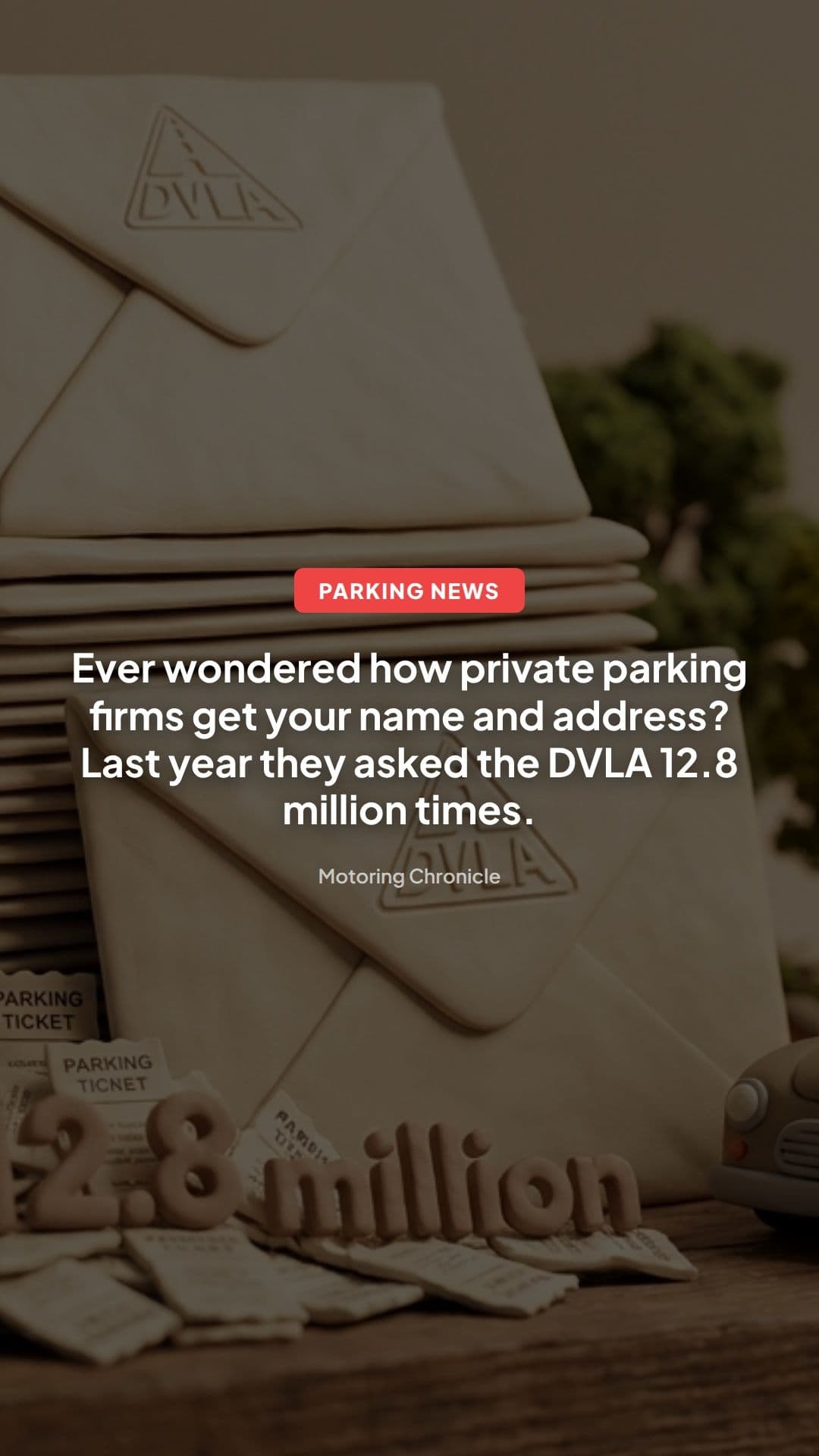
Private Parking Firms Made a Record 12.8 Million DVLA Requests Last Year
Picture this: somewhere in a Swansea data centre, the DVLA's systems whirred into action roughly 24 times every minute of every day last year, each time handing over a driver's name and address to a private parking company. Multiply that out and you get 12.8 million requests in a single year, a new record, and a number that says a great deal about how private parking enforcement has embedded itself into everyday British life.
If that figure makes you sit up, it should. It represents the invisible plumbing behind almost every private parking charge notice that lands on a windscreen or drops through a letterbox. Without it, the entire private parking industry as we know it simply couldn't function.
What Happened
According to reporting from Motoring Chronicle, private parking operators submitted a record 12.8 million requests to the DVLA for vehicle-keeper information last year. This is the mechanism by which a parking company, having photographed your number plate on their ANPR cameras or noted it down on a patrol, finds out who to send a parking charge notice to.
The DVLA doesn't hand this data over casually. Companies have to be accredited members of a trade body, either the British Parking Association (BPA) or the International Parking Community (IPC), and they pay a small fee (currently £2.50) for each keeper lookup. That fee income alone gives you a sense of scale: 12.8 million requests translates into a substantial revenue stream for the DVLA, quite aside from what it enables for the parking industry itself.
The headline number is significant not just because it's the highest on record, but because of the trajectory it represents. Private parking enforcement has grown from a niche activity, largely confined to a handful of retail car parks and railway station forfeit-if-you-overstay schemes, into a nationwide, ANPR-driven enforcement machine that touches millions of drivers every year.
Why It Matters
It's worth pausing on why this DVLA figure matters more than it might first appear. Every one of those 12.8 million requests represents a potential parking charge notice being prepared, and ultimately a driver somewhere finding a demand for money, often £100 or more, for an alleged parking contravention on private land.
The scale here dwarfs council-issued penalty charge notices in many areas. Local authorities operate within a tightly regulated statutory framework, but private parking firms operate on a contractual basis, using the law of trespass and contract rather than traffic law. The DVLA keeper-data pipeline is what makes this business model viable at scale. Without access to keeper details, a private landowner or their contracted parking firm would have no realistic way of pursuing a driver who doesn't stop and pay on the spot.
This matters for drivers because it underlines just how automated and impersonal the process has become. Many of these requests will originate from ANPR cameras that read number plates entering and leaving a car park, calculate a length of stay, and flag an "overstay" without any human involvement until the point a charge notice is generated. Errors, whether from misread plates, unclear signage, or system glitches, can and do happen at this kind of volume, and drivers are often left to unpick the consequences.
The steady rise in requests also reflects wider commercial pressures. Retail parks, hospitals, airports and residential developments increasingly outsource parking control to specialist firms who are paid, directly or indirectly, based on enforcement activity. Where there's a financial incentive to issue charge notices, volumes tend to climb, and DVLA data requests climb with them.
The Legal Angle
The framework governing all of this sits primarily in the Protection of Freedoms Act 2012 (POFA), specifically Schedule 4, which sets out the conditions under which the DVLA may release keeper information to accredited parking operators and, crucially, the circumstances in which a parking firm can pursue the registered keeper (rather than the driver) for an unpaid charge.
To use the "keeper liability" provisions in POFA 2012, a parking company must follow a strict process: a compliant notice must be affixed to the vehicle or a Notice to Keeper sent within a set timeframe, containing specific prescribed wording. If they get this wrong, in theory, keeper liability doesn't transfer, even if the DVLA has released the data.
Access to the DVLA's data itself is also governed by the Data Protection Act 2018 and UK GDPR principles. Companies cannot simply request data speculatively; they must certify that they have "reasonable cause" to believe a vehicle was involved in a parking contravention, and that release is necessary for pursuing a legitimate claim. In practice, this is largely self-certified by the parking operator at the point of request, which is one reason the volume of requests has been able to climb so sharply without much friction.
Trade body membership adds another layer. Both the BPA and the IPC operate Codes of Practice that member firms must follow to retain DVLA access, and government reforms under the Private Parking Code of Practice (introduced following the Parking (Code of Practice) Act 2019, though implementation has been repeatedly delayed and revised) aim to tighten standards around signage, grace periods, and charge caps. Readers wanting the detail on the specific proposals around a £100 cap and a 10-minute grace period may find our coverage of the new private parking rules useful background.
There's also a live question of oversight. The Competition and Markets Authority has previously taken enforcement action against private parking firms over unclear pricing and unfair practices, a reminder that this is an industry regulators are actively watching, not one operating in a legal vacuum.
What Drivers Should Know
Given how mechanical and high-volume this system has become, there are a few things worth keeping front of mind if you ever find yourself on the receiving end of a private parking charge notice.
Check the paperwork carefully. A Notice to Keeper must meet strict requirements under POFA 2012, including specific deadlines for issue and precise wording about your right to appeal. If these aren't met, the notice may be legally unenforceable against you as keeper, even if the DVLA lawfully supplied your details.
Verify the operator's accreditation. Only members of the BPA or IPC can access DVLA data lawfully. If a firm isn't accredited, question how they obtained your details at all. Our guide comparing BPA and IPC membership explains what each accreditation actually means for you as a driver.
Don't ignore it, but don't panic either. A private parking charge is a civil contractual matter, not a criminal fine, and it is not the same as a council PCN. That doesn't mean it can be ignored indefinitely, unpaid charges can eventually lead to county court claims, but the pressure tactics used in some collection letters often overstate the immediate consequences.
Photograph the signage. Since these charges rely on you having accepted a contract by driving in and parking, unclear, missing, or contradictory signage is one of the strongest grounds for challenge. We've covered how unclear signage can form a valid defence in more detail elsewhere on this site.
Use the appeals process properly. Every accredited operator must offer an internal appeal, followed by an independent appeals service, POPLA for BPA members or the Independent Appeals Service for IPC members. These are free to use and worth exhausting before any court claim proceeds. Our step-by-step guide to the POPLA process is a useful starting point if you're facing this stage.
Know your data rights. You're entitled to ask a parking company what evidence they hold and how your data was obtained. If you believe your data was requested without reasonable cause, this can be challenged, and in serious cases reported to the Information Commissioner's Office.
Looking Ahead
A record 12.8 million DVLA requests is unlikely to be the peak. As ANPR technology becomes cheaper and more widespread, and as more private landowners contract out enforcement rather than manage it themselves, the volume of keeper lookups seems set to keep climbing, at least until regulatory reform genuinely bites.
The government's long-promised private parking reforms, including charge caps and mandatory grace periods, could eventually curb some of the more aggressive practices that drive request volumes upward. But until those reforms are fully implemented and enforced, the DVLA's keeper-data pipeline will remain the quiet engine room of an industry that touches millions of British drivers every year, often without them fully understanding how the system works until a charge notice arrives. Staying informed about your rights, and checking every notice against the legal requirements, remains the best protection available in the meantime.
Written by
The Parking Ticket Pal Editorial Team
Source-checked parking guidance
Ready to Challenge Your Ticket?
Let our AI analyse your PCN and generate a professional appeal letter in minutes.
Start Free Appeal