
PCN code 32: blue arrow sign fines and how to challenge
Code 32 means you did not follow the arrow on a blue sign, such as ahead only or turn left. What 32d and 32t mean, grounds to use, and the deadlines.

The Parking Ticket Pal Editorial Team
18 November 20267 min read
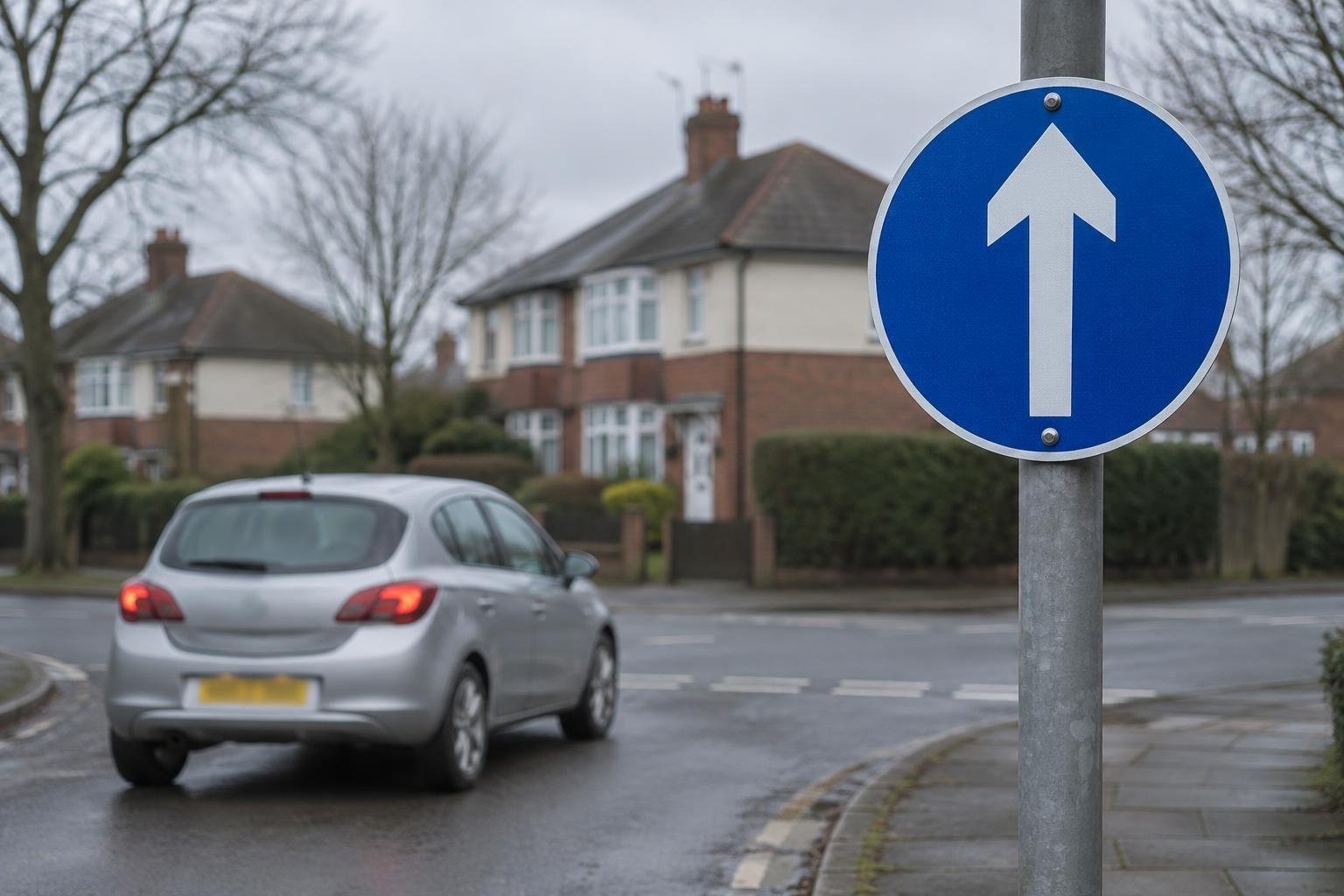
Code 32 is a moving traffic contravention, not a parking one. It arrives in the post, usually a week or two after the journey, with a camera image of your car at a junction.
The wording on the standard list is "Failing to proceed in the direction shown by the arrow on a blue sign".
This guide explains which signs it covers, what the letter after the code means, the grounds you can use, and the deadlines. The process is different in London and outside it, so both are set out.
What code 32 means
Round blue signs with a white arrow give an instruction. The Highway Code says signs with blue circles "mostly give positive instruction", and lists the arrow signs as:
- Ahead only
- Turn left ahead (or right)
- Turn left (or right)
If the sign says ahead only and you turn, or it says turn left and you go right or straight on, that is a code 32.
The letter after the code tells you which:
- 32d: proceeding in the wrong direction.
- 32t: turning in the wrong direction.
- 32j: camera enforcement. The code list says the j does not have to appear on the PCN.
Do not confuse it with nearby codes. On the same list, a "keep left" style sign (pass to the specified side) is code 38, a prohibited turn such as no right turn is code 50, and no entry is code 51.
Who can issue it
Code 32 can only be enforced with a camera. Outside London, government guidance says councils may issue these PCNs "only based on evidence from a camera and associated recording equipment".
- London: boroughs and Transport for London have enforced moving traffic rules for many years.
- England outside London: councils have only been able to do this since 2022, and only those granted the powers. The first group started in July 2022.
- Wales: councils with the powers can enforce too, and appeals go to the same tribunal as the rest of England outside London.
The PCN goes to the registered keeper. In London, the owner, not the driver, is normally the person liable.
Grounds people use to challenge code 32
The lists of grounds are slightly different in and outside London, but the main one is the same: the contravention did not occur.
- The signs were wrong or could not be read in time. The Traffic Penalty Tribunal gives "the signs and lines were wrong" as its first example. Government guidance for councils outside London says signs must comply with the national traffic sign rules and calls for "clear traffic signing which can readily be understood from a moving vehicle". If the blue sign was hidden by a tree, a parked lorry or another sign, turned the wrong way, or missing on your approach, photograph it.
- You did follow the arrow. London Tribunals gives "there was no failure to comply with a traffic sign" as its example. Watch the footage. Check it is your vehicle, and that it shows the sign applying to the lane and manoeuvre you made.
- The PCN was served late. London Tribunals says the authority should normally send the PCN within 28 days of the alleged contravention, though it can have longer where there is a delay in getting your details from the DVLA. Outside London the guidance says the same 28 days, with the same extension. In London this comes under the ground that the penalty exceeded the amount applicable.
- You were not the owner. You sold the vehicle before, or bought it after, the date. Give the name and address of the buyer or seller if you have it.
- The vehicle was taken without your consent, for example it was stolen.
- You are a hire firm and the hirer signed a statement accepting liability.
- The penalty is more than the correct amount.
Outside London, the list also includes a procedural impropriety by the council (for example the PCN lacks required information, or the council answered too late), an invalid traffic order, and the penalty having already been paid.
Warning notices outside London. Government guidance says that for 6 months after enforcement starts at a camera location, councils should issue warning notices for first-time moving traffic contraventions. If you received a PCN for a first contravention at a camera you believe is new, ask the council when enforcement began there.
If you turned the wrong way because of something outside your control, set out what happened and send whatever proof you have. Outside London, an adjudicator can recommend cancellation for compelling reasons, but the council does not have to follow it.
Evidence to gather
- The council's images and video. Outside London, the guidance says that if you ask, the council must send a clear copy of the record of the contravention, and it may give you a link to the moving footage.
- Your own photos or dashcam footage of the approach, driven or walked the same way, showing where the sign is and what hides it.
- Proof of sale or purchase, a hire agreement, or a crime reference number if one of those grounds applies.
- The date the PCN was posted and the date you received it.
The stages and deadlines
There is no informal challenge with a postal PCN. Your first step is formal representations to whoever issued it.
In London
- Pay within 28 days of the date of the notice. If payment arrives within the first 14 days you pay half.
- Or make representations so that they arrive within 28 days of the PCN being served.
- The authority replies with a Notice of Acceptance or a Notice of Rejection. London Tribunals says adjudicators expect a response within 3 months.
- From a Notice of Rejection you have 28 days to pay or appeal to London Tribunals.
Outside London (England and Wales)
- Pay at the 50% rate within 21 days of the PCN issue date.
- Or make representations within 28 days of the PCN issue date.
- A Notice of Rejection can take up to 56 days. The full amount usually applies from then.
- From the Notice of Rejection you have 28 days to pay or appeal to the Traffic Penalty Tribunal.
Appealing is free at both tribunals. Citizens Advice says not to pay a ticket you are challenging, because paying is usually treated as accepting it.
How much is it?
Go by the figure on your PCN. As checked on 18 Nov 2026:
- London: moving traffic PCNs are £160, in force across the boroughs from 7 April 2025.
- Outside London: the Traffic Penalty Tribunal describes moving traffic PCNs as "up to £70".
Moving traffic codes do not have the higher and lower levels that parking codes have.
If you ignore it
If you neither pay nor challenge within 28 days, the authority can issue a Charge Certificate, which adds 50%. If that is unpaid after 14 days, the debt can be registered at the Traffic Enforcement Centre and you receive an Order for Recovery.
You then have 21 days to pay or challenge the order on limited grounds, such as never having received the PCN. The form depends on who issued the PCN: GOV.UK lists form PE3 for moving traffic contraventions in London boroughs and form TE13 for moving traffic contraventions outside London. If you are out of time you also need form TE14. After that, bailiffs can be instructed.
Related guides
Parking Ticket Pal tracks every deadline on a ticket and reminds you before each one, which matters with a postal PCN where the clock starts before you have opened the envelope.
This is general information, not legal advice.
Written by
The Parking Ticket Pal Editorial Team
Source-checked parking guidance