
Parking Charge Notice After a Broken Pay Machine: Rights
Received a £100 parking charge notice after a retail park payment machine failed? Learn how to challenge a private PCN and the evidence that can help you win.

The Parking Ticket Pal Editorial Team
17 November 202611 min read
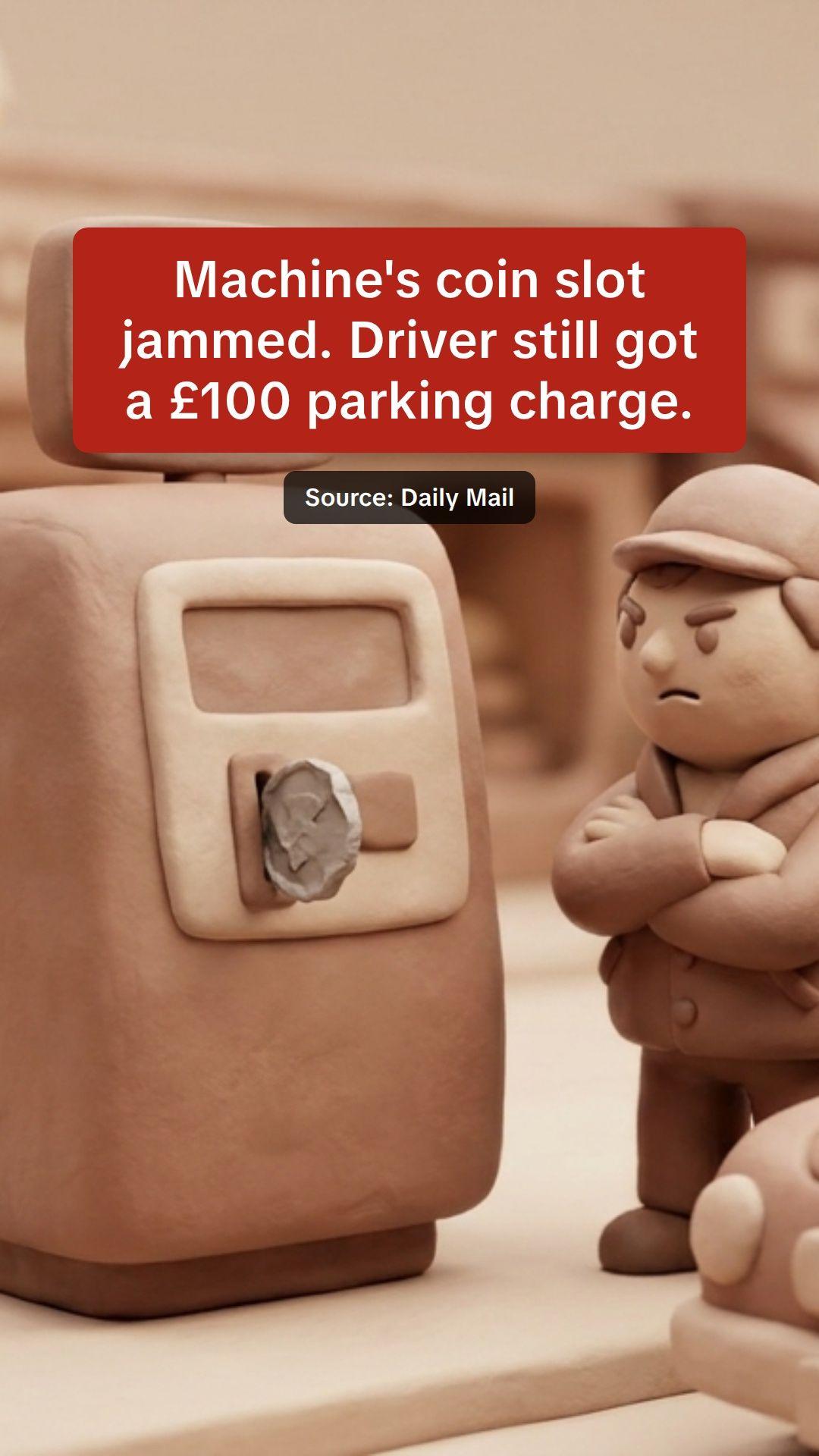
Car Park Machine Broken but Still Fined £100? What the Law Says About Faulty Pay Machines
You pull into a retail park, you want to do the right thing, and you head for the pay machine with your coins in hand. The slot is jammed. There is nobody to ask and no obvious alternative. You shop anyway, return to your car, and a few days later a £100 parking charge lands on your doormat.
That is broadly the situation behind a recent Daily Mail money column, where a driver wrote in after being charged at a retail park despite the machine's coin slot being jammed. It is a frustrating scenario, and one that raises a question many drivers never think about until it happens: if you genuinely tried to pay and couldn't, does the charge stand?
What happened
According to the Daily Mail piece, the driver went to pay at a retail-park machine but couldn't, because the coin slot was jammed. They were later issued with a parking charge notice (PCN) of £100 and asked how they could challenge it.
The source gives us the outline rather than every detail, so it is worth being clear about what we don't know. We can't say what the signage told drivers to do if the machine failed, whether a pay-by-phone option existed, or how the operator responded. Those details matter enormously, as we'll see below. What the story does show is a pattern that will be familiar to many readers: a driver acting in good faith, a piece of kit that didn't work, and a charge that arrives regardless.
Why it matters
Faulty equipment is one of the most common sources of parking disputes, and it sits in an awkward corner of the system. The operator knows the machine is theirs, but the driver is the one who pays the consequences when it fails.
A few things make this worse in practice.
Payment is increasingly digital. Many car parks now rely on apps, text payments or ANPR (automatic number plate recognition) with no physical ticket. Where cash machines remain, they tend to be older and more prone to faults. Drivers without a smartphone signal, a data plan, or the confidence to download an app on the spot can be left with no real way to comply.
ANPR changes the dynamic. Cameras record when you enter and leave. They can't record that you stood at a broken machine for five minutes trying to feed it coins. Unless you capture that yourself, the operator's system sees a vehicle that stayed without paying.
The sums are small but the principle isn't. A £100 charge is enough to be painful, but not always enough to make people feel it is worth fighting. Operators know this, and that is part of why disputes about faulty machines can go unchallenged. Recent posts on this site have covered how supermarket parking charges of £100 work, and the same logic applies on retail parks.
The legal angle
This is general information, not legal advice, and the outcome of any individual case depends on its facts. But there are some established principles worth understanding.
Private charges are a matter of contract, not a fine
A private parking charge is not a fine in the legal sense. Councils issue penalty charge notices under statute for on-street and some off-street contraventions. A private operator on a retail park is relying on contract law: the signs set out terms, and by parking you are treated as accepting them. If you break those terms, the operator may seek payment of a charge.
The Supreme Court's decision in ParkingEye v Beavis [2015] UKSC 67 confirmed that a £85 charge at a retail park was enforceable and not an unlawful penalty, mainly because the operator had a legitimate interest in managing the car park. That case is often cited by operators, but it concerned an overstay, not a driver who had been prevented from paying. A faulty machine raises a different question: did the driver actually have a fair opportunity to comply with the terms?
The "I tried to comply" argument
A broad principle in contract law is that a party generally shouldn't be able to rely on a breach that their own conduct caused or made unavoidable. In parking terms, that argument runs: the operator offered parking on condition of payment, but its own machine prevented payment. Whether this succeeds depends on the evidence, the wording of the signs, and whether alternatives were available. It is an argument, not a guarantee.
Many car parks display wording along the lines of "if the machine is out of order, please pay by phone or app" or "contact the operator." If that was on the signs and you didn't use it, the operator will say you had a route to comply. If there was no such wording, or the alternative was unworkable, the argument is stronger.
Keeper liability and the Protection of Freedoms Act 2012
If the operator doesn't know who was driving, it can only pursue the registered keeper if it follows the rules in Schedule 4 of the Protection of Freedoms Act 2012 (POFA). That schedule sets strict requirements for the content and timing of notices sent to keepers. Where an operator doesn't meet them, it generally can't transfer liability to the keeper, though it may still pursue the driver if identified.
Timings differ depending on whether a ticket was placed on the windscreen or the operator relied on ANPR, so it is worth checking the dates on any letter against the official wording of the Act, or seeking advice.
Codes of practice and independent appeals
Most private operators belong to an accredited trade association, either the British Parking Association (BPA) or the International Parking Community (IPC). Each has a code of practice and an independent appeals route: POPLA for BPA members, and the Independent Appeals Service for IPC members. Our guide to BPA versus IPC membership explains the difference.
The wider rulebook is also in flux. The government has been working on a single statutory code of practice for private parking under the Parking (Code of Practice) Act 2019, with proposals such as a £100 cap and a grace period. Our post on new private parking rules and the 10-minute grace period covers what has been proposed. Because timings and details can change, check the current position on gov.uk rather than assuming any new rule is already in force.
What drivers should know
If you are in this position, or want to be prepared, here is what tends to matter.
Before you leave the car park
- Photograph the machine. Capture the jammed slot, any "out of order" message, and the machine's location or ID number if it has one. Make sure the photo is time-stamped, which most phones do automatically.
- Photograph the signs. Get a wide shot of the entrance and the payment terms, and a close-up of any wording about what to do if the machine fails. This is crucial evidence of what you were told.
- Try the alternatives, and record it. If there is a pay-by-phone number or app, try it. Screenshots of failed attempts, error messages, or a lack of signal are all useful. A successful payment by another method of course solves the problem.
- Report the fault. If there is a helpline or contact number on the machine, call or text it and note the time. Many sites list a number for reporting faults.
- Keep your receipts. If you shopped or ate nearby, your receipt shows you were a genuine customer at that time, though it doesn't prove you tried to pay for parking.
After the charge arrives
- Don't ignore it. Unanswered letters tend to escalate, with reminders, debt recovery letters and in some cases court claims. Silence rarely makes a PCN disappear.
- Check the basics. Look at the date, the location, the vehicle registration, and who is named as the creditor. Errors on the notice can matter.
- Appeal in writing, in your own words. State the facts clearly: you attempted to pay, the machine was faulty, here is your evidence. Keep it factual and avoid long emotional accounts. Our guide to appealing with a free template may help with structure.
- Mind the discount window. Many operators offer a reduced amount for paying early. Paying can end the matter but may also be treated as accepting the charge, so think carefully before deciding.
- Use the independent route if refused. If the operator rejects your appeal, it should tell you how to escalate to POPLA or the IAS. Our step-by-step POPLA guide explains what to expect.
Don't forget the keeper question
If the notice is addressed to you as registered keeper, you are not obliged to name the driver, though doing so can change who is liable. Keeper obligations under POFA are narrower than many people assume, and the details are worth checking before replying. If the amount at stake is significant or you are unsure, consumer advice organisations such as Citizens Advice can help.
A word on parking apps and machine faults
This isn't a new problem. Our earlier post on parking apps and broken meters looks at similar issues on council-run sites, where the rules and appeals route differ from private land. Keeping the two systems distinct matters, because a council penalty charge goes to the council and then an independent tribunal, not to POPLA.
Looking ahead
The headline case is a small one, but it points to bigger questions.
Will reform address faulty equipment? The planned statutory code is intended to bring consistency to private parking, including how operators handle appeals and what counts as a fair process. Whether it will deal directly with broken machines, and how, isn't something we can predict. What is clear is that the direction of travel is towards more standardised rules and more oversight.
Cashless is spreading. As more sites drop cash completely, a jammed coin slot may become a rarer problem, but it will be replaced by others: app crashes, no mobile signal, and drivers who simply can't or won't use a smartphone. The underlying question will stay the same: did the driver have a reasonable way to pay?
Evidence is the great equaliser. In almost every dispute of this kind, the driver who photographs the fault, records the failed attempt, and keeps copies of everything is in a far stronger position than the one who relies on memory. It takes two minutes at the machine and can make all the difference months later.
The takeaway
A broken pay machine doesn't automatically cancel a private parking charge, and it doesn't automatically make one valid either. What matters is what the signs said, what alternatives existed, and what proof you can produce. If you hit a faulty machine, document everything on the spot, try any other payment route, report the fault, and appeal promptly and calmly if a charge follows. For anything involving a large sum, court papers, or a complicated set of facts, speak to Citizens Advice or a qualified adviser, and check the official guidance from gov.uk and the relevant appeals service for the rules that apply to your case.
Written by
The Parking Ticket Pal Editorial Team
Source-checked parking guidance