
London Parking Permit Fees: Why Some Drivers Pay £1,100
London's emissions-based resident parking permits range from £39.50 to more than £1,100. Discover why borough charges differ and what drivers can do.

The Parking Ticket Pal Editorial Team
14 October 2026
London Parking Permits: Why a Diesel Driver Could Pay 28 Times More Than a Neighbour Borough
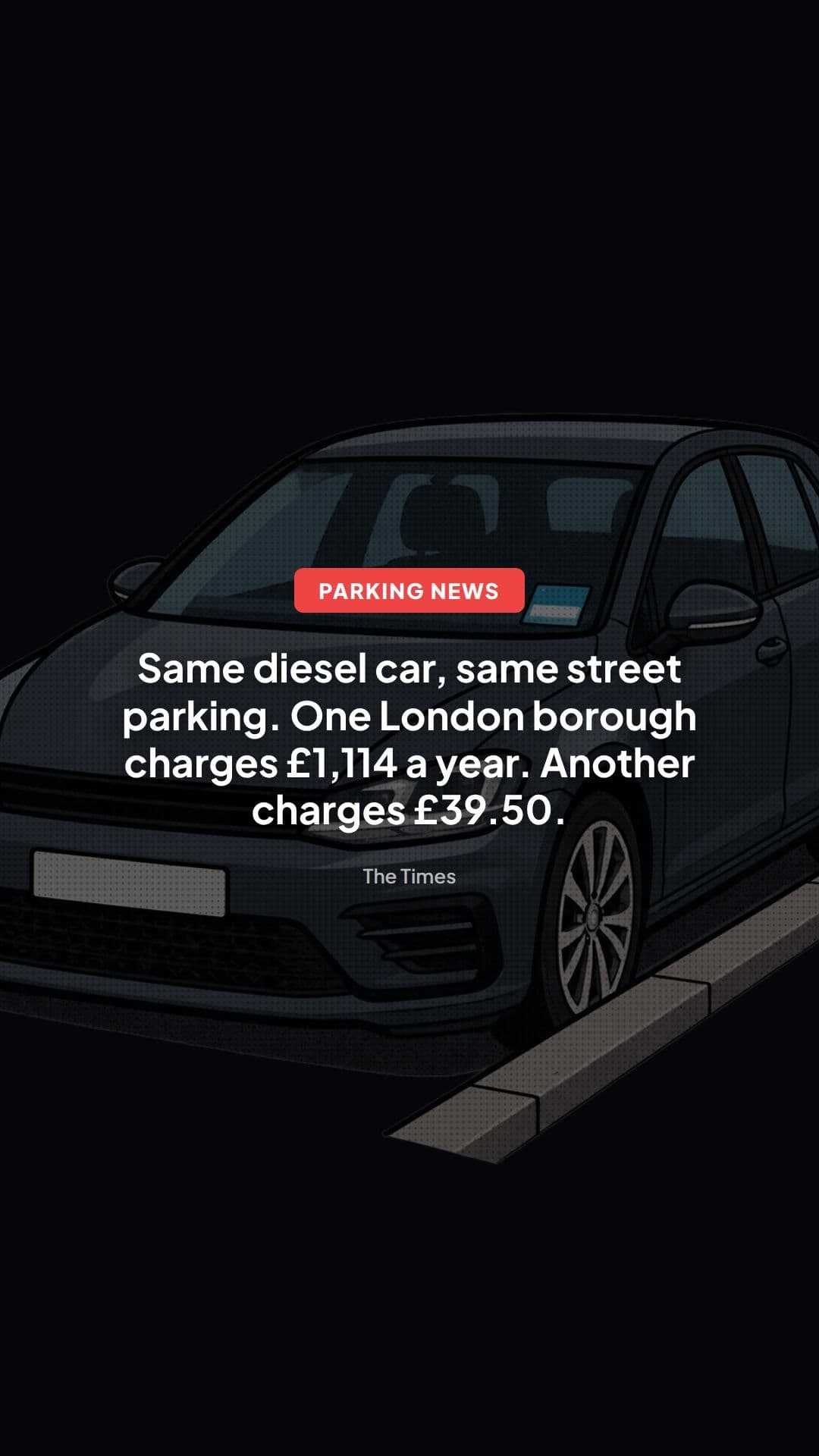
Picture two drivers with similar diesel cars. One lives in Redbridge and pays £39.50 a year for a residents' parking permit. The other lives in Islington and, according to reporting by The Times, could face a bill of up to about £1,114 for the same twelve months. Neither is doing anything wrong. They simply live a few miles apart, under different councils with different ideas about what a parking permit is for.
That gap, roughly 28 times between the cheapest and dearest figures quoted, is the sharpest illustration yet of how emissions-based permit pricing is reshaping the cost of owning a car in the capital. Here is what is going on, why it is legal, and what drivers can sensibly do about it.
What the story says
The Times reports that annual residents' permit costs now vary dramatically between London boroughs where pricing is linked to vehicle emissions. At the top end, some diesel drivers in Islington face charges of up to about £1,114. At the bottom, a permit in Redbridge costs £39.50.
Note the wording "up to". Emissions-based schemes work in bands, so the headline figure is the ceiling, not what every Islington motorist pays. A small, low-emission car in the same borough will cost far less. The story is less "Islington is expensive" and more "your vehicle's emissions profile and your postcode now combine to decide your bill".
How emissions-based permit pricing works
Traditionally, a residents' permit was a flat administrative fee. Over the past decade, many boroughs have moved to a sliding scale. Councils differ in the detail, but the common building blocks are:
- Fuel type. Diesel often attracts a surcharge, or sits in a higher band, because of nitrogen dioxide and particulate emissions.
- CO2 output. Many schemes use the grams-per-kilometre figure recorded on the vehicle's records.
- Engine size or vehicle size. Some boroughs use these as a proxy, and a few have looked at weight.
- Euro emissions standard. Newer diesels meeting Euro 6 may be treated differently from older ones.
- Electric vehicle discounts. Fully electric cars frequently get the lowest tier, sometimes the cheapest on the whole scale.
- Additional vehicles. A second or third permit per household often costs more than the first.
Because every borough picks its own mix and its own price points, there is no London-wide rate card. That is how you end up with a £39.50 permit in one place and four figures in another.
Why it matters beyond the headline
Parking as an environmental tool
Councils increasingly present permit pricing as part of their air quality and climate strategies rather than as a simple charge for kerb space. The reasoning is that an annual permit is one of the few recurring costs a council directly controls and that every resident on a street pays. Nudging households towards cleaner or fewer vehicles is cheaper than building new infrastructure.
Critics see it differently. They argue that a diesel bought in good faith years ago, partly because of earlier government encouragement of diesel, is now being penalised, and that many owners cannot simply swap cars. Others note that a surcharge is a blunt instrument if the car barely moves, because a rarely driven diesel pollutes far less than its band implies.
The postcode effect
The practical consequence is that moving house a short distance could change your annual costs by hundreds of pounds. For anyone choosing a rental, buying a flat, or renewing a lease, the permit regime is now a genuine part of the true cost of living somewhere. It also affects tradespeople and carers who live in controlled parking zones (CPZs) and depend on an older diesel van or car.
Stacking with other charges
London drivers already juggle ULEZ, the Congestion Charge and, in some areas, other schemes. A permit surcharge is another layer on top. Our wider coverage of the cost trend is in why resident parking permits now cost over £1,000, which looks at the top of the price range. The point here is the variation in how those figures are reached.
The legal angle
Drivers often ask whether a council is allowed to charge this much. This is general information, not legal advice, but the framework is worth understanding.
Where the power comes from. Councils designate parking places and set charges through traffic management orders made under the Road Traffic Regulation Act 1984 (RTRA 1984). Permit fees are part of that framework. In practice each borough sets its fees through its own formal process, which normally involves public notice and a chance to object.
What the fees are meant to do. Councils must exercise their traffic functions in line with section 122 of the RTRA 1984, which sets a duty to secure the expeditious, convenient and safe movement of traffic and the provision of suitable parking facilities. The same section lists other factors councils may consider, including air quality. That is the legal hook for emissions-based pricing. A council that can show a permit tariff supports traffic management and air quality objectives is generally on firmer ground than one that appears to be using it purely as a revenue-raiser. Councils also have rules on how surplus parking income can be spent.
Can a charge be challenged? Challenging the fee level itself is not like appealing a penalty notice. A Penalty Charge Notice (PCN) can be appealed through the council and then the independent tribunal. A permit tariff is a policy decision, and disputing it generally means either taking part in the consultation or, in rare cases, a legal challenge to the traffic order or the decision-making process. Statutory challenges to a traffic order have short time limits, and judicial review is a specialist, costly route. If you are considering this, speak to a solicitor or an organisation such as Citizens Advice rather than relying on a blog post.
The permit and the PCN link. Where permits intersect with enforcement is when drivers get it wrong. Parking in a resident bay with the wrong vehicle registered, or after a vehicle change, can lead to a PCN. Our guide to residents' parking permit rules and common traps covers the mistakes that most often cause problems, and the case-based post Islington permit parking appeal refused: key lessons shows how those disputes can turn out.
What drivers should know
These are points to check, not instructions for your own situation.
- Find your borough's tariff and your band. Council websites usually publish the fee table. Check whether it uses CO2, fuel type, engine size or Euro standard, because different boroughs will place the same car in different bands.
- Check the data held about your vehicle. Tariffs often rely on the records linked to your registration. If the fuel type, CO2 figure or first registration date looks wrong, ask the council how it gets that data and how to correct it. Always keep your V5C logbook details up to date.
- Watch the renewal window. A new financial year can bring a new tariff. Look for notices of changes to parking charges, since councils generally have to publicise these, and consider responding to consultations. They are the main way residents influence the outcome.
- Ask about alternatives. Some boroughs offer shorter permit periods, such as six months or a month, which can help if you are selling or changing cars. Ask about refund rules if you give up a permit mid-year, because policies vary.
- Consider the whole cost of the car. If a diesel sits in the top band, add the permit, any ULEZ exposure and fuel to weigh whether a change makes sense. A fully electric or lower-emission car can sit in a far cheaper tier, but the purchase decision involves much more than parking.
- Keep your permit and vehicle details aligned. Many permits are virtual and tied to a registration. If you change vehicles, update the permit before parking, not after. A mismatch is one of the easiest ways to pick up a PCN.
- If you do receive a PCN, use the proper process. Council PCNs have formal stages, and deadlines matter. Our guide to writing an effective informal appeal, with a free template explains how the first stage generally works.
- Check eligibility for exemptions. Some boroughs have reductions or exemptions for Blue Badge holders, low-income households or particular carers. These differ by council, so check the published criteria.
Fairness questions the debate raises
The Islington-versus-Redbridge contrast raises questions that are worth being open about.
Is the price signal working? A surcharge only changes behaviour if drivers can realistically respond. Someone with a newer diesel and no spare capital may simply pay. Whether the policy cuts pollution or mainly raises money is something each council should be able to evidence, and residents can reasonably ask.
Who bears the cost? People on modest incomes sometimes own older vehicles because they are cheaper to buy. A pricing system based on emissions can fall hardest on them, though many councils soften this with discounts and exemptions.
Consistency. A scheme that charges 28 times more in one borough than another for a comparable car invites the question of whether the policy aims are really that different, or whether councils are balancing their own budgets.
None of that makes the schemes unlawful. It does mean the debate is more political than legal, and that responding to consultations is the most effective lever residents have.
Looking ahead
Expect the trend to continue. Several pressures point the same way:
- More boroughs adopting emissions-based tiers, and existing ones adjusting their bands as the vehicle mix changes.
- Pressure on the tariff for electric vehicles. As electric cars become common, councils may look at how they price them, since a discount that is cheap to give when few cars are electric becomes costly when many are.
- Competing demands on council budgets, which can make parking income more attractive.
- Continued scrutiny, from press coverage like The Times story to local campaigns and Freedom of Information requests about how permit income is used.
For drivers, the sensible stance is to treat the permit as a variable cost that depends on both your car and your address. Read your borough's tariff before you renew, check the details held on your vehicle, and take part in consultations when councils propose changes. Where a real dispute arises, such as a PCN you believe is wrong, use the formal process and official guidance, and seek independent advice for anything high-stakes.
The £39.50 and £1,114 figures will not stay fixed, but the underlying lesson will: in London, where you park and what you drive now decide your bill together.
This article is general information about UK parking and motoring rules and is not legal advice. For your own circumstances, check your council's published guidance or seek advice from a qualified professional.
Written by
The Parking Ticket Pal Editorial Team
Source-checked parking guidance
Ready to Challenge Your Ticket?
Let our AI analyse your PCN and generate a professional appeal letter in minutes.
Start Free Appeal