
Lane Fines Reach £37.7m: The Mistake Drivers Must Avoid
Over 1.17 million PCNs have been issued for lane errors in 2026. Find out what triggers these fines, your appeal rights and how to avoid them entirely.

The Parking Ticket Pal Editorial Team
16 September 2026
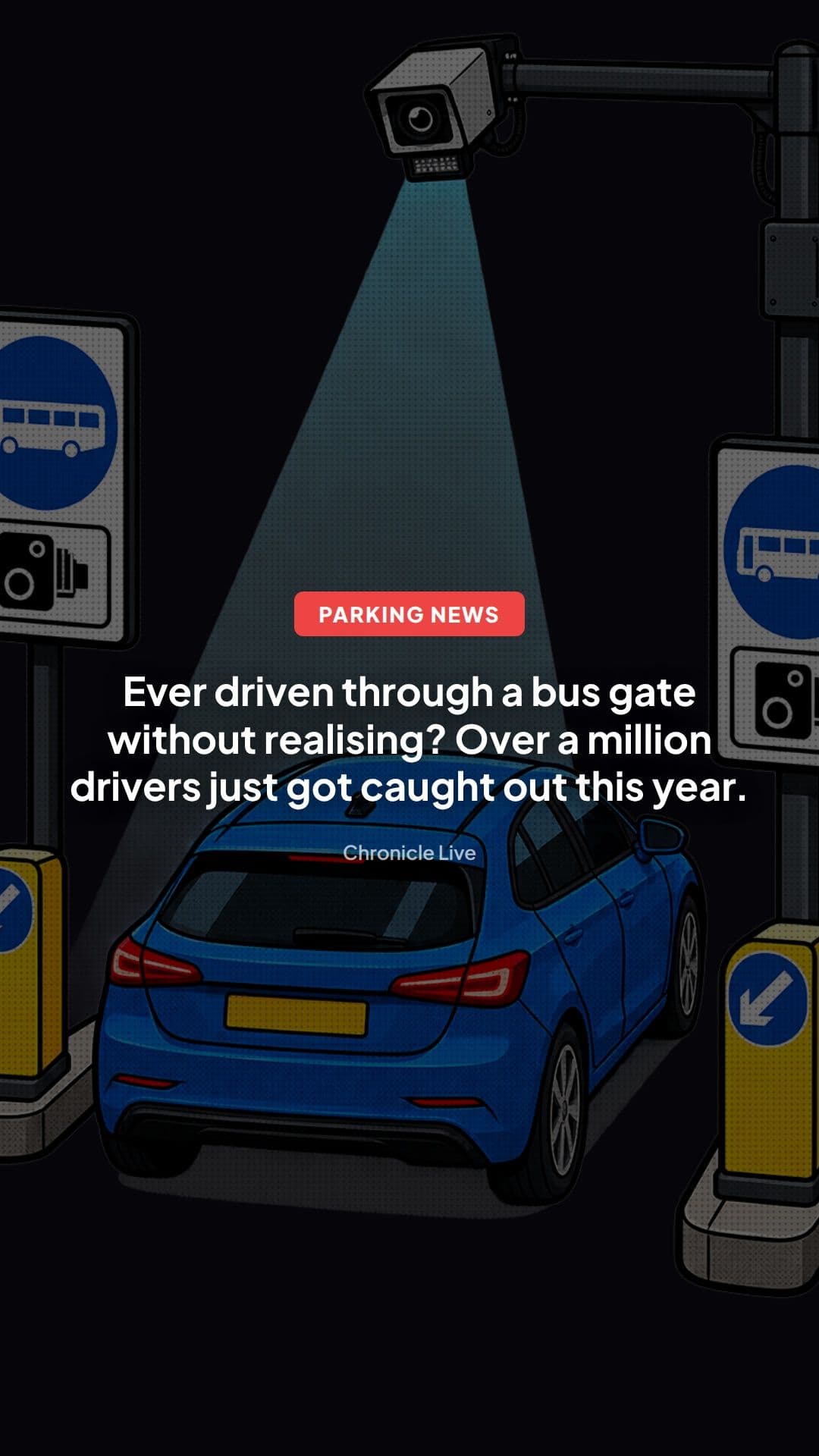
The £37.7 Million Mistake Happening at Every Junction in Britain
Picture this: you're indicating left, waiting patiently, when the driver behind decides to squeeze past on the inside because they're in a hurry. Or perhaps it's you making that split-second decision to nip into a lane you shouldn't, just to save thirty seconds on your commute. Multiply that scenario by well over a million and you start to understand why British drivers have collectively handed over £37.7 million this year alone for what sounds like a minor slip-up but is, in fact, one of the most consistently punished driving habits on UK roads.
The offence in question? Unlawful lane discipline, specifically driving in bus lanes, box junctions, or restricted lanes where you shouldn't be. It's a mistake so common that councils and Transport for London have turned it into one of the most lucrative enforcement categories going.
What Actually Happened
According to figures reported by Chronicle Live, more than 1.17 million penalty charge notices (PCNs) were issued in 2026 for this single category of lane-related contravention. That's not a typo. Over a million tickets, generating in excess of £37.7 million in fines, for drivers straying into lanes they weren't permitted to use.
To put that in perspective, that's roughly 3,200 penalty notices issued every single day of the year for this one type of mistake. It's not a niche enforcement quirk affecting a handful of unlucky motorists. It's a mainstream, everyday occurrence that's catching out ordinary drivers going about their ordinary business.
The overwhelming majority of these penalties come from automated enforcement. Cameras mounted on bus lane gantries, ANPR systems monitoring box junctions, and increasingly sophisticated council-operated surveillance mean that human error at a junction is far more likely to be caught than it would have been a decade ago. There's no traffic warden needing to spot you and scribble a ticket. The system does it instantly, and the fixed penalty notice lands on your doormat within days.
Why This Matters More Than You Might Think
There's a temptation to read a headline like this and think "well, those drivers shouldn't have broken the rules." And on one level, that's true. But the scale and consistency of these fines tell a more nuanced story about how road layouts, signage, and enforcement technology interact, often in ways that catch out perfectly careful, well-intentioned drivers.
Bus lanes and box junctions are notorious for being poorly signposted, oddly timed, or genuinely confusing to navigate at speed. A bus lane that's only restricted between 7am and 10am on weekdays, for example, requires a driver to process a sign, do the mental arithmetic, and make the right call, all while also watching for pedestrians, cyclists, and other vehicles. Miss the small print on a sign, misjudge the timing, or simply follow the car in front into what turns out to be a restricted lane, and you've committed an offence, whether or not you intended to.
Then there's the box junction problem. Yellow box junctions exist to stop gridlock, and the rule is simple in theory: you must not enter unless your exit is clear. In practice, misjudging the flow of traffic ahead, or being forced to stop because someone else box junctions ahead, are among the most commonly disputed contraventions in the country. It's genuinely one of those rules where camera evidence and human judgement diverge, because a camera captures a still image while a driver was reacting to a fluid, fast-changing situation.
This is precisely why lane and junction-related PCNs generate such a high volume of challenges and complaints. They're not always straightforward "you broke the rule, pay the fine" scenarios. Many involve genuine ambiguity.
The Legal Framework Behind These Fines
Understanding your position starts with understanding what kind of penalty you've actually received, because it changes everything about how you respond.
Bus lane and box junction contraventions enforced by local authorities or TfL are typically issued under the Traffic Management Act 2004, and in London specifically, under the London Local Authorities Act and associated TfL enforcement powers. These are civil penalty charge notices, not criminal matters, and they don't carry penalty points. That's an important distinction from, say, being pulled over by police for dangerous driving.
If you receive a PCN for a lane contravention, it will typically come with a specific contravention code. Box junction offences, for instance, are usually recorded as Code 31, while bus lane infringements have their own dedicated coding. These codes matter because they determine what defences are actually available to you and how the enforcement authority must justify the penalty.
Crucially, you have the right to challenge a PCN. The process generally follows this structure:
- Informal representation to the issuing council or TfL, usually within 14 days if you want to benefit from a reduced early payment discount (though making representations will pause this clock).
- Formal representation if the informal challenge is rejected, which the authority must respond to in writing.
- Independent tribunal appeal, either through the Traffic Penalty Tribunal (outside London) or the London Tribunals service, if formal representations fail.
At each stage, drivers can raise defences including unclear or absent signage, contradictory road markings, being forced into the lane by another vehicle or road layout, mechanical necessity, or genuine emergency. Camera evidence isn't infallible either. Timestamp errors, poor image quality, and misread number plates all feature regularly in successful appeals.
What Drivers Should Actually Know
If you've received a PCN for a lane-related contravention, or want to avoid joining the 1.17 million who already have, a few practical points are worth bearing in mind.
Check the exact wording and code on your PCN. Different contravention codes carry different legal requirements for signage and enforcement, and the specifics matter enormously when building a challenge.
Photograph everything if you believe signage was inadequate. If you genuinely didn't see a sign, or a sign was obscured, faded, or contradicted by road markings, evidence gathered as soon as possible after the event is far more persuasive than a recollection weeks later.
Don't ignore it. Penalty charge notices don't disappear if unaddressed. They escalate, potentially leading to increased charges, debt recovery action, and in the most serious cases, bailiff involvement. Whatever your view on the fine's fairness, responding within the deadlines preserves your options.
Understand that early payment discounts have strings attached. Most councils offer a 50% reduction if you pay within 14 days, but doing so is generally treated as an admission and closes off your right to appeal. If you intend to challenge the ticket, don't pay early and assume you can dispute it afterwards.
Familiarity with a route doesn't protect you. Many drivers caught by lane cameras are locals who've driven the same road for years, unaware that restrictions changed, hours were extended, or new camera enforcement was introduced. Councils don't always publicise these changes as prominently as they should.
Looking Ahead
The direction of travel here seems clear. Camera-based enforcement is cheaper, more consistent, and more scalable for councils and transport authorities than relying on traffic wardens, and there's little incentive for local authorities to dial it back given the revenue involved. With £37.7 million generated from this category already this year, and enforcement technology only becoming more sophisticated, the numbers are unlikely to shrink any time soon.
What might change is public and political pressure around fairness. As disputes over unclear signage and ambiguous box junction enforcement continue to surface, there's growing scrutiny on whether some of these million-plus penalties are entirely justified, or whether poor road design and confusing signage are effectively functioning as a revenue stream disguised as road safety enforcement.
For now, the most sensible approach for any driver is simple vigilance: know your route, understand the restrictions before you set off, and if a PCN does arrive, treat it as something worth properly investigating rather than an automatic bill to pay. Given the sums involved, a few minutes checking your rights could save considerably more than a few minutes at a junction ever would.
Written by
The Parking Ticket Pal Editorial Team
Source-checked parking guidance
Ready to Challenge Your Ticket?
Let our AI analyse your PCN and generate a professional appeal letter in minutes.
Start Free Appeal