RAC urges reform as private parking PCNs hit £170
RAC calls for urgent reform after motorists say confusing private parking PCNs pressure early payment of £170. Learn your rights, wording tricks and next steps.

Hannah MacLeod
10 June 2026
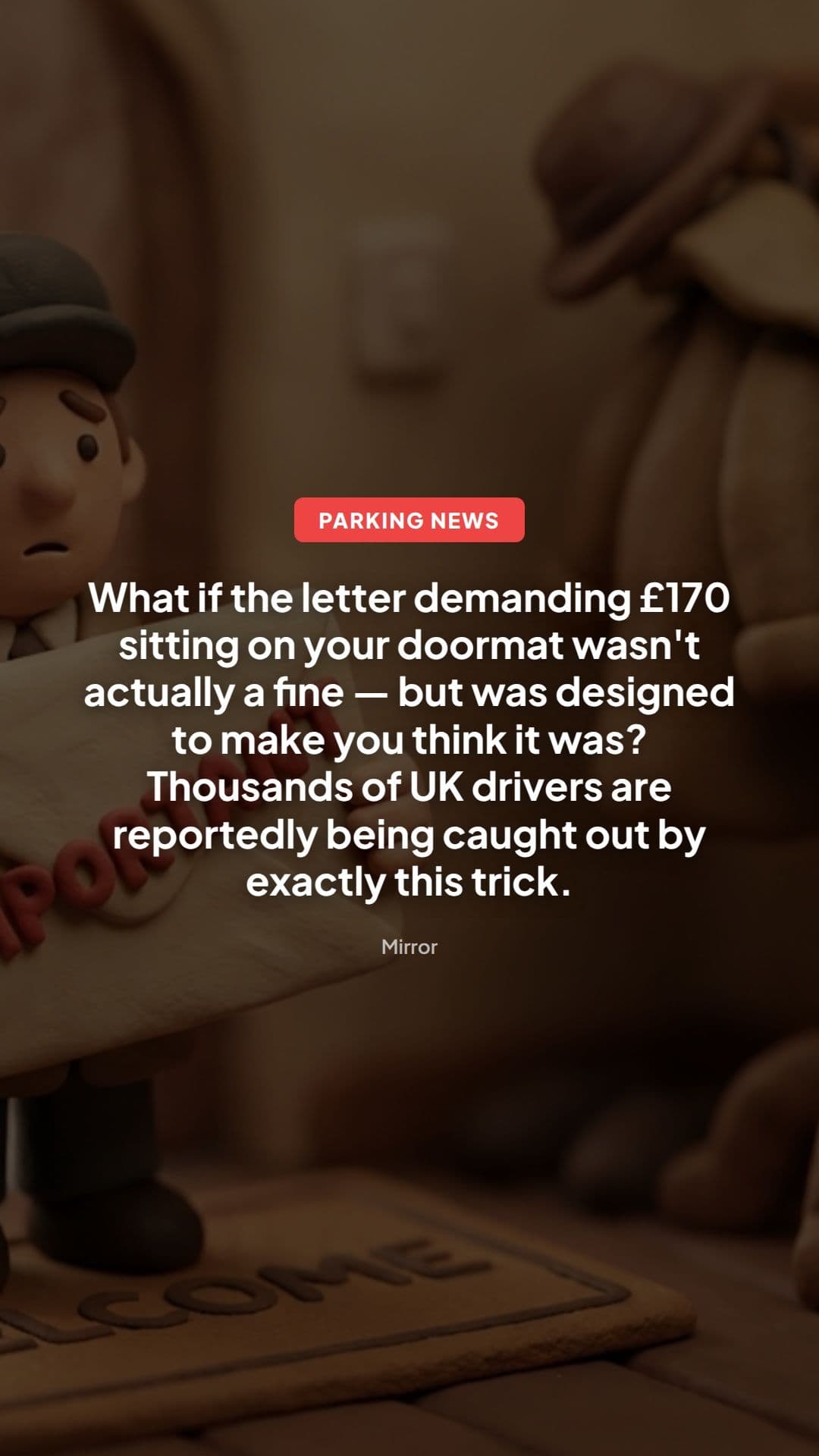
Are Drivers Being Deliberately Confused Into Paying £170 Parking Fines?
The RAC is demanding urgent reform — and when you understand how private parking companies operate, it's hard to argue they're wrong
Picture this: you return to your car to find an official-looking notice tucked under your windscreen wiper. It bears the word "PENALTY" in bold letters, lists a charge of £170, and warns of further action if you don't pay promptly. Your heart sinks. You assume you've done something wrong, and — wanting to avoid the hassle — you pay up within the discounted window.
What you may not realise is that you've just handed money to a private company with no statutory power to enforce that charge whatsoever. You weren't legally obliged to pay a penny. And according to the RAC, this scenario is playing out thousands of times every day across the United Kingdom — not by accident, but by design.
What's Actually Happening
The RAC has issued a formal call for urgent reform following a wave of driver complaints about private parking notices that are, at best, deeply misleading and, at worst, deliberately engineered to extract money from people who don't know their rights.
The core of the problem lies in language. Private parking companies issue what they call "Penalty Charge Notices" — or PCNs — a term that most drivers associate with official, legally enforceable fines issued by local councils or Transport for London. The problem is that private operators have no legal authority to issue penalty charges. What they're actually issuing is a parking charge notice — a contractual invoice based on the alleged breach of terms displayed (or not always clearly displayed) on signage in a private car park.
Same acronym. Completely different legal weight.
The RAC's concern is that operators are knowingly exploiting this confusion. A notice that looks official, uses intimidating language, and threatens escalating costs creates enormous psychological pressure on drivers to pay — even when the charge may be wholly unenforceable, disproportionate, or based on a technicality that would collapse under scrutiny.
Why This Matters: The Scale of the Problem
This isn't a minor consumer irritation affecting a handful of unlucky motorists. Private parking enforcement has grown into a multi-million-pound industry, and the incentive structures within it are deeply problematic.
Private parking companies operate on a model where issuing notices and securing payment is profitable. The more notices issued, and the higher the proportion of drivers who simply pay up without questioning the charge, the more money flows in. There is no independent body with real teeth overseeing day-to-day enforcement standards, and the appeals process — while it exists — is designed in a way that many drivers find opaque and intimidating.
The £170 figure cited in the RAC's concerns is particularly significant. Outside London, council-issued penalty charge notices for most parking contraventions are capped at £70 for lower-level offences and £100 for higher-level ones, with a 50% discount for early payment. The fact that private operators are charging £170 — and framing it in ways that mimic official enforcement — represents a serious gap in consumer protection.
Campaigners have long argued that the confusion between council-issued PCNs and private parking charge notices is not incidental. It is, they say, a feature rather than a bug.
The Legal Angle: What Private Operators Can and Cannot Do
Understanding the legal framework here is genuinely empowering for drivers.
Private parking companies do not have statutory enforcement powers. They cannot issue fines in the legal sense. What they issue is a contractual claim — essentially an allegation that by parking on their land, you entered into a contract (via the signage) and then breached its terms. The charge is their claimed remedy for that breach.
This distinction matters enormously because it means:
- You cannot be prosecuted for failing to pay a private parking charge notice in the same way you could for ignoring a council PCN
- The company must prove a valid contract existed — which requires clear, legible signage at the point of entry
- The charge must represent a genuine pre-estimate of loss or a legitimate interest, not simply a punitive sum designed to deter
The legal framework governing private parking enforcement sits primarily within contract law and is shaped by several important cases. The Supreme Court ruling in ParkingEye Ltd v Beavis [2015] UKSC 67 established that a charge of £85 for overstaying in a retail car park could be enforceable as a legitimate commercial interest — but it also set a threshold. The court was clear that charges must be proportionate and that the terms must be adequately communicated to drivers.
More recently, the Parking (Code of Practice) Act 2019 — which underpins the single Code of Practice for private parking — was designed to address many of these issues. The Code, which came into effect in 2022 and has since been updated, introduced a £100 cap on private parking charges (with a 50% discount for prompt payment, bringing it to £50) and mandated a 10-minute grace period before any notice can be issued after a parking session ends.
The fact that charges of £170 are still being reported suggests that either some operators are non-compliant with the Code, or that the enforcement and oversight mechanisms are failing to keep pace with practice on the ground.
Private parking operators are required to be members of either the British Parking Association (BPA) or the International Parking Community (IPC) — the two accredited trade bodies — in order to access DVLA data to trace registered keepers. Membership of these bodies also requires adherence to their respective codes of conduct. Drivers who receive a notice from a non-member operator have strong grounds to challenge it on that basis alone.
What Drivers Should Know: Practical Steps
If you receive a private parking charge notice, here is what you need to do — and critically, what you should not do:
Do not panic and pay immediately. The discounted early payment window is designed to make you act before you've had time to think. Take a breath.
Establish who issued the notice. Is it from a local council, Transport for London, or a private company? Check the letterhead carefully. Council notices reference specific legislation (typically the Road Traffic Act 1991 or the Traffic Management Act 2004). Private notices will typically reference contract terms.
Photograph everything. Return to the location if you can and photograph all signage — particularly the entry signs where contract terms should be displayed. Photograph the bay markings, any pay-and-display machines, and the general layout. Poor, obscured, or missing signage is one of the most effective grounds for appeal.
Check the charge amount. Under the current Code of Practice, private parking charges should not exceed £100 (or £60 in some lower-tariff situations). A notice for £170 may already be non-compliant.
Appeal at the first opportunity. Private operators must offer an internal appeals process before you can escalate to an independent appeals service. For BPA members, this is POPLA (Parking on Private Land Appeals). For IPC members, it is the Independent Appeals Service (IAS). These are free to use and the operator cannot pursue debt recovery while an appeal is pending.
Keep records of everything — including the date and time you received the notice, any payment receipts, and all correspondence.
Looking Ahead: Will Reform Actually Come?
The RAC's call for change is well-timed but not new. Consumer groups, motoring organisations, and MPs have been raising these concerns for years. The Parking (Code of Practice) Act 2019 was itself a response to sustained pressure — and while it improved matters in some respects, the implementation has been patchy.
The fundamental problem is structural. A system that allows private companies to use terminology that mimics official enforcement, while facing only light-touch oversight, will always create opportunities for exploitation. The RAC's specific call for clearer naming conventions — distinguishing private charge notices from statutory penalty charge notices in law — is a sensible starting point.
There is also a broader question about the DVLA's role. The agency supplies registered keeper data to accredited parking operators, effectively enabling the enforcement chain. Greater scrutiny of which operators access this data, and under what conditions, could act as a meaningful lever for reform.
For drivers, the most important takeaway is this: knowledge is your best defence. A private parking charge notice is not a fine. It is a contractual claim, and like any claim, it can be challenged, disputed, and — in many cases — successfully overturned. The companies issuing these notices are counting on the fact that most people won't know that. The more drivers who do, the less sustainable the current model becomes.
Reform may be slow in coming. But in the meantime, understanding your rights costs nothing — and could save you £170.
Written by
Hannah MacLeod
Traffic Law Specialist
Ready to Challenge Your Ticket?
Let our AI analyse your PCN and generate a professional appeal letter in minutes.
Start Free Appeal