
Exeter Car-Free Route U-Turn: £107k Planning Cost
Devon County Council may reopen Exeter’s Dryden Road to through traffic after spending £107,000 on its car-free scheme. What the decision means for drivers.

The Parking Ticket Pal Editorial Team
16 October 2026
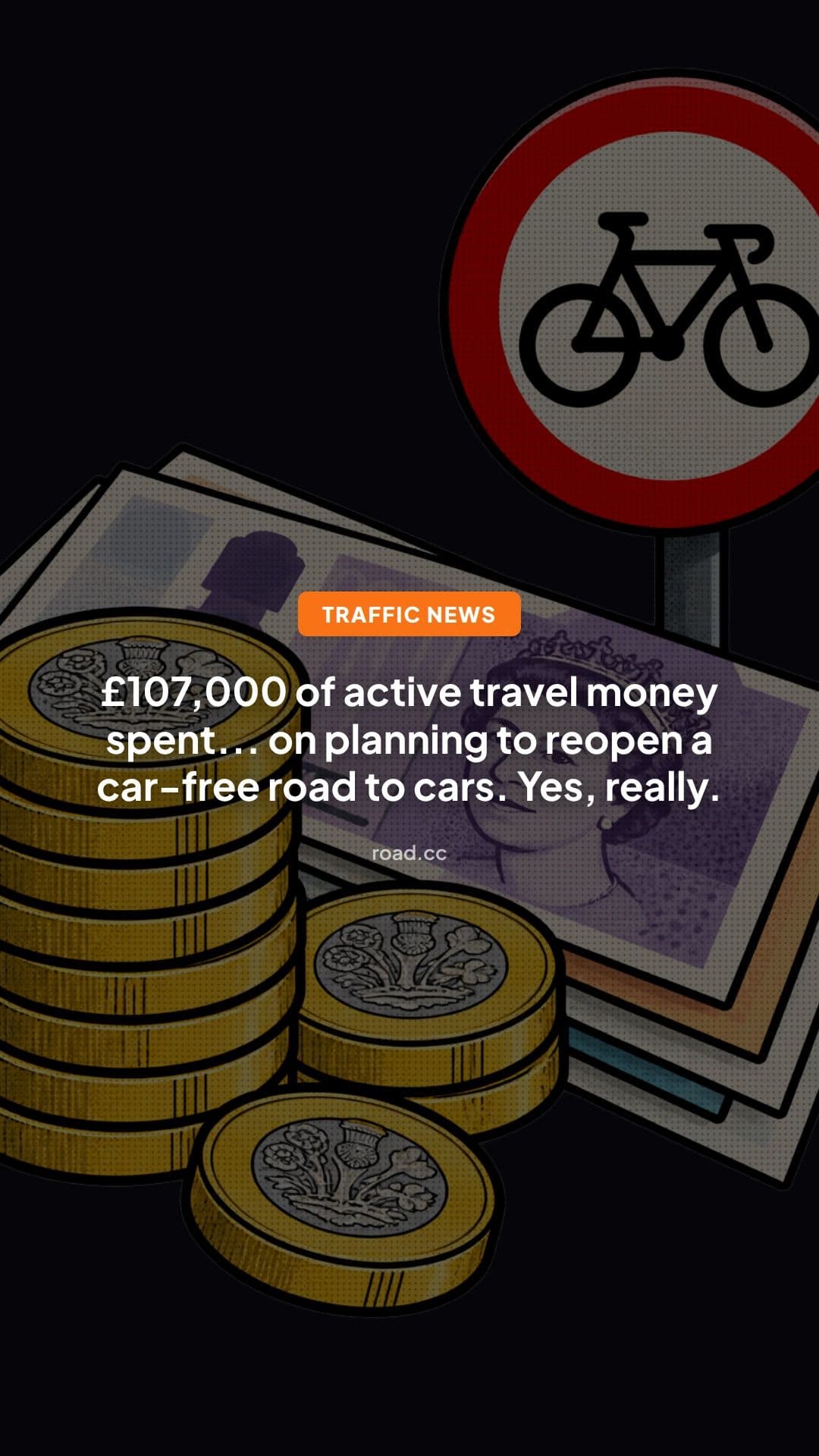
£107,000 to Close a Road, and Now a Vote to Reopen It: What the Dryden Road Row Means for Drivers
Few things irritate motorists and cycling campaigners alike quite like the sense that public money has been spent twice on the same stretch of tarmac. That is the charge hanging over Dryden Road in Exeter, where a street closed to through traffic since 2022 could now be reopened to cars.
Whatever your view on car-free streets, the story is a useful case study. It shows how road layouts change, how councils are held to account, and why drivers can't assume the roads they know will stay the same. Here is what has been reported, what the law says, and what to do if a street near you starts to change.
What happened
According to road.cc, Dryden Road has been closed to through traffic since 2022. Devon County Council has now approved a highways committee recommendation that could see it reopened to cars.
The detail that has prompted the strongest reaction is the cost. The report says £107,000 of active travel funding was spent on planning the current arrangement. The headline calls this "jaw-dropping", and the figure has become the focus of criticism.
It is worth being careful about what we know. The reported facts are that the closure has been in place since 2022, that the council has approved a committee recommendation that could lead to reopening, and that £107,000 was spent on planning. Beyond that, readers should check the council's own papers and the full road.cc report for the timetable, the exact legal mechanism and what any reopening would look like in practice. "Could be reopened" is not the same as "reopened", and several formal steps normally sit in between.
Why it matters beyond one road
The money question
Active travel funding is typically ring-fenced for walking and cycling schemes. When a scheme funded that way is reversed, critics see waste. Defenders of the original scheme may argue that a trial is meant to test whether a layout works, and that finding out it doesn't is a legitimate outcome.
Both positions have merit. The difficulty is that the public rarely sees a clear breakdown of what planning money buys, such as surveys, design work, consultation and traffic modelling. A headline figure of £107,000 invites suspicion unless it is explained. If you want to understand where the money went, local authority committee reports and transparency data are the place to start.
The "whiplash" problem for road users
Whether you drive, cycle, walk or run a business on the street, repeated changes are disruptive. Residents who bought homes expecting a quiet, closed-off road may now face traffic returning. Drivers who learned a new route after 2022 may have to change habits again. Businesses that reorganised deliveries around a closure face another reset.
Councils are right to review schemes that aren't working. But reversing one is rarely cost-free, and it tends to leave everyone a little less trusting of the next change.
A national pattern
Dryden Road is part of a wider debate about low-traffic schemes, filters and road closures across the UK. Some have been made permanent, some adjusted and some removed. Our guide to Oxford's traffic filters shows the opposite end of the spectrum, where filters have been introduced with camera enforcement and a detailed exemption system.
The legal angle
If you have ever wondered how a council can close a road, or reopen one, the answer lies in traffic regulation law. This is general information, not advice on any specific situation.
Traffic Regulation Orders
Most restrictions on who may use a road are created through a Traffic Regulation Order (TRO) under the Road Traffic Regulation Act 1984. Councils can use TROs to prohibit or restrict certain vehicles on a road, among other measures.
There are broadly two routes:
- Permanent TROs usually involve publicising proposals and allowing a period for objections before the order is made. The detailed procedure is set out in regulations covering England and Wales.
- Experimental TROs allow a council to try a scheme on the ground and gather evidence. Under section 9 of the 1984 Act, an experimental order can run for a maximum of 18 months, with objections considered during the trial period. After that, the council must decide whether to make it permanent, amend it or let it lapse.
Undoing a closure typically also requires a formal legal step. A council cannot simply remove bollards or signs and declare the road open. The order governing the restriction normally has to be varied or revoked, and the physical signs and layout need to match the legal position. That is one reason why committee approval is often the beginning of a process rather than the end.
The duties councils must balance
Two provisions often come up in these disputes:
- Section 122 of the Road Traffic Regulation Act 1984 requires authorities to exercise their functions so as to secure the expeditious, convenient and safe movement of vehicular and other traffic, including pedestrians and cyclists, so far as practicable.
- The network management duty under the Traffic Management Act 2004 requires a local traffic authority to manage its road network with a view to securing the expeditious movement of traffic on its own network and facilitating the same on others.
In practice, councils must weigh competing interests, and there is considerable room for judgement. That is why decisions like this are typically made by elected members in committee, with officers' recommendations in front of them.
Challenging a traffic order
Legal challenges to traffic orders are possible but narrow. Under the Road Traffic Regulation Act 1984, an order can be challenged in the High Court on limited grounds, such as the council acting beyond its powers or failing to follow the required procedure, and there is a short time limit of six weeks from the date the order is made. Disagreeing with a decision is not enough. If you are considering this, take specialist legal advice promptly.
For most people, the practical route is to respond to consultations, write to councillors and attend committee meetings.
Enforcement and your rights as a driver
Where a closure is enforced, the way it is enforced matters. Some road closures use physical barriers. Others rely on signs and cameras. If a restriction is enforced by camera, a penalty charge notice can be issued to the registered keeper, and drivers outside London can take disputes to the Traffic Penalty Tribunal. Our guide to unclear signage as a defence covers some of the principles, and the same logic often applies to moving traffic signs: the signs must be adequate and the order properly made for a penalty to stand.
What drivers should know
Here are practical points, particularly relevant if you drive in or around Exeter, but useful anywhere a layout is changing.
1. Don't assume the road is open until the signs say so. Even after a political decision, the legal and physical changes take time. A road that is "approved to reopen" may stay closed for weeks or months. Drive according to what is on the ground, not what you read in the news.
2. Be wary of sat nav lag. Navigation apps can take a while to reflect changes in either direction. After a reopening, your app may keep routing you around it. After any new restriction, it may keep sending you through it. Treat the signs as the authority.
3. Look for notices on lamp posts and at the roadside. Councils must publicise changes to traffic orders, and notices often appear on site and in local newspapers or on council websites. If you rely on a route for work, it's worth knowing where your council posts these.
4. If you receive a penalty notice for a road restriction, read it carefully. Check the date, time and location, the contravention alleged and what the signs said at the time. Take photographs of signs and road markings if you can safely do so. Know that there are deadlines for challenging a notice, and discounts for early payment that can be lost if you delay. Our guide to formal representations explains the process in more detail.
5. Use consultations. If you want a say, consultations and committee meetings are the moments that count. Responses framed around evidence, such as journey times, safety concerns, access for disabled residents or deliveries, tend to carry more weight than general complaints.
6. Know your access needs. Many schemes include exemptions, for example for emergency services, buses, or residents. Blue Badge holders sometimes have specific provisions too, though these vary from scheme to scheme. If you rely on access, check what applies locally rather than assuming.
Looking ahead
The Dryden Road decision raises a question that other councils will be asking as they review schemes introduced in recent years: how do you test a road layout, learn from it and, if necessary, change course, without losing public confidence in the process?
A few things are worth watching:
- The formal process. The committee approval is a step. Follow the council's papers for what comes next, including any order changes and timescales.
- The accounting. The £107,000 figure will keep attracting scrutiny. Greater transparency about what funding delivered, and what was learned, would help any council defend its decisions, whichever way they go.
- The wider debate. Reversals like this will be cited by both sides: by those who say such schemes were never going to work, and by those who say councils back down too quickly. The honest answer is that outcomes depend on design, local context and how well schemes are explained.
- The next set of changes. Reopening a road won't be the end of the story. Traffic patterns will shift again, and the pressure to improve cycling and walking routes hasn't gone away.
For drivers, the most useful takeaway is simple: road layouts are not fixed, and the rules attached to them can change faster than your habits. A little vigilance at the roadside is cheaper than a penalty notice.
This article provides general information about UK motoring and traffic law and is not legal advice. For decisions about challenging a traffic order or a penalty, consult official guidance, your local authority or a qualified professional.
Written by
The Parking Ticket Pal Editorial Team
Source-checked parking guidance
Ready to Challenge Your Ticket?
Let our AI analyse your PCN and generate a professional appeal letter in minutes.
Start Free Appeal