
Euro Car Parks Petrol Station Tickets Under Investigation
The CMA is investigating Euro Car Parks over petrol station parking tickets, including charges issued while drivers refuel, inflate tyres or charge EVs.

The Parking Ticket Pal Editorial Team
27 November 202610 min read
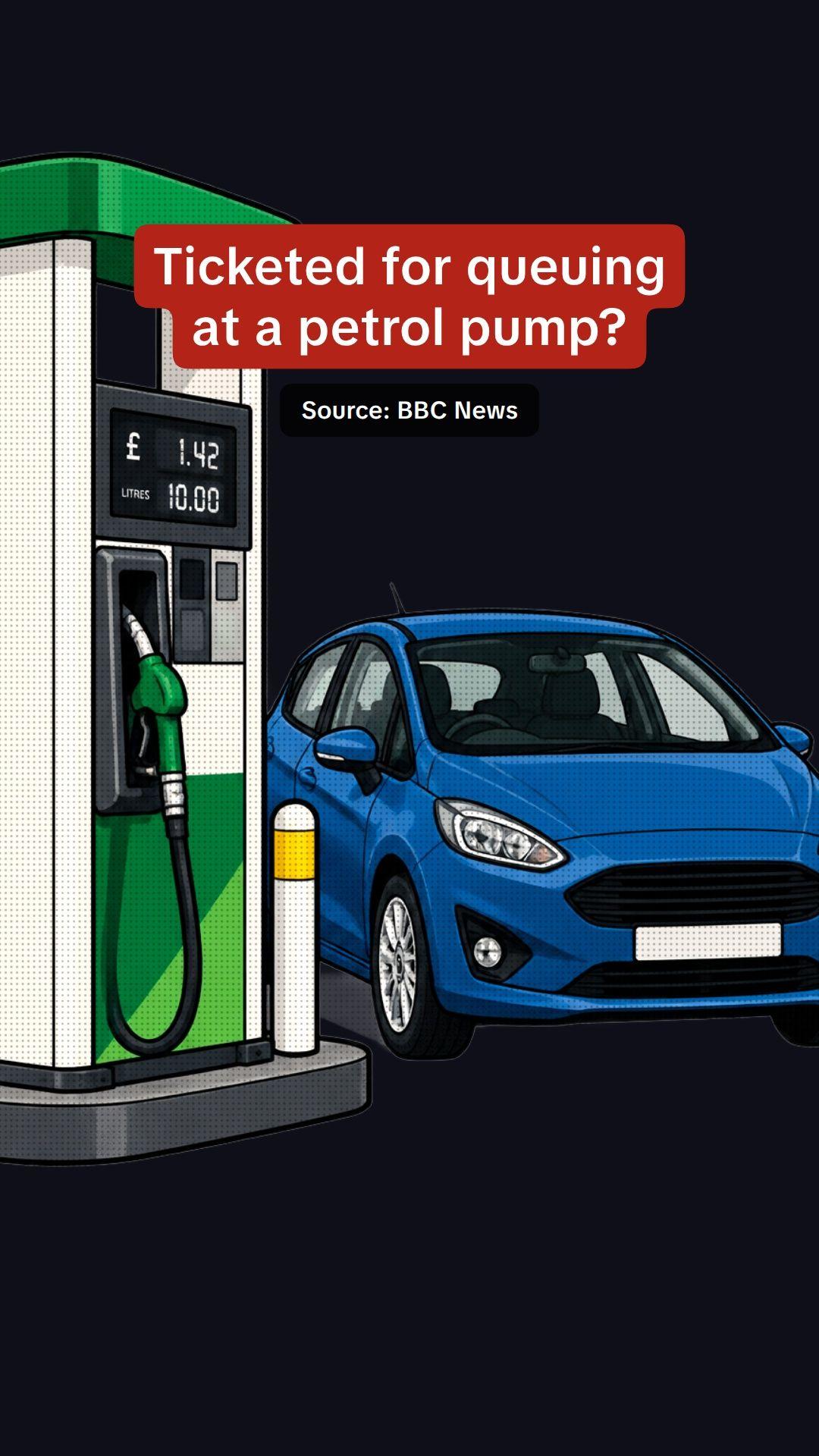
You pull onto a petrol station forecourt, fill the tank, perhaps top up your tyres or plug in an electric car. A few weeks later a letter arrives demanding £100 for "breaching the parking terms". You were, by any common-sense definition, a customer. Yet you are now a debtor in the making.
That is the experience many drivers have described to the competition regulator, and it is why Euro Car Parks is now under investigation. This post looks at what the probe covers, why forecourts are such a tricky setting for private parking enforcement, and what the law says about fairness.
What has actually happened
According to BBC News, the Competition and Markets Authority (CMA) is investigating whether parking tickets issued to drivers at petrol stations are fair. The complaints it cites include tickets issued while motorists were:
- refuelling their vehicles
- inflating their tyres
- charging electric vehicles
These are not parking in the way most people understand it. Nobody leaves their car on a forecourt and wanders off to the shops. Every one of these activities is something a forecourt exists to provide. The question for the regulator is whether it is fair to penalise drivers for doing them, and whether the way charges are presented and enforced treats customers properly.
This is not the first time the CMA has looked at the company. Our earlier piece on the CMA fine against Euro Car Parks covers that background. The BBC report concerns a separate investigation, and it is important not to assume an outcome. An investigation is not a finding. No decision has been reached on whether any rules were broken.
Why forecourts are a special problem
Private parking enforcement on a retail car park is usually built on a simple idea: you may park for free for a set time if you are a customer, and overstay or misuse the space and you breach the terms. Cameras using automatic number plate recognition (ANPR) record when a vehicle enters and leaves, and the operator calculates the time spent on site.
Forecourts upend that logic in several ways.
Dwell time is not the same as parking. A camera sees a car arrive at 2.00pm and leave at 2.40pm. It cannot see whether that was 40 minutes of parking or 10 minutes of fuelling, a queue for a busy pump, a phone call, a visit to the shop and a tyre check. Time-based systems are blunt instruments in a place where short, varied stops are the whole point.
Queues are outside the driver's control. At busy sites, drivers may wait for a pump to become free. Time spent in a queue is hard to describe as voluntary parking.
EV charging is slow by design. A rapid charge can take a good deal longer than filling a tank. If an operator's time limit was set with petrol in mind, an electric car can breach it simply by doing what the site advertises. We have looked at this problem before in our guide to EV charging parking fines and why drivers get shock PCNs.
Signage must work for a driver who is busy. Forecourts are often noisy, busy places with lots of competing signs, from fuel prices to promotions. A parking terms board that is easy to miss, or hard to read from a car window, is a weak basis for a contract.
The legal framework: how "fair" gets tested
Private parking tickets are not fines. They are, in legal terms, invoices based on a contract (or, in some cases, a claim for breach of the landowner's terms). That puts them squarely within consumer law.
The Beavis precedent
The leading case is ParkingEye v Beavis [2015] UKSC 67. The Supreme Court held that a £85 charge for overstaying a free car park was enforceable. It was not a penalty, because the operator had a legitimate interest in managing the car park and the charge was not out of proportion to that interest. The signage was prominent and the terms were clear.
It is a case operators rely on heavily, but it has limits. It concerned a driver who knowingly overstayed a free time limit, with clear signage. It does not automatically cover situations where the driver was doing exactly what the site invited, such as buying fuel or using a charger.
The fairness test
Under the Consumer Rights Act 2015, terms in consumer contracts must be fair and transparent. A term is unfair if, contrary to the requirement of good faith, it causes a significant imbalance in the parties' rights and obligations to the detriment of the consumer. Terms that are not prominent or are hard to understand can fall foul of the transparency rules too.
Whether a charge for refuelling or charging on a forecourt meets that test is precisely the kind of question the CMA appears to be examining. We do not know from the BBC report which specific legal provisions are in play, so it would be wrong to guess.
The CMA's expanded powers
Since April 2025, the Digital Markets, Competition and Consumers Act 2024 has given the CMA the ability to enforce consumer law directly, without having to go to court first. It can impose penalties of up to 10 per cent of a company's global turnover for breaches. That does not mean any penalty is likely here, but it explains why regulatory attention carries more weight than it once did.
Keeper liability
If a ticket arrives through the post after an ANPR capture, the operator generally needs to rely on Schedule 4 of the Protection of Freedoms Act 2012 (POFA) to pursue the registered keeper rather than the driver. That schedule sets out strict requirements for what the notice must contain and when it must be sent. Where an operator cannot meet those requirements, it may only be able to pursue the driver, and it often does not know who that was. Whether any specific notice complies is a technical question, and one where professional advice or official guidance is worth seeking.
What drivers should know
This is general information, not advice on any individual ticket. But there are some sensible points worth understanding.
Keep records when you use a forecourt
Evidence is the thing most drivers lack when a letter arrives weeks later. Habits that help:
- Keep the fuel receipt. It shows the time of purchase and proves you were a customer. Card statements work too.
- Photograph the signs on entry if the terms look unusual, including any time limits, the operator's name and the charge. Photos are time-stamped.
- Note EV charging sessions. App records show start and end times and the charger used.
- Record any queues or problems, such as a broken pump or charger.
Understand who is asking, and on what basis
Check whether the letter comes from a private operator or a council. A council penalty charge notice has a statutory appeals route. A private parking charge does not, and is based on contract. Our guide to parking on private land explains the distinction.
Don't ignore it, but don't panic either
Ignoring letters rarely makes them go away. Equally, a firm demand is not a court judgment. In broad terms, the usual process is an appeal to the operator, then an independent appeals body if that fails. Which body depends on the trade association the operator belongs to. Our explainer on BPA versus IPC membership sets out the difference, and our guide to the POPLA appeals process walks through one of them.
Signage often decides cases
Appeals frequently turn on whether the terms were clear, prominent and visible to a driver at the point of entry. If you are looking at a charge, our piece on using unclear parking signs as a defence explains what to look for.
Know where to go for impartial help
For anything serious, such as a court claim form, official guidance and professional advice are the right route. Government guidance on parking charges, Citizens Advice and the appeals bodies themselves publish plain-English information. If a claim form arrives, its deadlines are strict and it should not be left unanswered.
Consider reporting concerns
If you believe you were charged unfairly at a forecourt, regulators and consumer bodies do take an interest in patterns. Citizens Advice runs a consumer helpline, and the CMA publishes information on how it collects intelligence. Check their current guidance rather than relying on a general summary.
Looking ahead
There are a few threads worth watching.
The investigation itself. The CMA could close the matter, accept commitments from the company to change practices, or take further action. Which will happen is unknown, and nothing in the BBC summary suggests a timescale.
Wider implications. If forecourt practices are found wanting, other operators and sites will take note. Forecourts, EV charging hubs and retail parks all rely on similar technology and similar contract models.
The new code of practice. The Parking on Private Land etc. (Scotland) and England and Wales regimes have been moving towards a statutory code of practice under the Parking (Code of Practice) Act 2019, with proposals including a cap on charges and a minimum grace period. The status and detail of those rules have shifted over time, so check current government information rather than assuming. Our summary of new private parking rules and the grace period gives the background.
EV charging growth. As more drivers plug in away from home, the clash between slow charging and time-limited parking will only become more common. Clearer rules on what counts as legitimate use of a site would help operators and drivers alike.
The bottom line
At its heart, this probe asks a simple question: should a driver who is doing exactly what a petrol station invites, whether that is filling up, pumping tyres or charging a car, be at risk of a charge? Private parking law gives operators real powers, and the Beavis case shows courts will uphold clearly signed charges. Consumer law, however, demands that terms be fair and transparent, and regulators now have sharper tools to test that.
Until the CMA reports, the practical lesson is to keep your evidence, read the signs, and treat any letter as something to understand rather than something to ignore or pay in a panic. If the stakes are high, go to official guidance or independent advice. The outcome of this investigation may well shape how every forecourt in Britain handles its customers.
Written by
The Parking Ticket Pal Editorial Team
Source-checked parking guidance