
Dudley Nurse's Parking Charge Dropped After Court Threat
A Dudley nurse saw a £266 private parking charge court claim dropped after treating a seriously ill child. We examine her rights, apology call and next steps.

The Parking Ticket Pal Editorial Team
12 November 2026
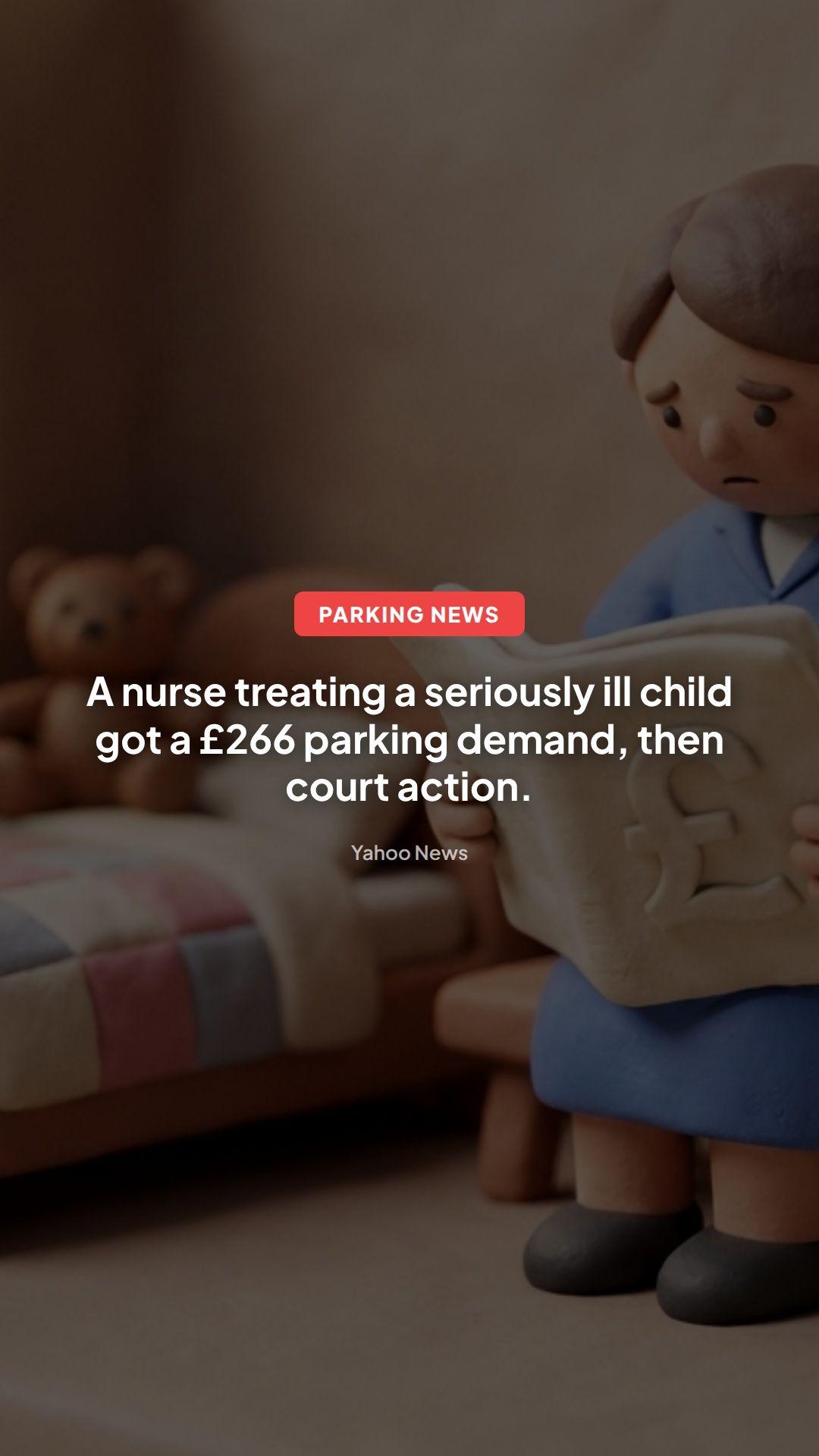
Dudley Nurse's £266 Parking Demand: What the Dropped Court Threat Tells Drivers
Few parking disputes are as emotionally charged as the one that landed on a Dudley nurse's doormat. She was accused of overstaying a 30-minute bay while treating a seriously ill child. The result was a demand for £266, and then the threat of court. That court action has now been dropped, and she is reported to want an apology.
It is easy to read this as a feel-good story about a company seeing sense. It is also a useful case study in how private parking charges escalate, why "just ignore it" is risky advice, and what rights ordinary drivers actually have when the rules and real life collide.
What happened
According to reporting syndicated on Yahoo News, the nurse received a £266 parking demand after allegedly overstaying in a 30-minute bay. The reason she was there is the heart of the story. She was said to have been caring for a seriously ill child at the time.
The dispute did not stop at a letter. The parking company had planned to take the matter to court. After media coverage, and after intervention by Dudley MP Sonia Kumar, that planned action was dropped. The nurse is now reported to be seeking an apology, which suggests the withdrawal did not feel like the end of the matter for her.
We should be careful about what we do not know. The summary does not set out the operator's full reasoning, how the £266 was built up, or the exact sequence of letters. So this article is about what the case illustrates, not a claim about the finer details of her paperwork.
Why a £266 demand lands so hard
Many drivers will be surprised by the figure. Private parking charges are often presented at a headline level, and then rise as a case moves through reminder letters and debt recovery stages. A demand that begins at a set charge can increase if it goes unpaid or unresolved, because operators typically add further sums as they pursue it. We cannot say what made up this particular figure, but the general pattern is worth knowing: the number on the first letter is often not the number on the last.
There is also a psychological pressure at work. A letter that mentions court is designed to feel serious, and for a working nurse juggling shifts, a threat of a county court claim can be frightening. Many people pay simply to make the problem go away, even when they believe they had a good reason. That is understandable, and it is one reason cases like this attract public sympathy.
Why it matters beyond one nurse
1. Genuine emergencies sit awkwardly with rigid time limits
A 30-minute bay is a blunt instrument. It works well for short-stay turnover, but it has no way of knowing whether the driver is popping to a shop or dealing with a medical situation. The system relies on the operator exercising discretion when someone presents a credible explanation.
That discretion is the real battleground. Industry codes of practice generally expect operators to consider mitigating circumstances, but "consider" is not the same as "must cancel". Outcomes can vary from one operator to another, which is why public pressure sometimes achieves what a written appeal has not. For a similar theme, see our piece on a £120 private parking fine overturned after a medical stop.
2. A dropped claim is not a legal precedent
It is important not to over-read the outcome. When a company discontinues a claim after media attention and an MP's involvement, that is a commercial and reputational decision. It does not create a rule that medical emergencies excuse overstaying, and it does not bind any other operator or court.
That distinction matters because drivers can come away with a false impression of their legal position. The law on private parking is still largely contractual, and a judge would look at the signage, the terms, and the evidence, not at how sympathetic the story was in the press.
3. The role of public and political pressure
An MP writing on behalf of a constituent cannot change the law, but it can change how a company views its risk. Letters from an MP's office and press enquiries can prompt a fresh internal review, and a firm may decide that a contested case is not worth the reputational damage. This is not a route most drivers can count on, but it shows that escalating a case beyond the standard appeals channels is sometimes worth considering.
The legal angle
This is general information, not legal advice, and anyone with a live case should check current official guidance or speak to a qualified adviser.
Private charges are not fines. A council penalty charge notice is issued under statutory powers. A private parking charge is, in legal terms, an invoice based on an alleged breach of contract (or trespass) on private land. The landmark Supreme Court ruling in ParkingEye v Beavis [2015] UKSC 67 held that a clearly signed charge can be enforceable where it protects a legitimate interest and is not extravagant. That decision gives operators a strong starting point, but it does not remove the need for clear signage and a properly pursued claim.
Keeper liability has strict conditions. Where an operator does not know who was driving, it can pursue the registered keeper only if it follows the requirements of Schedule 4 of the Protection of Freedoms Act 2012. These include specific information in the notice and strict timings. Operators who miss those requirements can lose the ability to hold the keeper liable. If the driver is known, and is the nurse herself, these rules matter less, because the operator can pursue the driver directly.
Court is a real, but not automatic, step. Operators can issue claims in the county court, usually in the small claims track for sums of this size. Before that, they are expected to follow pre-action steps, including sending a letter of claim and giving the recipient time to respond. A claim form is something you should never ignore. Responding on time keeps your options open, whereas missing deadlines can lead to a judgment in default. You can read more on this in our guide to whether you have to pay a private parking charge.
Appeals bodies exist, but membership matters. Operators who belong to an accredited trade association typically have an independent appeals route. For the British Parking Association, this is POPLA. For the International Parking Community, it is the Independent Appeals Service. Which one applies depends on the operator, and some operators are not members of either. Our walkthrough of the POPLA appeals process explains what to expect.
The rules are shifting. The Parking (Code of Practice) Act 2019 laid the groundwork for a single government-backed code for private parking, and proposals have included a lower cap on charges and a grace period at the end of a stay. The details and timing have moved over the past few years, so check official government sources for the current position. We have covered the proposals in new private parking rules, the £100 cap and 10-minute grace.
What drivers should know: practical takeaways
These are general pointers, not instructions for any individual case.
If an emergency causes you to overstay
- Write things down early. Note the date, time, location and what happened while it is fresh. Photographs of the signage and bay markings can be valuable later.
- Gather supporting evidence. This might include a letter from an employer, a rota, hospital or ambulance reference numbers, or a GP note. Be mindful of confidentiality, especially for healthcare workers. You can often say a medical emergency occurred without disclosing a patient's private details.
- Respond within the deadlines. Appeal windows on the notice are short, and an early, factual appeal is generally stronger than a late, angry one.
When you are appealing
- Keep it calm and factual. Explain what happened, why you stayed, and what you would like the operator to do. Appeals that read like a clear timeline tend to carry more weight than emotional ones.
- Check the paperwork. Look at the dates, the name of the operator, the signage described, and whether the notice meets the required format. Errors can be significant.
- Use the independent appeal if the first appeal fails. Operators who belong to an approved scheme should tell you how, but only if you appeal through the proper channel and within the time limit.
- Keep copies of everything, including envelopes, because dates can matter.
If debt recovery letters arrive
- Do not panic, but do not ignore them either. Debt recovery companies are usually sending letters on behalf of the operator. They are not bailiffs and they do not have powers of enforcement without a court judgment.
- Look for the formal letter of claim. That is the document that signals a genuine step toward court, and it should trigger a considered, timely reply.
- Consider free advice. Consumer and debt advice charities, and Citizens Advice in particular, can help you understand your position without charge.
If you think the process is unfair
- Complain in writing to the operator, and to the relevant trade body if the operator is a member.
- Contact your MP. As this case suggests, constituency casework can sometimes prompt a rethink, even though it carries no legal force.
- Be realistic. Publicity can help, but it is unpredictable and not a substitute for the formal process.
Looking ahead
The Dudley case lands at an awkward moment for private parking. Regulation has been under review for years, with pressure to rein in charges, tighten the rules on debt recovery add-ons, and give drivers clearer and fairer routes of appeal. Stories like this one feed that debate, because they highlight the gap between how the system is designed and how people actually use car parks, particularly workers in essential roles.
A fair outcome for emergency stops would be a clear, consistent standard, not one that depends on whether a case happens to reach the press. If the promised reforms to the private parking regime go ahead, drivers should hope for explicit guidance on how operators treat genuine emergencies, and for a simple, independent route to challenge a charge without needing a campaign.
For now, the lesson is a mixed one. The nurse's experience shows that a determined challenge, backed by evidence and public attention, can lead a company to back down. It also shows how stressful the process can be, and how much depends on the discretion of the company holding the invoice. Whether she gets her apology remains to be seen, but the wider question the case raises is not going away: when real life collides with a 30-minute limit, who decides what is reasonable?
This article provides general information about UK parking rules and is not legal advice. If you are facing a court claim or a significant sum, consider speaking to a qualified adviser or an organisation such as Citizens Advice.
Written by
The Parking Ticket Pal Editorial Team
Source-checked parking guidance
Ready to Challenge Your Ticket?
Let our AI analyse your PCN and generate a professional appeal letter in minutes.
Start Free Appeal