
Birmingham Children’s Hospital Parking Fines: Your Rights
Joe Lycett’s criticism of Birmingham Children’s Hospital parking fines puts council PCNs under scrutiny. Find out how hospital visitors can challenge a charge.

The Parking Ticket Pal Editorial Team
27 October 2026
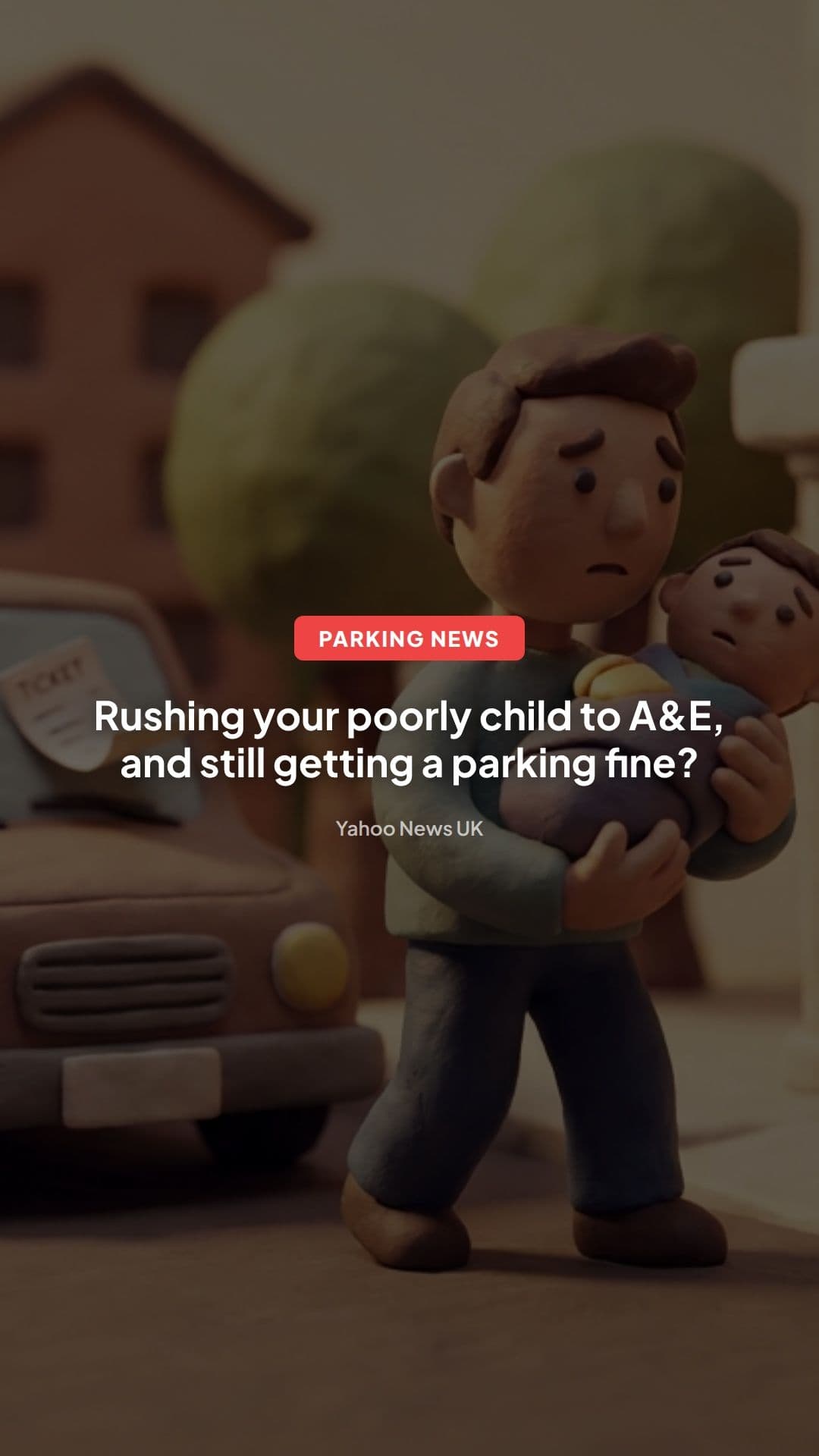
Joe Lycett, a poorly child and a parking charge: why hospital-run parking rows keep flaring up
When the person fined is a comedian with a loud platform, the story travels. But the situation Joe Lycett described is one thousands of parents know well: a sick child, a hospital appointment, and a mind on anything but the parking rules.
According to the Yahoo News UK report, Lycett criticised Birmingham City Council as "morally wrong" after receiving a parking charge while taking his unwell son to Birmingham Children's Hospital. The council said it would carefully consider challenges from hospital visitors.
That last line matters more than it first appears. This post looks at what the council's response signals, how the rules work, and what drivers in a similar spot can do.
What happened, and what we do and don't know
The reporting establishes a few key points:
- Joe Lycett received a parking charge while taking his unwell son to Birmingham Children's Hospital.
- He publicly criticised Birmingham City Council, calling the approach "morally wrong".
- The council responded that it would carefully consider challenges from hospital visitors.
The summary doesn't spell out every detail of the contravention, so it would be wrong to guess at specifics such as the exact restriction involved or the amount. What we can say is that the charge came from the council, which tells us something useful. Council-issued charges follow a different legal route from private parking charges, and that route shapes what a driver can do next.
The council's wording is also worth noticing. It did not say charges would be cancelled, and it did not say they would stand regardless. It said it would "carefully consider" challenges. That is the language of discretion, and discretion is where a lot of parking disputes are really decided.
Why it matters: hospitals and parking are a recurring flashpoint
Hospital sites generate parking friction for obvious reasons. People arrive stressed, often at short notice, and often unfamiliar with the area. They may be carrying a child, supporting an elderly relative or simply trying to find the right entrance. Nearby streets are also under pressure from staff, visitors and residents, so councils tend to apply restrictions such as residents' permit zones, yellow lines or time-limited bays.
That creates a tension councils have to manage:
- Restrictions exist for good reasons. Keeping routes clear for ambulances and buses, protecting residents' access and stopping all-day commuter parking are legitimate aims.
- Enforcement can look heartless in context. A charge landing on a parent of a poorly child is a bad look, even if the signs were clear and the rules were applied correctly.
- Drivers rarely read signs carefully in a crisis. That is human nature, but it is not a legal defence on its own.
We have covered the wider picture before, including NHS parking charges and what they cost patients and what happened when a trust cancelled charges after an apology. The Lycett story is a reminder that the problem is not only what hospitals charge on their own car parks. It also includes what happens on the surrounding streets.
The legal angle: how council parking charges work
First, a distinction that trips up many drivers. If the charge was issued by a council, it is almost certainly a Penalty Charge Notice (PCN) under the Traffic Management Act 2004 and its associated regulations. If it was issued by a private operator on hospital land, it is a "parking charge notice", a contractual claim under a completely different system. Our guide to council PCNs versus private charges explains the difference, and it matters because the appeal routes are not the same.
Assuming a council PCN in Birmingham, which is outside London, the general journey in England looks like this:
- Informal challenge. You can challenge the PCN in writing soon after it is issued. The notice itself explains how. Councils generally have discretion at this stage, which is where a hospital-related explanation is most likely to be considered.
- Discount window. Payment within a set period typically halves the charge, but paying ends the dispute. Check the notice for the exact deadlines rather than relying on memory.
- Notice to Owner. If the PCN is unpaid and not cancelled, the council can send a Notice to Owner to the registered keeper. This opens the formal representations stage.
- Formal representations. These must be made on the specific grounds set out in the legislation, such as the alleged contravention not having occurred, the penalty exceeding the right amount, or procedural impropriety by the council. Our guide to formal representations for PCNs covers this stage in detail.
- Independent adjudication. If the council rejects your representations, you can usually appeal to the Traffic Penalty Tribunal, the independent adjudication service for civil parking enforcement outside London. There is a step-by-step walkthrough in our Traffic Penalty Tribunal guide.
Where "compassion" fits in
This is the part most people misunderstand. A medical emergency or a sick child is powerful mitigation in human terms, but the formal appeal grounds are mostly about whether the contravention happened and whether the council followed the rules. Adjudicators are generally limited to the statutory grounds. Where they feel a case has compelling circumstances that fall outside those grounds, they can usually recommend that the council reconsider, but the final decision on whether to cancel still sits with the authority.
So the council's promise to "carefully consider" is not empty. Discretion is often exactly where cases like this are won or lost. It also means the way you present your case matters, because you are asking the council to exercise its discretion, not just arguing the legal technicalities.
There are also situations where specific exemptions or defences apply, such as a valid Blue Badge in the right circumstances or genuine loading and unloading. Our overview of hospital emergency bay parking rules is a good starting point, though each restriction has its own conditions.
A note on hospital car parks themselves
If the charge relates to the hospital's own car park, the rules differ. NHS England has published car parking principles for trusts, which include free or reduced parking for certain groups, such as some Blue Badge holders and parents of sick children staying overnight. These principles have been updated in the past, so check the latest guidance and the trust's own policy. Note too that this guidance applies to NHS car parks, not to council-run street restrictions nearby.
What drivers should know: practical takeaways
This is general information, not legal advice, and every case turns on its own facts. With that in mind, here are some sensible principles for anyone who has received a charge near a hospital.
1. Identify who issued the charge. Look at the notice. A council PCN and a private parking charge have different deadlines, different appeal routes and different legal footing. Do not treat them as interchangeable.
2. Do not ignore it, but do not rush to pay either. Ignoring a PCN can lead to escalating charges and enforcement. Equally, paying within the discount period usually closes the door on challenging it. Read the notice carefully and decide deliberately.
3. Gather evidence while it is fresh. Useful material includes:
- Appointment letters, text messages or hospital paperwork showing the date and time
- Photos of the signs, road markings and the location of your vehicle
- Any receipts or parking-app records
- A note of the timeline, including any emergency or delay
4. Separate the two arguments. Ask yourself two questions. First, was the charge correctly issued? Check signage, markings, times and the council's paperwork. Second, even if the charge was technically valid, are there compelling circumstances you want the council to take into account? Make both points clearly but keep them distinct. Our free informal appeal template guide can help structure a challenge.
5. Keep it factual and calm. Councils and adjudicators respond better to a concise, evidenced account than to a long expression of anger, however understandable the frustration. Include dates, times, the PCN number and what you are asking the council to do.
6. Watch your deadlines. Each stage has time limits set out in the notice. Missing them can narrow your options. If you are unsure, ask the council or use official guidance, such as the Traffic Penalty Tribunal's own materials.
7. Plan ahead for repeat visits. If your child has ongoing appointments, check in advance which parking is available, whether any concessions apply, and what the street restrictions are. Ask the hospital's patient services or the relevant department what support exists. Many trusts have schemes, but they are not always well advertised.
8. Seek proper advice where the stakes are high. If a charge escalates, for example to enforcement agents or court papers, consider independent advice from a consumer advice service or a qualified professional rather than relying on a blog post.
Looking ahead: will this change anything?
It is too early to say whether the council's response will lead to any formal change in how it deals with hospital visitors. Based on the reporting, what we have is a commitment to consider challenges carefully, not a change in policy. Several things are worth watching:
- Whether the council publishes clearer guidance for hospital visitors on how to challenge a charge and what evidence helps.
- Whether signage and information near the hospital improves, which is often the simplest and cheapest fix.
- Whether other councils face similar pressure. Hospital-adjacent enforcement is a national issue, and high-profile cases tend to prompt other authorities to review their approach.
There is also a broader policy debate about how parking income and enforcement interact with public services, something we have explored in our coverage of council parking surpluses. Cases like this one feed that debate, because public sympathy tends to evaporate quickly when enforcement catches families in medical distress.
The bottom line
Joe Lycett's criticism has put a spotlight on a problem that does not need a celebrity to be real. If you are taking a poorly child, or anyone else, to hospital, a parking charge can feel like an insult added to injury. The legal system has formal routes to challenge one, but the strongest outcomes often depend on the council's discretion, which is why a calm, well-evidenced case matters.
If you receive a charge near a hospital, identify who issued it, protect your deadlines, gather your evidence and make your case clearly. And if the council really does "carefully consider" challenges from hospital visitors, it will be worth watching whether that turns into practical, visible change for the families who need it most.
This article is general information about UK parking rules and is not legal advice. For guidance on your own situation, consult the notice you received, official guidance or a qualified adviser.
Written by
The Parking Ticket Pal Editorial Team
Source-checked parking guidance
Ready to Challenge Your Ticket?
Let our AI analyse your PCN and generate a professional appeal letter in minutes.
Start Free Appeal