August Bank Holiday Traffic: 25m Trips and Peak Routes
Up to 25 million UK journeys are expected over the August Bank Holiday. See the busiest travel days, peak times and route-planning advice for drivers nationwide.

The Parking Ticket Pal Editorial Team
24 August 2026
August Bank Holiday Traffic: Why This Weekend Could Be Britain's Worst Jam in a Decade
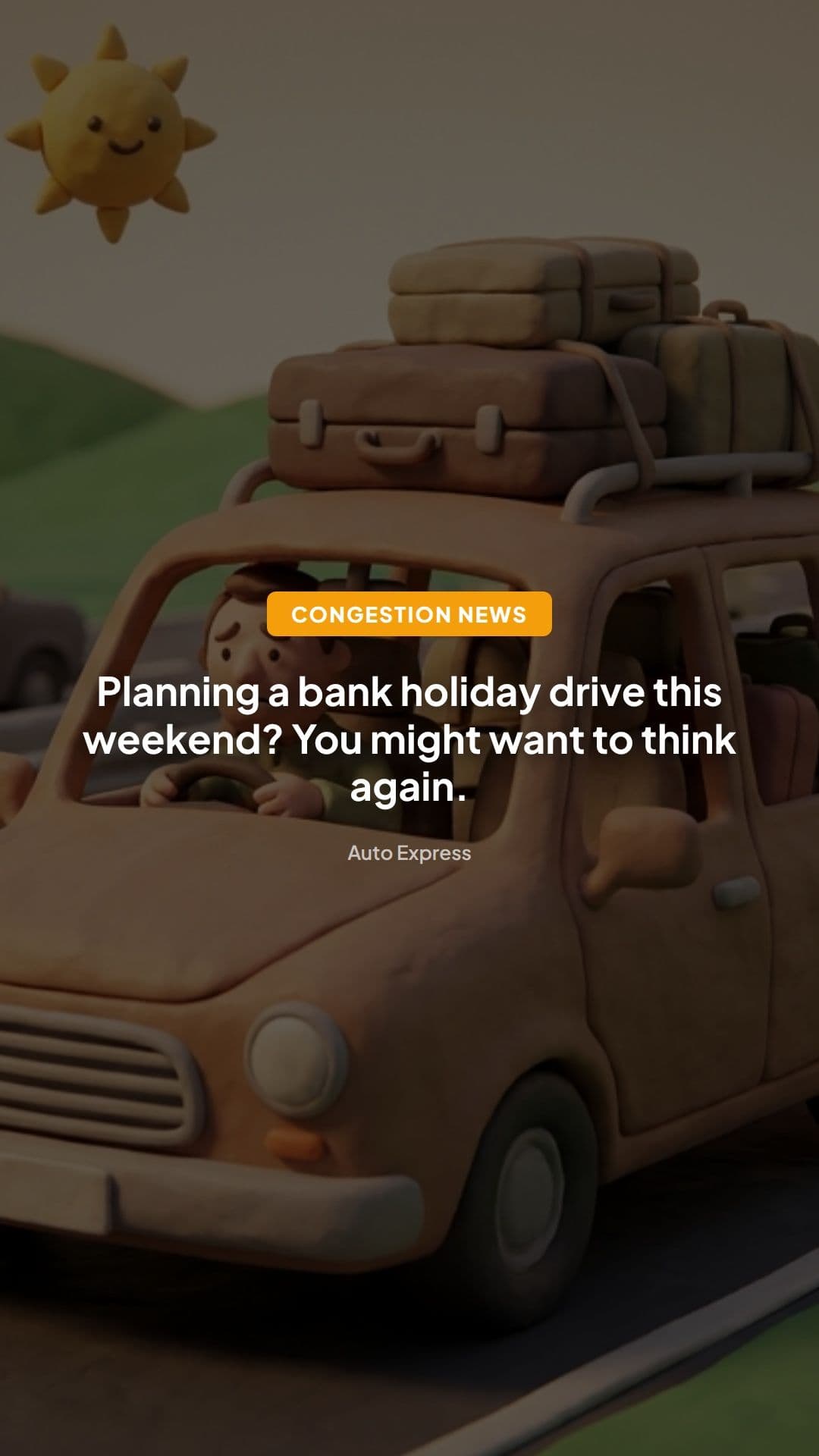
If you're planning to hit the road this August Bank Holiday, you might want to pack extra patience alongside your sun cream and swimming costumes. According to new figures reported by Auto Express, as many as 25 million journeys are expected across the UK between Friday and Monday, a volume that could make this the busiest August Bank Holiday for traffic in more than ten years.
For millions of drivers, that means one thing: a lot of time spent staring at brake lights.
What's Actually Happening This Weekend
The scale of the numbers is worth pausing on. Twenty-five million individual journeys, condensed into a four-day window, is not a trickle of extra traffic. It's a surge that will hit motorways, A-roads, seaside towns, and city centres simultaneously, as families squeeze in one last summer getaway before schools return and the nights start drawing in.
August Bank Holiday has always been a notoriously busy travel weekend, but the scale being forecast this year pushes it into "worst in a decade" territory. That's a meaningful claim. It suggests a combination of factors converging at once, more people choosing UK breaks, more day-trippers heading to the coast or countryside, and a road network that hasn't necessarily grown to match demand.
Friday afternoon and Saturday morning are traditionally the worst pinch points, as commuter traffic overlaps with holiday getaway traffic. Sunday tends to see staycationers moving between destinations, while Monday brings the return leg, often the most gridlocked day of all as everyone tries to get home before the working week resumes.
Why It Matters: More Than Just an Inconvenience
It's tempting to treat bank holiday traffic as background noise, the sort of thing you grumble about and then forget. But the ripple effects are worth understanding properly.
Fuel and time costs add up. Idling in stationary traffic burns fuel without covering any distance, and for many households already feeling the pinch, that's money wasted sitting on the hard shoulder rather than at the destination.
Breakdown risk rises sharply. Cars that have sat largely unused during the working week, or that haven't had a proper check before a long trip, are more likely to overheat or suffer mechanical issues in stop-start conditions, particularly in warm weather. Breakdown organisations typically see call-out numbers spike over bank holiday weekends.
Parking pressure intensifies at popular destinations. Seaside towns, National Parks, and tourist hotspots often see parking demand outstrip supply on peak weekends, leading to a rise in poorly considered decisions such as parking on verges, blocking access points, or ignoring restrictions in the rush to find a space. Areas like the New Forest and various coastal councils have already seen charges rise this year, and enforcement tends to be visible precisely when visitor numbers peak.
Enforcement doesn't take a holiday. Traffic wardens, ANPR cameras, and council enforcement teams remain fully operational over bank holidays. In fact, some councils see PCN issuance climb during busy periods, simply because more vehicles are on the move and more drivers are making split-second parking decisions under pressure.
The Legal Angle: Rules That Still Apply When the Roads Are Rammed
Heavy traffic doesn't suspend the Highway Code, and it's worth being reminded of a few rules that become particularly relevant when roads are congested.
Box junctions and yellow lines. When traffic backs up, the temptation to edge into a box junction because "everyone else is doing it" is strong. Rule 174 of the Highway Code is clear that you must not enter a box junction unless your exit is clear, and enforcement cameras don't make allowances for gridlock. Councils across London and other cities issue thousands of box junction PCNs, and "the traffic made me do it" is not a recognised defence.
Stopping in traffic and hazard lights. Rule 116 advises drivers to use hazard warning lights when stopped on a motorway or unrestricted dual carriageway to warn traffic behind of a hazard ahead, such as a sudden queue. This is a sensible habit worth remembering when traffic grinds to an unexpected halt.
Mobile phones at a standstill. Since the law was tightened, it is illegal to hold and use a mobile phone while driving, and this includes when stationary in traffic with the engine running, not just at traffic lights. Being stuck in a jam is not an exemption, and enforcement cameras increasingly catch this kind of offence. For a fuller rundown of rules drivers commonly overlook, it's worth revisiting the Highway Code rules that catch drivers out with fines and points.
Smart motorways and hard shoulders. On stretches without a permanent hard shoulder, stopping is only permitted in a genuine emergency and in a marked refuge area wherever possible. With more vehicles on the network, the safety concerns around smart motorways become more pronounced, a topic that has drawn increasing scrutiny in recent years.
Parking under pressure. When you finally reach your destination and every car park is full, resist the urge to park on double yellow lines, block a dropped kerb, or squeeze onto a verge that turns out to be private land. Councils in tourist areas are often well-prepared for bank holiday enforcement, and a rushed decision can turn a lovely day out into an unwelcome PCN in the post.
What Drivers Should Know: Practical Steps for the Weekend
There's no way to eliminate bank holiday congestion, but there's plenty you can do to reduce the stress and the risk.
- Check your vehicle before you leave. Tyre pressure and tread, oil, coolant, and screen wash levels are simple checks that can prevent a breakdown becoming a bank holiday disaster.
- Travel outside peak windows if you can. Setting off early in the morning or later in the evening, rather than during traditional Friday afternoon or Saturday late-morning peaks, can make a genuine difference.
- Plan your parking, not just your route. If you're heading somewhere popular, check whether the car park has a pre-booking system, and have a backup plan if it's full. Arriving at a beauty spot with no idea where you'll leave the car is a recipe for a rushed and potentially costly decision.
- Keep an eye on fuel. Queues at motorway services can be long over bank holidays, and running low on fuel while stuck in traffic is an entirely avoidable stress.
- Build in extra time. If you have a fixed appointment, event, or ferry crossing, factor in significantly more time than usual. Arriving stressed because you've cut it fine rarely ends well.
- Stay alert to changing signage. Temporary restrictions, contraflows, and diversions are more common during peak travel weekends as authorities try to manage flow, so don't assume last month's satnav route is still accurate.
- Know your rights if things go wrong. If you do end up with a parking penalty because a car park was unexpectedly full, a machine was faulty, or signage was unclear, it's worth understanding the appeals process rather than simply paying up. Unclear or contradictory signage can, in some circumstances, form a legitimate basis for challenging a ticket.
Looking Ahead
This weekend's forecast numbers point to something bigger than a single busy bank holiday. They reflect a broader pattern of UK road use bouncing back strongly, with domestic getaways remaining popular even as living costs stay high. If traffic volumes continue climbing year on year, the pressure on ageing infrastructure, stretched local enforcement teams, and overstretched car parks in tourist hotspots is likely to grow too.
For drivers, the practical lesson is straightforward: plan ahead, stay patient, and remember that the rules of the road, and the rules around where you leave your car, don't ease up just because everyone else is in a hurry to get to the coast. A little preparation now could save you a long wait, a hefty fine, or both, later this weekend.
Written by
The Parking Ticket Pal Editorial Team
Source-checked parking guidance
Ready to Challenge Your Ticket?
Let our AI analyse your PCN and generate a professional appeal letter in minutes.
Start Free Appeal