Wrong-Way Motorway Trend: AA Warning and Legal Risks
The AA warned authorities in 2025 about a wrong-way motorway social media trend. Explore the serious UK driving offences, penalties and safety risks involved.

The Parking Ticket Pal Editorial Team
26 August 2026
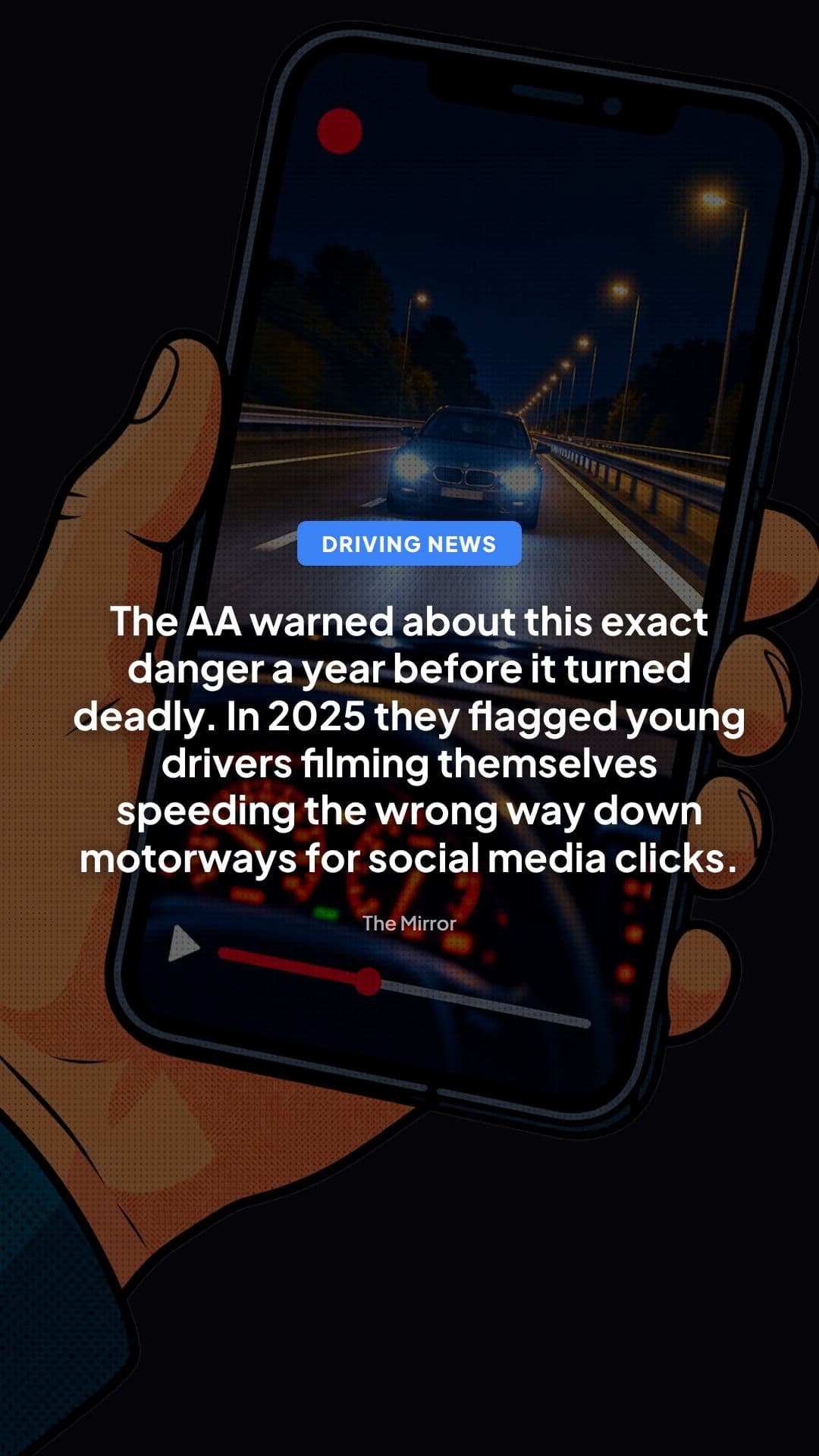
Driving the Wrong Way on a Motorway for Likes: The AA's Warning That Went Unheeded
A Trend That Should Never Have Needed a Warning
Imagine driving at 70mph on a motorway, then someone appears in your lane, driving straight towards you. Not a hazard. Not a mistake. Deliberate.
That is the reality the AA says it flagged to the relevant authorities back in 2025, months before the issue became a public talking point. According to reporting by the Mirror, the breakdown and motoring organisation warned that young motorists were driving the wrong way down motorways purely to film themselves doing it, then posting the footage online for views, likes and social media clout. The warning, it seems, did not stop the trend from continuing or from eventually becoming public knowledge through news coverage.
It is a genuinely alarming story, not because wrong-way driving is new (motorway control rooms have dealt with confused or elderly drivers going the wrong way for decades) but because this is different. This is intentional. It is filmed. It is shared. And it is aimed squarely at an audience of other young drivers who might be tempted to copy it for their own fifteen seconds of online notoriety.
What Actually Happened
The core of the story is straightforward but unsettling. The AA says it raised concerns with authorities in 2025 about a specific and dangerous social media trend: young drivers deliberately travelling against the flow of traffic on motorways and recording the experience to post on platforms such as TikTok, Snapchat or Instagram.
This is not the same as a driver missing a junction, panicking, and briefly reversing on the hard shoulder (itself illegal and hugely dangerous). This is a calculated act, performed with a camera running, apparently with the specific goal of generating content. The AA's warning suggests this was not an isolated one-off but a pattern significant enough to bring to the attention of the authorities, who presumably include police forces, National Highways, and potentially the Department for Transport.
What is particularly striking is the timeline. The warning reportedly came in 2025, yet the trend has evidently continued long enough, or reappeared prominently enough, for it to now be making national headlines. That gap between warning and wider public awareness is likely to raise uncomfortable questions about how such warnings are acted upon, and how quickly.
Why This Matters So Much
Motorways are, statistically, among the safest roads in Britain when everyone follows the same basic rule: travel in the same direction, at broadly similar speeds, in clearly defined lanes. That single shared assumption is what allows traffic to flow safely at 70mph with only metres of separation between vehicles.
Deliberately driving the wrong way destroys that assumption instantly. A closing speed between two vehicles travelling towards each other at motorway speeds can exceed 140mph, giving other drivers, who have every reason to expect traffic to be coming from behind them, virtually no time to react. There is no margin for error, no reaction window, and often no escape route given the volume of surrounding traffic.
This also fits into a wider and troubling pattern that has been covered extensively in recent months: the rise of dangerous driving content designed specifically for social media. Stories involving supercar meets that spiral into illegal displays of speed, or crashes linked to reckless stunts, have prompted police crackdowns and even regulatory scrutiny of the platforms hosting the footage. The wrong-way motorway trend sits firmly within this broader concern that social media rewards recklessness with attention, and that some drivers are willing to trade genuine, life-threatening risk for online engagement.
It also raises questions about platform responsibility. If content showing dangerous or illegal driving is being uploaded and monetised or amplified through algorithms, at what point does the platform bear some responsibility for the harm that content can inspire in impressionable viewers, particularly young ones who may see it as a challenge to beat rather than a crime to avoid?
The Legal Angle: What the Law Actually Says
Driving the wrong way on a motorway is not a grey area. It sits at the serious end of UK motoring law.
Motorway-specific rules. Under the Motorways Traffic (England and Wales) Regulations 1982, drivers are prohibited from reversing, making U-turns, or driving against the direction of traffic on a motorway except in very narrow, specified circumstances (such as at the direction of a police officer). Breaching these regulations is a criminal offence in its own right.
Dangerous driving. In practice, deliberately driving the wrong way on a motorway is highly likely to meet the threshold for dangerous driving under Section 2 of the Road Traffic Act 1988. This is defined as driving that falls far below what would be expected of a competent and careful driver, and where it would be obvious to that competent driver that the manner of driving was dangerous. Few actions could more obviously meet that test than driving head-on into oncoming traffic on purpose. Dangerous driving carries an unlimited fine, up to two years' imprisonment, obligatory disqualification, and 3 to 11 penalty points if a court decides not to disqualify.
If a collision occurs. Should the stunt result in a crash causing injury or death, the charges escalate dramatically. Causing death by dangerous driving under Section 1 of the Road Traffic Act 1988 carries a maximum sentence of life imprisonment, following recent sentencing changes that increased maximum penalties for the most serious driving offences.
The filming and sharing element. There is also a separate legal dimension around the recording and distribution of the footage itself. Content that appears to encourage or glorify dangerous driving can potentially fall foul of the Online Safety Act 2023, which places duties on platforms to remove illegal content and protect users, particularly children, from material that could encourage them to take dangerous risks. Separately, if footage is shared in a way intended to encourage others to replicate the act, questions could arise under the Serious Crime Act 2007 around encouraging or assisting an offence, though this would depend heavily on the specific circumstances and intent.
It's worth noting that this is a fast-evolving area of law and enforcement policy. Anyone concerned about the legal implications of dangerous driving footage, whether as a participant, a platform, or a bystander who has filmed something similar, should seek independent legal advice rather than relying on general commentary.
What Drivers Should Know
For the overwhelming majority of drivers who would never dream of doing this, there are still practical points worth understanding.
- If you accidentally find yourself going the wrong way, such as after a confusing junction, do not attempt to reverse, turn around, or continue. Instead, pull onto the hard shoulder or verge if it is safe to do so, put on hazard lights, and contact the police via 999 immediately. Trying to correct the mistake yourself is far more dangerous than waiting for help.
- If you see a wrong-way vehicle, move to the nearest safe lane, ideally the leftmost, reduce speed without braking harshly, and alert other drivers with hazard lights if it's safe to do so. Report it to National Highways or the police as soon as you are able to stop safely.
- Dashcam footage matters here too. If you witness a wrong-way driving incident, dashcam footage can be invaluable evidence for the police. It is worth knowing how to submit such footage through your local police force's online portal.
- Understand the scale of the risk you'd be taking on if ever tempted by this kind of stunt. Beyond the obvious risk to life, a dangerous driving conviction can mean a lengthy driving ban, a criminal record, and a prison sentence, none of which compare to the fleeting value of online engagement.
- Parents and guardians of young drivers may find it worth having a direct conversation about this specific trend, given that the AA's warning specifically identified young motorists as those involved.
Looking Ahead
The fact that the AA's 2025 warning is only now surfacing publicly, via media reporting rather than a swift regulatory response, suggests a gap between spotting dangerous trends early and acting on them decisively. It also mirrors wider frustrations already voiced around dangerous driving content online, where campaigners and safety bodies have called for faster, more coordinated action between motoring organisations, police forces, and social media platforms themselves.
Whether this latest revelation prompts tighter enforcement, clearer platform moderation policies, or renewed public safety messaging around motorway use remains to be seen. What seems certain is that as long as social media rewards shock value, some drivers will keep chasing it, and warnings from bodies like the AA will only matter if they translate into fast, visible action rather than sitting unheeded until a headline forces the issue back into view.
Written by
The Parking Ticket Pal Editorial Team
Source-checked parking guidance
Ready to Challenge Your Ticket?
Let our AI analyse your PCN and generate a professional appeal letter in minutes.
Start Free Appeal