West Quay £100 parking fines: drivers launch legal action
Drivers challenge £100 private parking charges at Southampton’s West Quay Retail Park, alleging misleading signs after rule changes and seeking refunds.

Fatima Benali
13 April 2026
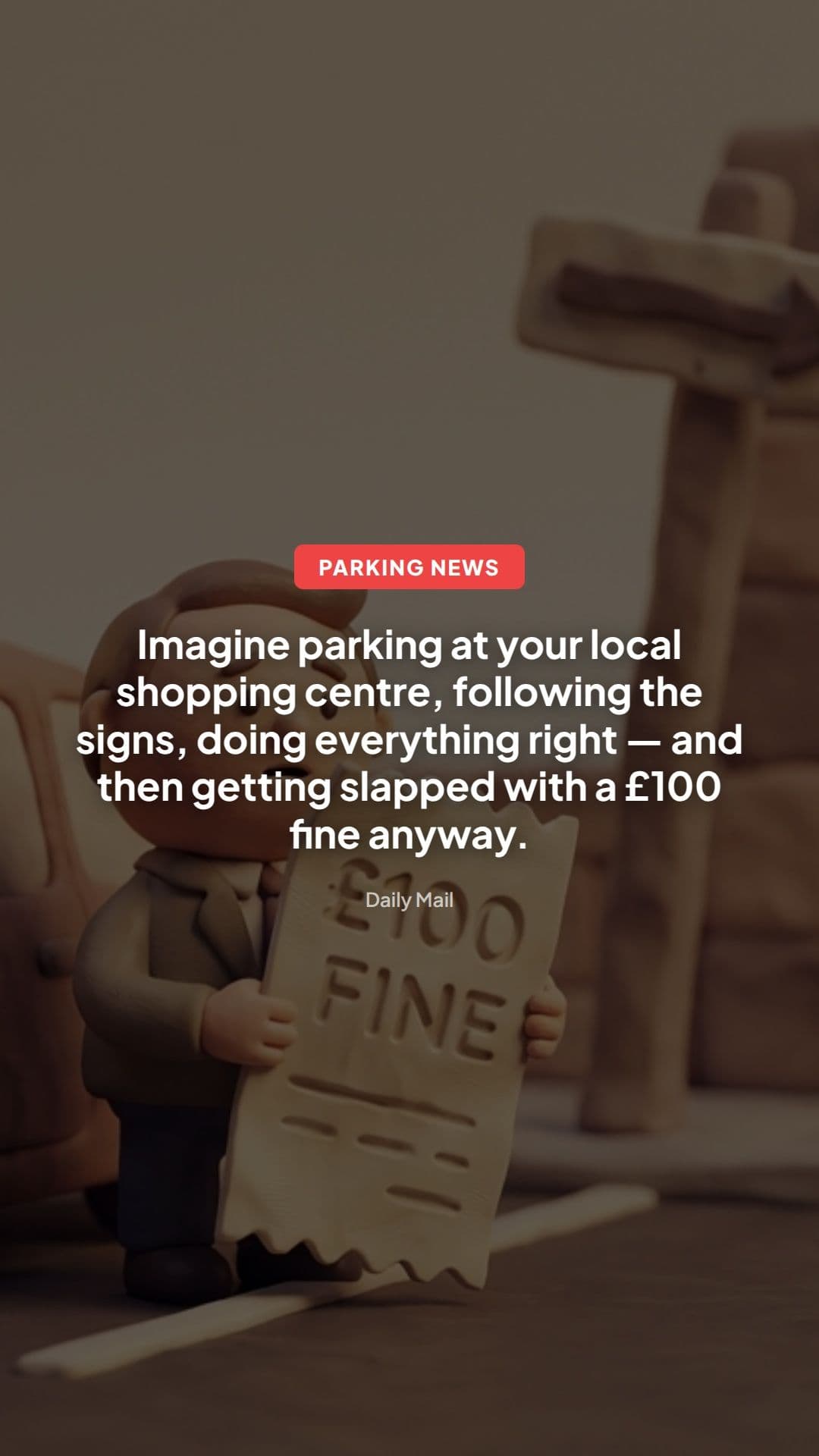
West Quay Parking Row: What the Southampton 'Scam' Fines Tell Us About Your Rights on Private Land
Drivers at one of southern England's busiest retail parks are fighting back — and their battle reveals a much bigger problem with how private parking enforcement really works.
Imagine pulling into a shopping centre car park you've used dozens of times before, following the same signs you always have, and then — weeks later — receiving a £100 penalty notice through your letterbox. No warden approached you. No obvious rule was broken. The signs, as far as you could tell, said nothing had changed.
That's precisely what hundreds of drivers claim happened to them at West Quay Retail Park in Southampton. And now, rather than simply paying up and moving on, they're fighting back — collectively, loudly, and with increasing legal weight behind them.
This isn't just a story about one car park in Hampshire. It's a story about a system that, critics argue, is structurally tilted against ordinary drivers — and what you can do about it.
What Happened at West Quay?
West Quay Retail Park is one of the largest shopping destinations in the south of England, attracting millions of visitors each year. According to reporting by the Daily Mail, drivers began receiving £100 Parking Charge Notices (PCNs) after the car park's operator — believed to be a private enforcement company — quietly changed the rules governing how the site could be used.
The central allegation is straightforward but damning: the signage did not adequately communicate the new restrictions. Drivers who had parked in the same way, at the same times, without incident for years, suddenly found themselves in receipt of significant fines.
Some motorists report receiving multiple notices across several visits before realising anything had changed. Others say they actively looked for signs indicating new rules and found nothing clear or prominent enough to constitute fair warning. The cumulative financial impact across affected drivers reportedly runs into the tens of thousands of pounds.
Legal action is now being pursued. Drivers — some coordinating through online communities and consumer rights groups — are challenging the fines on the grounds that the signage was misleading, insufficient, or failed to meet the legal standards required for a valid parking charge to be issued in the first place.
Why This Matters Beyond Southampton
Stories like this one surface with depressing regularity across the UK. What makes the West Quay case particularly significant is the scale of the alleged problem and the organised nature of the response. Drivers aren't just appealing individually — they're building a collective case.
But the broader context is equally important. Private car parks operate under an entirely different legal framework to council-run enforcement. When a local authority issues a Penalty Charge Notice, it does so under statutory powers derived from the Traffic Management Act 2004. Those notices are subject to formal appeal processes, independent adjudication, and strict procedural rules.
Private operators issue Parking Charge Notices — not Penalty Charge Notices. Despite sharing the same acronym, the distinction is enormous. A private PCN is essentially a contractual claim. The operator is arguing that by entering the car park, you agreed to their terms and conditions — and that by parking in breach of those terms, you owe them money.
This contractual basis is precisely why signage is so legally critical in private parking disputes. If the terms aren't clearly displayed at the point of entry and throughout the site, there is no valid contract. No contract means no enforceable charge.
The Legal Angle: What the Law Actually Says
The primary legislation governing private parking in England and Wales is the Protection of Freedoms Act 2012. Schedule 4 of that Act established the right of private operators to pursue the keeper of a vehicle (not just the driver) for unpaid charges — but only if they follow a strict set of procedural requirements.
Among those requirements: notices must be given in a prescribed form, within prescribed timeframes, and — crucially — the terms must be prominently displayed on signage that a driver could reasonably be expected to see and understand before parking.
The British Parking Association (BPA) and the International Parking Community (IPC) — the two accredited trade bodies whose members are permitted to access DVLA keeper data — both publish Codes of Practice that their members must follow. The BPA's Code, for instance, requires that signs be "prominent, legible and unambiguous." Changes to parking conditions must be communicated clearly, and operators cannot simply alter the rules and continue issuing charges as though nothing has changed.
A landmark ruling worth noting here is the Supreme Court case ParkingEye Ltd v Beavis [2015]. That judgment upheld the validity of private parking charges in principle — but it did so in a context where signage was deemed clear and prominent. The court was explicit that the legitimacy of a charge depends heavily on whether the motorist had reasonable notice of the terms. Where signage is found to be inadequate, the entire basis for the charge collapses.
More recently, the Parking (Code of Practice) Act 2019 paved the way for a single, government-backed Code of Practice for the private parking industry. Although full implementation has been slower than campaigners would like, the direction of travel is clear: operators are under increasing pressure to prove their signage is fit for purpose, or face having their charges thrown out.
What Drivers Should Know: Practical Steps If This Happens to You
If you receive a private parking charge you believe is unfair — whether at West Quay or anywhere else — here's what you need to do:
1. Don't ignore it, but don't panic-pay either Ignoring a private PCN can lead to escalating demands and, eventually, county court action. But paying immediately without question is often unnecessary. You have time to assess and challenge.
2. Return to the site and photograph the signs Do this as soon as possible after receiving the notice. Capture every sign at the entrance, throughout the car park, and near where you parked. Note their height, visibility, and clarity. If the rules have since been updated or signs replaced, try to gather evidence of what was there when you parked — social media posts, Google Street View captures, or witness accounts can all help.
3. Request the operator's evidence pack Before or during the appeals process, you can ask to see the evidence the operator holds — including photographs of your vehicle, the timestamp, and the signage they claim was in place.
4. Appeal on signage grounds If the signs were unclear, absent, obscured, or failed to communicate a recent rule change, this is a strong basis for appeal. Cite the BPA or IPC Code of Practice as applicable, and reference the requirement under Schedule 4 of the Protection of Freedoms Act 2012 for terms to be clearly displayed.
5. Escalate to POPLA or the IAS If your initial appeal to the operator is rejected, you have the right to escalate to an independent appeals service — POPLA (for BPA members) or the IAS (for IPC members). These are free to use and genuinely independent. Signage failures are among the most commonly successful grounds at this stage.
6. Connect with other affected drivers If you believe you're one of many affected at the same site — as appears to be the case at West Quay — connecting with others strengthens your position. Collective evidence of a systemic signage problem is far more compelling than a single complaint.
Looking Ahead: A System Under Scrutiny
The West Quay situation is a microcosm of a much larger reckoning that the private parking industry is slowly being forced to face. The Competition and Markets Authority has previously investigated the sector and found evidence of practices that harm consumers. The government's promised single Code of Practice, when fully enacted, should raise the bar considerably — requiring clearer signage, fairer appeals processes, and greater accountability from operators.
But until that framework is fully in place, the burden still falls disproportionately on individual drivers to know their rights and fight back. The good news is that the legal foundations for challenging poorly-signed private charges are genuinely solid. Courts and independent adjudicators have repeatedly found in favour of drivers where signage has been shown to be inadequate.
What the Southampton drivers are doing — documenting, organising, and refusing to accept charges they believe are unjust — is exactly the right response. And if their legal action succeeds, it could set a precedent that makes operators across the country think twice before quietly changing the rules and hoping nobody notices.
The message to drivers everywhere is simple: a parking charge notice is not a fine, it is not inevitable, and it is not the final word. Know the rules, challenge what's wrong, and don't let misleading signs cost you money they were never entitled to take.
Based on reporting by the Daily Mail. All legal information reflects the position as of 2025 and relates to England and Wales unless otherwise stated.
Written by
Fatima Benali
Dispute Resolution Specialist
Ready to Challenge Your Ticket?
Let our AI analyse your PCN and generate a professional appeal letter in minutes.
Start Free Appeal