Waltham Forest parking fines: calls for refunds explained
A Waltham Forest councillor says motorists hit with new parking PCNs should be refunded. What it means for enforcement, fairness and appeals.

Tariq Khan
3 April 2026
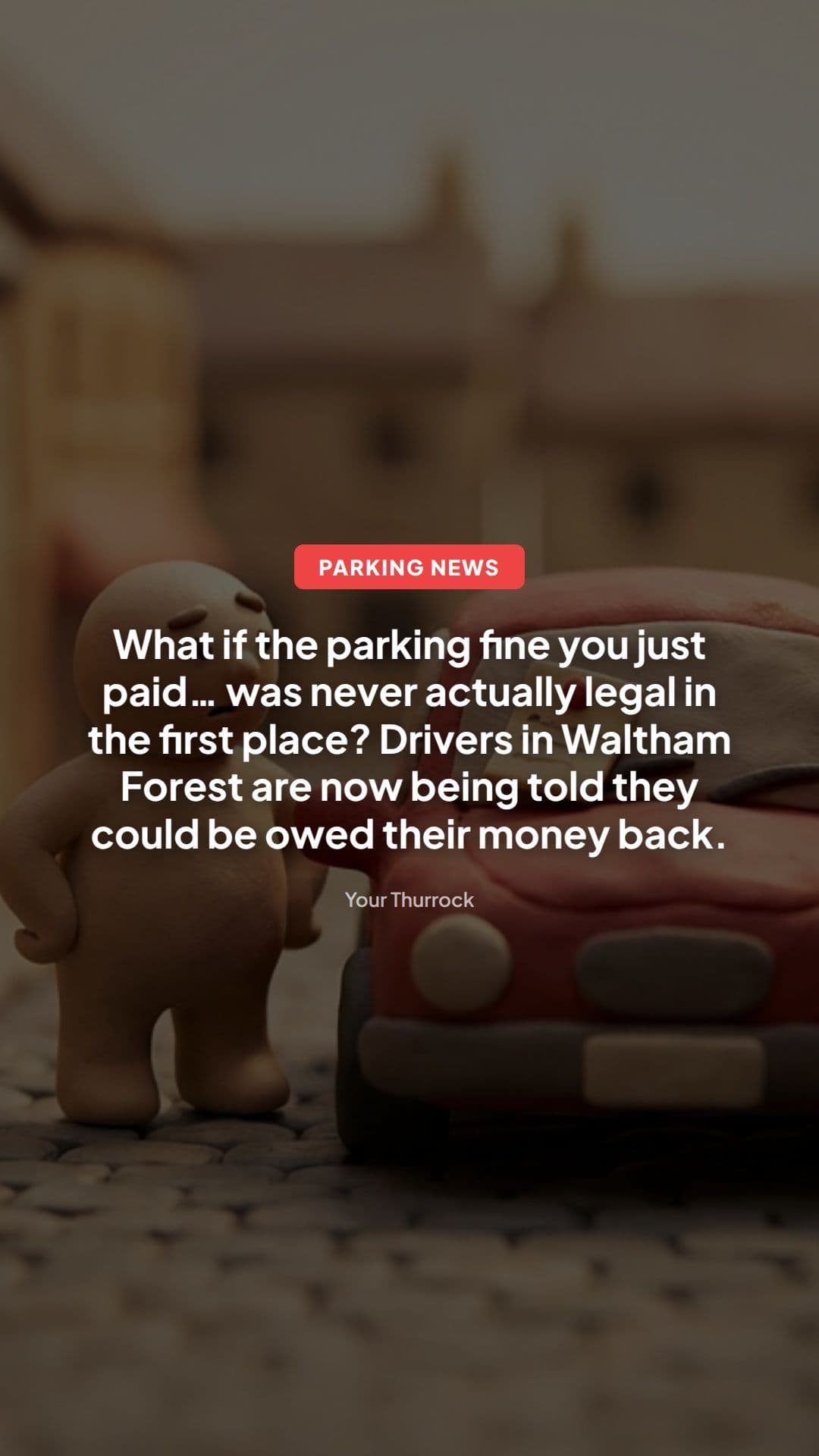
Waltham Forest Parking Fines Row: Why One Councillor's Call for Refunds Could Have Big Implications for Drivers Everywhere
When a local politician demands that parking fines be handed back, it's rarely just about one borough. Here's why this story matters far beyond Waltham Forest — and what every UK driver should take from it.
The Story That Caught Our Attention
Parking fines are a fact of life for millions of UK drivers. Most people grumble, pay up, and move on. But occasionally, a story emerges that cuts through the noise and forces a proper conversation about whether the system is actually working fairly.
That's precisely what's happened in Waltham Forest, where a Conservative councillor has gone on record calling for motorists who received parking fines under recent enforcement actions to be refunded. Not just appealed. Not just reviewed. Refunded.
It's a bold claim — and one that raises some genuinely important questions about how councils issue Penalty Charge Notices (PCNs), whether enforcement is always conducted lawfully, and what rights drivers actually have when they believe a fine has been issued unfairly.
Reported by Your Thurrock, the story has sparked debate about fairness, council accountability, and the processes that sit behind parking enforcement. Let's dig into what's really going on here, why it matters, and what practical lessons you can take away.
What Happened in Waltham Forest?
The core of the story is straightforward: a Waltham Forest Conservative councillor has publicly argued that drivers who received parking fines as a result of recent enforcement activity should be entitled to refunds. The councillor's position suggests that something about the enforcement process — whether the signage, the legal basis for the restrictions, the notice procedures, or the manner of enforcement itself — was sufficiently flawed to render the fines unjust.
Calls for mass refunds from elected officials are relatively unusual. Councils tend to defend their enforcement operations robustly, and individual councillors challenging their own authority's PCN processes publicly is a sign that something has gone meaningfully wrong — or at least that there is a credible argument that it has.
Waltham Forest has been at the centre of parking and traffic enforcement debates before. The borough has pursued ambitious active travel and low-traffic neighbourhood (LTN) schemes in recent years, some of which have generated significant controversy among local residents and motorists. Enforcement around these schemes — including camera-based monitoring of restricted streets — has not been without controversy.
Whether this latest row is directly connected to those LTN restrictions or relates to a separate enforcement action, the underlying principle is the same: if fines are issued without a proper legal basis, or through a flawed process, drivers should not be out of pocket.
Why This Matters Beyond One Borough
You might think this is a local story with local consequences. In one sense, it is. But the implications stretch considerably further.
The Scale of Council Parking Revenue
UK councils issued millions of PCNs in recent years, generating hundreds of millions of pounds in revenue. Parking enforcement is, for many local authorities, a significant income stream — even if, legally speaking, it's supposed to be ring-fenced for transport-related spending rather than used as a general revenue tool.
When enforcement is conducted improperly — whether due to inadequate signage, incorrect procedures, or restrictions that haven't been properly established through a Traffic Regulation Order (TRO) — the fines issued may be legally invalid. But here's the uncomfortable truth: most drivers simply pay up without questioning whether the fine was lawful in the first place.
The Accountability Gap
Councils are required to follow strict procedures when issuing PCNs. These include serving the notice correctly, ensuring the underlying restriction is legally valid, and providing accurate information about appeal rights. When any part of that chain breaks down, the fine may be challengeable — and in serious cases, the entire enforcement operation could be called into question.
The councillor's call for refunds suggests a belief that the enforcement in question crossed one of those lines. If that's true, it highlights a significant accountability gap: drivers who paid their fines without appealing may have handed over money they were never lawfully obliged to pay.
The Legal Angle: What the Law Actually Says
Understanding the legal framework here is essential.
Traffic Regulation Orders (TROs)
Every parking restriction in the UK — whether it's a yellow line, a residents' bay, or a restricted zone — must be underpinned by a Traffic Regulation Order. A TRO is a formal legal instrument made under the Road Traffic Regulation Act 1984. Without a valid TRO, a restriction has no legal force, and any PCN issued for breaching it is potentially unlawful.
Councils sometimes implement physical changes to road layouts — new signs, new markings, new restrictions — before the corresponding TRO has been formally confirmed. If enforcement begins before the TRO is in place, every fine issued during that window may be invalid.
The Civil Enforcement of Parking Contraventions (England) Regulations 2007
These regulations govern how councils must conduct parking enforcement. They set out the requirements for issuing PCNs, the timeframes involved, and the procedures for challenging fines. Breaches of these regulations — even procedural ones — can form valid grounds for appeal.
The Right to Refund
Here's where it gets interesting. If a council issues PCNs that are subsequently found to be unlawful — either because the underlying restriction was invalid or because the enforcement process was flawed — drivers who paid those fines without appealing are in a difficult position. There is no automatic right to a refund once a PCN has been paid. Payment is generally treated as acceptance of liability.
However, where a council acknowledges that enforcement was improper — as the councillor's call for refunds implicitly suggests — the authority has the discretion to issue refunds. Whether they choose to exercise that discretion is another matter entirely.
This is precisely why the councillor's public intervention is significant: it applies political pressure on the council to do the right thing, even where there may be no strict legal obligation to do so.
What Drivers Should Know: Practical Takeaways
If this story has you wondering whether you might have paid a fine you didn't actually owe — in Waltham Forest or anywhere else — here's what you need to know.
1. Always challenge before you pay Once a PCN is paid, your options narrow dramatically. If you receive a fine you believe is unjust, always submit an informal representation first. You have 28 days from the date of the PCN to do this, and doing so pauses the payment deadline.
2. Check whether the restriction is legally valid You can request information about the Traffic Regulation Order underpinning any restriction. If no valid TRO exists, or if the signs and markings don't accurately reflect the TRO, you have grounds to challenge.
3. Document everything If you're issued a PCN in circumstances that seem questionable — unclear signs, recently changed restrictions, camera enforcement in an area that feels new — photograph everything immediately. Date-stamped images can be invaluable evidence.
4. Escalate to the independent adjudicator If your informal representation and formal appeal are both rejected by the council, you can take your case to the Traffic Penalty Tribunal (for councils outside London) or the London Tribunals (for London boroughs including Waltham Forest). These are independent bodies, and adjudicators regularly overturn council decisions where the legal basis for enforcement is shaky.
5. Contact your local councillor As this very story demonstrates, local councillors can and do intervene in parking disputes — particularly where there is a pattern of questionable enforcement. If you believe you've been wrongly fined, raising the issue with your ward councillor is a legitimate and potentially effective step.
6. Keep an eye on local news If enforcement in your area is later found to have been improper, you'll want to know about it. Councils that acknowledge widespread errors sometimes set up refund schemes — but they rarely publicise them loudly.
Looking Ahead: What This Means Going Forward
The Waltham Forest situation reflects a broader tension in UK parking enforcement. As councils pursue ambitious transport policies — LTNs, clean air zones, active travel schemes — the pace of change sometimes outstrips the legal and administrative processes required to make those changes properly enforceable.
When that happens, it's invariably ordinary drivers who bear the cost. They receive fines, most pay without question, and the council benefits financially from what may have been an unlawful process.
The councillor's call for refunds is, at its heart, a demand for basic fairness and accountability. Whether the council acts on it remains to be seen. But the story serves as a timely reminder that parking fines are not infallible. They are issued by fallible human processes, underpinned by legal frameworks that councils are obliged to follow — and when those frameworks aren't followed properly, drivers have every right to push back.
The lesson for every driver is clear: a parking fine is not automatically a debt you owe. It is an allegation that you've committed a contravention. Treat it as such, examine the evidence, and never be afraid to challenge it.
Have you received a parking fine in Waltham Forest or another London borough that you believe was issued unfairly? Check your appeal rights carefully — the clock is ticking from the moment the PCN is issued.
Written by
Tariq Khan
Bailiff Procedures Expert
Ready to Challenge Your Ticket?
Let our AI analyse your PCN and generate a professional appeal letter in minutes.
Start Free Appeal