
Vehicle Tax 2026: £200 VED Rules and How to Pay
Find out how to tax your car in 2026, including the £200 standard VED rate for petrol, diesel and hybrid vehicles, payment options and what drivers need to know.

The Parking Ticket Pal Editorial Team
27 September 2026
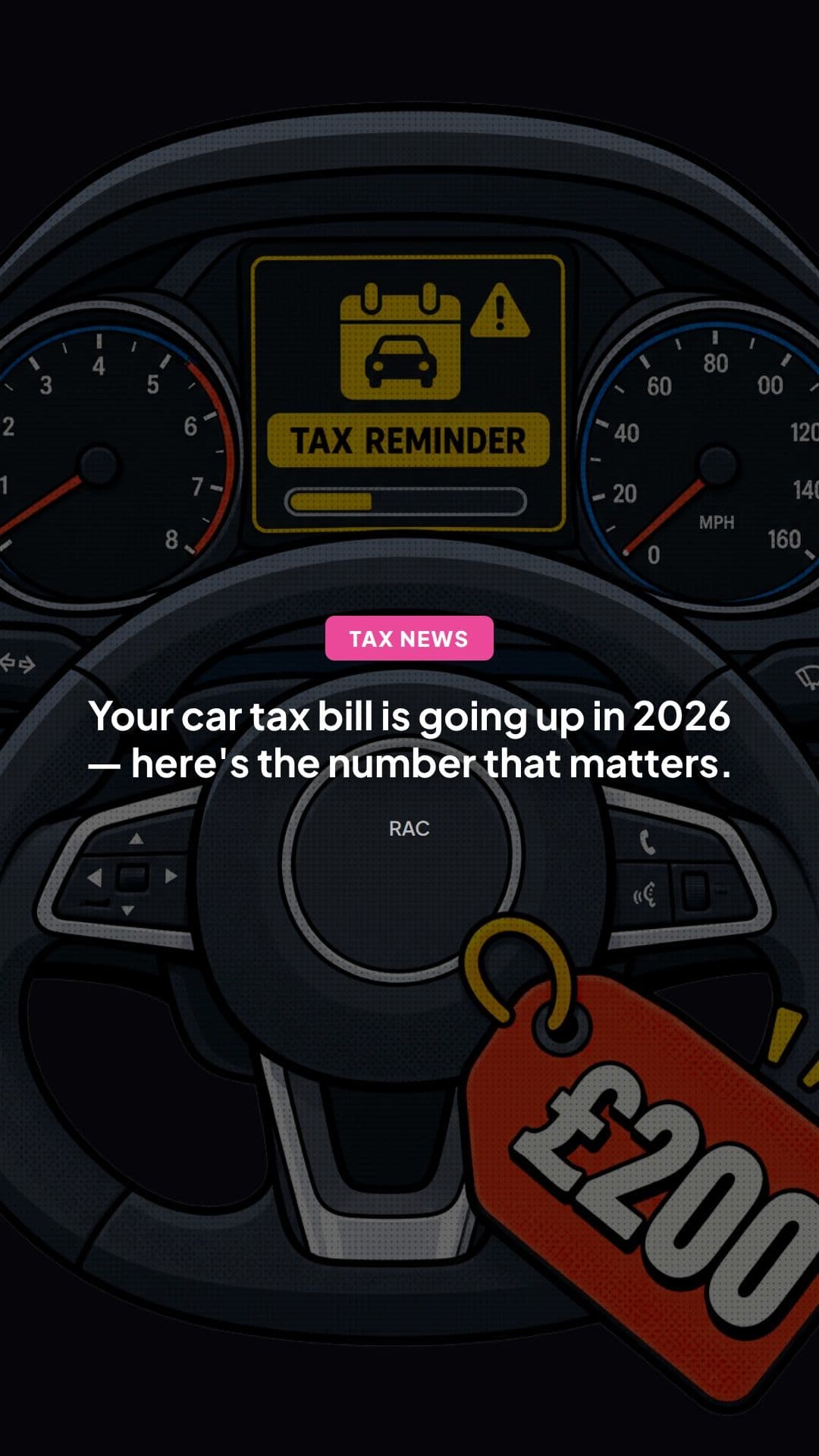
Vehicle Tax Explained: How to Tax Your Car in 2026
Hook
Every year, millions of UK drivers dutifully renew their vehicle tax without giving it a second thought. Direct debit taken, reminder letter binned, job done. But 2026 is shaping up to be the year that habit gets a rude interruption, because the numbers involved are changing significantly, and the process itself carries more legal weight than most motorists realise. If you've ever wondered what actually happens behind that DVLA renewal email, or why the taxman suddenly wants more from your ageing petrol hatchback, this is worth ten minutes of your time.
What Happened
RAC has published an updated guide on how to tax your car in 2026, and buried within the practical how-to advice is a genuinely significant change: standard Vehicle Excise Duty (VED), the official name for what most of us still call "road tax", is rising to £200 a year for many petrol, diesel and hybrid cars. This is the flat rate that applies from the second year of registration onwards for vehicles first registered after April 2017, and it affects a huge slice of the UK's existing car parc.
The RAC guide walks through the mechanics of taxing a vehicle, covering the documents you need, the payment options available, and the penalties for getting it wrong. But the headline figure, that jump to £200, is the part that will land hardest on household budgets already stretched by insurance premiums, fuel costs and MOT fees.
It's worth being clear about what this rate applies to. The £200 figure is the standard rate, not the first-year rate (which is calculated on CO2 emissions and can be considerably higher for high-polluting new cars), and it's not the "expensive car supplement" that applies to vehicles with a list price over £40,000. It's simply the flat annual charge that the majority of petrol, diesel and hybrid vehicles fall into once they're past their first year on the road.
Why It Matters
VED has always been a slightly odd tax in the public imagination. Many drivers still believe it's ring-fenced to pay for road maintenance, a myth that dates back to the old "Road Fund" era before 1937. In reality, VED revenue goes into general Treasury coffers, and has done for nearly a century. So while a rise to £200 a year sounds like it should mean smoother tarmac, there's no legal or financial mechanism that guarantees your tax disc money goes anywhere near your local potholes.
What makes this increase notable is timing. The Treasury has been gradually widening the VED net for several years, most significantly by bringing electric vehicles into the system from April 2025, ending the long-standing exemption that had made EVs financially attractive on running costs. With combustion and hybrid rates now climbing further, the gap between what different types of vehicle owners pay is narrowing, which some will read as the government levelling the playing field, and others will see as evidence that VED is simply becoming a broader revenue tool rather than a targeted environmental lever.
For household budgeting, an extra chunk on top of last year's rate might not sound catastrophic in isolation, but it compounds. Combined with insurance premiums that have risen sharply in recent years and fuel duty that remains a live political football, the total cost of simply owning a car, before you've driven a single mile, keeps climbing. This is part of a broader pattern we've tracked around VED and pay-per-mile proposals, and drivers should expect this direction of travel to continue rather than reverse.
The Legal Angle
Vehicle tax isn't optional, and the legal framework behind it is worth understanding, because the consequences of getting it wrong are more serious than many drivers assume.
The core legislation is the Vehicle Excise and Registration Act 1994, which makes it a criminal offence to keep or use a vehicle on a public road without either valid tax or a valid Statutory Off Road Notification (SORN). If your car is off the road and genuinely not being driven, a SORN is the legal mechanism that exempts you from tax, but it must be actively declared to the DVLA. You cannot simply stop paying and assume the obligation lapses.
Enforcement here isn't a paper exercise. The DVLA uses Automatic Number Plate Recognition (ANPR) cameras extensively to cross-reference vehicles on the road against its tax database in real time. If a car shows as untaxed and without a SORN, the registered keeper can face an automatic Out of Court Settlement letter, escalating to prosecution and fines that can run into four figures if the case reaches court, alongside the possibility of the vehicle being clamped or even impounded. We've covered the sharper end of this enforcement in detail elsewhere, including how DVLA clamping action works and what to do if you receive a warning letter.
There's also a continuous obligation point worth flagging: tax doesn't automatically transfer with vehicle ownership. If you sell a car, you must notify the DVLA immediately, and any remaining tax is refunded to the seller automatically, it is not passed to the buyer. The new keeper must tax the vehicle themselves before driving it, even if the previous disc still shows time left. This trips up a surprising number of private sellers and buyers every year, and it's a legal responsibility that sits squarely with the registered keeper at the time, not a courtesy.
What Drivers Should Know
The practical side of taxing a car in 2026 hasn't fundamentally changed, but it's worth refreshing the basics given the new rates in play.
Check before you commit. Before buying any petrol, diesel or hybrid car, whether new or used, check its VED banding on the government's vehicle tax rate checker using the registration number. Don't assume last year's figure still applies.
Renewal methods. You can tax a vehicle online via the gov.uk service, by phone, or at a Post Office that handles vehicle tax. You'll need the reference number from your V11 reminder letter, your V5C log book, or the green "new keeper" slip if you've just bought the car. A valid MOT certificate (where required) and insurance must also be in place, as the DVLA checks these automatically before allowing tax to be applied.
Payment options. Direct debit remains the most convenient route, and importantly it can be spread monthly, six-monthly or annually, though monthly and six-monthly instalments carry a 5% surcharge compared with paying the full annual amount upfront. If cash flow is tight, that surcharge is worth weighing up against the convenience.
Don't rely on paper reminders alone. The paper tax disc was scrapped back in 2014, and there's no longer any physical evidence needed to display in your windscreen. This is genuinely helpful in reducing faff, but it also means it's easy to lose track of renewal dates if you're not signed up for email or text reminders through the DVLA's service.
SORN if you're not driving. If your car is being stored, awaiting repair, or off the road for any reason, declare a SORN rather than letting tax lapse silently. It's free, done online in minutes, and protects you from prosecution.
Watch the wider cost picture. With standard VED heading to £200, it's worth factoring this into any decision about keeping an older combustion car versus switching to something more efficient. Our detailed breakdown of the April 2026 car tax changes sets out the full new rate structure across different vehicle bands, which is worth cross-referencing if you're weighing up a change of vehicle this year.
Looking Ahead
The direction of travel for vehicle taxation in the UK is now fairly clear, and it isn't towards simplicity or lower bills. Electric vehicles are now inside the VED system, standard rates for combustion and hybrid cars are climbing, and government has openly floated pay-per-mile style road pricing as fuel duty revenue shrinks with electrification. None of these threads are going away.
For drivers, the practical takeaway from this RAC guide isn't really about outrage at £200, it's about vigilance. Know your renewal date, understand which band your car sits in, keep insurance and MOT current so tax applications aren't rejected, and don't assume a sold car's tax history has nothing to do with you once the keys change hands. Vehicle tax has become a more expensive habit, but it remains a legal one, and the penalties for letting it slip quietly are far steeper than the annual bill itself.
Written by
The Parking Ticket Pal Editorial Team
Source-checked parking guidance
Ready to Challenge Your Ticket?
Let our AI analyse your PCN and generate a professional appeal letter in minutes.
Start Free Appeal