ULEZ Expansion: Three Years On, Has London Air Improved?
Three years after the ULEZ expansion, Sadiq Khan cites cleaner air and lives saved. We examine the figures, enforcement issues and driver concerns today.

The Parking Ticket Pal Editorial Team
8 September 2026
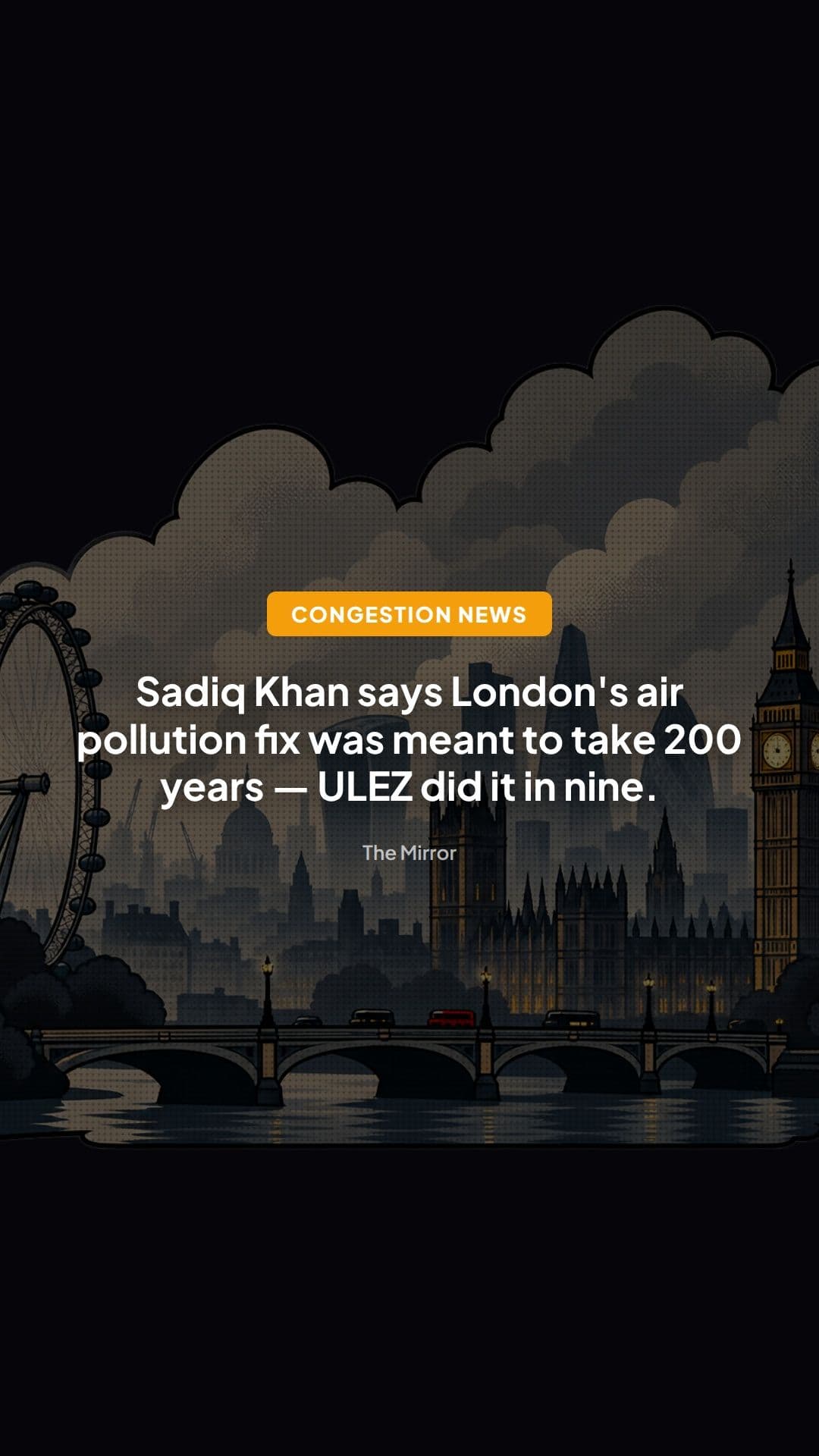
Three Years of ULEZ: Cleaner Air, Angrier Drivers, and an Enforcement Battle That Refuses to Die
There's a particular kind of British stalemate that plays out every time ULEZ makes headlines. One side points to lungs saved and pollution cut. The other points to camera vandalism, unpaid penalties piling up, and drivers who feel they've been taxed for simply owning the wrong car. Three years after London's Ultra Low Emission Zone expanded to cover the whole of Greater London, both stories are still true at once, and that's exactly why this anniversary is worth pausing on.
What Actually Happened
According to the Mirror's report, Sadiq Khan has marked the third anniversary of the ULEZ expansion by highlighting improvements in London's air quality and what he describes as lives saved as a direct result of the policy. It's the kind of announcement City Hall makes on cue at these milestones, but this time it lands against a messier backdrop than the mayor's press office might like.
The Mirror's summary is blunt about the other side of the ledger: continued opposition, unpaid penalties, and ongoing attacks on the enforcement cameras that make the whole system work. This isn't a new phenomenon. Since ULEZ expanded to outer London boroughs in August 2023, the scheme has been a lightning rod for a very specific kind of anger, one that mixes genuine financial hardship for some drivers with a broader culture war over what cars people are allowed to drive in their own city.
Three years in, the numbers Khan is citing on health outcomes sit alongside a parallel reality: a significant volume of ULEZ penalty charge notices remain unpaid, and enforcement infrastructure, the ANPR cameras that detect non-compliant vehicles, has repeatedly been targeted by vandals since the expansion was first proposed.
Why This Anniversary Matters More Than It Might Seem
ULEZ was never just a London story. It's the flagship example of a clean air zone in the UK, the template other cities have watched closely as they've rolled out their own versions, from Bristol's Clean Air Zone to Manchester's CAZ scheme. Whatever conclusion the public draws about ULEZ's three-year track record shapes the political appetite for similar schemes elsewhere.
It also matters because ULEZ has become genuinely entangled with wider questions about how London enforces its roads. The same enforcement infrastructure, ANPR cameras, penalty notice systems, appeals processes, that underpins ULEZ is functionally similar to what powers the congestion charge and a growing web of low traffic neighbourhoods and moving traffic restrictions. When that infrastructure comes under attack, or when non-payment becomes normalised, it has knock-on implications for how confident local authorities feel expanding enforcement elsewhere.
There's also a simple political reality. Khan has staked considerable capital on ULEZ. Every anniversary is a moment to reinforce the argument that the policy was worth the backlash. But the persistence of unpaid penalties and camera vandalism three years on suggests the opposition hasn't faded so much as settled into a permanent low-level insurgency. That's a different problem to manage than a wave of initial outrage that eventually subsides.
The Legal Angle: How ULEZ Enforcement Actually Works
For drivers who feel hazy on the mechanics, it's worth setting out how ULEZ penalties function in law, because the framework explains why non-payment has become such a persistent issue.
ULEZ is enforced under the same general legal architecture as the London Congestion Charge, using powers derived from the Greater London Authority Act 1999 and subsequent transport legislation, with Transport for London (TfL) as the enforcing authority. Vehicles that don't meet the required emissions standards, generally pre-Euro 4 petrol vehicles and pre-Euro 6 diesel vehicles, are liable for the daily charge if they're driven within the zone without payment.
Failure to pay results in a Penalty Charge Notice, currently set at a significant sum if paid promptly, rising if it goes unpaid within the initial discount window. Crucially, ULEZ PCNs follow a similar escalation path to other traffic contraventions: an initial notice, a chance to pay at a reduced rate, then full penalty, and eventually the option for TfL to register the debt with a court and pursue it through bailiffs or via the DVLA for vehicle keeper details.
This is where the "unpaid penalties" element of the story becomes legally significant rather than just a statistic. Drivers who ignore ULEZ PCNs don't make the debt disappear, they simply move themselves further along an enforcement chain that can end in enforcement agents (bailiffs) attending a registered address, or a County Court Judgment in more persistent cases. Anyone sitting on a stack of unpaid ULEZ notices should understand that the debt escalates in cost, not just moral weight.
On the flip side, drivers do have a genuine right to challenge PCNs they believe were issued in error, whether through incorrect vehicle recognition, a valid exemption, or a payment that wasn't correctly logged. TfL operates a formal representations process, and unresolved disputes can proceed to independent adjudication via the London Tribunals service. This mirrors the process available for standard parking contraventions, and drivers who've navigated a PCN appeal for a parking or bus lane matter will recognise the structure.
The vandalism angle raises its own legal questions. Deliberately damaging or disabling ANPR enforcement cameras is criminal damage under the Criminal Damage Act 1971, regardless of the political motivation behind it. It's not a grey area or a form of civil disobedience with special protection, it's a prosecutable offence, and TfL has pursued cases against those responsible where evidence allows.
What Drivers Should Actually Know
If you're a London driver, or you're planning to drive into the capital, here's what matters practically three years into the expanded zone:
Check compliance before you travel. TfL's official vehicle checker tool remains the definitive way to confirm whether your specific vehicle is ULEZ compliant. Don't rely on general assumptions about your car's age or fuel type, always verify using the registration number.
Understand the exemptions. Certain vehicle categories, including some historic vehicles and specific disabled tax class vehicles, may qualify for exemptions or a grace period. If you believe you qualify, this needs to be formally registered with TfL rather than assumed.
Don't ignore a PCN hoping it goes away. As outlined above, unpaid penalties escalate. If you genuinely believe a charge was issued incorrectly, use the formal representations process promptly rather than letting the discount window and later the standard payment window lapse.
Keep records if you're disputing a charge. Payment confirmations, screenshots, and correspondence references all matter if a dispute drags into the tribunal stage.
Be aware that ULEZ and Congestion Charge liability can overlap. Driving a non-compliant vehicle within the zone during charging hours can mean facing both charges on the same day, which surprises drivers unfamiliar with how the two schemes stack.
If you're dealing with unpaid historic ULEZ debt that's escalated to bailiff involvement, it's worth understanding your formal rights around enforcement visits and payment arrangements rather than engaging with agents without knowing the rules, since bailiff conduct itself is governed by specific regulations drivers can hold enforcement agents to.
Looking Ahead
Three years on, ULEZ has settled into an uneasy permanence. It isn't going away, and Khan's anniversary messaging makes clear City Hall regards the health case as settled and the political fight as worth continuing to have. But the persistence of unpaid penalties and camera attacks tells its own story: a meaningful minority of drivers haven't accepted the scheme's legitimacy, three years is a long time for opposition to still be expressing itself through vandalism rather than through the ballot box or legal challenge.
The bigger question for drivers across the country is what ULEZ's third anniversary signals for clean air zones elsewhere. Every city considering or expanding a similar scheme will be watching whether London's combination of environmental gains and enforcement friction is a price worth paying, or a warning about what happens when a policy outruns public consent. For now, the practical reality for anyone driving in London hasn't changed: check your vehicle, understand the charges, and don't assume a penalty notice will simply expire if you leave it unanswered.
Written by
The Parking Ticket Pal Editorial Team
Source-checked parking guidance
Ready to Challenge Your Ticket?
Let our AI analyse your PCN and generate a professional appeal letter in minutes.
Start Free Appeal