
UK Petrol Prices Jump 5p: How Iran War Hits Drivers
UK petrol and diesel prices have climbed by 5p in a week as the Iran war pushes up oil. See what it means for motorists, forecourts and fuel bills.

The Parking Ticket Pal Editorial Team
21 September 2026
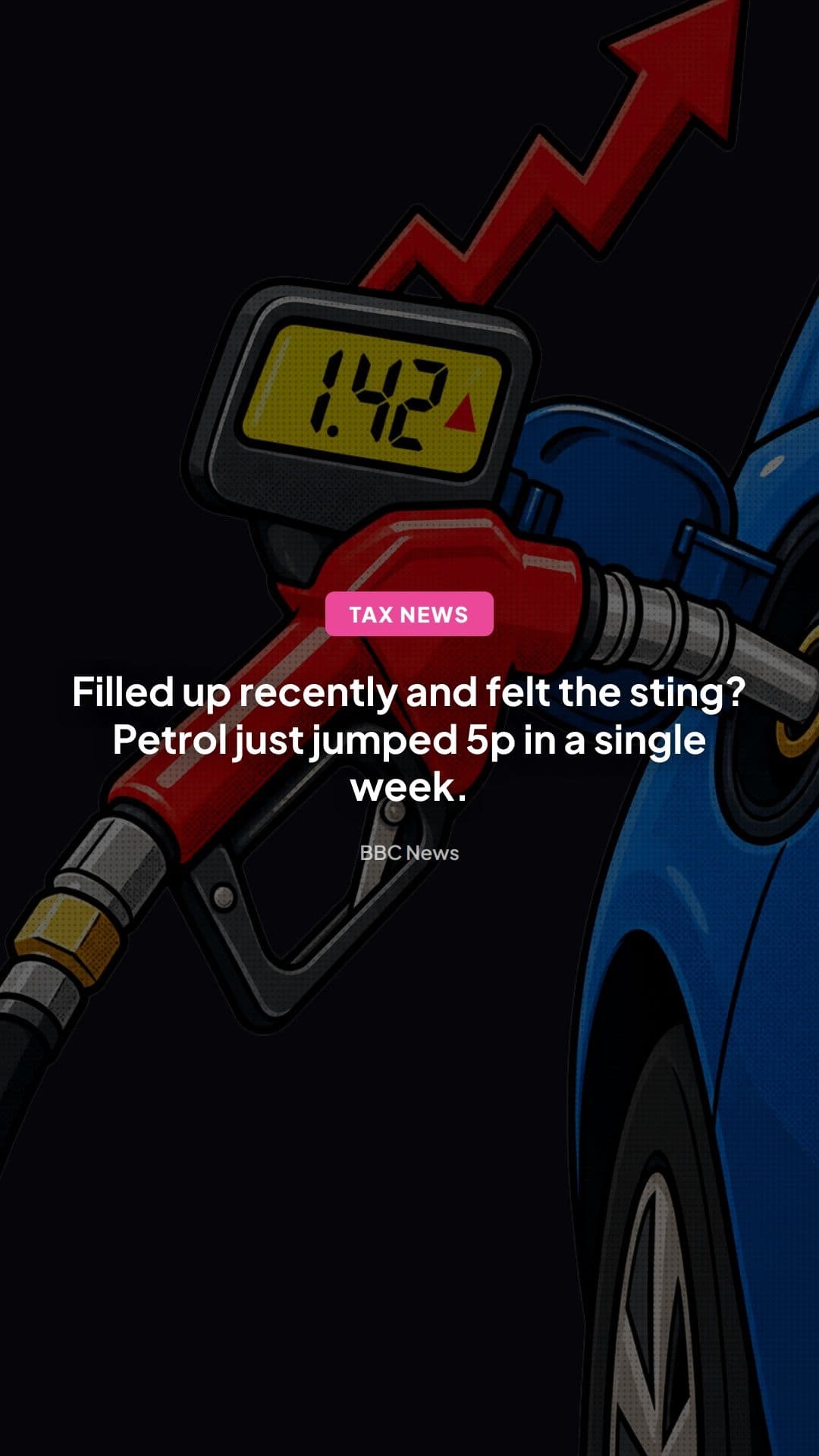
Petrol Prices Jump 5p in a Week: How the Iran Conflict Is Hitting UK Drivers Where It Hurts
Just when you thought you'd got a handle on your monthly fuel budget, along comes a geopolitical crisis thousands of miles away to blow it apart. According to BBC News, UK petrol and diesel prices have risen sharply over the past week, with pump prices climbing by around 5p as tensions between the US, Israel and Iran push global oil prices higher. For millions of British motorists already stretched thin, it's yet another unwelcome jolt to the household budget, and a reminder of just how exposed we all are to events on the other side of the world.
What Happened
The trigger for this latest spike is the escalating conflict involving Iran, which has rattled energy markets and sent the price of crude oil climbing. Iran is a major oil producer and sits astride the Strait of Hormuz, one of the world's most critical shipping routes for crude oil and liquefied natural gas. Roughly a fifth of the world's oil supply passes through that narrow waterway. Any hint that shipping through the strait could be disrupted, whether through military action, mining, or simply heightened insurance risk for tankers, is enough to send traders scrambling and prices surging.
That's precisely what's happened here. As the situation between the US, Israel and Iran has intensified, oil markets have reacted with the kind of nervous jump that ripples almost immediately through to the forecourt. Within the space of a week, UK petrol and diesel prices climbed by around 5p a litre, according to the BBC's reporting, putting fresh pressure on drivers who had perhaps hoped for a period of stability after a turbulent few years of fuel price swings.
It's worth remembering that this isn't an isolated blip. Pump prices in the UK have been on a broadly upward trajectory for much of the past year, with previous spikes tied to everything from refinery issues to wider Middle East instability. This latest jump simply adds another layer onto an already uncomfortable trend for anyone who relies on a car to get to work, ferry children to school, or run a small business.
Why It Matters
It's tempting to see a 5p rise as small change, especially set against the backdrop of years in which pump prices have swung by much larger amounts. But the real story here is about exposure and vulnerability, not just the headline figure.
The UK imports the vast majority of its refined fuel and remains deeply tied into the global oil pricing system. That means a conflict in the Middle East, even one that doesn't directly involve British interests or supply chains, can still land squarely on the average driver's fuel bill within days. There's no domestic buffer big enough to absorb these shocks. When crude oil prices rise on international markets, UK wholesale fuel costs follow, and retailers pass much of that increase on to consumers at the pump, often within a week or two.
For households already juggling higher energy bills, rising food costs and stagnant wage growth, an unexpected 5p per litre rise translates into a real, tangible squeeze. Fill up a typical 55-litre family car tank and that's an extra £2.75 compared to the week before, and that's before accounting for any further rises if the situation escalates further. For those who drive for a living, such as delivery drivers, tradespeople, or anyone reliant on a van, the cumulative effect over a month can be significant.
There's also a broader inflationary knock-on effect to consider. Fuel costs feed into the price of almost everything, from the delivery van bringing groceries to supermarkets, to the haulage firms moving goods around the country. A sustained rise in oil prices doesn't just hit drivers at the pump, it has the potential to nudge up prices more broadly across the economy, reigniting concerns about inflation just as it seemed to be cooling.
The Legal and Regulatory Angle
Unlike many of the parking and enforcement stories we cover, this isn't really a story about drivers' legal rights in the traditional sense. There's no PCN to appeal, no clamping law to understand. But there are important regulatory and tax dimensions worth unpacking, because they shape just how much of that oil price rise actually reaches your tank.
Fuel duty is a fixed amount charged per litre by the Treasury, currently frozen as part of the government's ongoing fuel duty freeze, which has been extended repeatedly in recent years rather than allowed to rise in line with inflation. On top of that sits VAT at 20%, which is charged not just on the base price of the fuel but on the fuel duty itself, meaning drivers are effectively paying tax on tax. When wholesale oil prices rise, that 20% VAT slice grows in cash terms too, so the Treasury actually collects more revenue as pump prices climb, even without any change in the rate itself.
This dynamic has drawn criticism in the past from motoring organisations who argue that fuel retailers and the Treasury both benefit disproportionately during price spikes. There have also been ongoing questions, raised repeatedly by groups such as the RAC and AA, about whether retailers pass on price rises faster than they pass on price falls, sometimes referred to as "rocket and feather" pricing, where prices shoot up quickly but drift down slowly. The Competition and Markets Authority has previously examined fuel retailing practices, and pricing transparency remains a live issue for regulators.
For drivers, understanding this tax structure matters because it explains why relief at the pump rarely matches the scale of falls in global oil prices, and why rises can feel disproportionately painful. It's not just Iran and oil markets, it's the layered tax structure sitting on top that determines what you actually pay.
What Drivers Should Know
While nobody can control international oil markets, there are practical steps that can soften the blow of price spikes like this one.
Shop around before you fill up. Prices can vary significantly between filling stations, even ones just a few miles apart, and supermarket forecourts often undercut standalone stations. Fuel price comparison apps can help you spot the cheapest options nearby before you commit to a fill-up.
Consider the timing of your fill-ups. If a price rise has just been reported, filling up sooner rather than later can save you money before further increases filter through to local forecourts, which typically takes a few days to a couple of weeks depending on location and competition.
Look at your driving habits. Simple changes such as reducing harsh acceleration and braking, keeping tyres correctly inflated, and removing unnecessary weight from the boot can all improve fuel economy, sometimes by a noticeable margin over a full tank.
Factor volatility into your budgeting. Given how frequently global events have driven fuel price swings over the past few years, from the war in Ukraine to Middle East tensions, it's worth building a buffer into household budgets rather than assuming prices will stay stable for long.
Keep an eye on diesel versus petrol pricing. The gap between the two can shift depending on global supply dynamics, and it's worth checking which is currently better value if you have a choice of vehicle, or when considering your next car purchase.
Watch for further government intervention. Given the political sensitivity of fuel prices, further extensions to the fuel duty freeze, or even temporary reductions, are always a possibility during periods of sustained price pressure, though nothing has been confirmed at this stage.
Looking Ahead
The key question now is how long this particular spike lasts, and whether it's the beginning of a more sustained upward trend or a temporary reaction that eases once markets get a clearer picture of how the Iran situation develops. Oil markets are notoriously reactive to headlines, and prices can fall back as quickly as they rise if tensions de-escalate or if there's no actual disruption to supply through routes such as the Strait of Hormuz.
But there's a broader lesson here that goes beyond this single week's price rise. UK drivers remain deeply exposed to events entirely outside their control, and outside the control of the UK government too. Every time tensions flare in a major oil-producing region, the ripple effects land on British forecourts within days. That vulnerability isn't going away any time soon, and it's a strong argument for why fuel costs are likely to remain a source of genuine financial stress for many households and businesses for the foreseeable future.
For now, the most sensible approach for drivers is to stay informed, compare prices actively rather than defaulting to the nearest station, and build some flexibility into monthly budgets to absorb the kind of sudden swings that international events like this can trigger with very little warning.
Written by
The Parking Ticket Pal Editorial Team
Source-checked parking guidance
Ready to Challenge Your Ticket?
Let our AI analyse your PCN and generate a professional appeal letter in minutes.
Start Free Appeal