UK Petrol Prices Hit 160p: What It Means for Drivers
UK petrol prices have climbed to around 160p per litre as the Iran war drives up fuel costs. Find out what the increase means for drivers and household budgets.

Marcus Campbell
3 August 2026
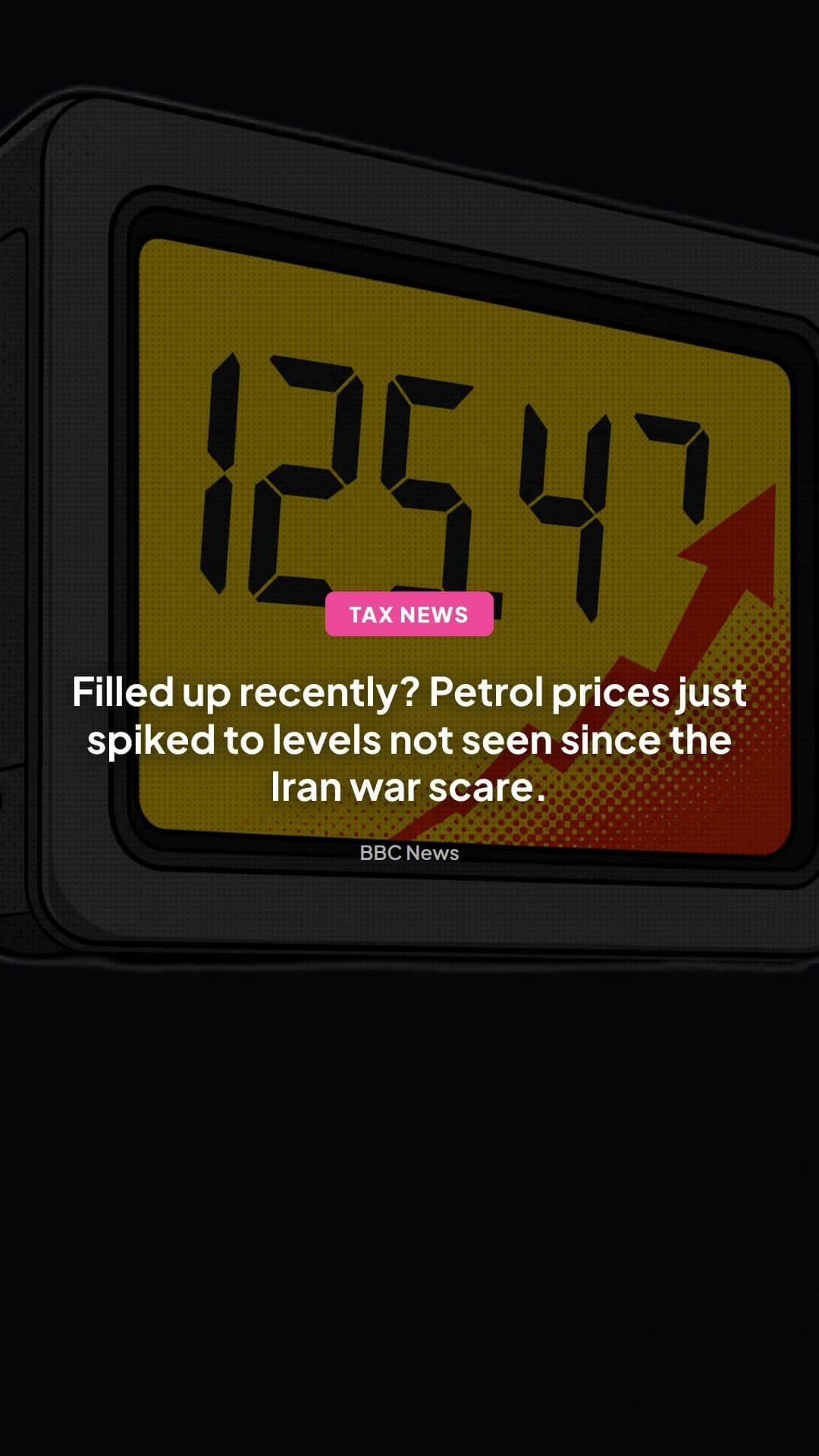
Petrol Prices Surge to Iran War Highs: What's Really Driving the Cost at the Pump
There's a particular kind of dread that comes with watching the numbers tick past on a fuel pump display, especially when you know you didn't imagine it getting more expensive last time you filled up. According to the RAC, average UK petrol prices have now reached around 160p per litre, with diesel climbing to roughly 179p. The trigger this time isn't a domestic tax change or a supply hiccup at a refinery. It's a war thousands of miles away, in the Strait of Hormuz and the wider Gulf region, rippling through to forecourts in Solihull, Swansea and everywhere in between.
For households already stretched by energy bills, food costs and mortgage rates, this is unwelcome news. But there's more to this story than a headline figure. Understanding why prices move the way they do, and how much of what you pay is actually tax versus wholesale cost, matters if you want to make sense of your monthly outgoings and plan ahead.
What Happened
The RAC's figures show a clear and fairly rapid escalation in pump prices, with diesel now sitting notably higher than petrol at around 179p per litre. This has been linked directly to the conflict involving Iran, which has unsettled global oil markets. When tensions rise in the Gulf, a region responsible for a huge share of the world's crude oil and a critical shipping corridor through the Strait of Hormuz, traders react immediately. Oil futures spike on the mere possibility of disrupted supply, even before a single tanker is delayed or a barrel fails to ship.
That spike in wholesale crude prices doesn't stay confined to oil trading floors. It works its way through refining costs, then into the wholesale price paid by fuel retailers, and finally lands at the pump, often within days or a couple of weeks. Diesel tends to be particularly sensitive to this kind of geopolitical shock because a significant proportion of UK diesel is imported, and it's also more heavily used in industries and shipping that respond quickly to global supply fears.
The RAC has warned that diesel prices could climb further still, suggesting this isn't necessarily the peak. That's a sobering prospect for the hauliers, tradespeople and delivery drivers who rely on diesel vehicles and have far less flexibility to simply drive less.
Why It Matters
It's tempting to see fuel price spikes as a one-off inconvenience, but the reality is more structural. Fuel costs are baked into almost everything else we buy. Haulage firms pass on higher diesel costs to retailers, retailers pass them on to consumers, and suddenly a war in the Middle East is showing up in the price of your weekly shop, not just your fuel receipt.
For individual households, the maths is stark. Someone commuting 10,000 miles a year in an average petrol car will feel every penny-per-litre rise multiplied across dozens of fill-ups. For diesel-driving tradespeople, delivery drivers or anyone running a larger vehicle, the impact is proportionally worse, and it comes at a time when many were already juggling higher costs elsewhere.
There's also a psychological dimension worth acknowledging. Fuel prices are one of the most visible, most frequently observed prices in daily life. Unlike an energy bill that arrives monthly, or grocery inflation that creeps in gradually, the number on a forecourt sign is impossible to ignore. That visibility tends to shape how people feel about the broader cost of living, sometimes even more than the numbers alone would justify.
The Tax Angle
Here's where it gets interesting, and where a lot of drivers are surprised by the detail. Roughly half of what you pay at the pump isn't the cost of oil, refining or retailing at all. It's tax.
Fuel duty is currently charged at a flat rate per litre, regardless of the wholesale price of oil. On top of that, VAT is charged at the standard 20% rate, and crucially, it's applied to the total price including fuel duty. That means when wholesale prices rise, as they have here due to the Iran conflict, the government actually collects more VAT in cash terms, because 20% of a bigger number is a bigger amount. This is sometimes referred to as a "tax on a tax" and it's a genuine feature of how UK fuel is priced, not a myth.
The government has kept fuel duty frozen for a number of years now, and extended that freeze into the current period, which has provided some cushioning against price rises. Without that freeze, forecourt prices would likely be even higher than they are today. But a frozen duty rate doesn't protect drivers from wholesale price shocks like this one. It simply means the tax component isn't adding to the problem on top of the geopolitical one.
There's also an ongoing regulatory dimension. The Competition and Markets Authority has taken an active interest in how fuel retailers set and display prices, including work on a fuel price transparency scheme intended to help drivers compare local prices more easily and spot retailers who are slow to pass on wholesale price drops, or quick to pass on rises. Whether that kind of scheme meaningfully constrains pricing behaviour during a genuine international supply shock like this one is a fair question. Retailers will argue they're simply responding to higher wholesale costs, and in a fast-moving crisis, there's some truth to that. But it's worth watching whether prices come down as quickly as they went up once the immediate tension eases, because that asymmetry, quick to rise, slow to fall, has been a persistent concern for regulators and motoring organisations alike.
What Drivers Should Know
There's no getting around the basic reality that international events like this are outside any individual driver's control. But there are still sensible, practical steps worth taking:
- Shop around, don't assume your usual station is cheapest. Price differences between forecourts, even ones close together, can be more significant during volatile periods than people expect. Comparison apps and websites can help identify genuinely cheaper options nearby rather than relying on habit.
- Avoid panic-buying or topping up unnecessarily. During periods of price anxiety, some drivers rush to fill up "before it gets worse," which can itself contribute to short-term local shortages and queueing, without actually saving much money if prices are set to fluctuate either way.
- Reconsider journey planning where practical. Combining errands, reducing unnecessary short trips, and keeping tyres properly inflated all have a modest but real effect on fuel consumption, particularly for diesel vehicles doing stop-start urban driving.
- Keep an eye on maintenance. A poorly maintained engine, clogged air filter or under-inflated tyres can increase fuel consumption noticeably. In a period where every litre costs more, small efficiency gains matter more than usual.
- Consider your next vehicle carefully. Rising fuel costs, especially diesel, are one of several factors pushing more drivers to look seriously at electric or hybrid alternatives. That's a bigger decision than a single price spike should drive on its own, but it's a legitimate part of the wider calculation for anyone due a change of car in the near future.
None of this is legal advice, and nothing here changes drivers' rights or obligations. If you're facing genuine financial hardship because of fuel or wider living costs, organisations like Citizens Advice and the Money Advice Service offer free, tailored guidance that goes well beyond general commentary like this.
Looking Ahead
The honest answer is that nobody can say with certainty how long this price surge will last. Oil markets are notoriously reactive to geopolitical developments, and prices can fall as quickly as they rise if tensions ease. Equally, further escalation in the Gulf region could push prices higher still, particularly for diesel, as the RAC has already flagged as a risk.
What's more predictable is the ongoing domestic conversation about fuel taxation. With fuel duty frozen and public finances under pressure, there will inevitably be renewed debate about whether that freeze can continue indefinitely, particularly as the government looks at broader questions around road funding and how to tax driving fairly as more vehicles go electric. Drivers watching pump prices climb because of events overseas are also, whether they realise it or not, part of a much longer running conversation about how Britain pays for its roads.
For now, the most useful thing any driver can do is stay informed, be a bit more deliberate about where and when they fill up, and recognise that this particular spike has its roots not in domestic policy, but in a volatile world that has an uncomfortable habit of showing up in our fuel bills whether we like it or not.
Written by
Marcus Campbell
Former Traffic Warden
Ready to Challenge Your Ticket?
Let our AI analyse your PCN and generate a professional appeal letter in minutes.
Start Free Appeal