
UK petrol and diesel price rises: what inflation means
UK petrol and diesel price rises have lifted inflation. Find out why fuel costs are climbing, how oil disruption affects prices and what it means for drivers.

The Parking Ticket Pal Editorial Team
16 September 2026
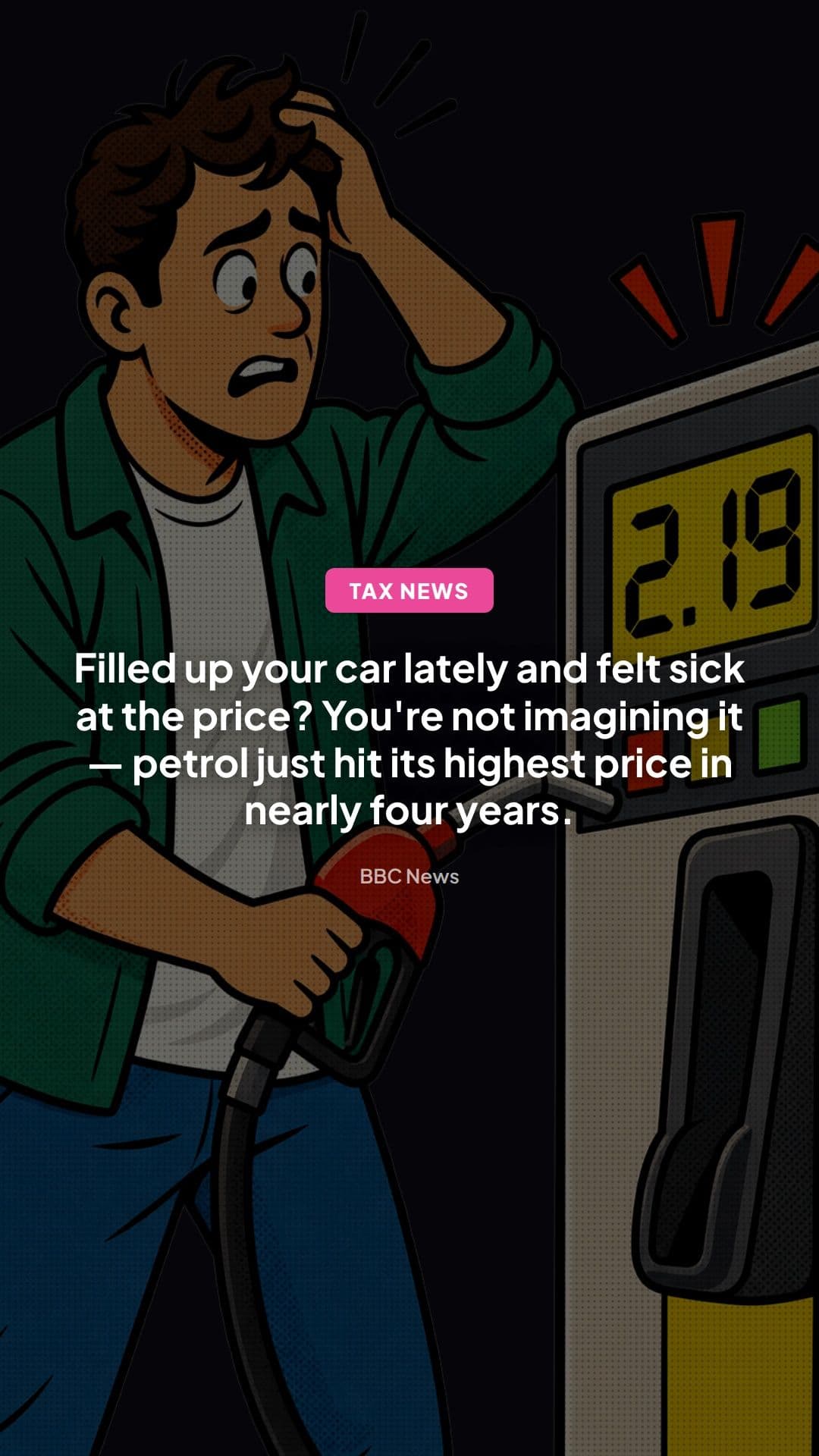
Why Your Fuel Bill Is Now Officially Part of Britain's Inflation Problem
Fill up your car this week and you might have noticed the total creeping higher again. That's not just an inconvenience for your wallet, it is now officially part of the story behind why the cost of living across the UK is rising faster than expected. According to the latest figures reported by the BBC, higher petrol and diesel prices, driven in part by disruption to global oil supply and the ongoing conflict in the Middle East, have contributed directly to a rise in UK inflation.
For millions of drivers already juggling insurance premiums, road tax and maintenance costs, this is unwelcome news. But it also raises a bigger question: how exactly does what you pay at the pump end up shaping the inflation figures that dictate interest rates, mortgage costs and government policy? Let's unpack it.
What Happened
The headline figure is straightforward. UK inflation ticked upwards, and the Office for National Statistics pointed to fuel costs as one of the contributing factors. Petrol and diesel prices have been climbing, partly because of instability in global oil markets linked to the ongoing conflict in the Middle East, which continues to disrupt supply routes and unsettle traders.
Oil is a globally traded commodity, and its price reacts quickly to geopolitical shocks, whether that's tension around key shipping routes, production decisions by oil-producing nations, or fears of wider regional escalation. When crude oil prices rise, it typically takes only a week or two for that increase to filter through to the price displayed on UK forecourts, because wholesale costs feed almost directly into retail pricing.
This isn't the first time fuel has been blamed for pushing inflation off course. It happened dramatically in 2022 following the invasion of Ukraine, when pump prices hit record highs. What's notable now is that even without a single dramatic trigger event, the combination of oil market jitters and ongoing Middle East conflict is proving enough to nudge inflation upward again.
Why It Matters
It's tempting to think of inflation as an abstract economic statistic, but the mechanics are very real for drivers. Fuel doesn't just cost you money directly, it also filters into the price of almost everything else. Haulage costs, food distribution, tradespeople's callout charges and even the cost of your online deliveries all have a fuel cost baked in. When diesel goes up, businesses that rely on vans and lorries pass those costs on. That's part of why fuel is treated as such a significant component of the inflation basket that the ONS tracks each month.
There's also a policy feedback loop worth understanding. The Bank of England watches inflation extremely closely when deciding whether to raise, hold or cut interest rates. Higher inflation, even if it's driven by something as specific as oil prices, can make the Bank more cautious about cutting rates, which in turn affects mortgage costs, credit card interest and business borrowing across the country. In other words, a spike in diesel prices in the Middle East can indirectly influence what you pay on your mortgage in Manchester or Motherwell.
For drivers specifically, the pain is layered. Fuel duty in the UK has remained frozen for well over a decade in cash terms, a freeze that successive chancellors have chosen to extend rather than let fuel duty rise with inflation, as our piece on the fuel duty freeze extended to 2026 explains. But VAT is charged at 20% on top of both the fuel price and the duty, meaning that when wholesale oil prices rise, the tax take rises too, since VAT is a percentage rather than a flat amount. Drivers end up paying tax on a tax, and that dynamic becomes more pronounced whenever oil prices spike.
The Legal and Regulatory Angle
There's no single law that dictates the price of petrol, the UK operates a largely liberalised fuel market where retailers set prices based on wholesale costs, competition, and location. However, there are regulatory pressures worth knowing about.
The Competition and Markets Authority (CMA) has an ongoing watching brief over the road fuel market, following a 2023 study that found competition in the sector wasn't working as well as it should for drivers, particularly around price transparency at the pump. That work has continued, and government-backed fuel price finder tools have been introduced with the aim of making it easier for drivers to compare local prices before filling up, part of a wider effort to hold retailers accountable when wholesale costs fall but pump prices are slow to follow.
Separately, fuel duty itself is set by HM Treasury and confirmed at each Budget. While it has been frozen (and at times cut) in recent years, there is always a possibility that future Budgets could reverse that trend, particularly if the government needs to raise revenue elsewhere. Any change to fuel duty has to go through the usual parliamentary Budget process, so drivers typically get advance warning, but it's worth keeping an eye on Budget announcements each autumn and spring, as we've covered previously when looking at fuel duty rises and their impact on drivers.
There is no legal requirement for fuel retailers to justify individual price changes to customers, but persistent findings of unfair practices, such as prices failing to fall in line with wholesale costs, can prompt CMA intervention or recommendations for regulatory reform.
What Drivers Should Know
While nobody can control global oil markets, there are practical steps drivers can take to soften the impact of rising fuel costs.
Compare prices before you fill up. Apps and websites that track fuel prices by postcode can reveal surprisingly large differences between forecourts just a few miles apart. Motorway services are almost always the most expensive option, so where possible, fill up before joining the motorway network.
Time your fill-ups where you can. Prices can shift week to week depending on wholesale trends, so if you're not desperate, it's worth checking whether a short delay might catch a dip.
Consider your driving style and vehicle load. Simple habits such as removing unnecessary weight from the boot, keeping tyres correctly inflated, and avoiding harsh acceleration can meaningfully improve fuel economy, particularly on longer journeys.
Keep receipts if you claim mileage. Anyone claiming fuel expenses for work, whether as an employee or self-employed, should keep clear records, since HMRC's Advisory Fuel Rates are reviewed periodically and don't always keep pace with sudden price rises.
Watch for knock-on costs. Rising fuel costs often precede increases in delivery charges, breakdown cover, and even some parking or council charges that are linked to inflation-adjusted pricing, so it's worth budgeting for wider cost creep, not just the pump price itself.
Think about your next vehicle carefully. With fuel costs volatile and prone to geopolitical shocks, some drivers are increasingly weighing up electric vehicles, as explored in our coverage of rising UK interest in EVs amid petrol price increases, though the total cost comparison depends heavily on home charging access and annual mileage.
Looking Ahead
The immediate question is whether this is a temporary blip or the start of a sustained upward trend. Much depends on how the Middle East situation develops and whether wider oil-producing nations adjust output to stabilise prices. Inflation figures are published monthly, and fuel costs will remain a closely watched component, given how directly and quickly they can move the headline number.
For drivers, the practical reality is that pump prices are likely to stay unpredictable for the foreseeable future, shaped as much by international politics as by domestic economics. Staying informed, comparing prices, and understanding how duty and VAT interact with wholesale costs can help you make smarter decisions at the pump, even if the bigger picture remains largely out of any individual driver's control.
What's clear is that the cost of keeping your car on the road is no longer just a personal budgeting issue. It's now firmly woven into the national economic conversation, and that's unlikely to change any time soon.
Written by
The Parking Ticket Pal Editorial Team
Source-checked parking guidance
Ready to Challenge Your Ticket?
Let our AI analyse your PCN and generate a professional appeal letter in minutes.
Start Free Appeal