
UK Inflation Hits 3.4% as Petrol and Diesel Prices Soar
UK inflation is forecast to reach 3.4% in September as rising petrol and diesel prices lift motoring costs. See what the fuel price surge means for drivers.

The Parking Ticket Pal Editorial Team
19 October 2026
Inflation at 3.4%: What Pump Prices Really Mean for Your Motoring Budget
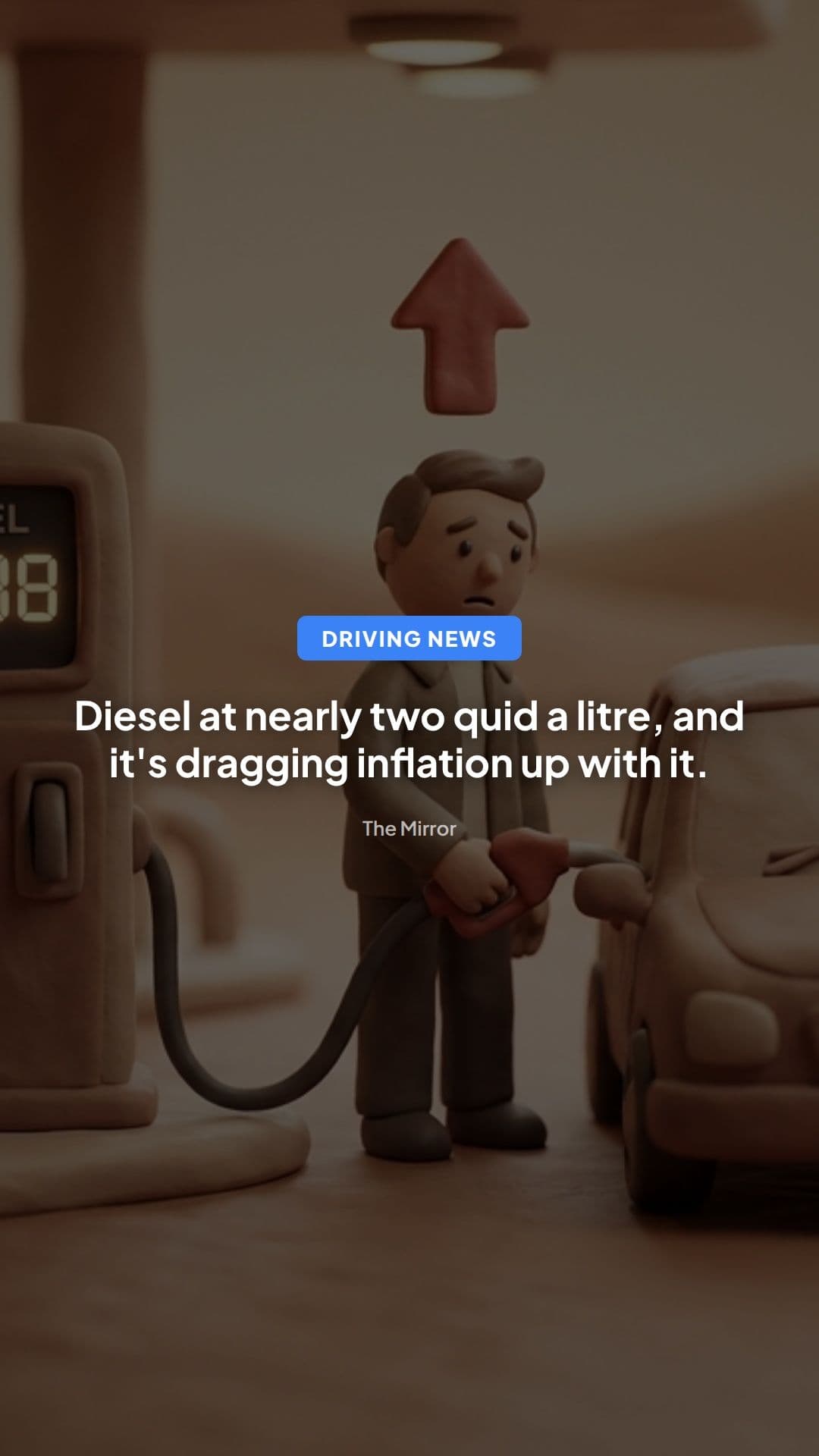
You do not need an economics degree to know when inflation is biting. You just need to stand on a forecourt watching the numbers spin. According to The Mirror, a surge in pump prices was expected to push UK inflation to about 3.4% in September, with RAC averages reported at 174.31p a litre for petrol and 199.31p for diesel.
Those headline figures matter, but the story behind them matters more. Fuel is the most visible motoring cost, yet it is only one of many that drift upwards when inflation does. Here is what is going on, how the rules around driving costs work, and what you can do about it.
What the figures actually say
The Mirror's report ties a jump in fuel prices to a rise in the headline inflation rate, which the Office for National Statistics (ONS) measures through the Consumer Prices Index (CPI). A few points are worth unpicking:
- Inflation is a rate, not a price. A 3.4% rate means prices overall are rising at that pace compared with a year earlier. It does not mean your petrol went up by 3.4%.
- Fuel is one part of a big basket. CPI covers everything from groceries to rent. Fuel can nudge the headline number noticeably when prices move sharply, but it never tells the whole story.
- The official figure is the ONS's. The Mirror's piece reflects expectations ahead of publication, so treat the 3.4% as the reported estimate and check the ONS release for the confirmed number.
The RAC averages are more straightforward. At 174.31p, petrol means a typical 50-litre fill costs roughly £87.16. At 199.31p, diesel brings the same fill to about £99.66. That is a gap of around £12.50 per tank between the two fuels, with diesel just under the symbolic £2 a litre mark.
Why diesel is now the pricier pump
For years, diesel drivers enjoyed a slight edge on mileage but paid a small premium at the pump. At roughly 25p a litre more than petrol, that premium is now substantial. Diesel's better miles per gallon softens the blow, but only up to a point. A diesel car doing 10% better mpg than a petrol equivalent will still cost more per mile if the fuel is more than around 10% dearer, and here the gap is closer to 14%.
That is general arithmetic rather than a prediction for your car. Your real-world mpg, your annual mileage and whether you do mostly short urban trips (which can be tough on diesel particulate filters) all affect the sums. It is worth working out your own cost per mile rather than assuming one fuel is automatically cheaper.
Why fuel prices amplify so quickly
Pump prices are built from several layers: the underlying cost of crude and refined product, retailer margins, fuel duty and VAT. Two of these are worth understanding because they shape how much of any wholesale rise reaches you.
Fuel duty is a fixed amount per litre set by the Treasury. It does not rise automatically when wholesale prices climb, so it does not directly amplify a price spike. Governments have frozen or cut it in recent years, though the Treasury can change it at any Budget.
VAT at 20% is charged on top of the price including duty. That means when the product cost goes up, VAT takes a fifth of the increase on top. A rise at the wholesale end therefore shows up as a slightly larger rise at the pump.
This layering is why a sharp movement in wholesale costs can feel disproportionate when it reaches the forecourt.
The wider motoring bill
Here is where inflation gets quietly expensive for drivers. Fuel is the cost you see weekly. The others arrive in lumps.
Insurance. Insurers price in the cost of repairs, parts and replacement vehicles. When general costs rise, premiums tend to follow, although the timing varies by insurer and by your own risk profile.
Vehicle tax. Vehicle Excise Duty rates have typically been uprated each April, so they track broader price movements over time.
Servicing and parts. Garage labour and parts costs reflect general price pressures.
Parking. Here the rules are more interesting, and they are worth a closer look.
The legal angle: how parking charges and penalties are set
Inflation raises the temptation for councils and landowners to increase parking charges. But the way those charges are set, and what you can challenge, depends on who is charging you.
Council parking charges
On-street and council car park tariffs are set through Traffic Regulation Orders under the Road Traffic Regulation Act 1984. Councils must follow a legal process, including advertising proposed changes and considering objections, before new charges take effect. Many councils also publish their fees and charges annually. If you want to understand why a tariff is changing, the council's published decision papers and consultation notices are the place to look.
Penalty Charge Notices
Statutory PCN levels for council-enforced contraventions are not index-linked to inflation. In England outside London, the amounts are set in regulations under the Traffic Management Act 2004. In London, they are set under separate local legislation. Because they are fixed in law rather than rising automatically each year, any increase needs a deliberate change to those rules. Reviews and proposals to change them have been reported separately, but the key point for drivers is simple. A PCN's amount is set by law, not by the council's own budgeting, and the notice must state the correct amount and the grounds on which you can challenge it.
If you receive one, the usual route is an informal challenge, then a formal representation, and if that is rejected, an appeal to the independent tribunal (the Traffic Penalty Tribunal in England outside London and Wales, or London Tribunals in the capital). Official guidance on each stage is published by those bodies, and you can read it in full before deciding what to do.
Private parking charges
Private operators are different. A private parking charge is a contractual or trespass-based claim, not a penalty set by statute. If the operator wants to pursue the registered keeper rather than the driver, it must comply with the strict requirements of Schedule 4 of the Protection of Freedoms Act 2012. Inflation does not entitle a private firm to bump up its charge arbitrarily. The charge must be clearly signposted and properly justified. Independent appeals are available through the operator's accreditation scheme, which will be either the British Parking Association or the International Parking Community.
Fuel, phones and the small print of saving money
When money is tight, drivers get creative. Some of the creativity is wise. Some of it comes with legal risk.
Comparing prices on your phone. It is perfectly sensible to compare prices, but do it before you set off. Holding and using a handheld phone while driving is an offence under the Road Vehicles (Construction and Use) Regulations 1986, and the penalty is a £200 fixed penalty and six penalty points. The law applies even when you are stationary in traffic or at lights, as long as the engine is running. Plan your fuel stop in advance, or use hands-free voice settings where the law allows.
Driving off without paying. Any rise in fuel prices makes the temptation to skip payment more likely for some, but making off without payment is an offence under section 3 of the Theft Act 1978. It is a criminal matter, not a civil dispute. If you genuinely forget to pay or your card is declined, go back or contact the forecourt straight away and explain. Many forecourts allow late payment within a stated period, but you should check the local policy and act promptly.
Idling to stay warm or cool. Leaving the engine running while parked burns fuel for no benefit. Local authorities in England have powers to issue fixed penalties for unnecessary idling, so it is worth switching off if you are stationary for any length of time.
Practical steps for drivers
You cannot control the global price of oil, but you can control some of what you spend.
- Know your cost per mile. Note your odometer and litres at each fill. A simple spreadsheet tells you more than a glance at the pump.
- Check tyre pressures monthly. Under-inflated tyres increase rolling resistance. Use the pressures in your handbook or on the sticker inside the door frame.
- Lighten the load. Roof boxes, roof bars and clutter in the boot all add drag or weight.
- Smooth driving. Gentle acceleration and anticipation cost nothing and generally reduce consumption.
- Compare before you go. Use a reputable price-comparison tool at home. Motorway services are typically more expensive than supermarket or independent forecourts, but check rather than assume.
- Review your insurance and tax payments. Renewal quotes are worth comparing, and paying monthly usually costs more than paying annually if you can manage the lump sum.
- Keep parking evidence. Photograph signs, tariffs and your payment confirmation. If rising costs tempt you to shorten your stay or switch apps, accuracy matters. A typo in a registration number can lead to a penalty even if you paid.
- Do not ignore notices. If a PCN or private charge letter arrives, note the deadlines. Discounts for early payment on council PCNs and appeal windows are time-limited, and silence can make things worse.
Looking ahead
There is no certainty about where pump prices go next, and anyone claiming otherwise is guessing. Fuel prices respond to global oil markets, exchange rates, refinery capacity and government tax decisions. What we can say is that the pressure on household budgets from motoring costs is unlikely to come from fuel alone.
Three things are worth watching:
- The ONS release and any Bank of England response. Interest rate decisions affect car finance and credit costs as well as savings.
- The next Budget. Fuel duty, Vehicle Excise Duty and any changes to how motorists are taxed are all decided there.
- Local council budget decisions. Many councils review fees and charges annually, and parking tariffs often feature. The legal process for changing them is public, which means you can often see proposals before they bite.
The bigger picture is that inflation is not just a number on the news. It filters into the pump, the parking meter and the insurance renewal. Understanding which of those costs are fixed by law, which are set by councils through a public process, and which are commercial decisions gives you a better chance of spotting where you can push back and where you simply need to budget.
This article is general information about UK motoring and parking rules and is not legal or financial advice. If you are dealing with a specific penalty or dispute, check the official guidance from the relevant tribunal or authority, or seek professional advice.
Source: The Mirror, "Inflation 'rose to 3.4% in September' after surge in fuel pump prices".
Written by
The Parking Ticket Pal Editorial Team
Source-checked parking guidance
Ready to Challenge Your Ticket?
Let our AI analyse your PCN and generate a professional appeal letter in minutes.
Start Free Appeal