UK Fuel Theft Soars: What Forecourts and Drivers Face
UK fuel theft has risen 23% since the Iran war began, costing forecourts £1.2m a week. Explore the rise in drive-offs, recovery challenges and enforcement.

Lisa Rodriguez
21 July 2026
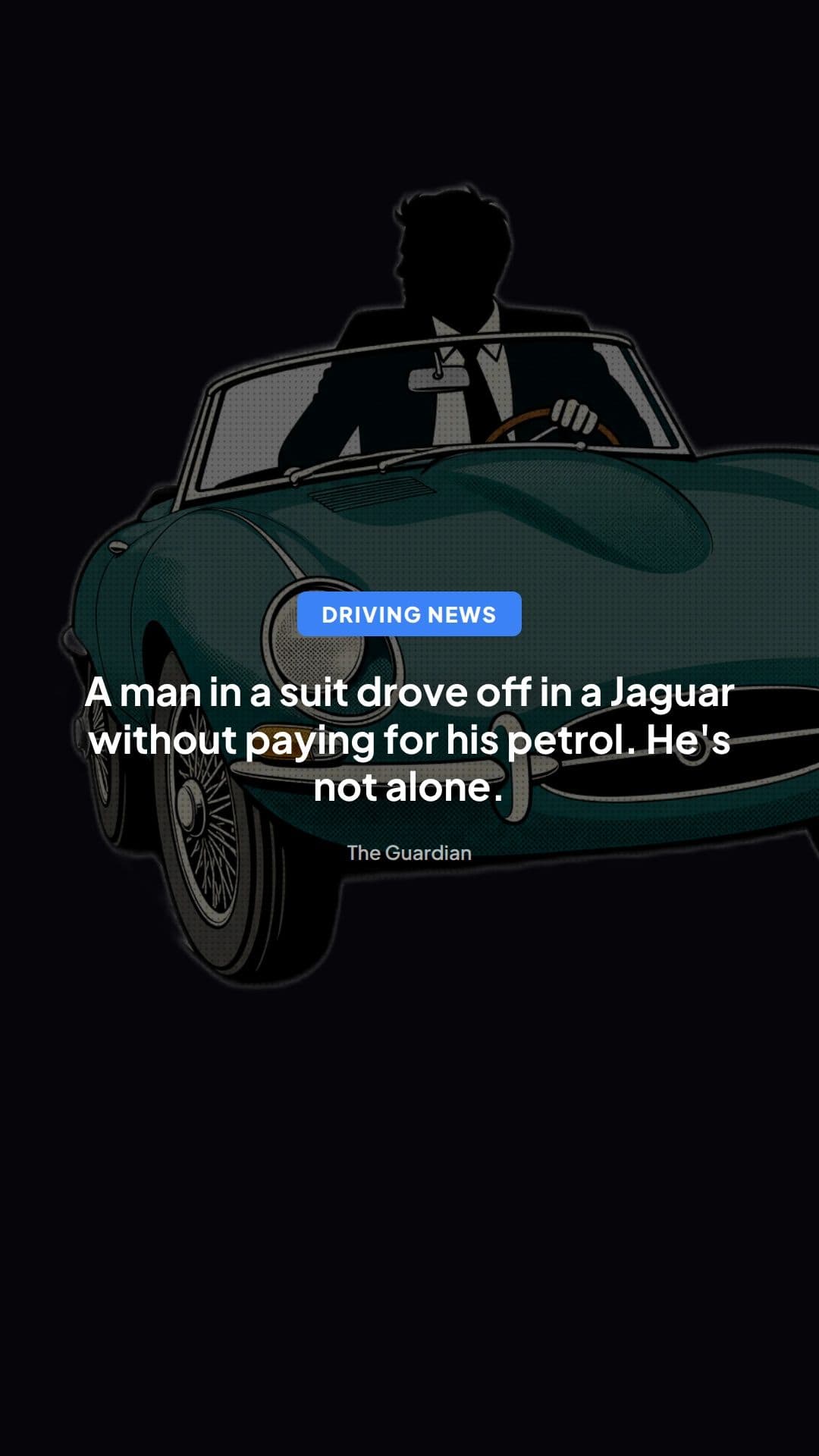
'A guy did a runner in a Jaguar': the petrol theft scandal driving forecourt owners to despair
Picture the scene. A driver pulls onto the forecourt in a gleaming Jaguar, fills the tank, and simply drives away without paying a penny. No fumbling with cash, no dodging the cashier's eye. Just a calm, confident exit. It sounds like the plot of a heist film, but according to a recent Guardian investigation, this kind of "drive-off" is becoming a routine, almost mundane, part of running a petrol station in Britain today.
The numbers behind that anecdote are startling. Fuel theft from British forecourts has risen by 23% since the start of the Iran war, with garage owners reportedly losing more than £1.2 million every single week to drivers who fill up and disappear. That's not shoplifting on a small scale. That's an industry-wide haemorrhage of cash, and it's landing squarely on the shoulders of independent retailers who often operate on razor-thin margins.
What actually happened
The Guardian's reporting paints a picture of an escalating crisis at the pumps. Since geopolitical tensions in the Middle East pushed fuel prices sharply upwards, forecourt operators have seen a marked jump in "make off without payment" incidents, industry slang for what most of us would simply call driving off without paying. Garage owners describe a growing sense of helplessness. Even when they capture clear number plate footage, recovering the money owed can be a slow, frustrating, and often fruitless process.
It's worth being precise about what's happening here, because "petrol theft" covers a spectrum of behaviour. At one end, you have genuine forgetfulness: a driver pays inside, gets distracted, and drives off having paid for less fuel than they took, or simply forgets to pay at all before leaving. At the other end, you have deliberate, calculated theft, sometimes involving cloned plates or vehicles that are never seen at that station again. The Guardian's story focuses on the latter, the "runners" who treat the forecourt as a free top-up station, betting that no one will bother chasing them down.
Why this matters beyond the forecourt till
This isn't just a story about a few opportunistic drivers. It's a symptom of wider pressures squeezing household budgets and testing the resilience of small businesses.
Fuel prices have been volatile for months, buffeted by conflict in the Middle East and the knock-on effects for global oil markets. When the cost of filling a tank climbs, the temptation for some drivers to simply not pay understandably grows, even if the vast majority still do the right thing. At the same time, petrol station margins on fuel itself are notoriously thin, meaning operators rely heavily on shop sales and consistent payment to stay afloat. A steady drip of unpaid drive-offs, multiplied across thousands of sites nationwide, adds up to a serious dent in an already fragile business model.
There's also a knock-on effect for honest customers. Forecourts that suffer repeated losses may respond by tightening policies, introducing mandatory pre-pay at the pump, reducing staff numbers to cut costs, or even raising prices slightly to offset losses. In other words, the cost of a minority's dishonesty is often quietly absorbed by everyone else.
For garage owners themselves, the frustration isn't just financial. It's the sense that the system isn't built to help them. Many report that police treat individual drive-offs as low priority compared with other crime, understandably given finite resources, which leaves retailers feeling they're fighting this battle largely alone.
The legal angle: theft, debt, or something in between?
Here's where things get genuinely interesting from a legal standpoint, because "driving off without paying" doesn't sit neatly in one legal box.
Making off without payment is a specific criminal offence under Section 3 of the Theft Act 1978. It applies when someone, knowing that payment is required or expected, dishonestly leaves without paying and intends to avoid payment permanently. Critically, this requires proof of dishonest intent. A driver who genuinely forgot, or whose card was declined and who intended to return, hasn't necessarily committed a criminal offence, even if the fuel wasn't paid for.
This distinction matters enormously in practice. Forecourt operators often have ANPR footage identifying a vehicle, but proving the driver's state of mind at the time is much harder. Was it a deliberate runner, or a genuine mistake by someone who got distracted before the payment step? That evidential gap is often exactly why police, understandably stretched across competing priorities, may not pursue every incident as a criminal matter.
Where a criminal prosecution doesn't follow, garages are generally left pursuing the debt through civil channels. This typically means:
- Writing to the registered keeper (obtained via a formal request to the DVLA under the relevant data-sharing regulations, which allow such requests where there's reasonable cause, such as recovering an unpaid debt)
- Sending a demand for the value of the fuel taken, sometimes with an administration fee attached
- Escalating to a debt collection agency if the driver doesn't respond
- In persistent or high-value cases, pursuing recovery through the small claims court
It's worth stressing that any additional "administration fees" tacked onto these demand letters must be reasonable and proportionate, not simply invented to pad the bill. If you ever receive one of these letters and believe there's been a genuine error, such as being billed for a transaction you didn't make, it's sensible to respond in writing promptly, keep records of any correspondence, and seek advice if the sums involved are significant or the demand feels aggressive or unclear.
What drivers should know
Whether you're an entirely honest motorist worried about accidentally getting caught up in this, or simply want to understand your position, a few practical points are worth bearing in mind.
If you genuinely forget to pay: Return to the station as soon as you realise, or phone them directly. Most garages will simply want the payment resolved and won't escalate matters if you're proactive and honest about the mistake.
If you receive a letter demanding payment for fuel you didn't take: Cloned plates and identification errors do happen. Don't ignore the letter, but don't panic either. Request evidence, such as the ANPR footage or CCTV timestamp, and check it genuinely matches your vehicle and the time in question before agreeing to pay anything.
Understand the difference between a civil debt and a criminal matter. A stern letter demanding payment is not the same as a criminal charge. However, if a garage reports the matter to police and there's evidence of deliberate, repeated, or premeditated non-payment, such as using a vehicle with a cloned plate specifically to avoid identification, that's a different matter entirely and could result in prosecution under the Theft Act.
Keep your fuel card and payment details secure. Some drive-offs stem not from deliberate theft by the vehicle's owner but from stolen vehicles or cloned plates being used to disguise the true culprit. If your car has ever been stolen and you later receive a fuel demand letter, it's important to flag this immediately, provide evidence of the theft report, and not simply pay up out of anxiety.
If you're struggling financially, speak to the garage before you fill up, not after. Some forecourts will allow a small tab or flexible arrangement if you're upfront about a temporary shortfall. Driving off is never the answer, and it can follow you in the form of debt collection activity or, in the worst cases, a criminal record that could affect employment, insurance, and more.
Looking ahead
The pressures behind this story aren't going away soon. Fuel prices remain sensitive to global instability, and household budgets are still stretched. Unless something changes structurally, whether that's wider adoption of mandatory pre-payment systems, better ANPR-linked enforcement partnerships between forecourts and police, or clearer national guidance on how these cases should be handled, it seems likely that garage owners will continue to bear a disproportionate burden.
There's also a broader conversation worth having about how retailers recover legitimate debts fairly, without resorting to heavy-handed collection tactics that punish innocent mistakes as harshly as deliberate theft. As with so many issues at the intersection of motoring and money, the answer probably lies somewhere in the middle: better technology to prevent the problem at source, clearer legal routes for genuine theft, and a bit more grace for the driver who simply forgot their wallet was empty.
For now, though, the message from Britain's forecourts is clear. The pumps are open, the fuel is flowing, and increasingly, so is the frustration of those left footing the bill.
Written by
Lisa Rodriguez
Automotive Journalist
Ready to Challenge Your Ticket?
Let our AI analyse your PCN and generate a professional appeal letter in minutes.
Start Free Appeal