UK fuel prices could rise again — what it means for drivers
Rising oil prices could add 1–2p per litre at UK pumps and push up electricity bills too. Here’s what it means for petrol and EV drivers—and why govt action is urged.

Carlos Mendoza
6 March 2026
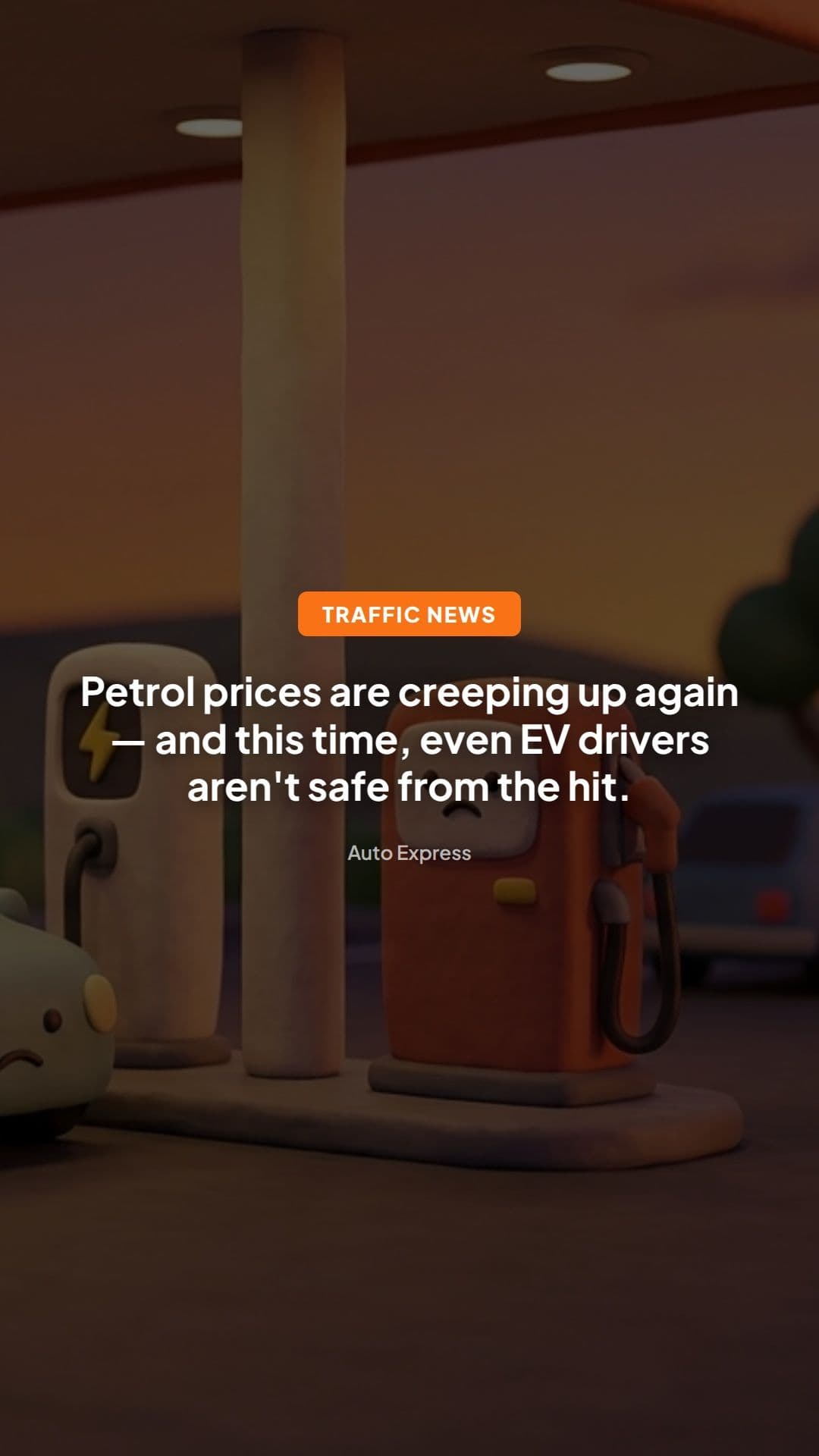
Rising Fuel Costs: Why Every UK Driver — Petrol or Electric — Should Be Worried Right Now
Picture this: you've just filled up your tank, winced at the total on the pump, and driven away telling yourself it can't get much worse. Or perhaps you've made the switch to an electric vehicle, quietly congratulating yourself on dodging the forecourt entirely. Either way, the uncomfortable truth emerging from global energy markets right now is that neither camp is safe — and the Government may need to act before millions of household budgets take another serious hit.
What's Happening: Oil Prices, Energy Bills, and a Familiar Squeeze
According to a recent piece in Auto Express, global oil prices have climbed to around $80 per barrel, a level that analysts suggest could add between 1p and 2p per litre to the price of petrol and diesel at UK forecourts. That might not sound catastrophic in isolation — but when you factor in the cumulative pressure already bearing down on drivers, it's yet another unwelcome nudge in the wrong direction.
What makes this story particularly interesting — and frustrating — is that it doesn't just affect drivers of traditional combustion engine vehicles. EV drivers, long told they've future-proofed themselves against volatile oil markets, are also in the firing line. The mechanism is straightforward: rising oil prices push up the cost of wholesale energy across the board, which feeds directly into electricity generation costs. The result? Higher electricity bills, which erode the cost advantage that makes home charging so attractive in the first place.
The timing is especially sharp. The UK's energy price cap had been expected to ease slightly, offering some modest relief to households. But if wholesale energy costs tick upwards on the back of oil market movements, that relief could be partially or entirely offset before most people even notice it arriving.
Why This Matters: The Bigger Picture for UK Drivers
To understand why this moment feels significant, it helps to step back and look at the landscape UK drivers are navigating.
The average British driver covers roughly 7,400 miles per year, according to Department for Transport figures. For a typical petrol car achieving around 40 miles per gallon, that's approximately 840 litres of fuel annually. A 2p-per-litre increase adds around £17 per year — modest on paper, but that's before accounting for the broader inflationary drag on energy, insurance, and vehicle running costs that has defined the past three years.
For EV drivers, the picture is more nuanced. Home charging remains significantly cheaper than petrol per mile, but the gap narrows when electricity prices rise. Public charging — already far more expensive than home charging — becomes even less competitive. Rapid chargers operated by networks like Pod Point, BP Pulse, or Osprey can already charge upwards of 70p–80p per kWh at peak rates. If wholesale electricity costs rise, those tariffs will follow.
There's also a structural inequality baked into the system. Drivers without off-street parking — disproportionately those in urban areas, renters, and lower-income households — cannot benefit from cheap overnight home charging. They are entirely dependent on public infrastructure, which means they absorb price rises with no ability to offset them through smarter charging habits.
The Legal and Regulatory Angle: What Framework Governs All of This?
While fuel pricing itself isn't directly regulated in the way that, say, parking enforcement is, there is a significant body of legislation and regulatory oversight that shapes what the Government can — and arguably should — do.
Fuel duty remains one of the most powerful levers available. Currently frozen at 52.95p per litre (a freeze that has been repeatedly extended since 2011), fuel duty represents a substantial chunk of what drivers pay at the pump. Under the Finance Act, the Government sets duty rates annually through the Budget process, meaning any decision to cut, hold, or raise duty is a direct political choice — not an inevitable market consequence.
The Competition and Markets Authority (CMA) published a landmark report in 2023 that found the major supermarket fuel retailers had been widening their margins rather than passing on wholesale cost reductions to consumers. As a result, the CMA established a new fuel finder scheme, requiring fuel retailers to report live pump prices to a central database. This was introduced under powers contained within the Digital Markets, Competition and Consumers Act 2024, and the data is now publicly available via tools like the government-backed price comparison service.
For electricity, the energy price cap is set quarterly by Ofgem under the Gas and Electricity (Consumer Protection) Act 2008 and subsequent regulations. Ofgem's methodology is designed to reflect wholesale market costs, which means oil-linked energy price movements will eventually feed through — with a lag — into what households pay. Drivers who charge at home are therefore not insulated from global commodity markets; they're just one step removed from them.
There's also the question of VAT. Petrol and diesel attract the standard 20% VAT rate on top of fuel duty, meaning the Treasury benefits directly from higher pump prices without lifting a finger. This creates an inherent tension: the Government profits from the very price rises that squeeze drivers.
What Drivers Should Know: Practical Steps to Take Right Now
Whether you drive petrol, diesel, or electric, there are concrete actions you can take to limit the impact of rising energy costs.
For petrol and diesel drivers:
- Use the CMA's fuel finder data. The government-mandated live pricing tool means you can now compare pump prices in your area before you fill up. Even a 3p-per-litre difference across a full tank represents a meaningful saving.
- Consider your fill-up timing. Pump prices tend to be slightly higher on motorways and in rural areas. Planning longer journeys to fill up in towns or near supermarkets can make a consistent difference.
- Check your tyre pressures regularly. Under-inflated tyres can reduce fuel efficiency by up to 3%. It's a small thing, but it compounds over thousands of miles.
- Review your driving style. Aggressive acceleration and late braking are among the biggest contributors to poor fuel economy. Smoother driving on familiar routes can improve efficiency by 10–15%.
For EV drivers:
- Lock in an EV-specific electricity tariff now. Several energy suppliers — including Octopus Energy (with its Intelligent Octopus Go tariff) and OVO — offer time-of-use rates that allow overnight charging at significantly reduced rates. If you haven't already switched to one of these, the window to benefit from current pricing may be narrowing.
- Avoid peak-rate public charging wherever possible. Rapid chargers at motorway services are convenient but expensive. If your journey allows flexibility, slower destination chargers at supermarkets, car parks, or leisure centres are often free or substantially cheaper.
- Monitor your home energy contract. If you're on a fixed-rate deal, check when it expires. Rolling onto a standard variable tariff during a period of rising wholesale prices could significantly increase your charging costs.
- Use smart charging features. Most modern EVs and home chargepoints allow you to schedule charging during off-peak hours. Make sure this is activated and set correctly.
Looking Ahead: Will the Government Act?
The Auto Express piece is right to call for government intervention — but the question of what form that intervention should take is genuinely complicated.
A further fuel duty cut or freeze would provide immediate relief at the pump, but it disproportionately benefits higher-mileage drivers and does nothing for those who have already made the switch to electric. Conversely, targeted support for public charging infrastructure — or a cap on rapid charging tariffs — would benefit EV drivers but leave petrol drivers feeling abandoned.
What the situation arguably demands is a dual-track response: maintaining the fuel duty freeze in the short term while simultaneously investing in the public charging network and introducing greater regulatory oversight of rapid charging pricing. The latter is a glaring gap — while domestic electricity is subject to Ofgem's price cap, public EV charging carries no equivalent consumer protection. Drivers can be — and are — charged wildly varying rates with little transparency or recourse.
There is growing political pressure to address this. The Electric Vehicle Infrastructure Strategy published in 2023 set targets for public chargepoint availability, but said relatively little about pricing fairness. With the 2030 phase-out of new petrol and diesel car sales now firmly back on the legislative agenda under the Zero Emission Vehicle (ZEV) Mandate, the Government cannot afford to allow public charging to become a financial deterrent to EV adoption.
The broader lesson here is one that UK drivers have learned repeatedly over the past decade: energy markets are interconnected, and no vehicle technology insulates you completely from global price shocks. What matters is having a government willing to use the regulatory and fiscal tools at its disposal — and right now, drivers on both sides of the petrol-versus-electric divide are watching closely to see whether that willingness materialises.
Because the pump price you pay tomorrow isn't just a market outcome. It's a policy choice.
Written by
Carlos Mendoza
Parking Technology Analyst
Ready to Challenge Your Ticket?
Let our AI analyse your PCN and generate a professional appeal letter in minutes.
Start Free Appeal