
UK EV Sales Targets Under Review: What Drivers Need to Know
UK ministers are considering changes to electric vehicle sales targets after carmaker pressure. Learn what it could mean for drivers and the petrol car ban.

The Parking Ticket Pal Editorial Team
19 September 2026
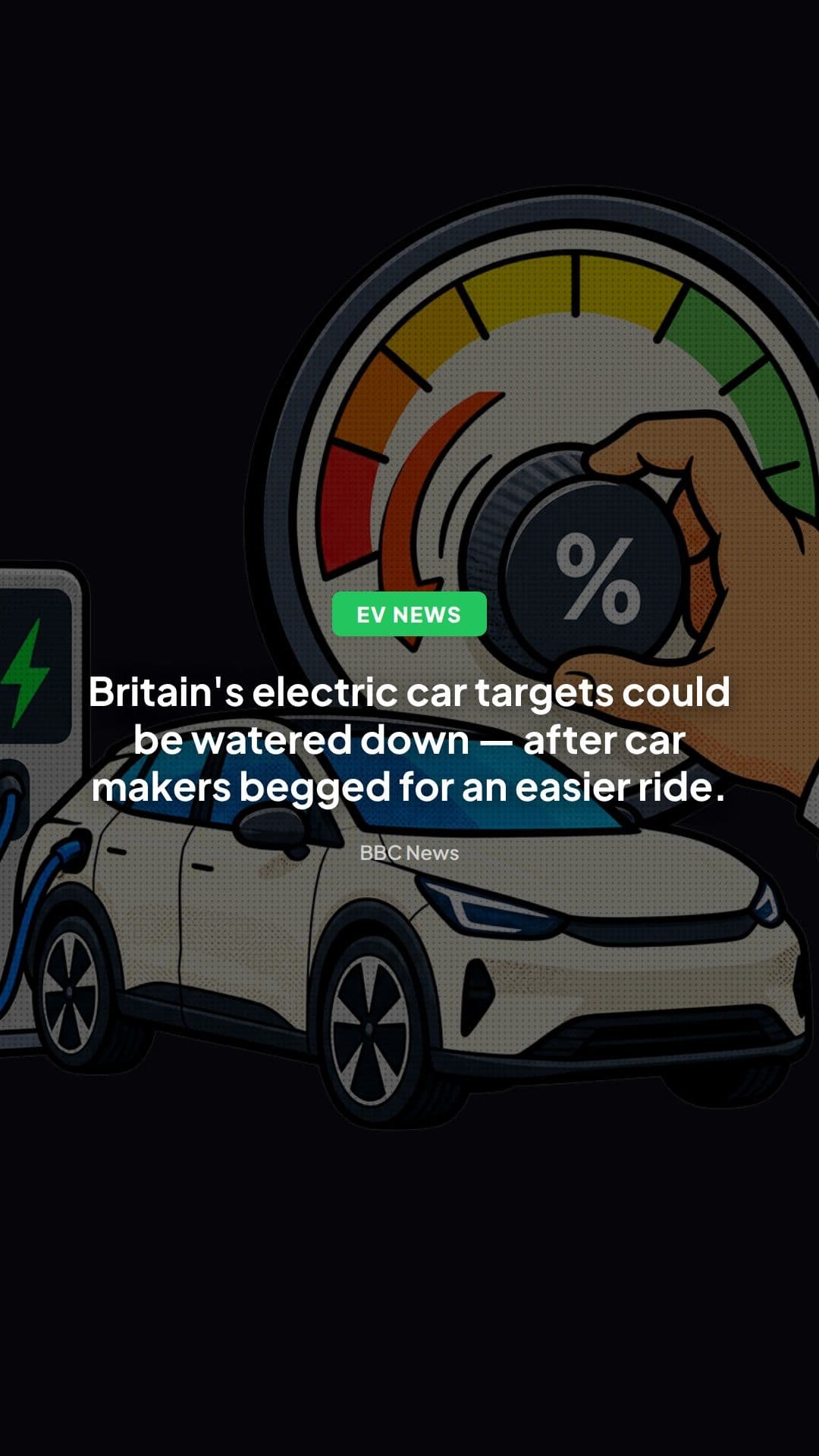
EV Sales Targets Under Fire: What the Latest Row Between Carmakers and Government Really Means
If you've ever wondered why one week the government insists Britain's electric vehicle revolution is on track, and the next week manufacturers are warning of factory closures and job losses, you're not alone. The tension between political ambition and industrial reality has been bubbling for years, and it's just boiled over again. Vehicle manufacturers have ramped up pressure on ministers to soften the rules that dictate how many electric cars they must sell each year, reigniting a debate that goes right to the heart of Britain's net zero strategy.
This isn't a minor technical squabble buried in a trade journal. It affects what cars are on forecourts, how much you pay for your next vehicle, whether dealers push you towards an EV with a juicy discount, and ultimately how quickly Britain's roads switch away from petrol and diesel. Here's what's actually going on, and what it means if you're planning to buy a car in the next few years.
What Happened
According to BBC News, pressure from vehicle manufacturers has prompted fresh discussion within government about changing the sales targets that require carmakers to sell a rising proportion of electric vehicles each year. This is the Zero Emission Vehicle (ZEV) Mandate, the regulatory mechanism that sets binding annual EV sales quotas for manufacturers selling cars in the UK.
The mandate isn't a vague aspiration. It's a legally enforceable target. Manufacturers who miss their quota face financial penalties or must buy compliance credits from rivals who've overshot theirs. With targets scaling upwards year on year towards an eventual ban on new pure petrol and diesel car sales, carmakers argue the pace simply isn't matching consumer demand, particularly given cost-of-living pressures, patchy charging infrastructure and higher upfront prices for electric cars compared with their petrol equivalents.
The phase-out date for new petrol and diesel cars remains central to this argument. Manufacturers are effectively saying: if you want us to keep hitting these targets, either help boost demand or ease the enforcement mechanism, because right now we're being squeezed from both directions.
Why It Matters
To understand why this row keeps resurfacing, it helps to know a bit of history. The original plan, announced under a previous government, was to ban the sale of new purely petrol and diesel cars from 2030, with hybrids getting a stay of execution until 2035. That date has already been the subject of political wobbling, softened and then reaffirmed in various forms as different administrations have weighed environmental commitments against economic and industrial concerns.
The ZEV Mandate was introduced as the enforcement teeth behind that ambition. Rather than simply hoping manufacturers would electrify quickly enough, the government set escalating percentage targets for zero-emission vehicle sales, rising each year. Miss the target and you face a fine of up to £15,000 per non-compliant vehicle sold above your allowance, unless you can borrow credits from future allowances or buy them from a manufacturer who's overdelivered.
This matters enormously for the shape of the new car market. It's a major reason why some manufacturers have been offering steep discounts on electric models, sometimes selling them at a loss, simply to hit their quota and avoid fines. It's also why some manufacturers have hinted at rationing petrol and diesel model availability or raising prices on combustion cars to nudge buyers towards EVs.
If targets are eased, that dynamic could shift. Less pressure to sell EVs at a loss could mean fewer aggressive discounts for buyers currently eyeing an electric car. But it could also mean a slower, more organic transition, with manufacturers investing more cautiously in EV production capacity and charging partnerships if they're not being forced into it by regulation.
There's also a broader industrial angle. The UK car manufacturing sector has faced real pressure, with some plants already scaling back or pausing production decisions pending regulatory clarity. Manufacturers argue that a stable, achievable framework is essential for planning multi-billion-pound investment decisions, and that a mandate seen as disconnected from real consumer demand risks undermining the very industry the policy is meant to help transform.
The Legal Angle
The ZEV Mandate is set out in secondary legislation, specifically regulations made under powers in the Road Traffic Act framework and updated through statutory instruments laid before Parliament. That's an important distinction from a simple policy statement. Because it's law rather than guidance, any change to the percentage targets, the flexibilities available to manufacturers, or the penalty regime requires a formal regulatory process, typically involving consultation before amendments are made.
This is why the discussion reported by the BBC is significant even before any concrete change is confirmed. Any softening of targets isn't just a ministerial announcement; it likely means amending the underlying regulations, which in turn triggers scrutiny from Parliament, environmental groups, and rival manufacturers who've invested heavily in EV production and would lose out competitively if rules were relaxed for everyone.
There's also a consumer protection dimension worth understanding. The mandate indirectly shapes advertising and sales practices. Discounts framed as "government-mandated EV offers" or manufacturer schemes designed to hit compliance targets are commercial decisions, not statutory entitlements, so if targets change, those offers can disappear or shift just as quickly as they appeared. Buyers shouldn't assume any particular discount or grant will still be available by the time they're ready to purchase.
Separately, it's worth remembering that any government-backed grant schemes for electric vehicle purchases sit outside the ZEV Mandate itself. Eligibility criteria and funding pots for schemes such as the electric car grant are reviewed independently and can change with little notice, so it's always worth checking current eligibility before assuming a specific discount applies to the car you want.
What Drivers Should Know
For anyone thinking about their next car purchase, this ongoing tug-of-war between government and manufacturers has some genuinely practical implications.
Don't assume today's EV discount will be there tomorrow. Manufacturer discounting driven by compliance pressure can vanish quickly if targets are relaxed. If you're seriously considering an EV and have found a compelling deal, it's worth acting on solid information rather than waiting indefinitely for an even better one that may never materialise.
Petrol and diesel isn't disappearing overnight. Despite years of headlines about looming bans, the practical reality is that new petrol and diesel cars remain on sale, and any phase-out date has already shifted once. If you're weighing up your next vehicle purely on the assumption combustion engines will be unavailable imminently, it's worth checking the latest confirmed timeline rather than relying on older news.
Consider the used market. With policy uncertainty affecting new car pricing and availability, the used EV and hybrid market has become an increasingly attractive option for buyers wanting lower running costs without the sticker shock of a new electric model.
Keep an eye on running costs, not just headline price. Regardless of how the sales target debate resolves, electric vehicles generally remain cheaper to run day to day thanks to lower charging costs compared with fuel, even as public charging prices have crept up in places. Weigh the total cost of ownership, not just the purchase price.
Check grant and incentive eligibility before you buy. If financial incentives are part of your decision, verify current terms directly rather than relying on outdated reporting, since schemes and qualifying vehicle lists are subject to revision.
Looking Ahead
Nothing here is settled yet. What the BBC's reporting confirms is that pressure is mounting and the conversation about softening EV sales targets is very much live within government. Whether that translates into a formal consultation, a revised mandate, or simply another round of political reassurance to manufacturers without substantive change remains to be seen.
What's clear is that this issue isn't going away quietly. The tension between environmental ambition, industrial capacity and consumer affordability is structural, not a one-off news cycle. Expect further announcements, further lobbying from manufacturers, and further scrutiny from campaigners keen to see the UK stick to its climate commitments.
For drivers, the sensible approach is to stay informed rather than reactive. Policy in this area has shifted before and will likely shift again. Base your next car purchase on your actual needs, budget and driving patterns rather than trying to second-guess the next headline, and always verify grant eligibility, discount terms and phase-out dates directly from official government sources before making a decision.
Written by
The Parking Ticket Pal Editorial Team
Source-checked parking guidance
Ready to Challenge Your Ticket?
Let our AI analyse your PCN and generate a professional appeal letter in minutes.
Start Free Appeal