Suspended Bay Compensation in the UK: How to Claim
Can you get suspended bay compensation in the UK? Learn when councils must pay, what evidence you need, and how to claim for PCNs, towing and costs.

Mohammed Al-Hassan
7 April 2026
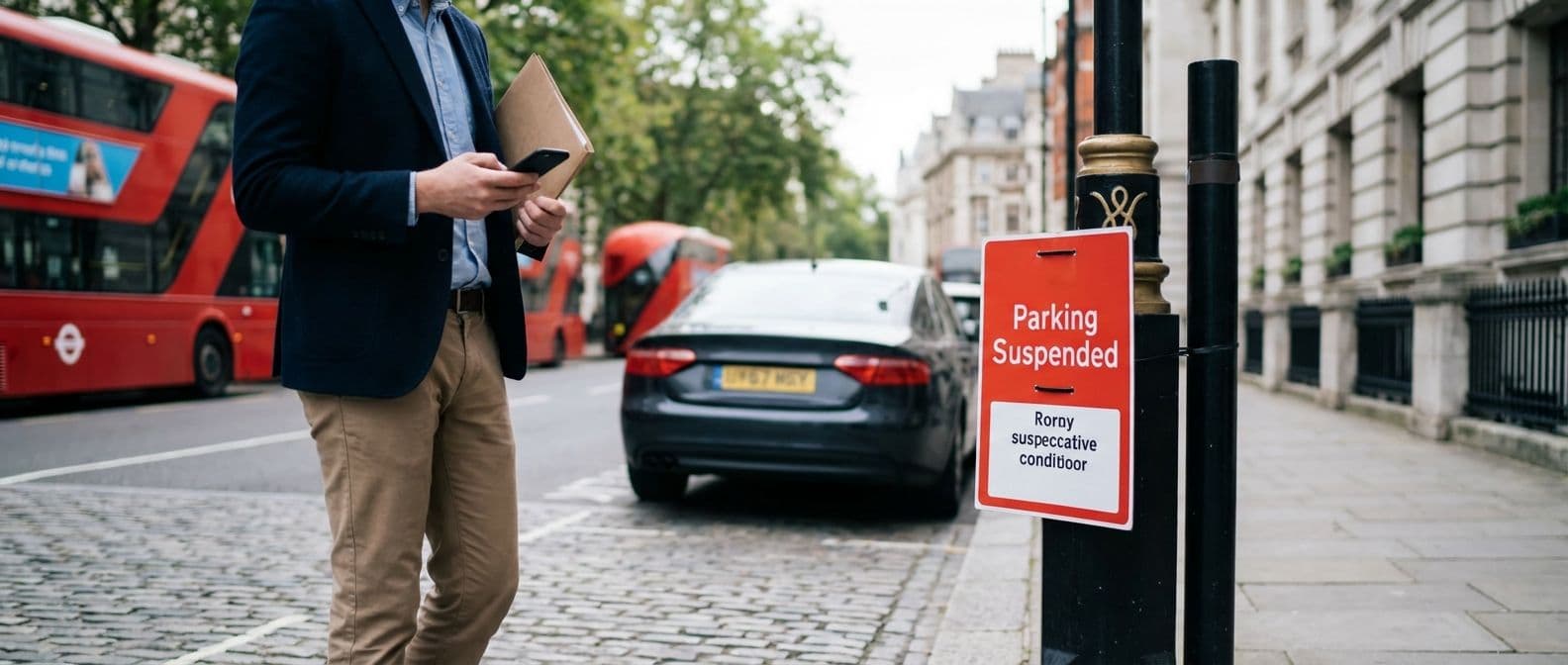
Suspended Bay Compensation in the UK: How to Claim What You're Owed
Picture this: you return to your car to find a Penalty Charge Notice tucked under your wiper — or worse, your vehicle is simply gone, towed away by the council. You were parked legally in a bay you've used dozens of times before. But overnight, a suspension notice went up, and nobody told you. Sound familiar?
This situation plays out across the UK every single day, and the frustrating truth is that many drivers simply pay up without realising they may be entitled to compensation. Whether you've received a PCN, had your car towed, or paid storage fees after parking in a suspended bay, you could have a legitimate claim against the council. Here's exactly what you need to know.
What Is a Suspended Parking Bay?
A parking bay suspension is when a council temporarily removes the right to park in a normally permitted space. This happens for all kinds of reasons:
- Filming and TV productions taking over a street
- Construction or utility works requiring access
- Removals or skips needing temporary clearance
- Special events or road closures
- Emergency works by gas, water or electricity companies
Under the Traffic Management Act 2004, councils in England and Wales have the authority to suspend bays — but that power comes with responsibilities. They must give adequate notice, and that notice must be clearly displayed before enforcement begins.
When Does the Council Have to Pay You Compensation?
This is where it gets interesting. The council isn't automatically on the hook just because you parked in a suspended bay — but there are specific circumstances where you have a strong case.
1. The Signs Weren't Properly Displayed
This is the most common and most winnable argument. Suspension signs must be placed at or near the bay in advance — typically at least 24 hours before the suspension begins. If the signs:
- Weren't there when you parked
- Were obscured, damaged or illegible
- Appeared after you'd already left your vehicle
- Only covered part of the bay, leaving the rest unmarked
…then any PCN issued is likely unlawful, and you're entitled to a full cancellation plus reimbursement of any towing or storage costs.
Real-world example: A resident in Haringey successfully appealed a PCN after demonstrating that suspension signs had been placed on the opposite side of the road, not adjacent to the actual bay. The adjudicator found the signage inadequate and the PCN was cancelled.
2. Insufficient Notice Was Given
Even if signs were eventually placed, if they went up less than 24 hours before the suspension started, that may not meet the legal threshold. Emergency works are sometimes exempt from this rule, but routine suspensions for filming, removals or planned works must comply.
3. The Suspension Wasn't Properly Authorised
Councils must follow correct procedures when authorising a suspension. If there's no valid Traffic Management Order or the suspension wasn't logged correctly, the enforcement action may be invalid entirely.
What Can You Claim Compensation For?
If the council got it wrong, you're not just entitled to have the PCN cancelled — you may be able to claim back:
- The PCN itself (typically £70–£130 in London, £50–£100 outside)
- Towing fees (can be £200 or more)
- Storage charges for each day your vehicle was held
- Travel costs to retrieve your vehicle
- Any other direct losses caused by the unlawful tow
Pro tip: Keep every receipt. Storage yards issue itemised invoices — hold onto these even after you've paid, as they'll form the backbone of your compensation claim.
How to Appeal a PCN Issued in a Suspended Bay
Step 1: Gather Your Evidence Immediately
Time is critical. Go back to the location as soon as possible and photograph:
- The suspension signs (or their absence)
- The bay markings
- Any notices on nearby lamp posts or boards
- The surrounding area to show context
If you have a dashcam, check the footage from when you parked. Even a neighbour's testimony about when signs appeared can be valuable.
Step 2: Submit an Informal Representation
You have 28 days from the date of the PCN to submit an informal appeal to the issuing council. In your representation, clearly state:
- The date and time you parked
- Why you believe the suspension signs were inadequate or absent
- The evidence you're attaching (photos, witness statements)
- That you're requesting cancellation and reimbursement of any associated costs
Keep your tone factual and firm. Councils deal with thousands of appeals — clear, evidence-backed representations stand out.
Step 3: Formal Representation and the Independent Tribunal
If the council rejects your informal appeal and issues a Notice to Owner, you can escalate to a formal representation. If that's also rejected, you have the right to appeal to an independent adjudicator:
- London Tribunals (for London boroughs)
- Traffic Penalty Tribunal (for councils in England outside London)
- SCTS (for Scotland)
These adjudicators are genuinely independent and are not afraid to rule against councils. Inadequate suspension signage is one of the most frequently upheld grounds at tribunal level.
Pro tip: When appealing to the tribunal, request the council's evidence pack as soon as possible. This will include photos taken by the Civil Enforcement Officer and details of when the suspension was logged. Any discrepancies between their records and yours are gold.
If Your Car Was Towed: Getting Your Money Back
Having your car towed from a suspended bay is a deeply stressful experience — and an expensive one. Here's how to recover those costs:
- Pay to release your vehicle first. This might feel counterintuitive, but if you refuse to pay the release fee, storage charges keep accumulating. Paying doesn't mean you're accepting liability.
- Write "paid under protest" on any documentation you sign at the pound. This formally records that you dispute the charge.
- Appeal the PCN as described above. If the PCN is cancelled, the council must also refund your towing and storage fees.
- If the council refuses, escalate to the tribunal. Adjudicators can direct councils to refund all associated costs when enforcement was unlawful.
What If the Council Keeps Refusing? The Ombudsman Route
If you've exhausted the appeals process and you believe the council has acted unfairly — perhaps they've admitted the signs were inadequate but still won't refund your costs — you can escalate to the Local Government and Social Care Ombudsman (or the Scottish Public Services Ombudsman in Scotland).
The Ombudsman investigates maladministration, which can include:
- Failure to follow proper suspension procedures
- Refusing to refund costs after a PCN has been cancelled
- Delays in processing your appeal
- Poor communication or misleading information
The Ombudsman can direct councils to pay compensation, including for distress and inconvenience — not just the direct financial losses.
Pro tip: Before going to the Ombudsman, you must complete the council's internal complaints procedure. Document every step, every phone call and every letter. The Ombudsman will want to see that you've tried to resolve this directly first.
Your Actionable Next Steps
If you've been caught out by a suspended bay, here's your checklist:
- [ ] Photograph everything at the location immediately
- [ ] Check the suspension notice — note the date it says the suspension started
- [ ] Submit your informal appeal within 28 days with all evidence attached
- [ ] Keep every receipt for towing, storage and travel
- [ ] Write "paid under protest" if paying to release a towed vehicle
- [ ] Request the council's evidence pack if escalating to tribunal
- [ ] Contact the Ombudsman if the council continues to act unreasonably
Councils rely on drivers simply paying up and moving on. The reality is that inadequate suspension signage is one of the most successfully challenged grounds in UK parking enforcement — and the system exists precisely to hold councils accountable when they get it wrong. Don't let a poorly placed sign cost you hundreds of pounds without a fight.
Written by
Mohammed Al-Hassan
Appeals Tribunal Specialist
Ready to Challenge Your Ticket?
Let our AI analyse your PCN and generate a professional appeal letter in minutes.
Start Free Appeal