Speeding Lamborghini Seized Under Tougher UK Driving Laws
Police seized a Lamborghini allegedly driven at 80mph in a 30mph zone. See how tougher UK antisocial driving laws can result in fines and vehicle seizure.

The Parking Ticket Pal Editorial Team
6 September 2026
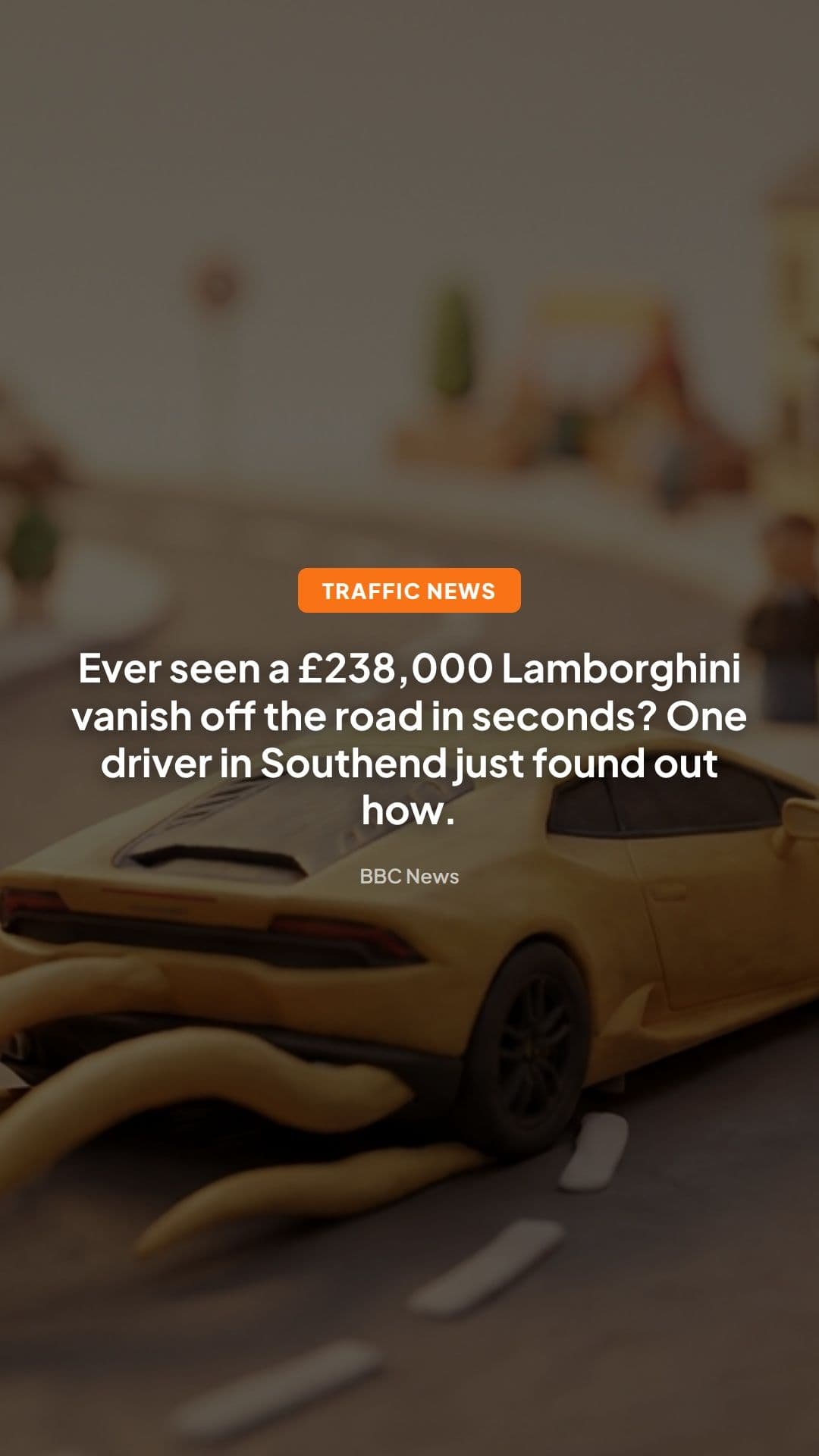
Police use tougher driving laws to seize speeding Lamborghini
A £200,000 car, a 30mph street, and 80mph of noise
Picture a quiet residential road, the kind with parked cars, prams and pensioners walking dogs, suddenly torn apart by the shriek of a V10 engine doing more than double the speed limit. That is essentially what happened in the case reported by the BBC, in which police seized a Lamborghini after members of the public reported it travelling at around 80mph through a 30mph zone. It is a story that sounds almost cinematic, but the legal reality behind it says a great deal about how attitudes, and the law, towards antisocial and dangerous driving in the UK have hardened.
This was not a routine speeding stop. The vehicle was seized using strengthened powers specifically designed to target antisocial driving, powers that have been reshaped in recent years precisely because the old system was seen as too slow and too easy to dodge.
Why it matters: a crackdown years in the making
Supercars being driven recklessly through residential streets, revved aggressively outside shops, or used in organised "cruises" and meet-ups that spill onto public roads, has been a persistent source of complaints to police forces across the country. Communities have long argued that the noise, the danger to pedestrians and cyclists, and the sheer intimidation factor of a high-powered car being driven inconsiderately is a serious quality-of-life issue, not merely a minor irritation.
For years, police had a tool to deal with this: the power to seize vehicles being driven in a way that causes alarm, distress or annoyance. The problem was that this power traditionally came with a significant catch. Officers usually had to give the driver a warning first, and only if the same driver (or the same vehicle) was caught behaving in the same way again could the car actually be taken away. In practice, that gave persistent offenders a free pass on their first encounter with police, and made it hard to act decisively against a one-off, extreme case like a car doing 80mph in a 30 zone.
That is the backdrop against which "strengthened laws" have emerged. Ministers and police forces have pushed to close the loophole, allowing vehicles to be seized more quickly, and in more serious cases without the need for a prior warning at all, particularly where the driving is dangerous rather than merely a nuisance. A case involving nearly triple the speed limit is precisely the sort of scenario these reforms were designed to catch.
The legal angle: more than just a speeding ticket
It is worth understanding just how many layers of law potentially apply to a case like this, because a Lamborghini doing 80mph in a 30mph limit is not treated the same way as a driver caught doing 35mph in the same zone.
The seizure power. The underlying authority police rely on to seize vehicles used in an antisocial manner comes from Section 59 of the Police Reform Act 2002. This allows a constable to seize a vehicle being driven in a way that contravenes careless or dangerous driving rules, or in a manner causing alarm, distress or annoyance to the public. Historically, use of this power against a specific driver required a prior warning unless it was impractical to give one. Recent policy changes and legislative efforts have focused on stripping back that warning requirement in cases of genuinely dangerous driving, giving officers the ability to act immediately rather than waiting for a repeat offence.
The criminal offence. Separate from the seizure itself, driving at 80mph in a 30mph limit is likely to be treated as far more serious than a simple speeding matter. Under the Road Traffic Act 1988, speed alone can support a charge of dangerous driving (Section 2) if the manner of driving fell far below what a careful, competent driver would consider safe, which a near-triple breach of a limit in a built-up area plainly could. Dangerous driving carries an unlimited fine, discretionary disqualification, and in the most serious cases a prison sentence. Even if prosecutors pursue it as "only" a speeding offence, an excess of this magnitude would almost certainly result in a court summons rather than a fixed penalty notice or speed awareness course, with the possibility of disqualification and a significant fine based on the driver's income.
What happens to a seized car. Once impounded, a vehicle does not simply sit in a police yard indefinitely. Registered keepers typically have a limited window, often measured in days, to produce proof of insurance, a valid driving licence and other documentation before the vehicle can be reclaimed. Storage and recovery fees accrue daily, and for a high-value performance car those costs, plus specialist transport and secure storage, can run into hundreds of pounds even for a short stay. If the correct paperwork is not produced within the specified period, or if fees go unpaid, the vehicle can ultimately be sold or destroyed. For a car worth six figures, that is an enormous financial risk to run for the sake of a few seconds of high-speed showing off.
What drivers should know
There are some genuinely practical lessons here, whether or not you will ever get near a Lamborghini's steering wheel.
- Seizure can now happen fast. The days of relying on "they have to warn me first" are numbered, if not already gone in the most serious cases. Extreme or dangerous driving can result in immediate seizure, not just a slap on the wrist.
- Speed excess changes everything legally. A driver doing 5 or 10mph over a limit faces a fixed penalty or awareness course. A driver doing 80mph in a 30mph zone is in an entirely different category, likely facing court, disqualification, and a criminal record rather than points on a licence.
- Insurance matters enormously. High-performance vehicles often come with specific policy conditions, mileage limits, or named-driver restrictions. Reckless driving that leads to seizure, prosecution or an accident could easily invalidate cover, leaving the owner exposed to the full cost of any damage or claims.
- Borrowed and hired supercars carry the same risks. Anyone renting or borrowing a high-performance car for a day out should understand that the registered keeper, not just the driver, can face consequences, fees and reputational fallout if the vehicle is seized.
- Reclaiming a seized vehicle is not free or guaranteed. Storage costs mount daily, and documentation must be in order. Owners of valuable vehicles are taking a considerable financial gamble by allowing them to be driven irresponsibly.
- Witness reports matter. This case reportedly began with reports from the public, a reminder that dashcam footage, timestamps and witness accounts increasingly feed directly into police enforcement action, not just insurance claims.
Anyone caught up in a seizure or facing a dangerous driving charge should treat it as a serious legal matter and seek professional advice promptly, rather than assuming it will resolve itself like a routine parking dispute.
Looking ahead
Cases like this one are likely to become more common, not less. Police forces have made clear their intent to use strengthened seizure powers more assertively against antisocial and dangerous driving, and high-value, high-performance cars make for particularly visible examples, both to reassure communities and to deter others tempted to treat public roads as a racetrack.
For genuine enthusiasts, this should not change much. Track days, organised events and considerate road use remain entirely legitimate ways to enjoy a powerful car. But for those who see a supercar as an excuse to intimidate pedestrians or terrify a residential street, the message from this case is unambiguous: the legal safety net that once required a warning before action has been eroded, the financial risk of losing a seized vehicle is real, and the criminal consequences of extreme speeding go well beyond a simple fine. For anyone weighing up a moment of bravado against a six-figure asset and a clean licence, it is an expensive lesson to learn the hard way.
Written by
The Parking Ticket Pal Editorial Team
Source-checked parking guidance
Ready to Challenge Your Ticket?
Let our AI analyse your PCN and generate a professional appeal letter in minutes.
Start Free Appeal