Skywell UK importer shuts: what owners can do now
Skywell’s UK importer has closed, leaving EV owners and dealers uncertain. What it means for warranty cover, servicing, parts supply and your consumer rights.

Priya Sharma
6 July 2026
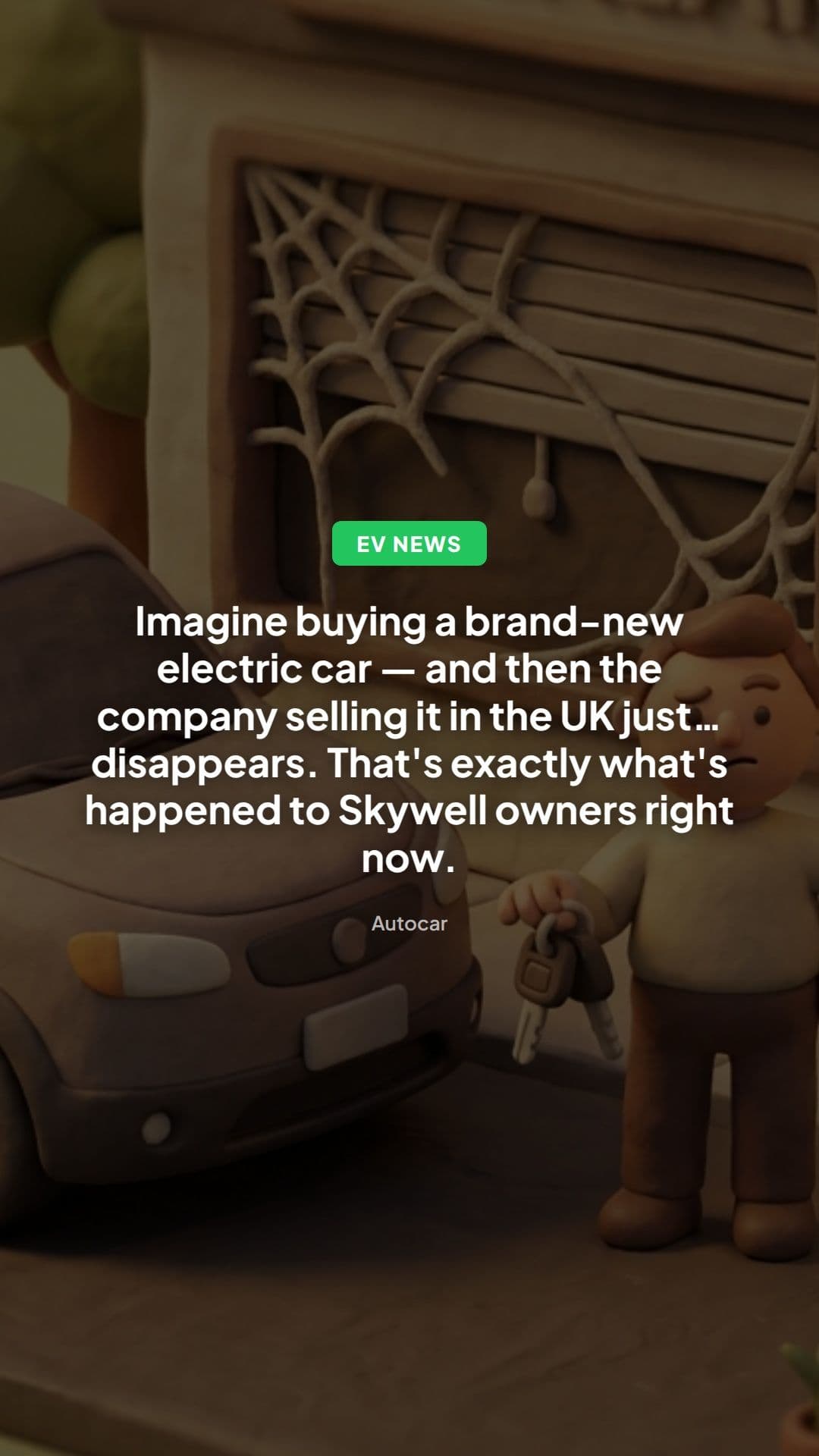
Skywell's UK Collapse: What Happens When Your Car Brand Simply Disappears?
When you buy a car, you expect the brand to outlast the warranty. For Skywell owners in the UK, that assumption has just been shattered.
Imagine buying a brand-new electric vehicle — making a conscious, forward-thinking choice, signing the finance agreement, driving it home — only to discover, months later, that the company responsible for supporting it in the UK has quietly shut up shop. No fanfare, no transition plan, no clear answers. Just silence.
That is precisely the situation facing owners of Skywell vehicles in Britain right now. The Chinese EV brand's UK importer has closed its doors, leaving a small but significant group of customers, dealers, and would-be buyers in a state of profound uncertainty. It is a story that goes well beyond one obscure brand's misfortune — it raises uncomfortable questions about the risks of buying into emerging EV marques, and what legal protections actually exist when things go catastrophically wrong.
What Happened With Skywell in the UK?
Skywell is a Chinese electric vehicle manufacturer that made a quiet entry into the British market, positioning itself as an affordable EV option at a time when the push towards electrification was intensifying. The brand was brought to the UK by a local importer — the entity responsible for distribution, dealer relationships, warranty administration, and after-sales support.
As reported by Autocar, that importer has now ceased trading. The knock-on effects are immediate and serious. Dealers who stocked or sold Skywell vehicles are left without a supply chain or support structure. Customers who purchased cars are now holding warranties that, in practical terms, may be worthless — because there is no longer a UK entity to honour them. And anyone who placed a deposit or order for a new vehicle faces the very real prospect of losing their money entirely.
Skywell's UK sales figures were, by any measure, tiny. This was never a mainstream brand competing with Tesla or Volkswagen. But the small scale of the operation does not diminish the impact on those individuals directly affected. For them, this is not an abstract corporate story — it is a significant financial and practical crisis.
Why This Matters Beyond One Small Brand
The Skywell situation is a warning shot, not an isolated incident. The UK EV market has seen a wave of new entrants from China and other emerging markets over the past few years, many operating through relatively thin importer structures rather than the robust, fully capitalised subsidiary networks that established brands like BMW or Toyota maintain.
This model — where a small importer acts as the sole gateway between a foreign manufacturer and UK consumers — carries inherent fragility. When the importer is financially healthy and the brand is growing, it works fine. But importers are often under-capitalised, dependent on volume sales that may never materialise, and exposed to currency risk, supply chain disruption, and the brutal competitiveness of the EV market.
The broader context matters here. The UK EV market, while growing, remains intensely price-sensitive. Chinese brands entered with a value proposition — cheaper electric cars — but have struggled against several headwinds: consumer wariness about unfamiliar names, concerns about parts availability, and the simple reality that established brands have been aggressively cutting EV prices in response to competition.
When a new brand fails to achieve sufficient volume, the importer's business model collapses. Overheads remain fixed, warranty claims accumulate, and revenue dries up. The result is exactly what we have seen with Skywell.
The Legal Angle: What Rights Do Owners Actually Have?
This is where things get genuinely complex — and where affected drivers need to pay close attention.
Consumer Rights Act 2015
The Consumer Rights Act 2015 remains the cornerstone of protection for anyone who purchased a Skywell vehicle from a UK dealer. Under this legislation, goods must be of satisfactory quality, fit for purpose, and as described. Crucially, your contract is with the dealer who sold you the vehicle, not with the importer or the Chinese manufacturer. This means that even if the importer has folded, your legal claim for defects or misrepresentation runs against the dealership.
If that dealership is still trading, you have a viable route to pursue remedies — including repair, replacement, or a partial refund — depending on when the fault arose and how long you have owned the vehicle.
Section 75 of the Consumer Credit Act 1974
If you purchased your Skywell using a credit card or a personal loan (not a finance agreement secured on the vehicle itself), Section 75 of the Consumer Credit Act 1974 may provide a powerful route to recovery. Under Section 75, the credit provider is jointly and severally liable alongside the seller for any breach of contract or misrepresentation. This means you can claim directly from your credit card company or lender.
This protection applies to purchases between £100 and £30,000, and given that even budget EVs typically exceed £100, it is likely to cover most Skywell transactions made on credit.
Finance Agreements and PCP
For customers who took out Personal Contract Purchase (PCP) or hire purchase agreements, the situation is more nuanced. Under a hire purchase arrangement, the finance company is the legal owner of the vehicle until the final payment is made. This gives you a direct contractual relationship with the finance provider, who may have obligations to you if the vehicle cannot be properly supported or repaired.
The Financial Conduct Authority (FCA) regulates motor finance in the UK, and consumers can raise complaints through the Financial Ombudsman Service if they believe a finance provider is failing to address legitimate concerns arising from the importer's collapse.
Warranty Implications
Here lies perhaps the most painful consequence. A manufacturer's warranty is only as useful as the entity standing behind it. With no UK importer, Skywell's warranty is effectively unenforceable in Britain. The parent company in China has no legal obligation to honour warranty claims made by UK consumers, and there is no straightforward mechanism to compel them to do so.
This is not a new problem in the automotive world. When MG Rover collapsed in 2005, warranty claims became a major issue for thousands of customers. The government ultimately facilitated a warranty support scheme, but no such safety net exists automatically — it requires political will and organised advocacy.
What Skywell Drivers Should Do Right Now
If you own a Skywell vehicle or have a financial interest in one, here is what you need to prioritise immediately:
- Document everything. Gather your purchase agreement, warranty documentation, finance paperwork, and any correspondence with the dealer or importer. You will need this for any claim.
- Contact your dealer directly. Your legal rights under the Consumer Rights Act 2015 run against the dealer. If they are still trading, write to them formally outlining any concerns about the vehicle's ongoing support and warranty.
- Check your payment method. If any part of the purchase was made by credit card, contact your card provider about a Section 75 claim. If you used a debit card, a chargeback request through your bank may be available, though this has a shorter time window — typically 120 days from the transaction.
- Contact your finance provider. If you have a PCP or hire purchase agreement, write to the finance company explaining the situation and asking what protections they can offer.
- Register with any owner groups. When importer collapses happen, collective action often achieves more than individual complaints. Seek out Skywell owner forums or groups, as coordinated pressure on dealers, finance providers, and potentially government can be more effective.
- Seek independent servicing. For ongoing maintenance, independent EV specialists may be able to service your vehicle even without manufacturer support, provided they can access parts. Investigate this proactively rather than waiting for a problem to arise.
Looking Ahead: The Wider Lesson for UK EV Buyers
The Skywell story is unlikely to be the last of its kind. As the UK market continues to attract new EV entrants — particularly from China and other Asian markets — the risk of importer failure will remain real. Several brands currently operating in the UK through thin importer structures could face similar pressures if sales volumes disappoint.
For prospective EV buyers, due diligence on brand stability is now as important as range figures and charging speeds. Before committing to a purchase from a less-established brand, it is worth asking: Is this brand supported by a fully capitalised UK subsidiary, or a small independent importer? What happens to my warranty if the importer fails? Are parts readily available through independent channels?
The government and consumer bodies should also take note. The Competition and Markets Authority (CMA) and the Society of Motor Manufacturers and Traders (SMMT) could usefully develop clearer guidance — or even minimum financial requirements — for importers bringing new vehicle brands to the UK market. The current framework provides consumers with legal rights, but exercising those rights against a collapsed importer is cold comfort when your car needs a warranty repair.
The electrification of Britain's roads is a genuine and necessary transition. But it must be built on consumer confidence — and confidence requires knowing that when something goes wrong, there is someone standing behind the product. Skywell's UK collapse is a reminder that for some early adopters, that confidence was misplaced.
Source: Autocar, "Skywell brand in limbo after UK importer closes doors."
Written by
Priya Sharma
Legal Aid Coordinator
Ready to Challenge Your Ticket?
Let our AI analyse your PCN and generate a professional appeal letter in minutes.
Start Free Appeal