
Roadwork Closures: Why Drivers Risk Lives to Skip Queues
Hundreds of drivers have ignored roadwork closures in England. We examine the risks, possible penalties and why queue-jumping endangers roadworkers daily.

The Parking Ticket Pal Editorial Team
18 September 2026
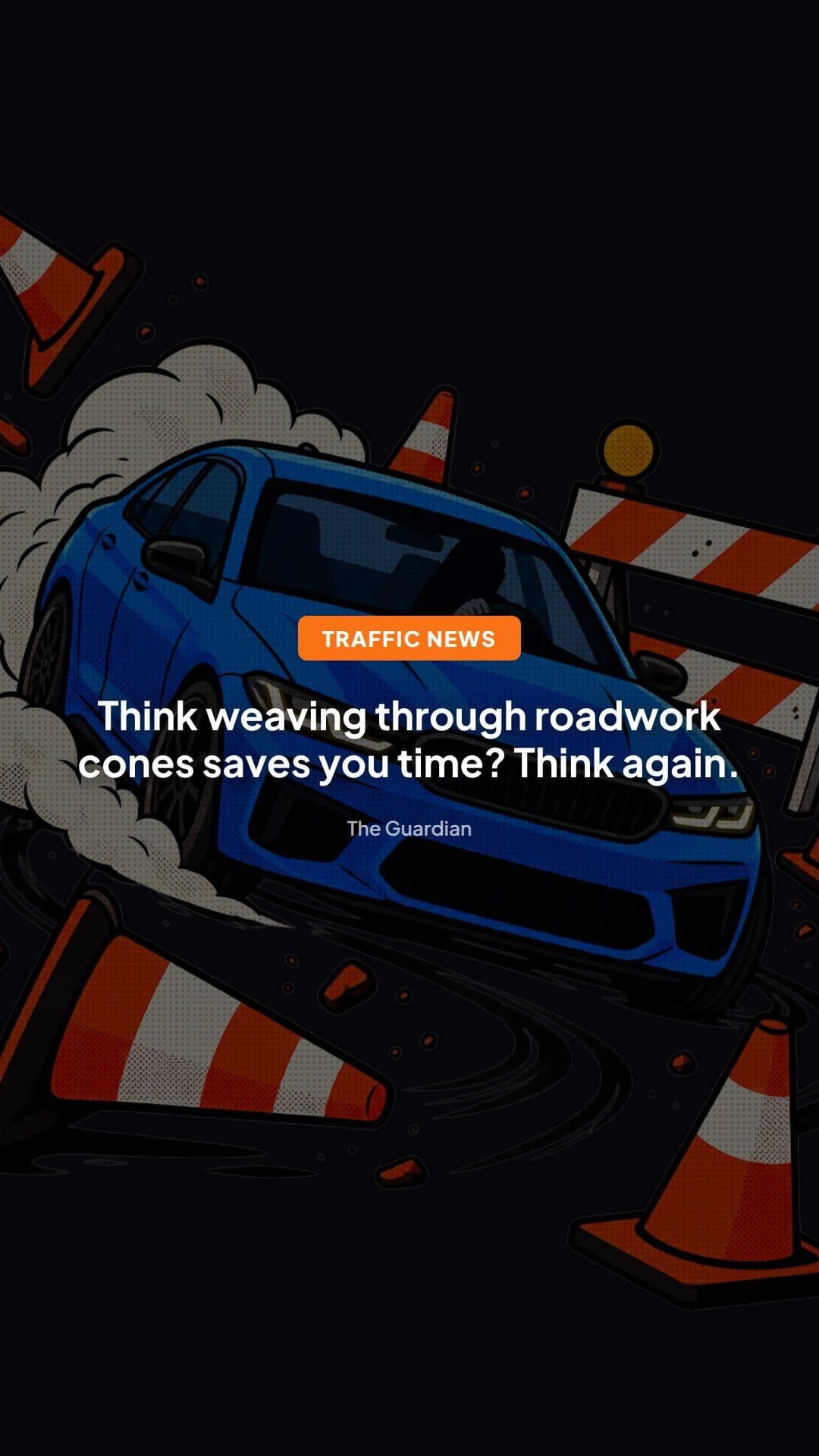
Drivers Who Barge Through Roadworks Are Playing a Dangerous Game, and the Law Is Catching Up
Picture this: a queue of traffic backed up for half a mile, engines idling, tempers fraying, while a lane closure funnels everyone into a single carriageway past a gang of workers in high-vis. Then, without warning, a car swerves around the cones, clips a barrier, and speeds through the closed lane to jump the queue. It sounds like the kind of stunt you'd see in a dashcam compilation with a wince-inducing caption. But according to National Highways, this is happening on English roads with alarming regularity, and the consequences could be fatal.
What Happened
National Highways has revealed that hundreds of vehicles have driven through cones or barriers at English roadworks so far this year, according to reporting from The Guardian. The agency, which manages motorways and major A-roads in England, says drivers are deliberately breaching temporary closures set up to protect road workers and manage traffic flow around construction, maintenance, and repair sites.
The behaviour typically involves motorists growing impatient with queues caused by lane closures or full carriageway shutdowns, then physically forcing their way past cones, barriers, or temporary signage to bypass the restriction and rejoin traffic further along, effectively jumping ahead of everyone who waited. National Highways has characterised this as drivers "wilfully putting lives at risk", a description that reflects just how seriously the organisation views the danger to both road workers and other motorists.
This isn't a case of someone accidentally clipping a cone in poor visibility or misreading a diversion sign. The framing from National Highways suggests a pattern of deliberate, calculated rule-breaking, drivers who can see the closure, understand what it means, and choose to ignore it anyway because they don't want to sit in traffic.
Why It Matters
Roadworks closures exist for reasons that go well beyond bureaucratic box-ticking. When a lane is shut on a motorway or major A-road, it's usually because there's live machinery, exposed excavations, workers standing feet from moving traffic, or structural work that makes the road surface genuinely unsafe to drive on. The barriers and cones aren't a suggestion. They're a physical demarcation between a controlled work zone and open road, and that boundary is often the only thing standing between a road worker and a vehicle travelling at speed.
Roadworkers have one of the more hazardous jobs on Britain's road network. They operate in close proximity to fast-moving traffic, often with limited reaction time if something goes wrong. A driver who decides to nudge past a barrier isn't just being selfish, they're introducing an unpredictable, high-speed variable into an environment that has been carefully controlled specifically to eliminate that risk. If a vehicle enters a closed lane where workers assume no traffic will pass, the margin for error can shrink to almost nothing.
There's also a knock-on effect for other drivers. Roadworks are designed with merge points, speed restrictions, and traffic flow calculations that assume everyone stays within the marked lanes. A vehicle suddenly appearing in a supposedly closed lane, or cutting back into moving traffic after skipping the queue, creates exactly the kind of unpredictable manoeuvre that causes rear-end shunts, sideswipes, and multi-vehicle pile-ups. The person who broke the closure to save ten minutes might trigger a collision that costs someone else considerably more than time.
This pattern also feeds into a wider conversation about impatience and entitlement on Britain's roads. Whether it's drivers nudging into box junctions when they know they can't clear them, or ignoring bus lane restrictions to save a few seconds, there's a recurring theme of individual convenience being prioritised over shared safety and fairness. Roadworks breaches sit at the sharper end of that spectrum precisely because the people at risk aren't other queue-jumping drivers, but workers with no protection beyond a hi-vis jacket and a barrier that's supposed to be respected.
The Legal Angle
Driving through a closed lane marked by cones, barriers, or official signage isn't a grey area. Temporary traffic signs and barriers placed by or on behalf of a highway authority carry legal weight under the Traffic Signs Regulations and General Directions, and failing to comply with them can constitute an offence.
Depending on the specifics, drivers who breach roadworks closures can potentially face prosecution for careless or dangerous driving under the Road Traffic Act 1988, particularly if their manoeuvre creates a genuine risk to others, which forcing a barrier or driving through a closed lane past workers almost certainly does. Dangerous driving convictions can carry unlimited fines, driving bans, and even custodial sentences in the most serious cases, especially where the driving falls "far below" what would be expected of a careful and competent driver, which is the legal threshold used by courts.
There's also the question of enforcement mechanisms. National Highways operates alongside police forces on the strategic road network, and many roadworks sites now feature CCTV or ANPR-linked monitoring, meaning drivers who breach closures may find themselves identified after the fact even if no officer was present at the time. Given the scale of investment in average speed cameras and monitoring technology already seen through roadworks zones (often the same cameras used to enforce reduced speed limits through construction sites), there's a reasonable chance that footage exists of many of these incidents.
Civil liability is another dimension worth understanding. If a driver who breaches a closure causes an accident, whether that's a collision with another vehicle or, worse, an incident involving a road worker, they could face not only criminal prosecution but civil claims for damages. Insurers may also take a dim view of a driver knowingly bypassing a legal traffic restriction, which could complicate any claim arising from the incident.
What Drivers Should Know
If you find yourself sitting in a queue at roadworks, however frustrating it feels, there are a few things worth bearing in mind.
The closure is not optional. Cones and barriers placed as part of an official roadworks scheme have the same legal standing as permanent road markings and signs. Treating them as a suggestion rather than a rule exposes you to prosecution, not just moral disapproval.
Your insurance may not protect you. If you cause a collision while deliberately breaching a closure, your insurer could argue that the incident arose from reckless or illegal conduct, potentially affecting any claim you make, or one made against you.
Dashcams and site cameras are everywhere. Modern roadworks, particularly on the strategic road network, increasingly include monitoring equipment. Don't assume nobody's watching just because you can't see an enforcement vehicle.
Patience genuinely is safer, and often faster overall. Queue-jumping through a closure rarely saves meaningful time once you account for the risk of being stopped, prosecuted, or involved in a collision that could cost you your licence, your no-claims bonus, or far worse.
Plan ahead where you can. National Highways publishes live roadworks and closure information, and many satnav and traffic apps now factor in known roadworks delays. Checking before a long journey can help you build in extra time or choose an alternative route, rather than arriving at a closure already frustrated and looking for a shortcut.
If you're ever unsure whether a road layout or restriction was properly signed, that's a different matter, and worth raising through the correct channels rather than acting unilaterally on the road. Disputes over unclear signage are common in parking and traffic enforcement more broadly, and there are established routes for challenging penalties issued in confusing circumstances, but breaching an obviously marked closure with workers present isn't the same category of issue at all.
Looking Ahead
National Highways' willingness to speak publicly about this issue suggests enforcement is likely to intensify rather than fade away. Expect more visible monitoring at roadworks sites, closer collaboration with police forces on prosecutions, and potentially clearer public messaging campaigns aimed at reminding drivers just how serious the consequences can be, both legally and physically.
There's also a broader safety conversation happening across Britain's road network at the moment, from concerns about smart motorway safety to debates over how road workers and vulnerable road users are protected from increasingly impatient traffic. Roadworks breaches fit into that pattern: a small minority of drivers deciding their own convenience outweighs everyone else's safety, and the rest of us bearing the risk.
The uncomfortable truth is that most roadworks delays are temporary and finite. Barging through a closure doesn't just risk a fine or points, it risks someone's life, quite possibly your own. Given the legal exposure, from dangerous driving charges to potential civil liability, the ten minutes saved simply isn't worth the gamble.
Written by
The Parking Ticket Pal Editorial Team
Source-checked parking guidance
Ready to Challenge Your Ticket?
Let our AI analyse your PCN and generate a professional appeal letter in minutes.
Start Free Appeal