Private Parking Rule Changes Target Five-Minute Fines
Planned private parking rule changes could curb five-minute fines at ANPR car parks. See how payment timing, grace periods and short overstays may be treated.

Yuki Tanaka
23 July 2026
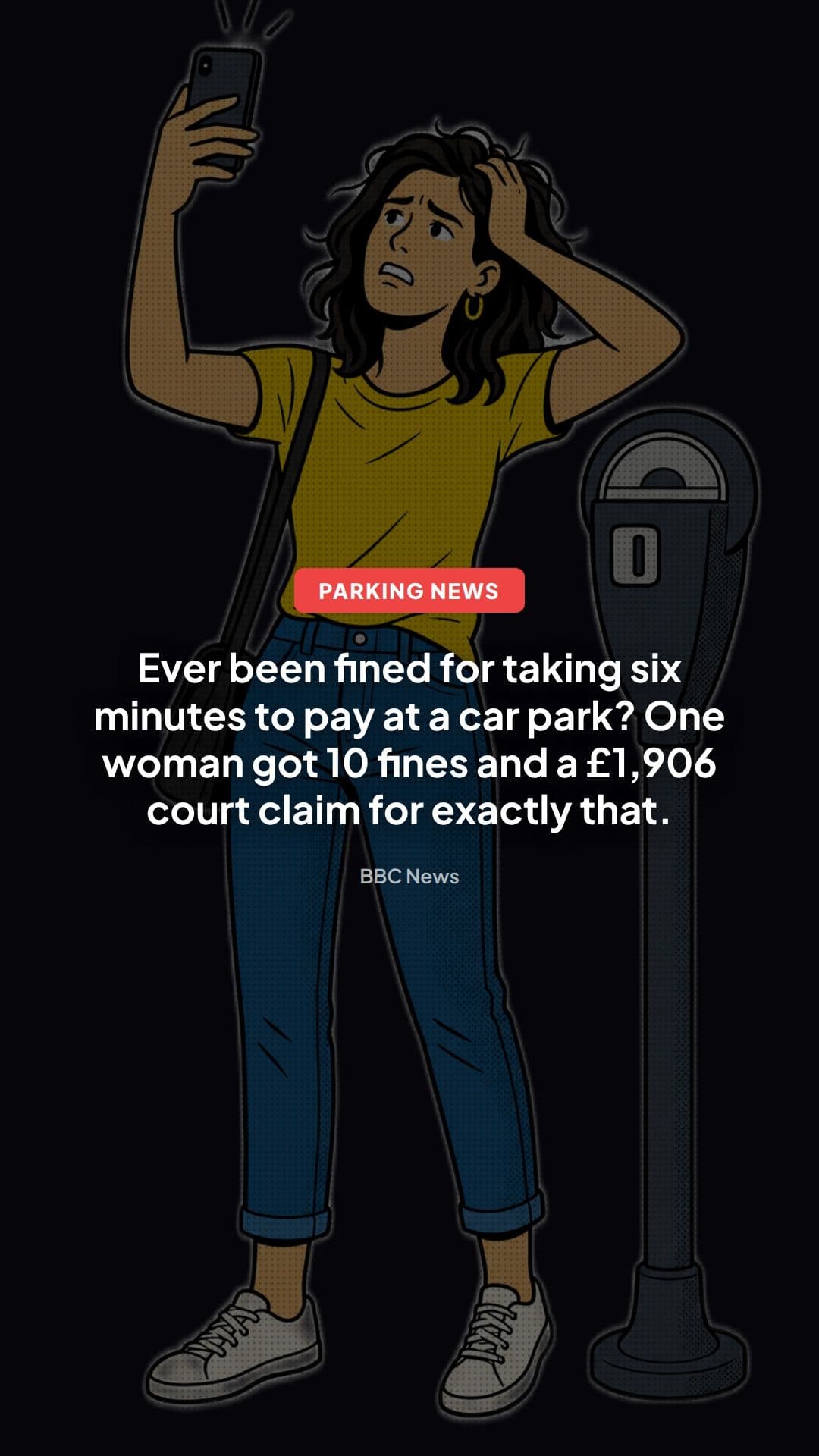
Parking Rules to Change After 'Five-Minute Fines': What Drivers Need to Know
Caught out by seconds, not minutes
Picture the scene: you park in a supermarket or retail car park fitted with automatic number-plate recognition cameras, walk to the machine, pay for your stay, do your shopping, and head home. A fortnight later, a penalty notice lands on your doormat. According to the camera, you left the car park a few minutes after your paid time expired. Never mind that you'd already handed over your money before walking back to the car. Never mind that most of that "overstay" was simply the time it took to get from the shop to the till and back to your vehicle.
This is the "five-minute fine" problem that has been generating growing numbers of complaints to consumer groups, MPs, and the private parking industry's own appeals services. BBC News reports that the government is now planning changes designed to stop drivers being penalised in these circumstances, specifically where a motorist has paid for their parking before leaving a camera-monitored car park. It's a narrow but significant shift, and one that goes to the heart of how ANPR-based enforcement actually works.
What's actually being proposed
The reform under discussion targets a specific and common scenario in ANPR car parks: a driver's entry and exit times are logged automatically by cameras at the barrier or entrance, and any gap between the time paid for and the time the car actually left the site is treated as an overstay, regardless of whether payment was made. Because the system compares two data points, camera time in and camera time out, it takes no account of the practical reality of visiting a car park: walking to a pay machine, queuing, returning to the vehicle, or simply misjudging how long a shop or appointment might take by a matter of minutes.
The proposals reported by the BBC would prevent penalties being issued in at least some of these cases, provided the driver paid before leaving the site. It's a much more targeted fix than a blanket grace period. Rather than giving every driver extra free minutes regardless of whether they've paid, it focuses on the injustice of fining someone who has, in fact, settled their parking charge, just not quite quickly enough to satisfy a camera's timestamp.
This sits alongside other reforms already reported elsewhere, including a proposed £100 cap on private parking charges and a standard grace period before enforcement action can begin. Those changes stem from years of pressure to overhaul an industry that has operated, in large part, through two competing voluntary trade bodies rather than a single statutory code.
Why this matters: a long-running fight over private parking
To understand why this reform matters, it helps to know how we got here. The private parking sector in England and Wales is regulated by the Protection of Freedoms Act 2012, which allows parking operators to pursue the registered keeper of a vehicle for unpaid charges, provided they follow strict procedural rules set out in Schedule 4 of the Act. Get the notice wording, timing, or signage wrong, and the operator can lose the right to claim against the keeper rather than just the driver.
Parliament tried to go further with the Parking (Code of Practice) Act 2019, which required ministers to publish a single, legally binding code of practice for private parking operators. A draft code, including a £100 cap on charges and a mandatory grace period, was published in 2022, only for it to be quashed following a legal challenge from within the parking industry, which argued the consultation process had been inadequate. That left the sector regulated, in practice, by two separate trade bodies, the British Parking Association (BPA) and the International Parking Community (IPC), each running its own code of conduct and its own appeals service (POPLA and the IAS respectively). Operators must belong to one of these bodies to gain access to DVLA keeper data, which is what allows them to chase registered keepers for penalty charges in the first place.
The "five-minute fines" issue is a symptom of this patchwork system. ANPR technology has made enforcement cheaper and more automated, but it has also stripped out the human judgement that a warden on foot might once have applied. A traffic warden might reasonably let a driver who is settling up at the machine or wheeling a trolley back to the boot pass without a ticket. A camera simply logs two timestamps and lets the software decide.
The legal angle: consideration, evidence, and unfair terms
Two legal principles are worth understanding here. The first is the idea of a "relevant period" and fair notice under the Protection of Freedoms Act 2012. Operators must give keepers a reasonable opportunity to know the terms of parking before a charge can be enforced against them, and the notice-to-keeper process has to follow specific timescales.
The second is the Supreme Court's landmark 2015 decision in ParkingEye Ltd v Beavis, which confirmed that private parking charges can be enforceable even though they look like penalties, provided the operator has a legitimate commercial interest in imposing them and the amount isn't "extravagant or unconscionable." That ruling gave the industry a strong legal foundation to issue charges, but it also implicitly relies on drivers having had a genuine chance to comply with the terms, not being caught out by a technicality they had no real ability to avoid.
A driver who has paid for their stay but is challenged over a handful of minutes' discrepancy between camera timestamps and payment records has a reasonably strong case to argue that no genuine loss was suffered by the operator, and that the charge doesn't reflect a legitimate commercial interest in the way Beavis envisaged. That's precisely the kind of dispute POPLA and the IAS have had to adjudicate on a case-by-case basis, with no automatic protection until the reforms actually take effect. For anyone wanting to understand ANPR reliability more broadly, it's also worth reading about how camera errors can undermine parking penalty evidence, since timestamp accuracy is central to disputes like this.
What drivers should know right now
Until any new rule is formally in force, existing protections and appeal routes remain the best tools available to drivers:
- Keep your payment evidence. A bank statement, app receipt, or pay-and-display ticket showing you paid before leaving is the single most powerful piece of evidence in a dispute over a short overstay.
- Check which trade body the operator belongs to. This determines whether you can appeal to POPLA or the IAS if an informal challenge fails. Understanding the difference between BPA and IPC membership can help you know what standards the operator is supposed to meet.
- Don't assume a PCN is automatically valid. Many private charges are successfully challenged on procedural grounds, unclear signage, or, increasingly, ANPR timing disputes. If you've been fined for a marginal overstay after paying, a well-evidenced informal appeal is often worth trying first, and free templates exist to help structure one.
- Understand the specific code on your notice. If your penalty cites a paid-time-expiry code, it's worth understanding exactly what that code means and what operators must prove before the charge can stick.
- Escalate through the correct channel if rejected. If an informal complaint doesn't work, formal representations and, ultimately, an appeal to POPLA or the IAS are the next steps, not simply ignoring the letter.
None of this constitutes legal advice for an individual case, and drivers dealing with a genuine dispute, particularly one involving debt recovery agents or court action, should seek independent advice or use the formal appeals processes designed for this purpose.
Looking ahead
The direction of travel is now fairly clear: government has been signalling for some time that the private parking sector needs firmer, statutory rules rather than reliance on competing voluntary codes, and the "five-minute fines" reform is part of a broader package that also includes charge caps and standard grace periods. Turning proposals into enforceable law, however, has proved slow going, not least because of the earlier legal setback in 2022.
For drivers, the practical reality for now is that ANPR-based enforcement remains widespread, and short overstays continue to generate penalty notices even where payment has technically been made. Until any new protections are written into a binding code, the safest approach is to keep hold of evidence, understand your appeal rights, and challenge charges that don't reflect a fair or proportionate response to a genuine, if minor, delay in leaving a car park.
Written by
Yuki Tanaka
Urban Planning Researcher
Ready to Challenge Your Ticket?
Let our AI analyse your PCN and generate a professional appeal letter in minutes.
Start Free Appeal