Private parking fines hit 48,000 a day: new rules urged
Private parking firms issued 13.1m PCNs from April–Dec 2025 (48,000 a day), up 19%. Pressure grows for a tougher Government code of practice.

Mohammed Al-Hassan
17 April 2026
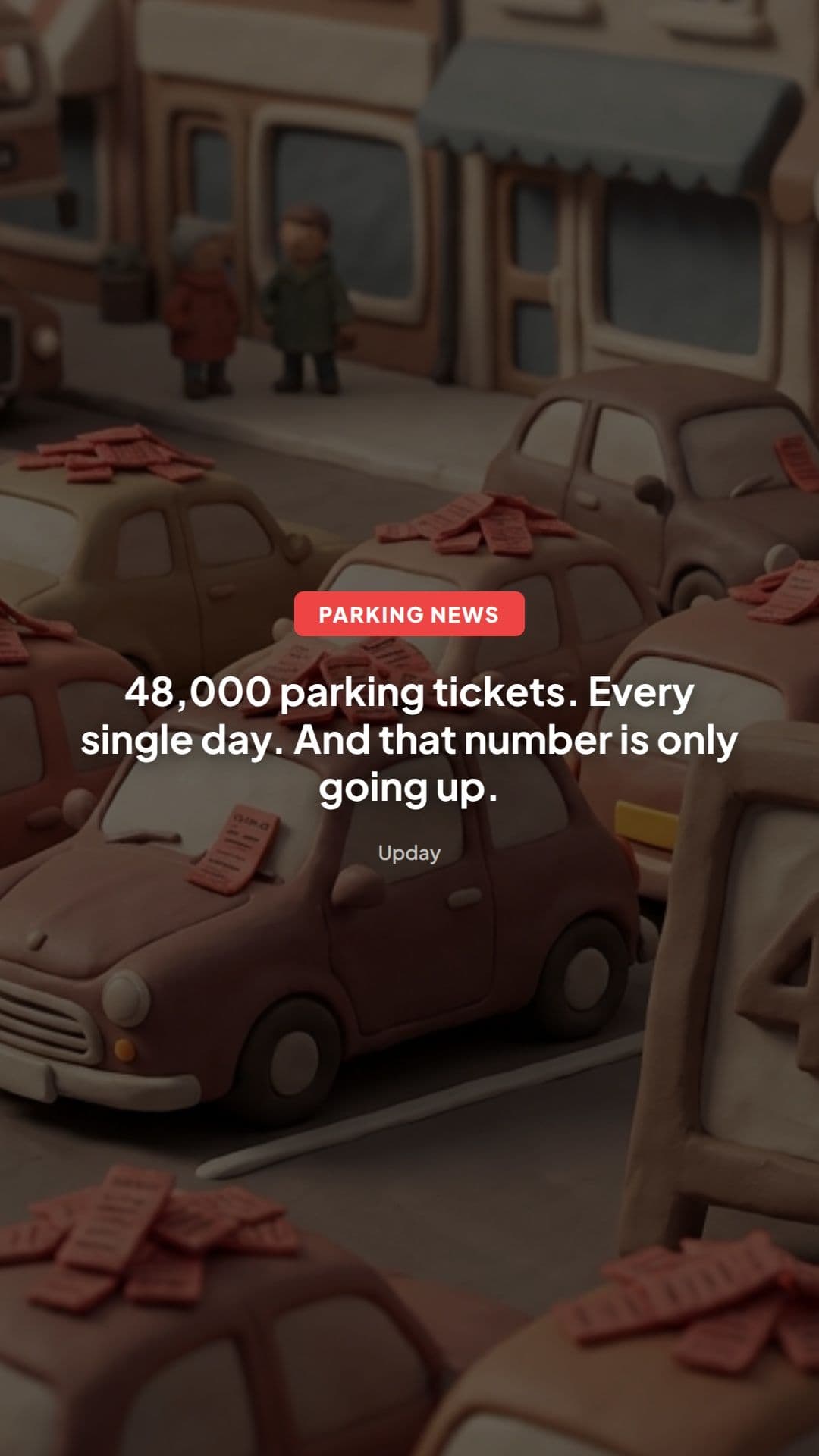
48,000 Parking Tickets a Day: Why Private Firms Are Out of Control — and What You Can Do About It
There is something quietly staggering about the number 48,000. That is how many parking tickets private companies are issuing every single day in the United Kingdom. Not councils. Not the police. Private firms — operating on retail parks, hospital car parks, housing estates, and supermarket forecourts — armed with cameras, clamping equipment, and debt collection letters. By the time you finish reading this article, another couple of thousand notices will have dropped through letterboxes or been photographed onto windscreens somewhere across the country.
New figures covering April to December 2025 reveal that private parking companies issued an estimated 13.1 million Parking Charge Notices (PCNs) in just nine months — a staggering 19% year-on-year increase. That is not a blip. That is a trend, and it has reignited a long-running and increasingly urgent debate about whether the private parking industry is fit for purpose.
What the Numbers Actually Tell Us
Let us be clear about what 13.1 million tickets in nine months really means. Extrapolated across a full year, we are looking at well over 17 million private parking charges annually. For context, the entire population of the Netherlands is around 18 million people. Private parking firms are, in effect, issuing a fine for nearly every person in a mid-sized European country — every single year.
The 19% year-on-year rise is particularly telling. It is not simply that there are more cars on the road, or more car parks being managed privately. The infrastructure of enforcement — Automatic Number Plate Recognition (ANPR) cameras, mobile enforcement patrols, and sophisticated data-matching systems using DVLA records — has become dramatically more sophisticated and pervasive. It is now cheaper and easier than ever for a private operator to issue a charge, and the financial incentives to do so remain enormous.
Industry insiders suggest that even with a relatively modest appeal rate, the revenue generated from these 13.1 million tickets — typically £100 per notice, reduced to £60 if paid within 14 days — runs into hundreds of millions of pounds annually. That is a significant commercial enterprise, built on the backs of drivers who may or may not have genuinely broken any rules.
Why This Matters: A Broken System
The private parking industry operates in a fundamentally different legal universe from local councils. When a council issues a Penalty Charge Notice, it is backed by statute — specifically the Traffic Management Act 2004 — and subject to independent adjudication at a tribunal. Drivers have clear, codified rights of appeal.
Private parking, by contrast, operates under contract law. When you drive onto privately managed land, the landowner (or their agent) argues that you have entered into a contract — the terms of which are supposedly displayed on signs around the car park. Breach those terms, and you owe a debt. That is the theory, anyway.
The practical reality is messier. Signs are frequently unclear, poorly positioned, or contradictory. Grace periods are inconsistently applied. And the process of appealing a private parking charge — through the operator, then through an independent appeals service such as POPLA (Parking on Private Land Appeals) or the Independent Appeals Service (IAS) — can be confusing, time-consuming, and opaque.
Two trade bodies govern most of the industry: the British Parking Association (BPA) and the International Parking Community (IPC). Both operate codes of practice that member firms must follow. Both have been criticised for being insufficiently robust. The BPA's Approved Operator Scheme and the IPC's Accredited Operator Scheme are, in effect, industry self-regulation — and critics argue that is a bit like asking a pub to police its own last orders.
The Legal Landscape: Where Things Stand
The legal framework governing private parking has been in a state of flux for several years, and that uncertainty is itself part of the problem.
The Parking (Code of Practice) Act 2019 was passed with cross-party support and was specifically designed to create a single, statutory code of practice for private parking operators in England, Scotland, and Wales. It would have established consistent grace periods, capped charges, and a single independent appeals body. It should have been transformative.
It has not yet been fully implemented. The Government's own review of the draft code — which included a proposed 10-minute grace period before any charge can be issued, and a £100 cap on fines — has been delayed repeatedly. While some provisions have been consulted upon, the full statutory code remains outstanding. In the meantime, the industry continues to self-regulate, and the volume of tickets continues to rise.
A landmark Supreme Court case, ParkingEye Ltd v Beavis [2015], remains the foundational legal precedent for the industry. The court ruled that a £85 charge for overstaying in a retail car park was enforceable as a legitimate business interest, not an unenforceable penalty. That ruling gave private firms significant legal confidence to pursue charges — and many have used it accordingly.
However, the Beavis case also contained important nuances. The court emphasised that charges must be proportionate, that signage must be clear and prominent, and that the charge must reflect a genuine commercial interest — not simply be punitive. These conditions are not always met, and that is where drivers have real grounds to push back.
What Drivers Should Know: Your Practical Rights
If you have received a private parking charge — or want to avoid one — here is what you genuinely need to understand.
1. A Parking Charge Notice is not the same as a Penalty Charge Notice The terminology is deliberately confusing. A PCN from a council is a statutory penalty. A PCN from a private firm is a contractual demand. You have more room to dispute the latter, and it does not automatically go on any official record.
2. Check the signs before you do anything else Under the BPA and IPC codes of practice, signage must be clear, legible, and prominent before a charge can be enforced. If signs were obscured, missing, or contradictory, you have a strong appeal ground. Photograph the signs if you return to the location.
3. You have a right to appeal — use it Every legitimate private parking operator must offer an internal appeals process. If that fails, BPA members must offer POPLA, and IPC members must offer the IAS. These are free to use and genuinely independent. A significant proportion of appeals succeed — particularly where signage or procedural issues are involved.
4. The 10-minute grace period matters Although the full statutory code has not been implemented, the BPA code of practice already requires a minimum 10-minute grace period after the paid or permitted time expires before a charge can be issued. If you were ticketed within that window, challenge it.
5. Ignore the escalating letters — up to a point Private parking firms often send a series of increasingly threatening letters, sometimes involving debt collection agencies. These can look alarming. However, unless the firm has obtained a County Court Judgment (CCJ) against you, your credit rating is not affected. Do not ignore correspondence entirely, but do not panic either. Engage with the appeals process properly.
6. DVLA data access is a privilege, not a right Private operators can only access DVLA keeper data if they are members of an accredited trade body. If a firm is not a BPA or IPC member, they should not have your details — and that itself may be grounds for a complaint to the Information Commissioner's Office (ICO).
Looking Ahead: The Pressure Is Building
The renewed calls for tighter regulation following these latest figures are not coming from fringe campaigners. Motoring organisations including the RAC and AA, consumer groups, and MPs across party lines have all raised concerns. The Competition and Markets Authority (CMA) has previously taken enforcement action against individual operators for failing to respond to Subject Access Requests — a sign that scrutiny is intensifying.
The Government faces a genuine test. The Parking (Code of Practice) Act 2019 is already law — it simply needs to be brought fully into force. The longer implementation is delayed, the more drivers will be caught in a system that is structurally weighted against them.
What is clear is that 48,000 tickets a day is not a sign of a well-functioning system keeping errant drivers in check. It is a sign of an industry that has been allowed to grow enormously profitable with insufficient accountability. The drivers on the receiving end of those 13.1 million notices deserve better — and the legal framework to deliver it already exists. It just needs to be used.
If you have received a private parking charge and are unsure how to respond, the appeals process is your most powerful tool. Start there.
Written by
Mohammed Al-Hassan
Appeals Tribunal Specialist
Ready to Challenge Your Ticket?
Let our AI analyse your PCN and generate a professional appeal letter in minutes.
Start Free Appeal