Port of Dover Road Block: What Drivers Need to Know
Protesters blocked Port of Dover access roads in Kent, disrupting cross-Channel traffic. Find out what happened, how drivers were affected and travel advice.

The Parking Ticket Pal Editorial Team
5 September 2026
When Protest Meets Port: What the Dover Road Blockade Means for Drivers
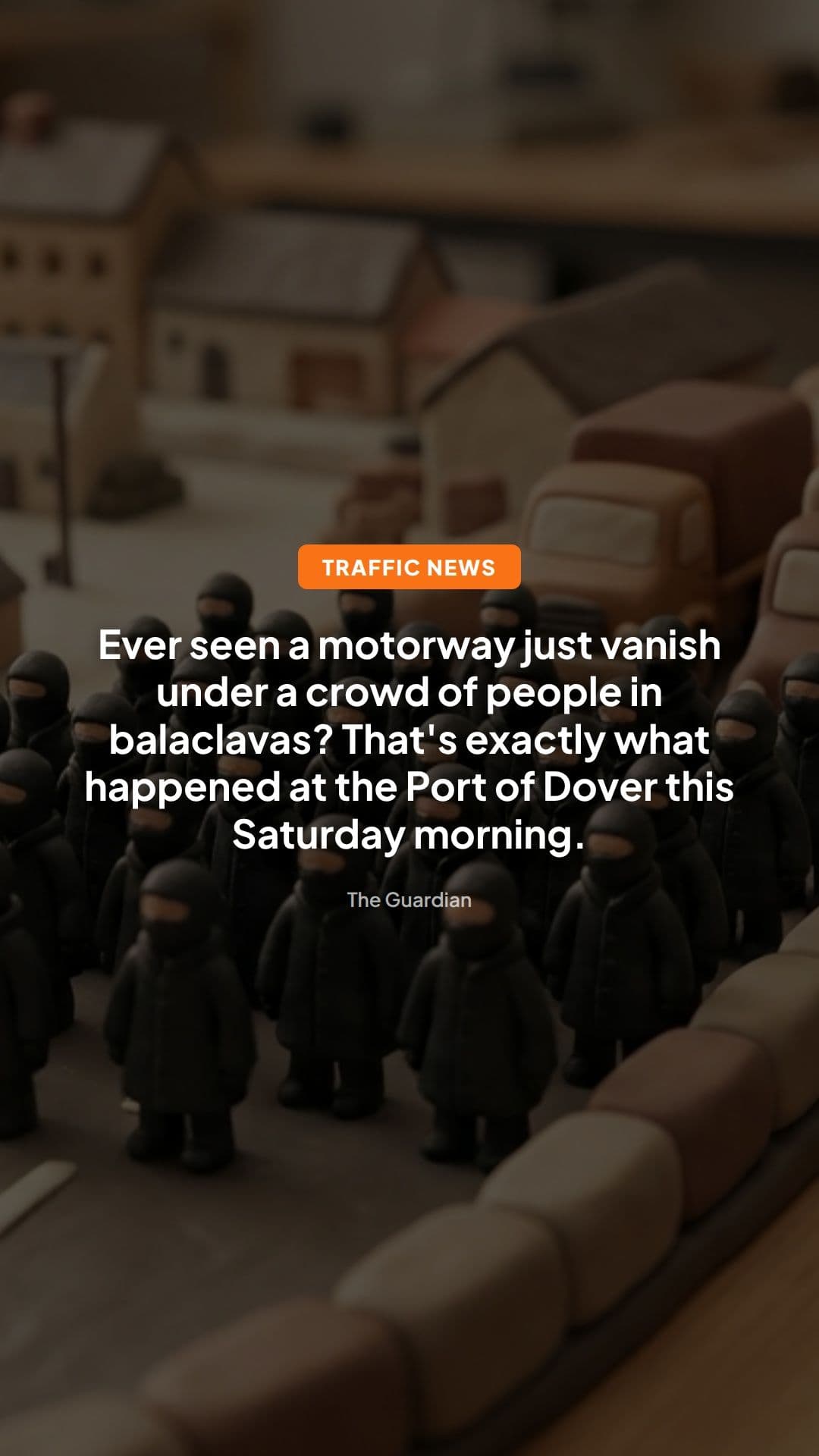
Picture the scene: a queue of lorries and cars grinding to a halt on the approach roads to one of Britain's busiest ports, drivers with no idea why they've stopped moving, and a knot of figures dressed head to toe in black, faces hidden behind balaclavas, standing between them and the terminal gates. That was the reality for motorists heading to or from the Port of Dover recently, when dozens of protesters blocked access roads in both directions, bringing traffic to a standstill before Kent's authorities eventually confirmed the roads had reopened.
It's a story that, on the surface, reads like a footnote: a temporary disruption, quickly resolved. But for anyone who has ever sat in a jam on the A20 or the approach to the Eastern Docks, it raises bigger questions. What actually happens, legally, when protesters block a public highway? What rights do drivers have when they're caught up in it? And why does Dover, of all places, keep finding itself at the centre of these standoffs?
What Happened
According to reporting from the Guardian, dozens of protesters dressed in black and wearing balaclavas gathered on the roads leading into the Port of Dover, effectively cutting off access in both directions. The port, which handles a huge volume of freight and passenger traffic crossing to and from continental Europe via Calais, relies on a handful of key approach roads to funnel vehicles towards check-in and border control. Blocking those roads doesn't just inconvenience a few cars, it can ripple back along the road network for miles, particularly at a site that already has a well-documented history of queuing and congestion problems.
Authorities later confirmed that traffic was flowing again, suggesting the blockade was cleared relatively quickly, whether through negotiation, police intervention, or the protesters dispersing of their own accord. The Guardian's report doesn't specify the protesters' cause or affiliation, and speculating on motive isn't the point of this piece. What matters for drivers is understanding the mechanics of what happens when a public road is deliberately obstructed, and what your rights and responsibilities are if you're one of the people stuck in the queue.
Why It Matters
Dover isn't just any road junction. It's the UK's principal short-sea crossing point to mainland Europe, handling an enormous share of the country's freight trade as well as huge volumes of holiday and day-trip traffic, especially during peak periods. The port and its approach roads have long been a pressure point. Kent's road network has a well-established contingency system, Operation Brock, designed specifically to manage queuing traffic when there's disruption at the border, a legacy of the additional friction introduced since the UK left the EU customs union.
That existing fragility is exactly why a protest blocking access roads matters more here than it might elsewhere. Even a short-lived blockade can trigger tailbacks that take hours to clear, because once HGVs and cars are backed up along limited approach routes, there's often nowhere for them to go. Local residents, commuters, and businesses reliant on freight movement all feel the knock-on effects long after the immediate blockage is lifted.
There's also a wider context worth flagging. Dover's border processes are already under strain from new EU entry requirements that add extra checks for UK travellers, something we've covered in detail in our piece on how the EU's new entry system could snarl Port of Dover traffic. Layer a deliberate road blockade on top of a system that's already struggling with capacity, and the disruption compounds quickly.
The Legal Angle
For drivers wondering "can protesters just do that?", the honest answer is that blocking a public highway is not something they're free to do without legal consequence, even if the right to protest itself is protected.
Obstruction of the highway. The starting point is section 137 of the Highways Act 1980, a long-standing offence covering anyone who, without lawful authority or excuse, wilfully obstructs the free passage along a highway. It's a summary offence, meaning it's dealt with in a magistrates' court, and carries a fine rather than a custodial sentence. Police have used this power for decades against protesters who sit or stand in roads.
Key national infrastructure. More significantly, recent legislation has specifically targeted protests that disrupt critical infrastructure. The Public Order Act 2023 introduced an offence covering interference with the use or operation of key national infrastructure, a category that explicitly includes ports, alongside roads, railways and airports. This was a direct legislative response to a wave of high-profile protests that blocked motorways and fuel depots, and it carries the potential for a prison sentence, not just a fine, making it a considerably more serious matter than a straightforward obstruction charge.
Police powers on the ground. Officers attending a blockade have a range of tools available, from directing protesters to move under existing public order powers to arresting those who refuse. Where there's a risk of disorder, police can also, in specific pre-authorised circumstances, require individuals to remove face coverings under section 60AA of the Criminal Justice and Public Order Act 1994, a power designed to prevent people concealing their identity while committing offences. Whether that power applies in any given case depends on whether a formal authorisation is in place at the time, and is very fact-specific.
Balancing rights. It's also worth remembering that the right to protest is protected under the Human Rights Act 1998, drawing on Articles 10 and 11 of the European Convention on Human Rights (freedom of expression and freedom of assembly). Courts have repeatedly had to weigh those rights against the rights of others, including the general public's right to move freely and go about their business without obstruction. This tension is precisely why protest-related road blockages so often end up being tested in court, whether through criminal prosecutions of protesters or judicial review of policing decisions.
What Drivers Should Know
If you find yourself caught up in a road blockade like the one at Dover, whether caused by protest, an accident, or an unplanned closure, there are some practical steps worth bearing in mind.
Check before you travel. Kent Police, National Highways and the Port of Dover's own travel updates are the quickest way to find out about live disruption. If you're heading to the coast for a ferry crossing or freight delivery, building in a buffer and checking live status before you set off can save hours of frustration.
Don't take matters into your own hands. It might be tempting to try to nudge through a crowd or find an unofficial route around a blockade, but doing so can put you at risk of a driving offence, quite aside from the obvious safety concerns of trying to manoeuvre a vehicle through a crowd of people.
Keep evidence if you're delayed. If a blockage causes you to miss a ferry, be late for work, or breach a delivery deadline, it's sensible to note the time, take dashcam footage if you have it, and keep any official statements from police or the port confirming the closure. This kind of evidence can be useful for insurance claims, compensation requests to ferry operators, or explaining a missed appointment to an employer.
Watch out for knock-on parking and traffic penalties. Diversions caused by sudden closures can sometimes lead drivers into unfamiliar restricted areas, bus lanes, or resident parking zones they wouldn't normally use. If you're issued a penalty charge notice as a direct result of being diverted or trapped by circumstances outside your control, it's worth knowing that such situations can form a legitimate part of an appeal. We've explored a similar scenario in our piece on whether you can get a PCN if you're trapped by an unexpected closure, which sets out the kind of evidence that tends to help those appeals succeed.
Understand your rights, don't assume none exist. It's easy to feel that being caught in a protest-related jam is simply bad luck with no recourse. In reality, depending on the circumstances, contractual protections through your ferry or travel operator, employer discretion, and even insurance policies may offer some relief, though none of this amounts to legal advice, and anyone facing a specific dispute over fines, missed travel, or losses should seek advice tailored to their situation.
Looking Ahead
Dover's position as a chokepoint for Channel traffic, combined with the extra friction introduced by post-Brexit border checks, means the port will likely remain a flashpoint for both logistical strain and, potentially, further demonstrations of this kind. The introduction of tougher legislation around key national infrastructure suggests the authorities are increasingly treating disruption to ports and similar sites as a serious matter rather than a minor public order issue.
For ordinary drivers and hauliers, the lesson isn't really about the rights and wrongs of any particular protest. It's a reminder that the road network, especially at pinch points like Dover, can be disrupted with very little notice, for reasons entirely outside your control. Building flexibility into your journey planning, knowing where to check for live updates, and understanding how to respond if disruption leads to fines or missed commitments are the practical safeguards every driver can put in place, regardless of what's causing the holdup on any given day.
Written by
The Parking Ticket Pal Editorial Team
Source-checked parking guidance
Ready to Challenge Your Ticket?
Let our AI analyse your PCN and generate a professional appeal letter in minutes.
Start Free Appeal