Police Seize £8m Supercars in Anti-Social Driving Crackdown
Police impounded £8m of Ferraris, Lamborghinis and McLarens in a three-day anti-social driving crackdown. What the operation means for UK motorists today.

Raj Patel
10 August 2026
£8 Million of Supercars Seized: Inside the UK's Growing Crackdown on Anti-Social Driving
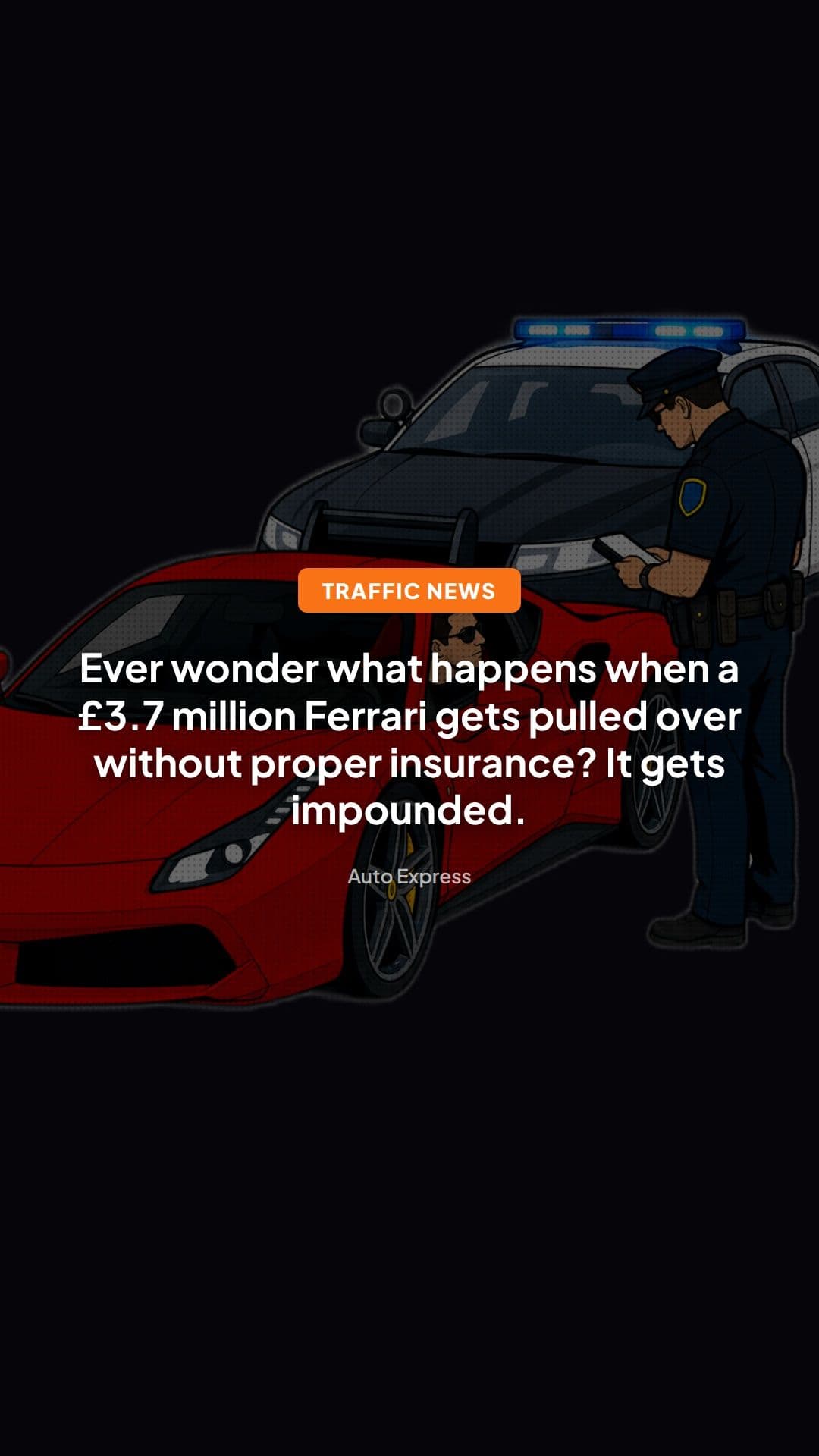
Picture the scene: a convoy of Ferraris, Lamborghinis and McLarens, engines snarling through residential streets, phones out filming for social media clout. Then blue lights. Within three days, police had impounded supercars worth a combined £8 million, a stark reminder that horsepower doesn't buy immunity from the law.
This wasn't a one-off traffic stop. It was a coordinated, multi-day operation targeting a very specific and increasingly visible problem on Britain's roads: the use of high-performance vehicles for anti-social driving, from convoy cruising and revving displays to dangerous overtakes and street takeovers.
What Happened
According to Auto Express, police carried out a three-day crackdown that resulted in the seizure of a Ferrari, multiple Lamborghinis, McLarens and Porsches, with the combined value of the impounded vehicles reaching around £8 million. Among the haul were some genuinely rare and desirable machines, the kind of cars that would normally be tucked away in a private collection or driven cautiously to a track day, not thrashed through public roads in a display designed to attract attention.
The operation targeted anti-social driving specifically, a category that covers a broad range of behaviour: excessive noise, dangerous manoeuvres, convoy driving that intimidates other road users, and the sort of exhibitionist behaviour that has become closely associated with supercar meet-ups in cities across the UK. These events, often organised informally via social media, have become a recurring headache for police forces in areas with a concentration of wealthy car enthusiasts, notably parts of London, Manchester and other major cities.
The scale of this particular crackdown, both in terms of duration and the value of vehicles seized, suggests a level of planning and resourcing that goes beyond routine patrols. This looks like a targeted operation, likely informed by intelligence about planned meet-ups or known hotspots for this kind of driving.
Why It Matters
Supercar culture and anti-social driving crackdowns might seem like a niche corner of motoring news, but the implications ripple outward in ways that affect ordinary drivers too.
First, there's the public safety angle. Anti-social driving isn't just noisy and irritating for residents, it's genuinely dangerous. High-powered cars driven aggressively in built-up areas put pedestrians, cyclists and other motorists at risk. A car capable of well over 150mph has no business being driven anywhere near its limits on a residential street, and when groups of such vehicles convoy together, the risk of a serious incident multiplies.
Second, this crackdown reflects a broader shift in how police forces are using their powers. Seizure and impoundment send a much stronger message than a fixed penalty notice ever could. Losing a £250,000 Ferrari, even temporarily, hits differently than a fine that some owners might barely notice. It's a visible, financially painful consequence, and crucially, one that generates headlines and, police will hope, a deterrent effect among a community that often prides itself on flouting convention.
Third, there's a wider social dimension. Supercar meets and cruises have grown into a genuine subculture, fuelled by social media platforms where footage of loud revving, drifting and convoy driving racks up views and engagement. Police forces have increasingly had to treat these gatherings as organised events requiring proactive intervention, rather than isolated incidents to be dealt with after the fact.
For everyday drivers, this story is also a useful reminder that anti-social driving enforcement isn't limited to speed cameras and parking wardens. It involves proactive, resource-intensive police operations that can result in some of the most serious consequences available under UK road traffic law: total loss of your vehicle, at least temporarily, and potentially permanently.
The Legal Angle
Police powers to seize vehicles used in an anti-social manner stem primarily from Section 59 of the Police Reform Act 2002. This legislation allows officers to seize a vehicle if it's being driven in a manner that causes, or is likely to cause, alarm, distress or annoyance to members of the public, and where the driver has already been warned (either on this occasion or a previous one) that continuing such use could lead to seizure.
In practice, this covers exactly the sort of behaviour associated with supercar cruises: excessive revving, wheelspins, doughnuts, convoy driving through residential areas, and generally using a vehicle in a way designed to draw attention and cause a nuisance. Once seized, a vehicle can be held for up to 21 days, and if the owner doesn't come forward to claim it (or can't produce the necessary documents, such as proof of insurance, a valid licence and vehicle registration), it can be disposed of, meaning sold or destroyed.
Beyond Section 59, drivers involved in this kind of activity may also face prosecution for offences under the Road Traffic Act 1988, including dangerous driving or careless driving, both of which carry penalty points, fines and, in the most serious cases, disqualification or even imprisonment. Where noise nuisance is a factor, local authorities can also become involved, since excessive vehicle noise can fall under environmental protection legislation in some circumstances.
It's worth noting that seizure doesn't automatically equate to a criminal conviction. A car can be impounded under Section 59 without the driver necessarily facing separate criminal charges, although in cases involving genuinely dangerous driving, prosecution is highly likely to follow. For owners of seized vehicles, reclaiming the car typically involves paying release and storage fees, on top of proving legal ownership and valid documentation. For a supercar, storage costs alone can escalate quickly given the specialist facilities required to house high-value vehicles securely.
This is a complex area of law with serious financial and legal consequences, and anyone facing a vehicle seizure or related prosecution should seek advice from a qualified solicitor rather than relying on general guidance.
What Drivers Should Know
Whether or not you drive anything more exotic than a family hatchback, there are practical lessons here.
Owning a fast car doesn't grant you special treatment. If anything, expensive, distinctive vehicles are easier for police to identify, track and target in operations like this one. Number plate recognition technology and social media intelligence gathering mean that organisers of unofficial meets are often known to police well before an event takes place.
A prior warning matters. Under Section 59, police typically need to have warned a driver (on this or a previous occasion) before seizing the vehicle. This means that if you're stopped and told your driving is causing alarm or distress, take it seriously. A second instance, even by a different officer, can result in seizure.
Insurance and documentation are your first line of defence. If your vehicle is ever seized for any reason, having your V5C, valid insurance and driving licence readily accessible will make the process of reclaiming it considerably smoother and faster.
Loaning or lending a car doesn't remove liability risk. If you lend a supercar to a friend for a meet-up and they drive it anti-socially, the vehicle itself can still be seized regardless of who's behind the wheel. Owners should think carefully about who they hand the keys to.
Anti-social driving convictions can affect your insurance for years. Beyond the immediate embarrassment and cost of a seizure, a dangerous driving conviction will significantly increase premiums and may make some insurers unwilling to cover you at all.
Looking Ahead
This crackdown is unlikely to be an isolated event. Police forces have shown a growing appetite for proactive, intelligence-led operations targeting organised car meets, and the visible success of an £8 million seizure operation is exactly the sort of outcome that encourages further investment in similar tactics elsewhere.
For the wider supercar community, the message is increasingly clear: informal meets and cruises that spill into public disorder, dangerous driving or noise nuisance are firmly in the crosshairs. Enthusiasts who want to enjoy performance driving without legal risk have plenty of legitimate outlets, from track days to organised, marshalled events, that don't carry the same risk of a knock on the door from police.
For everyday motorists, the story is a useful, if extreme, illustration of how seriously anti-social driving is now being treated in the UK, and a reminder that the consequences of dangerous or disruptive behaviour behind the wheel can be severe, regardless of what's parked in your driveway.
Written by
Raj Patel
Transport Policy Analyst
Ready to Challenge Your Ticket?
Let our AI analyse your PCN and generate a professional appeal letter in minutes.
Start Free Appeal