
Petrol Station Fuel Demand: Do You Have to Pay £90?
A petrol station missed your fuel payment then sent a £90 demand? Understand your UK legal rights, when you must pay, and how to dispute added fees fairly.

The Parking Ticket Pal Editorial Team
21 October 2026
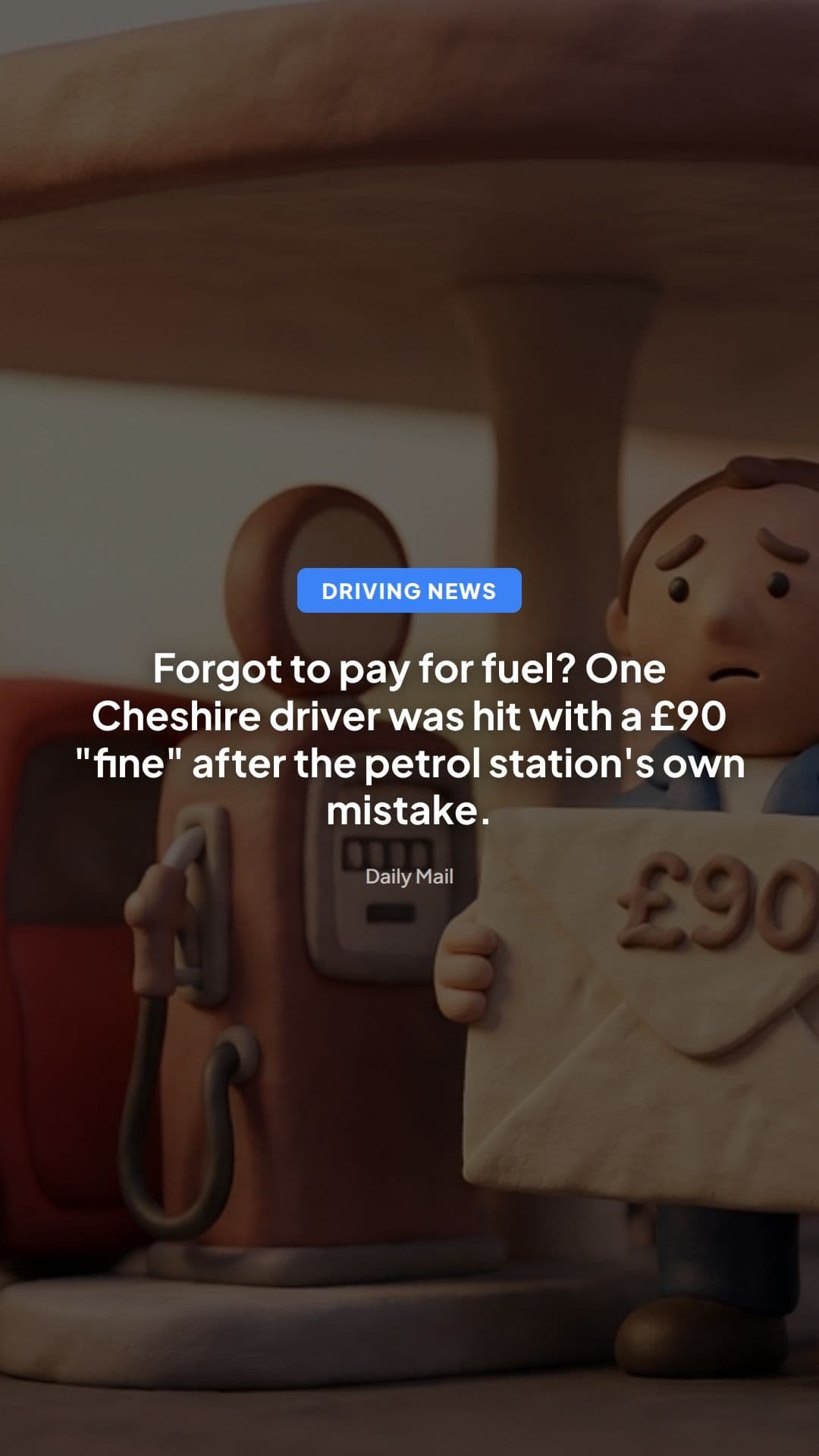
Petrol station fined me £90 after forgetting to charge for fuel: do you have to pay?
You pull onto a forecourt, fill up, and head inside or speak to an attendant. You go home believing the transaction is done. Then a letter arrives demanding £90. The garage says you didn't pay for your fuel, but the till operator, not you, was the one who forgot to ring it up.
That is the situation behind a recent Daily Mail consumer column, in which a reader asked whether they really have to pay a £90 demand after an attendant failed to charge for fuel at the time of purchase. The question touches contract law, penalty charges, and the line between an honest mistake and an offence. It's worth unpicking, because the answer depends heavily on the details.
This article is general information, not legal advice. It sets out how the rules tend to work in the UK, so you can understand your position and know where to get proper help.
What happened
According to the Daily Mail's summary, a motorist bought fuel at a petrol station, but the attendant failed to charge for it at the point of sale. The garage later demanded £90 from the driver. The reader then asked the paper's consumer legal expert whether they were obliged to pay.
I haven't reproduced the column's detailed advice here, and you should read the original for that. But the scenario raises several separate questions that are often tangled together:
- Does the driver owe the garage for the fuel itself?
- Can the garage add a penalty on top, and is £90 defensible?
- Does a staff error change anything?
- Could the driver face any criminal exposure?
- How should someone respond to a demand like this?
Why it matters
Fuel prices are a constant worry for UK drivers, and forecourts are under pressure from drive-offs. Garages understandably want to recover losses, and many use signage, recovery schemes or debt-collection letters to do so. Our earlier coverage of rising drive-off thefts explores the pressures forecourts face.
The risk is that a letter written for a genuine drive-off lands on a customer who did nothing wrong, or at least nothing dishonest. A £90 demand for what may have been a modest fill-up can feel disproportionate, and plenty of people simply pay to make it go away. Knowing the rules lets you decide whether to do so or to challenge it.
This also fits a wider pattern. Drivers are increasingly handed charges by businesses that rely on signs, automatic systems and contractual terms rather than statutory penalties. Our guides on private parking charges and on the forecourt queue-fines probe cover similar ground. The principle running through them is that a private company can only charge what a valid contract or the law allows.
The legal angle
1. The fuel itself is almost certainly still owed
Under the Sale of Goods Act 1979, a buyer is generally expected to pay the price for goods they take. If you drove away with fuel that wasn't charged, even through the seller's error, the garage will usually have a legitimate claim for the value of that fuel. Lawyers sometimes describe recovering money or goods handed over by mistake as a restitution or unjust enrichment claim.
So an honest mistake by the attendant does not usually wipe the slate clean. It generally means the garage made an error, and it may well be entitled to recover the actual cost. What it doesn't automatically mean is that the garage can charge a penalty.
2. The extra charge is the real battleground
The more contested question is the difference between the cost of the fuel and the £90 demanded. For a private business to charge more than its actual loss, there generally needs to be a contract term that allows it, and that term has to survive scrutiny.
Two ideas matter here:
- Penalty clauses. In Cavendish Square Holding BV v Makdessi; ParkingEye Ltd v Beavis [2015] UKSC 67, the Supreme Court reframed the penalty rule. A charge is likely to be unenforceable if it is out of all proportion to a legitimate interest of the business in the contract's performance. In the Beavis case, an £85 parking charge was upheld because it deterred overstaying and was clearly signposted. That ruling concerned car parking, not fuel, and the facts were specific. It shows that courts look at legitimate interest and proportionality, not just the sum itself.
- Consumer fairness. Under the Consumer Rights Act 2015, terms in consumer contracts must be fair and transparent. A term requiring a consumer to pay a disproportionate sum, or one buried where nobody would see it, can be challenged as unfair, and a court can decline to enforce it.
Whether a forecourt had a visible, clear term setting an administration charge, and whether you had a realistic chance to read it before filling up, can therefore matter a great deal. A notice at a pump saying "Pay before you leave" is not the same as a detailed contract for a £90 fee.
Note too that the Protection of Freedoms Act 2012 regime that governs recovery of private parking charges from vehicle keepers applies to parking. It is not a general power to pursue keepers for fuel debts. A garage chasing a debt is typically relying on ordinary contract or debt-recovery principles.
3. Is this a criminal matter?
Not necessarily, and often not at all. In England and Wales, the offence of making off without payment under section 3 of the Theft Act 1978 requires the person to have acted dishonestly, knowing that payment on the spot was required or expected, with intent to avoid payment. Someone who genuinely believed they had paid, or who was told by staff to go, is in a very different position from someone who deliberately drove off. Scotland and Northern Ireland have their own legal frameworks, so the details differ there.
Dishonesty is a question of fact for a court, so this is exactly the kind of situation where specific advice is wise if the garage threatens police involvement.
4. Where do the garage's details on you come from?
If the garage tracked you down through your number plate, it will have obtained keeper details somewhere. DVLA may release keeper information only where the requester has "reasonable cause", and the use of that data is subject to data protection law. If you're unsure how the business got your details, you can ask. That question may reveal whether the demand follows a proper process.
5. Debt-claim process and time limits
If a business wants to take a consumer to court over a debt, it is generally expected to follow the Pre-Action Protocol for Debt Claims, which involves sending clear information about the debt and giving time to respond. Most claims of this size would sit in the small claims track in England and Wales. Under the Limitation Act 1980, simple contract claims generally have a six-year limit, but that is a ceiling, not a reason for delay.
What drivers should know
If a letter like this lands on your doormat, here are sensible things to consider. These are general pointers, not instructions for any individual case.
Don't ignore it. Ignored letters tend to escalate to debt-collection firms, and eventually a court claim. A calm, written reply keeps a paper trail.
Check the basics of the claim. Ask for or look for:
- The date, time, pump number and amount of fuel
- CCTV or ANPR evidence that links you to the vehicle
- How the figure of £90 is made up (actual fuel cost, admin fee, recovery costs)
- The contractual basis or signage the garage relies on for any extra charge
Gather your own evidence. Bank or card statements, receipts, loyalty-card records, and a note of what happened at the till or pump can all help. If staff told you that you had paid, or waved you away, write down what was said while it's fresh.
Separate the fuel from the fee. Many people find the cost of the fuel itself hard to dispute where they did take it. The fairness of any additional charge is a different question. A written reply can acknowledge the genuine fuel value while questioning the rest, but think about how you word things, because what you say in writing may matter later.
Be honest and measured. If you realise you did leave without paying, say so plainly. Prompt, truthful engagement tends to go better than evasion, especially if dishonesty is ever in question.
Be wary of pressure. Threats of "police involvement" or "court within days" in a template letter don't change the underlying legal position. A threat of criminal action is serious, though, so take it seriously and consider advice.
Know where to get help. Citizens Advice offers free guidance on consumer debt disputes, and the Consumer Rights Act 2015 provisions are explained on GOV.UK. If the sum, the threat or the paperwork is escalating, a solicitor or a specialist consumer organisation can give advice on your particular facts. Drivers who also deal with parking charges can find our other guides on responding to private demands useful for structuring a reply.
Prevent it next time. If you fill up and nobody asks for payment, say something before leaving. Keep receipts for a reasonable period, and use pay-at-pump or app-based payment where you can, because there's a clear digital record of the transaction.
Looking ahead
Disputes like this show how much weight now rests on clear terms and honest communication between motorists and businesses. A few trends are worth watching.
First, forecourts are likely to keep tightening payment systems, using more pay-at-pump, ANPR-linked pre-authorisation and app payments. That reduces both genuine drive-offs and staff errors, but it also means more automated demands, with more chances for mistakes to reach innocent customers.
Second, regulators and the courts have been scrutinising how businesses use fees and charges against consumers, particularly in the parking sector. Whether that attention reaches ancillary charges on forecourts remains to be seen, but the legal principles on proportionality and fairness are not specific to car parks.
Third, as with many consumer disputes, the outcome often turns less on grand legal theory than on paperwork: what was signed, what was displayed, and what can be proved. Drivers who keep records and ask for evidence are generally better placed than those who either pay instantly or ignore everything.
The Daily Mail case is a useful reminder that a mistake by the seller doesn't necessarily cancel what you owe, but it doesn't give the seller a free hand to charge whatever it likes either. The fuel's value and the fee on top are separate questions, and both deserve a careful look before you reach for your bank card.
Key takeaways
- A staff error doesn't usually erase a genuine debt for fuel taken, but a penalty on top needs a proper legal basis.
- Penalty and fairness rules, including the ParkingEye v Beavis approach and the Consumer Rights Act 2015, can be used to test an additional charge.
- Criminal liability for making off without payment generally depends on dishonesty.
- Ask for evidence, keep records, reply in writing and seek independent advice where the stakes are high.
Written by
The Parking Ticket Pal Editorial Team
Source-checked parking guidance
Ready to Challenge Your Ticket?
Let our AI analyse your PCN and generate a professional appeal letter in minutes.
Start Free Appeal