Petrol Prices Rise: What Higher Oil Costs Mean for UK Drivers
UK petrol has risen to 155.57p a litre, while diesel reaches 172.14p. Discover how global oil market disruption is pushing up forecourt costs for drivers.

Oliver Johansson
31 July 2026
Petrol Prices Climb Again: What's Really Driving the Cost at the Pump
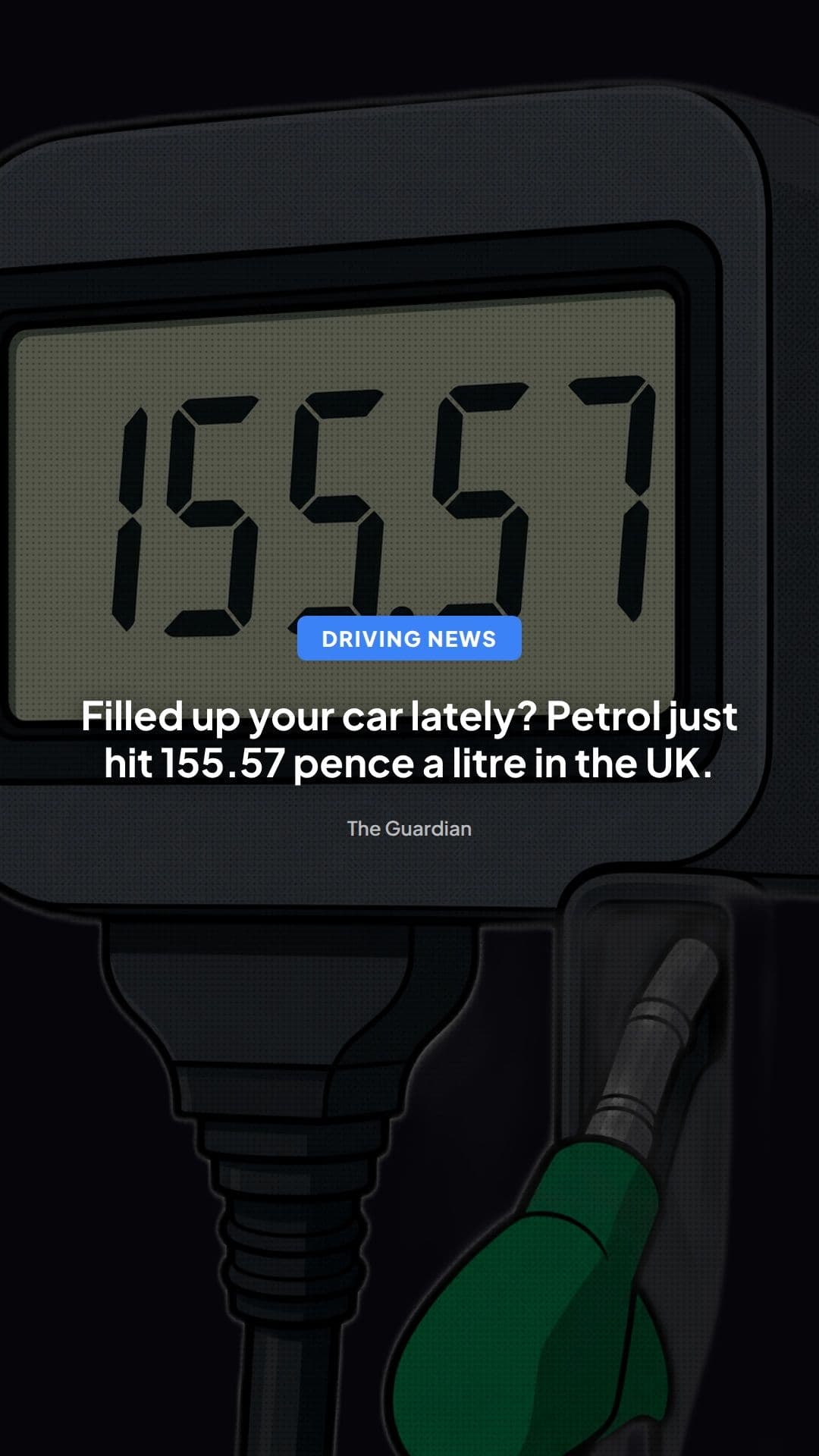
If you filled up this week and did a double take at the total on the screen, you're not imagining things. Petrol has crept up to 155.57p per litre and diesel now sits at 172.14p, according to the latest figures reported by The Guardian. For anyone who fuels up regularly, that's yet another squeeze on already tight household budgets, and it comes down to something most drivers have little control over: instability in global oil markets.
It's easy to feel like fuel prices are simply what they are, a fact of life you grumble about and then pay anyway. But there's a lot going on behind that number on the forecourt sign, from international supply shocks to domestic tax policy, and understanding it can help you make smarter decisions about when, where and how you buy fuel.
What's Actually Happened
The rise reported this week has been linked directly to disruption in international oil markets, pushing up the wholesale cost of crude that eventually filters through to the price you pay at the pump. This isn't an isolated blip. Oil is a globally traded commodity, and its price reacts almost instantly to geopolitical tension, supply interruptions, and shifts in demand from major economies. When something happens thousands of miles away, whether that's a conflict affecting shipping routes, a producer cutting output, or a refinery going offline, it tends to show up in UK fuel prices within days or weeks.
Diesel has been hit particularly hard, now sitting more than 16p above petrol per litre. That gap matters enormously for hauliers, van drivers, and anyone running an older diesel vehicle bought back when diesel was marketed as the economical choice. The days of diesel being reliably cheaper than petrol are, for now, firmly behind us.
Why This Matters Beyond the Petrol Station
For most households, fuel isn't a discretionary purchase. It's how people get to work, do the school run, visit relatives, and keep small businesses running. When crude oil prices rise, the effect isn't confined to a single trip to the garage. It ripples outward into haulage costs, delivery charges, and ultimately the price of goods on supermarket shelves. Fuel price rises are inflationary in a very direct sense, because almost everything that reaches you has travelled by road at some point.
There's also a fairness question lurking underneath all this. Fuel retailers don't all move their prices in lockstep, and the gap between what a station pays wholesale and what it charges at the pump can vary significantly from one forecourt to the next, and even from one town to another. This is part of why the Competition and Markets Authority has kept such a close eye on the road fuel market in recent years, examining whether retailer margins are fair and whether drivers are getting transparent, competitive pricing regardless of where they happen to be filling up.
For drivers already stretched by rising insurance premiums, council parking charges, and the general cost of running a car, this latest increase lands at an awkward time. It's another reminder that the total cost of driving in the UK is made up of many moving parts, most of which are largely outside any individual motorist's control.
The Legal and Regulatory Angle
Fuel pricing in the UK isn't regulated in the way that, say, energy tariffs are. There's no price cap and no legal obligation for retailers to charge a specific amount. Prices are set by individual operators based on wholesale costs, competition in the local area, and their own margins. What the law does require is transparency and accuracy.
Under the Weights and Measures Act 1985, fuel pumps must be calibrated correctly so that drivers receive exactly the amount of fuel they're paying for. Trading Standards enforce this, and forecourts can face penalties if pumps are found to be inaccurate. Separately, fuel retailers are required to display prices clearly and prominently under general consumer protection rules, so that drivers can see what they'll be charged before committing to fill up.
More recently, the government has moved toward greater price transparency through the fuel finder scheme, which is intended to give drivers access to near real-time pricing data from stations across the country, making it easier to compare costs before you even leave the house. This sits alongside the CMA's ongoing scrutiny of the road fuel market, which has previously flagged concerns about retailer margins and regional pricing disparities.
Fuel duty itself remains a significant, fixed part of the price you pay, currently frozen at a reduced rate that was introduced as a temporary relief measure and has been repeatedly extended rather than allowed to rise. On top of both the product cost and duty, VAT is charged at the standard 20% rate, meaning tax makes up a substantial chunk of every litre you buy, regardless of how high or low the underlying oil price goes. This is worth remembering when headlines focus on retailer profiteering. The government's own tax take is baked into the price before any margin is added.
What Drivers Should Know and Do
There isn't a legal remedy for oil prices rising, but there are sensible, practical steps that can soften the impact:
- Compare prices before you fill up. Apps and fuel finder tools can highlight significant differences between nearby stations, and those differences can be surprisingly large even within the same postcode.
- Avoid filling up at motorway services unless necessary. These tend to carry a premium compared with supermarket forecourts or high street independents.
- Keep an eye on tyre pressure and driving style. Small efficiency gains add up over time and reduce how often you need to visit the pump at all.
- Check whether a loyalty scheme or supermarket fuel voucher applies to you. Many supermarkets tie discounted fuel to a minimum in-store spend, which can be worth factoring into your weekly shop.
- If you're genuinely struggling with the cost of driving, consider whether some journeys could shift to public transport, cycling, or car sharing, even occasionally. It won't suit everyone, but for short, avoidable trips it can make a real dent in monthly spend.
If you ever suspect a forecourt is displaying inaccurate pricing, shortchanging you at the pump, or engaging in genuinely misleading practices, that's a matter for Trading Standards rather than something you're expected to resolve yourself. Keep receipts and be specific about dates, times and pump numbers if you do need to raise a concern.
Looking Ahead
Global oil markets are notoriously difficult to predict, and disruption in one region can ease or escalate within weeks. What's clear is that UK drivers remain exposed to these swings in a very direct way, because so much of the pump price is determined by forces well beyond domestic control. Government levers like fuel duty freezes can cushion some of the impact, but they can't insulate drivers entirely from a genuinely volatile international market.
For now, the sensible approach is the same one that's applied through every previous price spike: shop around, drive efficiently, and keep half an eye on the wider picture so a sudden jump at the pump doesn't come as a total surprise. Fuel prices will keep moving, in both directions, as global conditions shift. Staying informed is the best defence most drivers have.
Written by
Oliver Johansson
Traffic Management Consultant
Ready to Challenge Your Ticket?
Let our AI analyse your PCN and generate a professional appeal letter in minutes.
Start Free Appeal